| Product No. DS-0012 昭秀作(栗原彦三郎) |
|---|
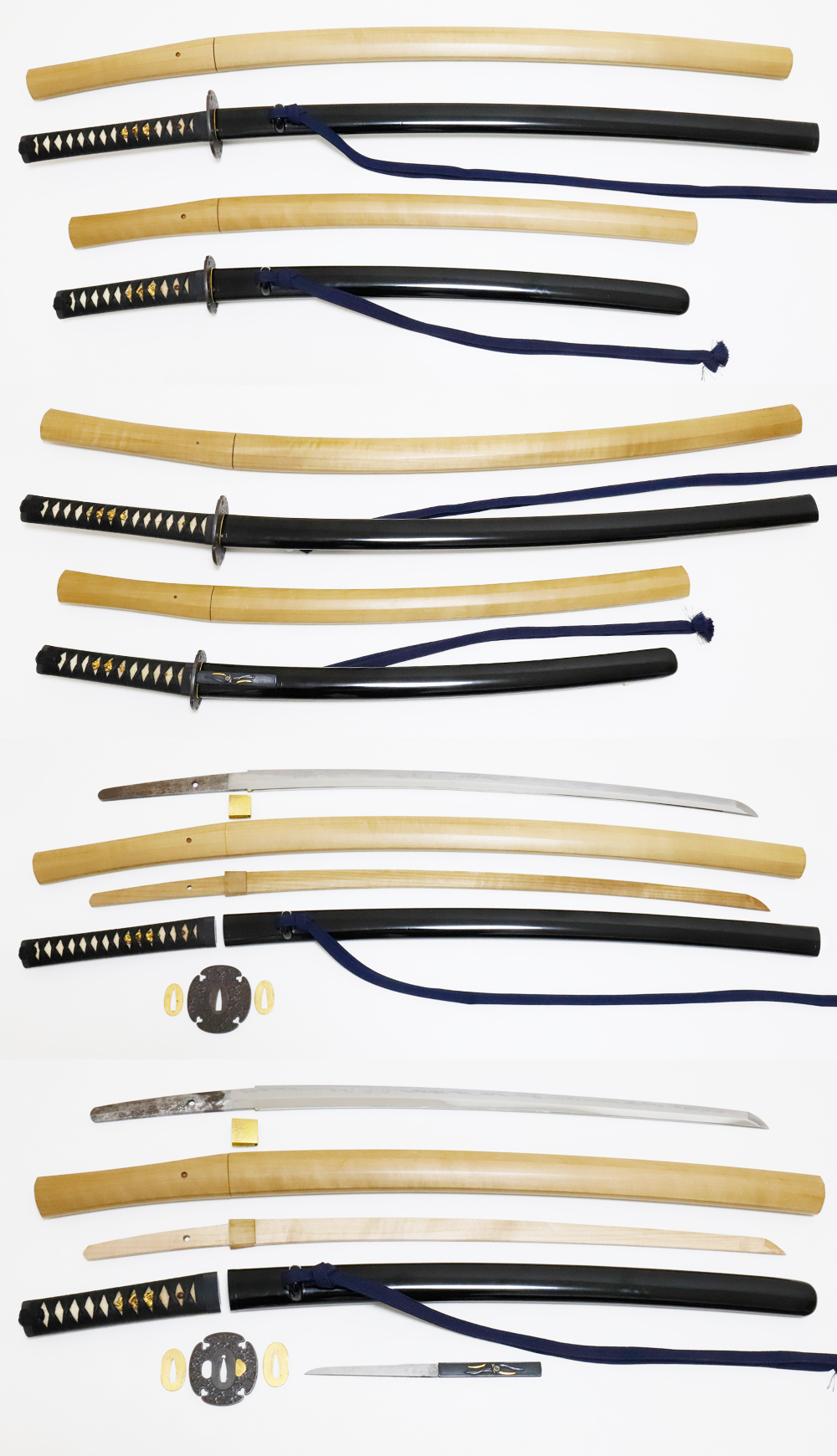
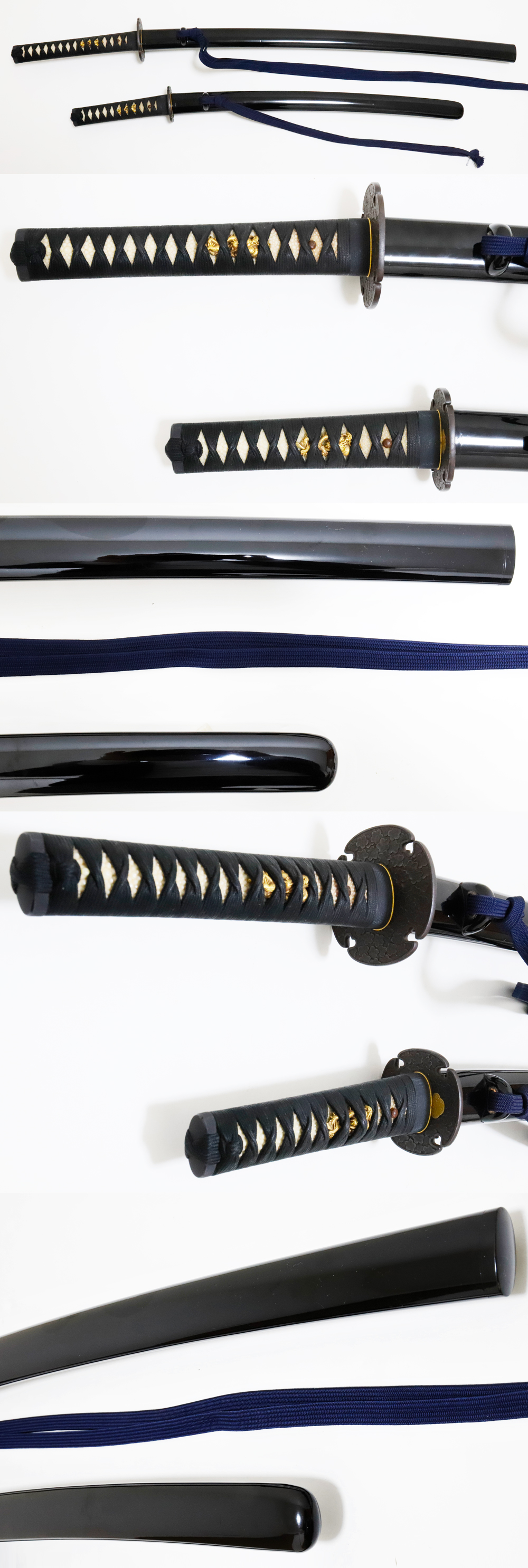
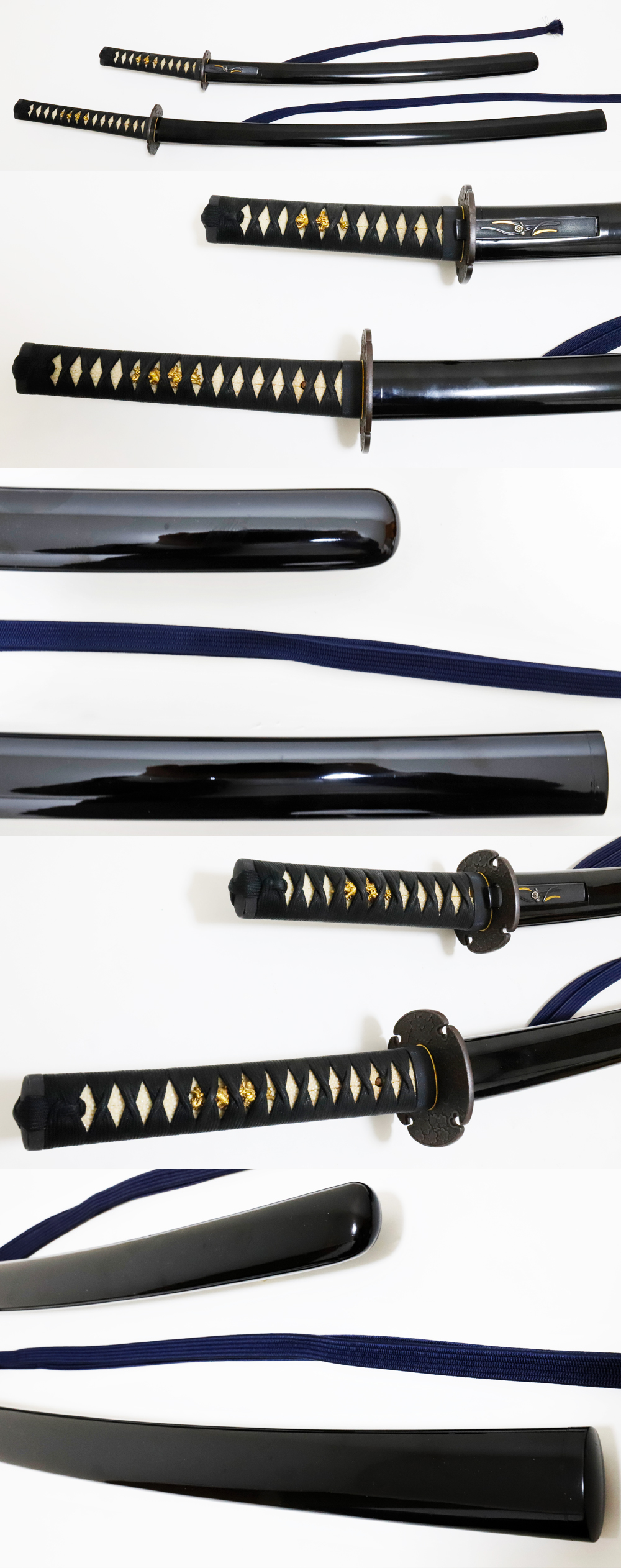
| Daisho title | Daishō koshirae with black roiro-lacquered saya |
| Certification Date | , |
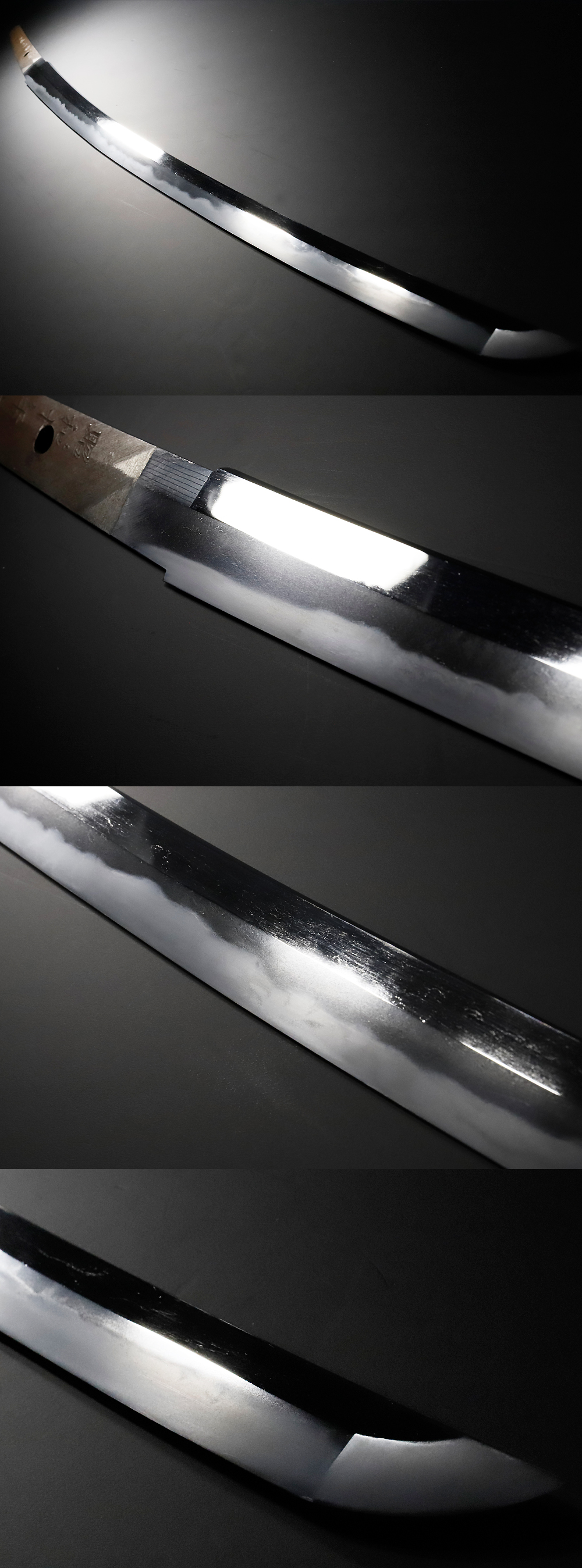
| 刀 |
|---|
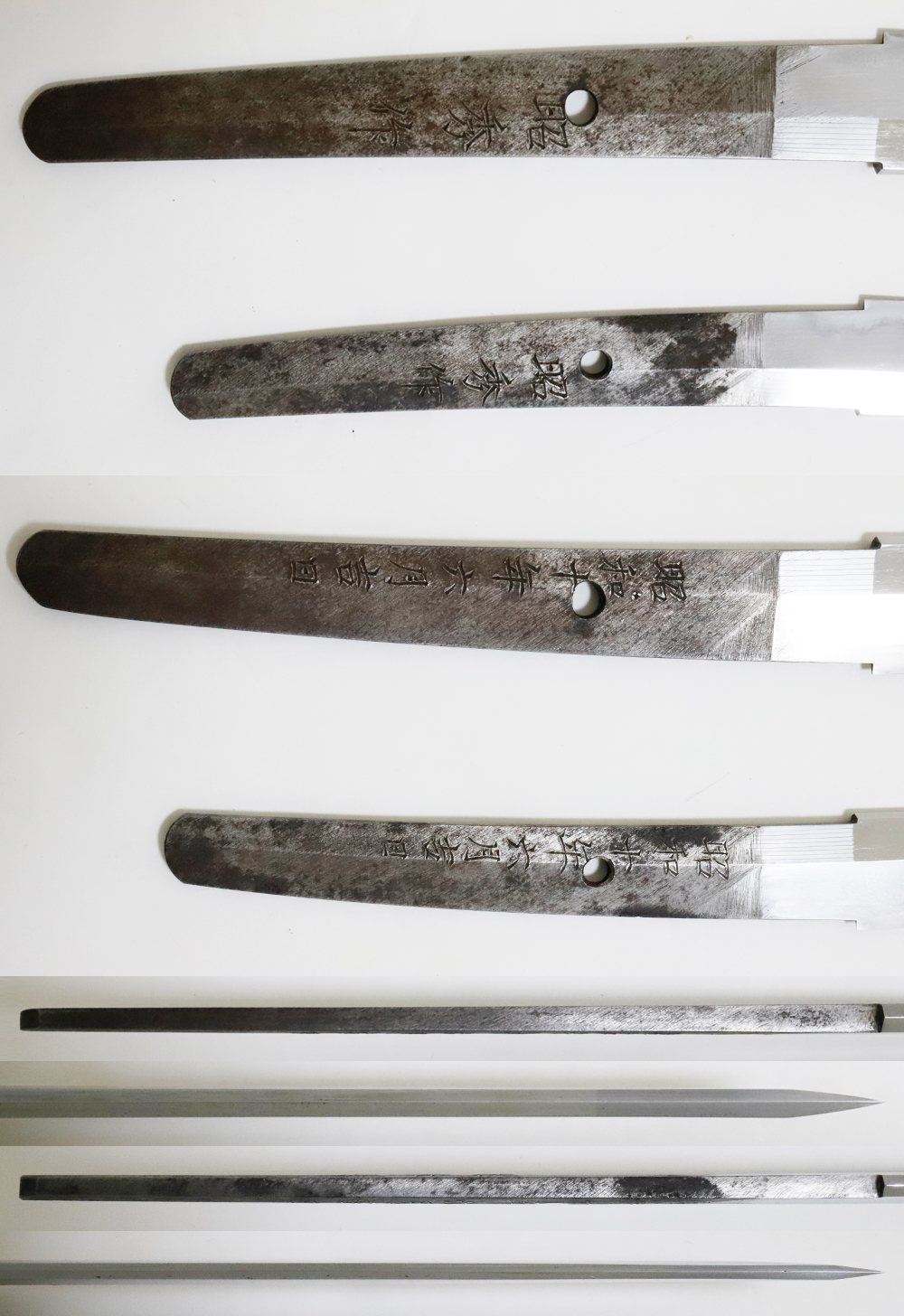
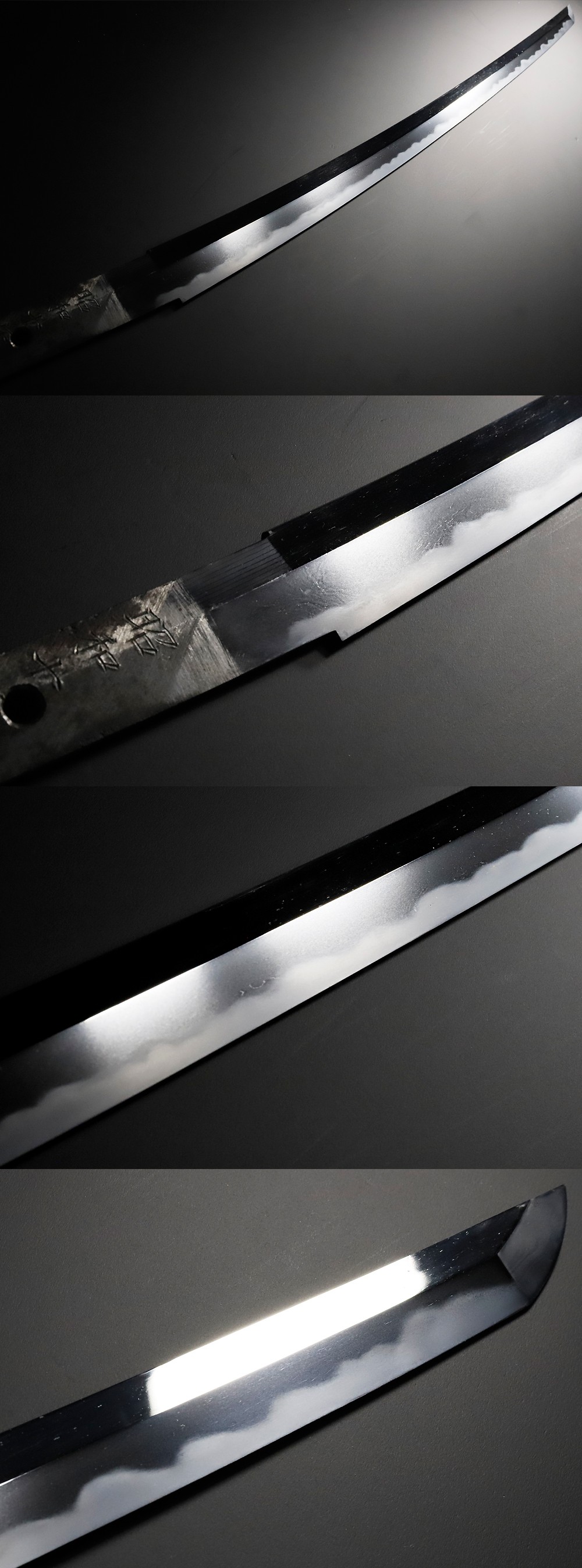
| Mei |
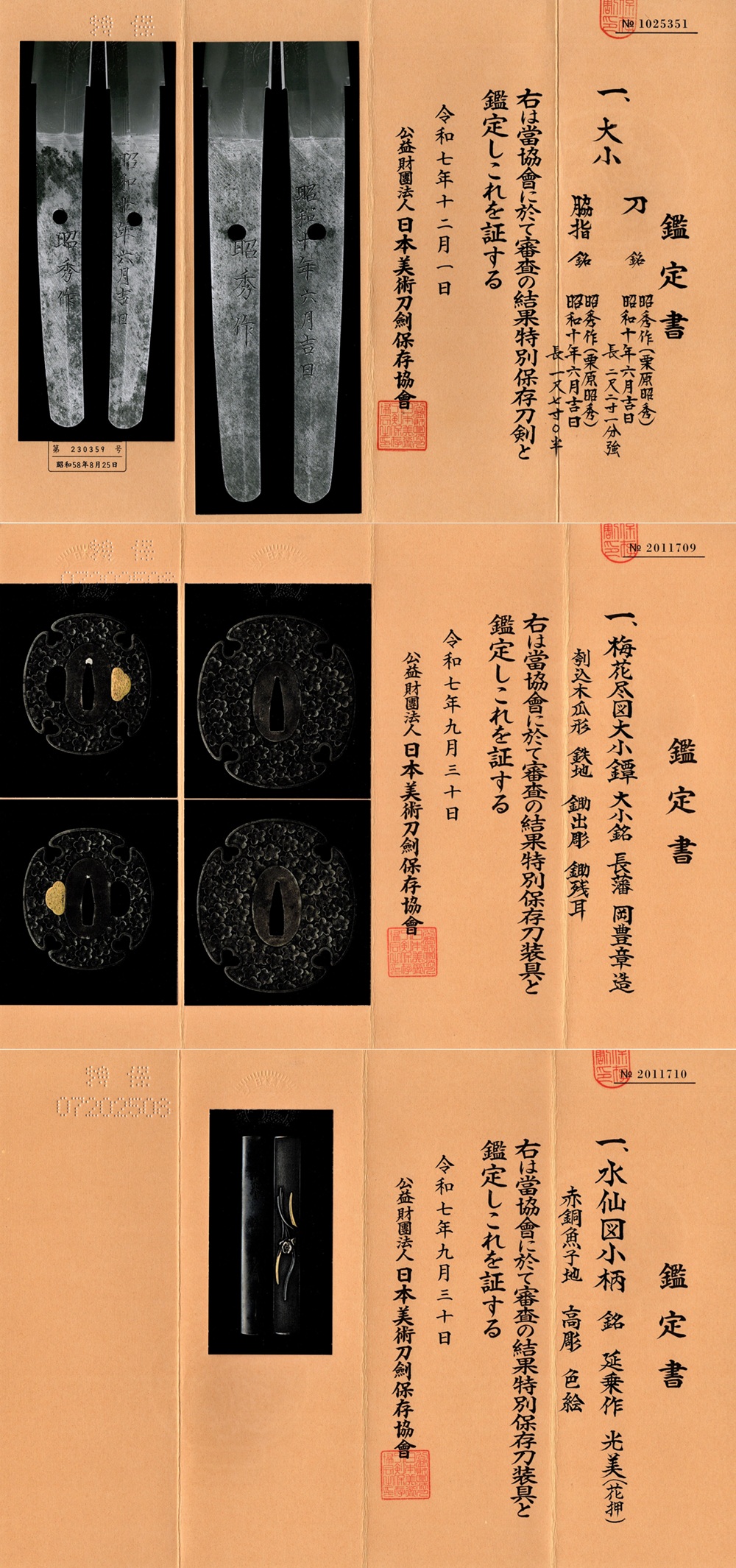
Made by Akihide (Kurihara Hikozaburō) Back: On an auspicious day in June 1935 |
| Region | Tochigi Prefecture(Shimotsuke Province) |
| Era | Showa Period |
| Length |
66 cm 26.0 in |
| Sori (curvature) |
1.4 cm 0.6 in |
| Motohaba |
3.2 cm 1.3 in |
| Sakihaba |
2.1 cm 0.8 in |
| Munekasane |
0.7 cm 0.3 in |
| Status | Tokubetsu Hozon Token |
| Certification Date | December 01, 2025 |
| Registration Authority | Tokyo |
| Registration Date | August 25, 1983 |
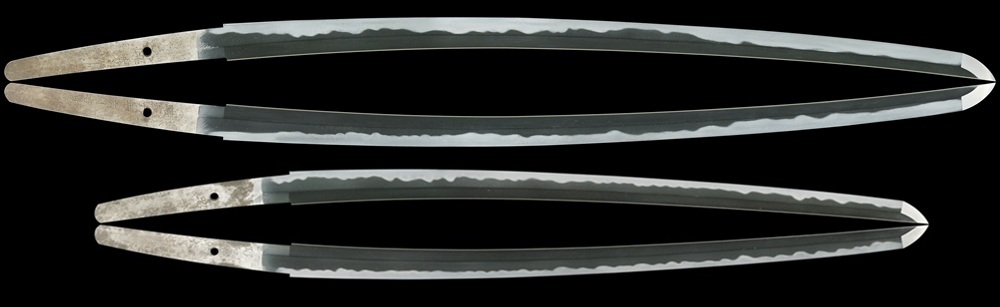
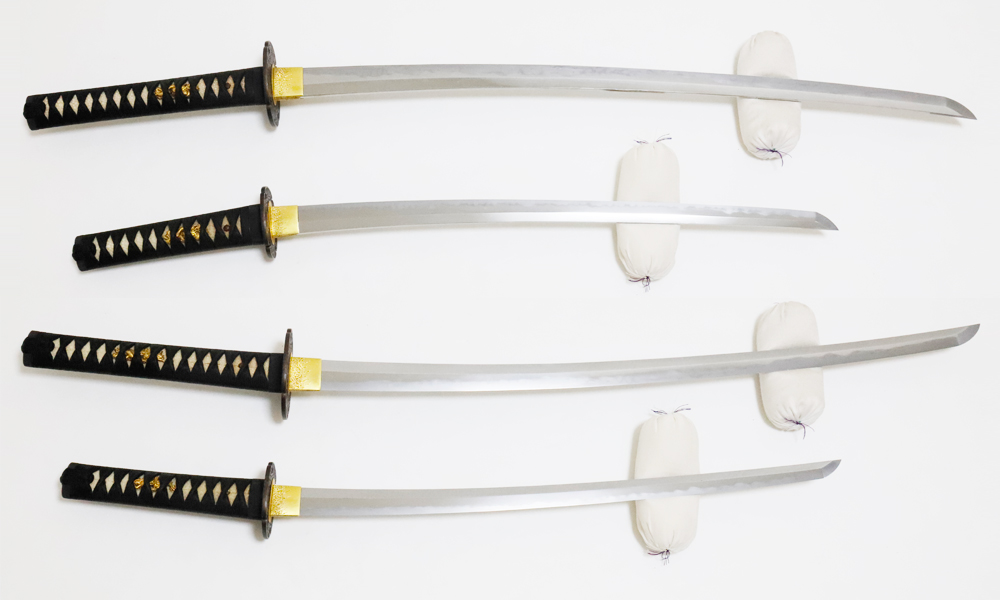
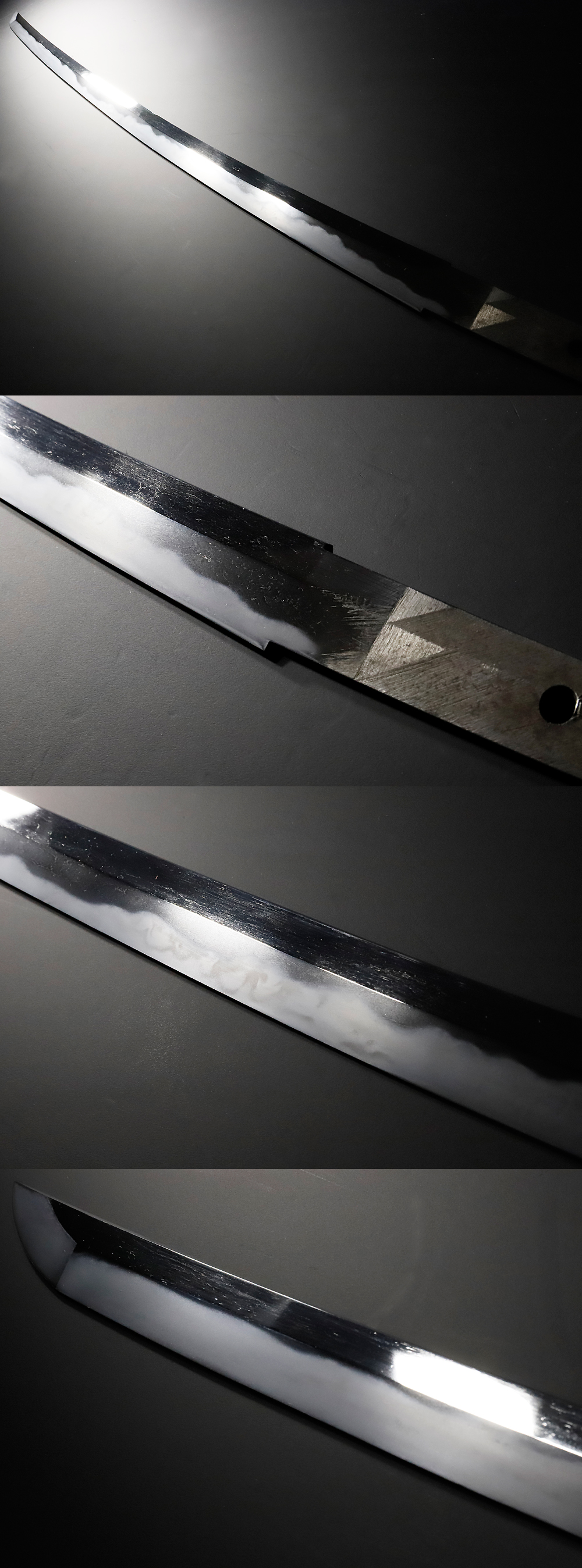
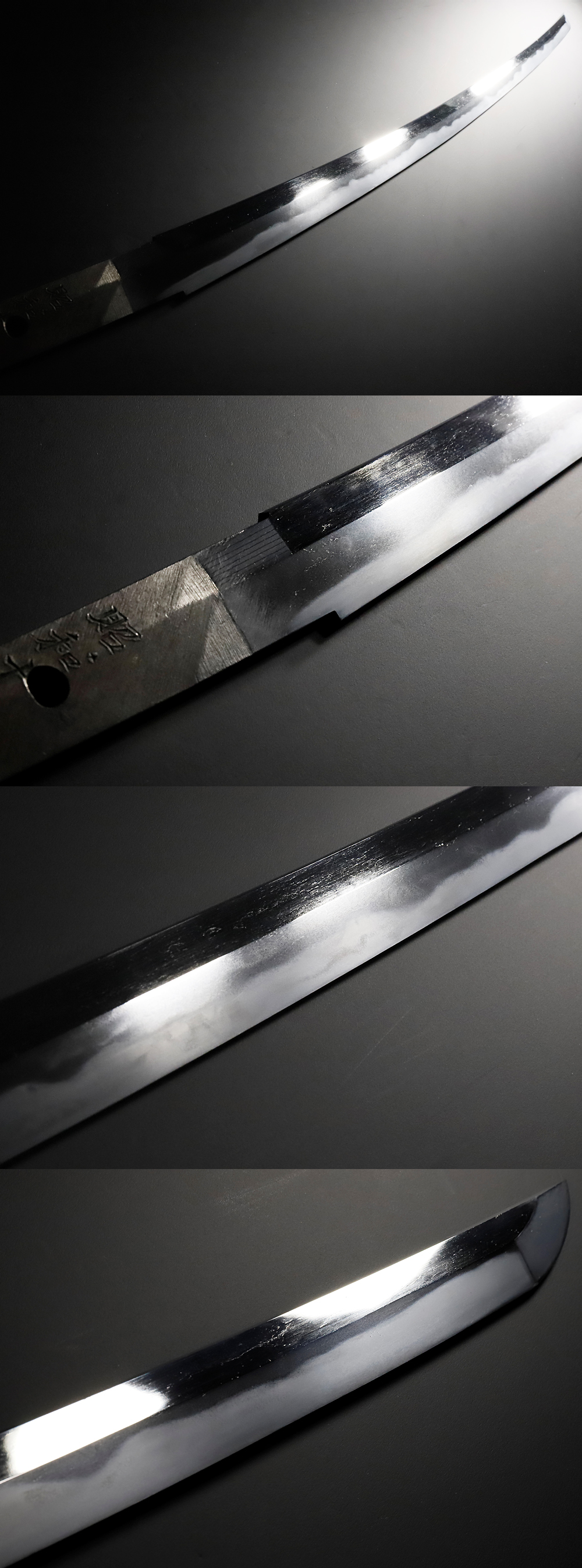
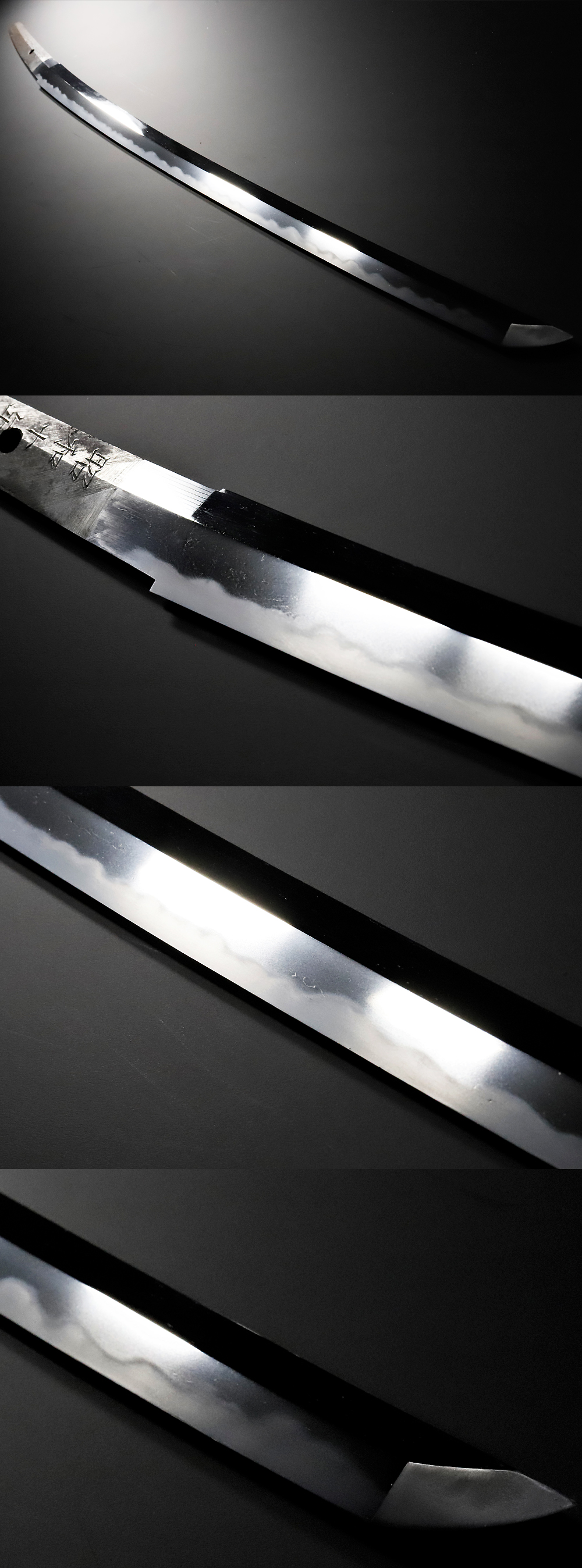
| Jihada (Metal pattern) | Tightly forged ko-itame hada with ji-nie present |
| Hamon (Temper line) | A high yakiba of mixed gunome–chōji midare, with ko-nie, containing ha-activity (ha iri), and mixed with tobiyaki, showing rich and distinctive variations |
| Bōshi (Point / Tip) | Forming an ichimai-style appearance |
| Nakago (Tang) | Ubu, sujikai yasurime with kesho finish, kurijiri end |
| Mekugiana (Rivet holes) | 1 |
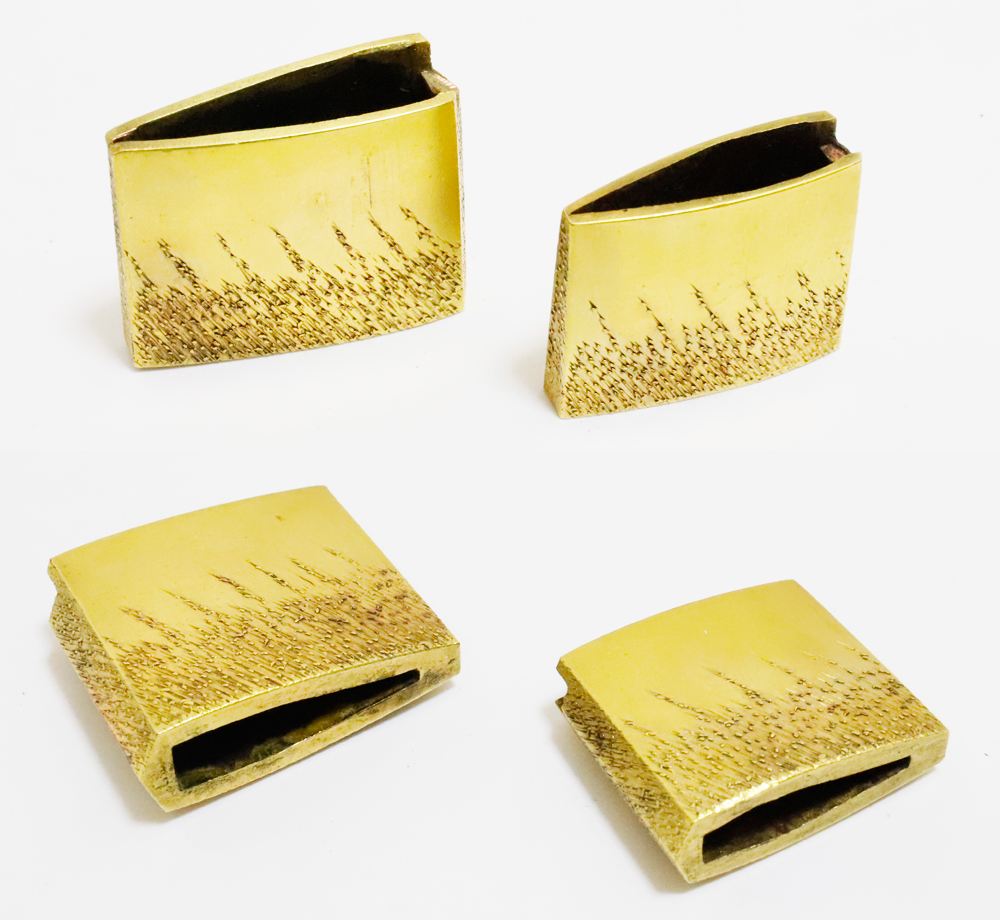
| Habaki | Solid copper with gold plating, finished with koshiyūjō file marks |
| Mountings | Koshirae-tsuki |
| Koshirae Length |
97.3 cm 38.3 in |
| Tsuka Length |
23.4 cm 9.2 in |
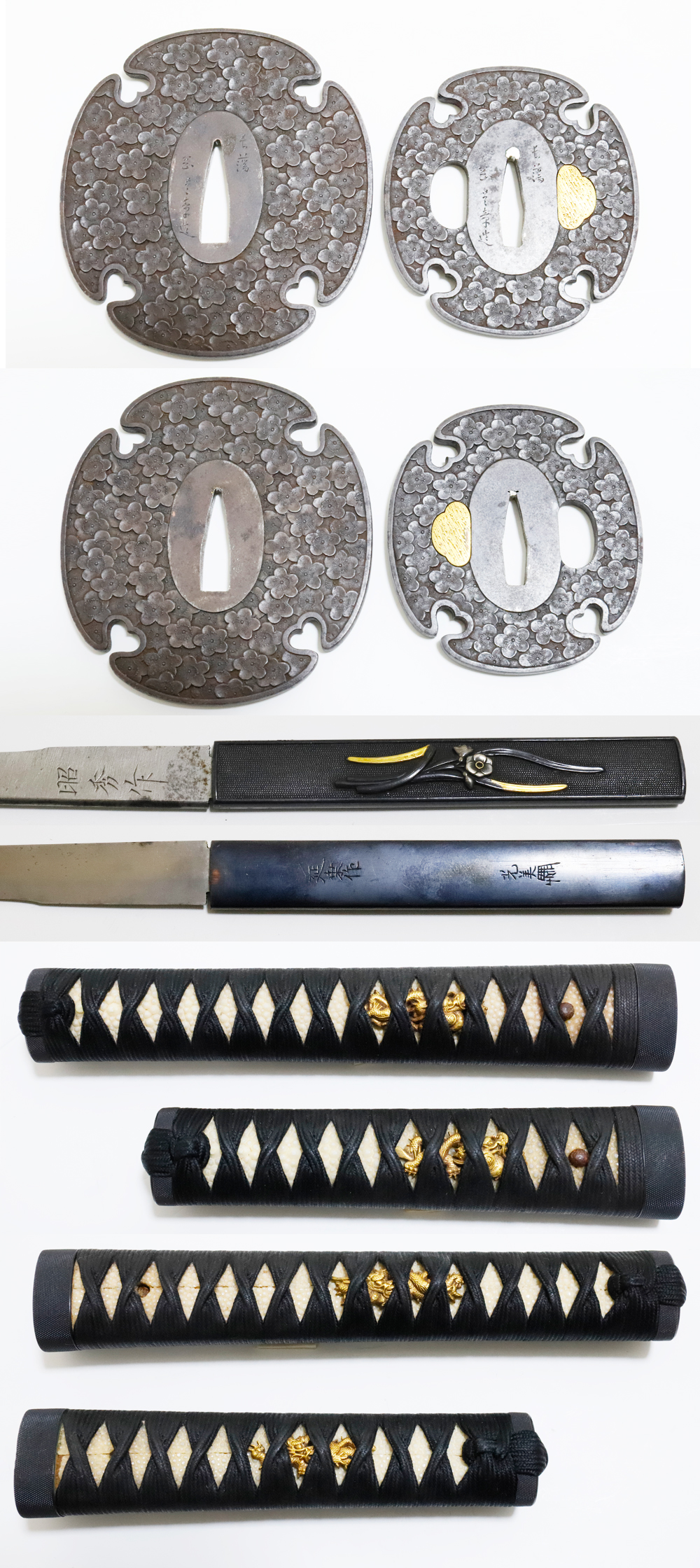
| Tsuba | (Tokubetsu Hozon Tosogu) Daishō tsuba with an all-over plum blossom design Daishō-mei: Chō han Oka Toyoaki saku Kurikomi mokkō-gata, iron plate, sukidashi-bori, sukinokoshi-mimi |
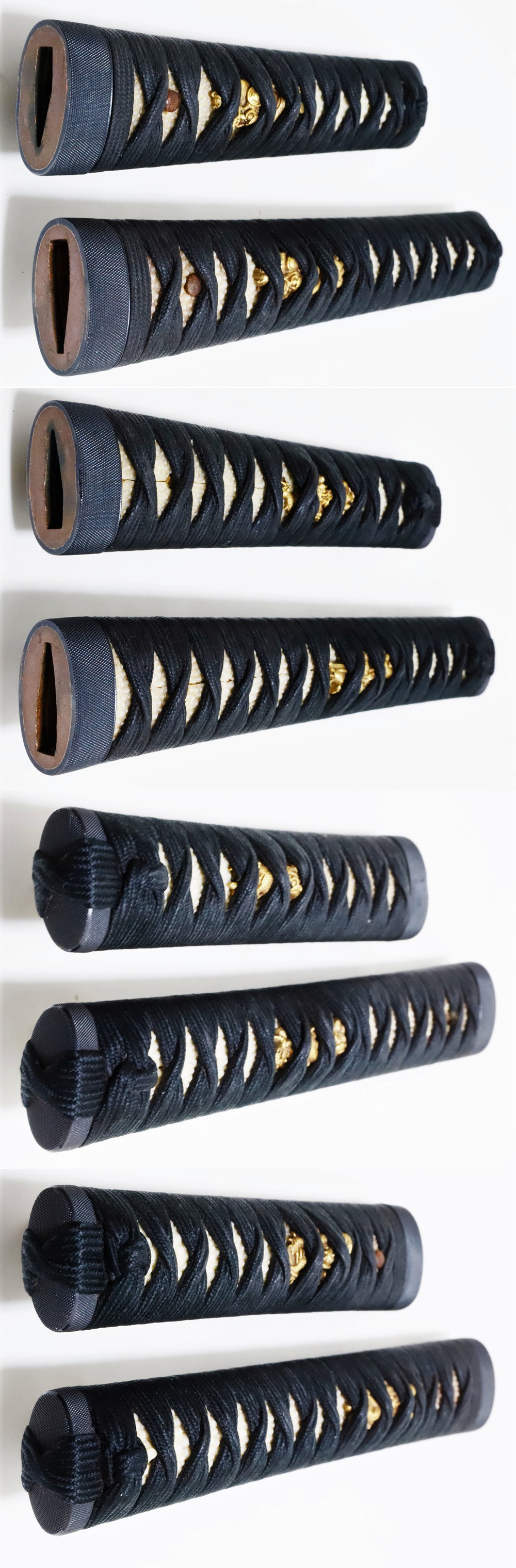
| Menuki | Crawling dragon design, solid gold ground, katachibori engraving |
| Fuchigashira | Shakudō nanako ground, undecorated |
| Other details | Tsuka with white ray skin (samegawa), wrapped in black ito in tsumami-maki style |
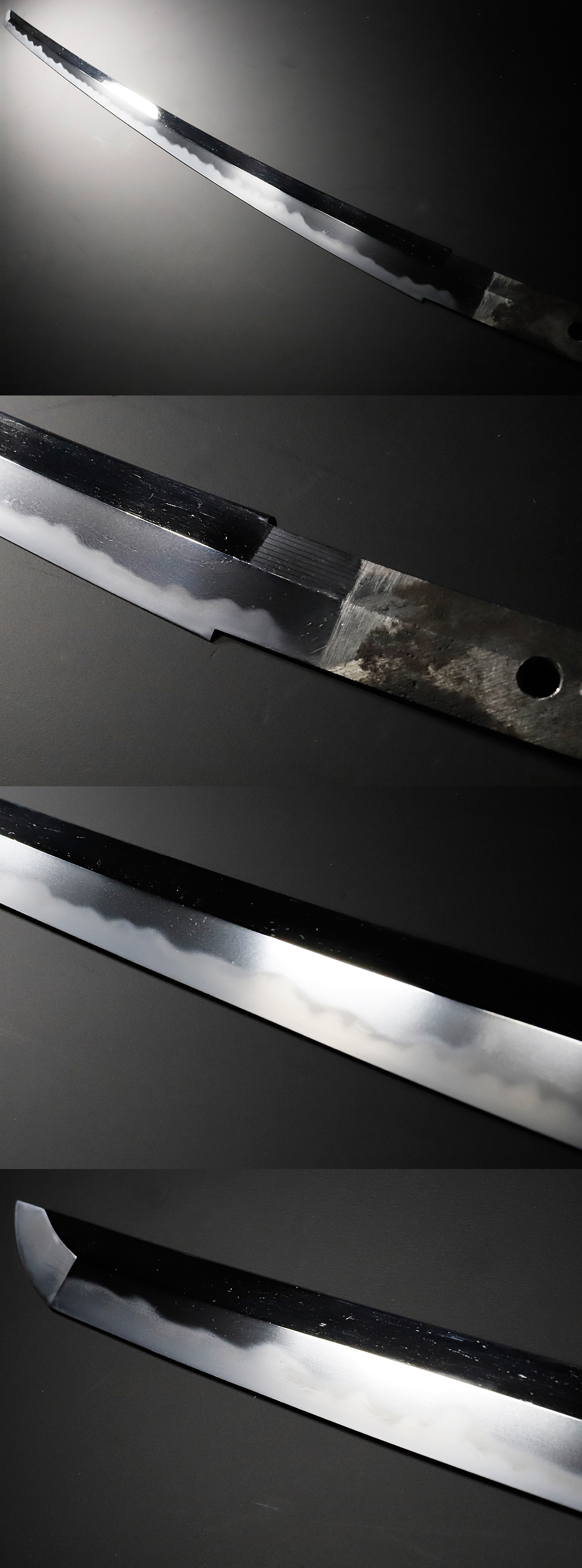
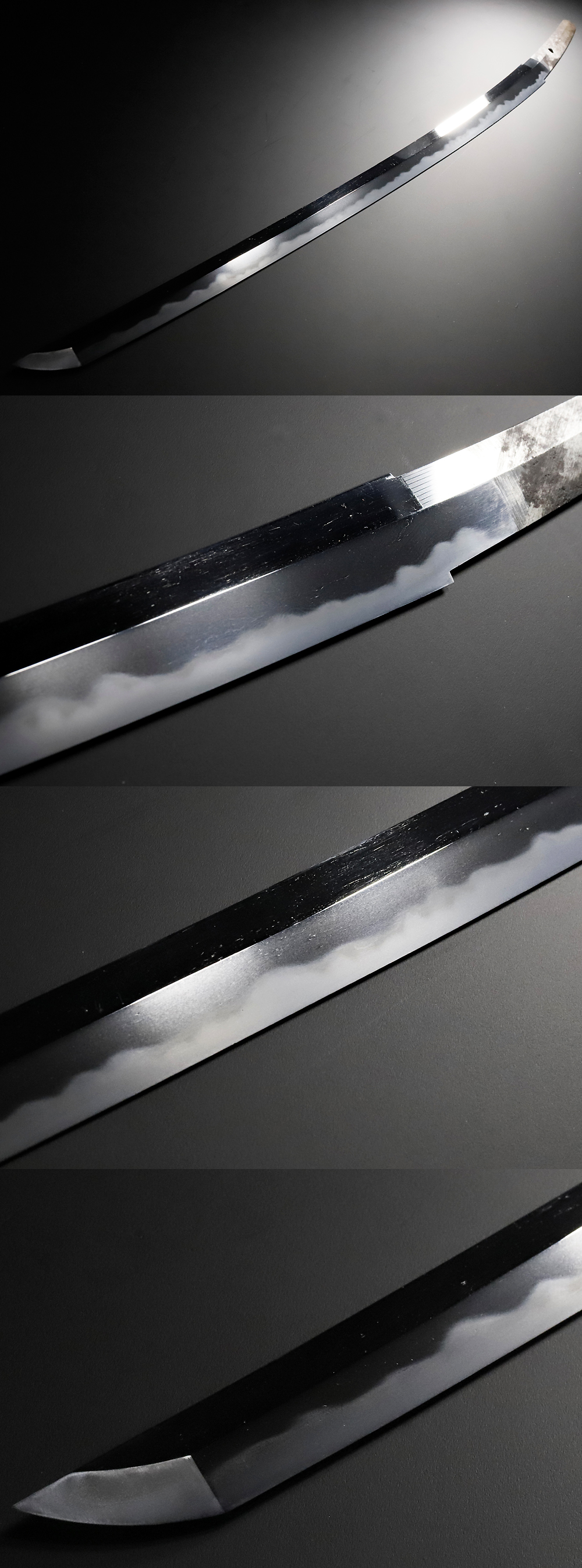
| 脇差 |
|---|
| Mei |
昭秀作(栗原彦三郎) Back: 昭和十年六月吉日 |
| Region | Tochigi Prefecture(Shimotsuke Province) |
| Era | Showa Period |
| Length |
51.7 cm 20.4 in |
| Sori (curvature) |
1 cm 0.4 in |
| Motohaba |
2.8 cm 1.1 in |
| Sakihaba |
1.8 cm 0.7 in |
| Munekasane |
0.4 cm 0.2 in |
| Status | Tokubetsu Hozon Token |
| Certification Date | December 01, 2025 |
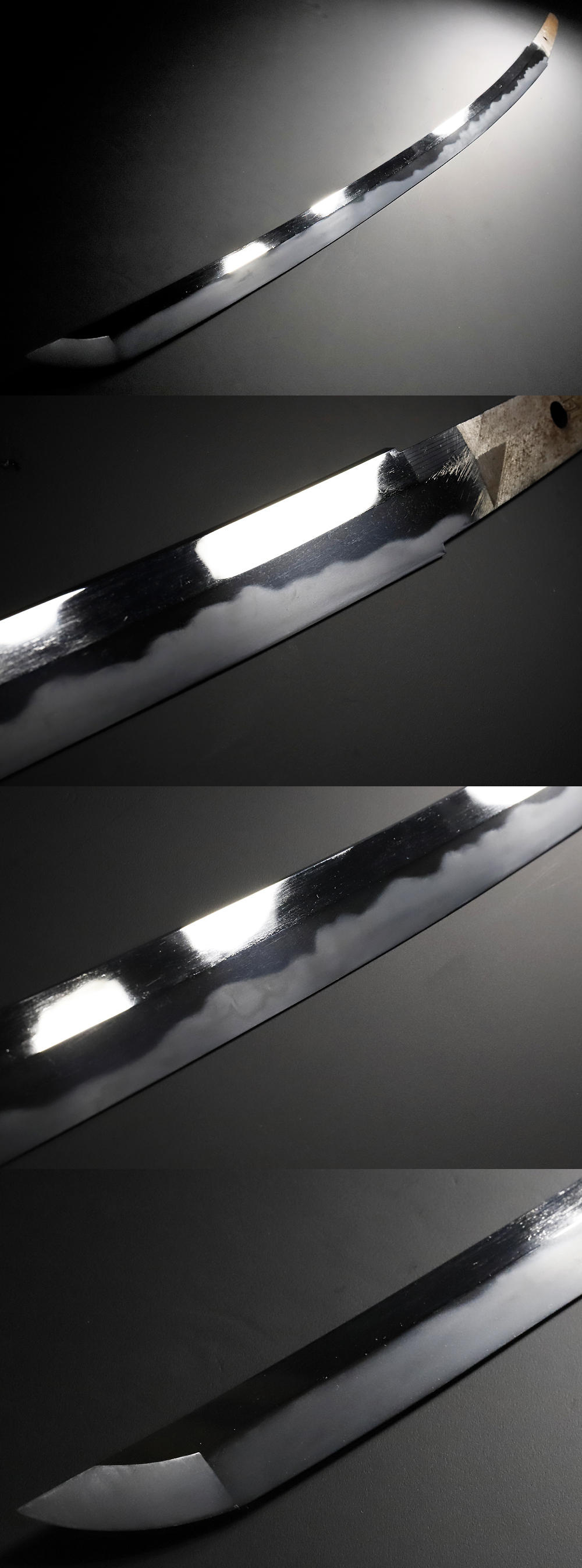
| Hamon (Temper line) | Gunome–chōji midare with ashi, showing sunagashi and kinsuji |
| Bōshi (Point / Tip) | Covered in nie in a nearly straight pattern, turning back small at the tip |
| Nakago (Tang) | Ubu, o-sujikai file marks with a kesho finish, kurijiri end |
| Habaki | Solid copper with gold plating, finished with koshiyūjō file marks |
| Mountings | 拵付 |
| Koshirae Length |
73.9 cm 29.1 in |
| Tsuka Length |
17.6 cm 6.9 in |
| Tsuba | (Tokubetsu Hozon Tosogu) Daishō tsuba with an all-over plum blossom design Daishō-mei: Chō han Oka Toyoaki saku Kurikomi mokkō-gata, iron plate, sukidashi-bori, sukinokoshi-mimi |
| Menuki | Crawling dragon design, solid gold ground, katachibori engraving |
| Fuchigashira | Shakudō nanako ground, undecorated |
| Kozuka | (Tokubetsu Hozon Tosogu) Daffodil design Signed: Enjō saku, Mitsuyoshi (kaō) Shakudō nanako ground, high-relief carving, iroe decoration |
| Other details | Kogatana: signed “Akihide saku”; tsuka with white ray skin, wrapped in black ito in tsumami-maki style |
| Akihide’s real name was Kurihara Hikozaburō. He was born in 1879 in Sano, Tochigi Prefecture, and passed away in 1954 at the age of 75. He studied under Inagaki Shōō (the second generation). In addition to serving as a member of the House of Representatives representing Tochigi Prefecture, he devoted himself to the revival of Japanese sword making. In 1933, he established the Nihontō Tanren Denshūjo (Japanese Sword Forging Training Institute) in Akasaka, Tokyo. He trained more than fifty students, including Miyairi Yukihira, Amada Akitsugu, and Akimoto Akitomo. This work was made when Akihide was 54 years old, about two years after founding the training institute, during his mature period. The swords as daishō come with their original koshirae, a matching pair of black roiro-lacquered mountings, making this a valuable daishō set by Akihide. The Daisho swords passed the Tokubetsu Hozon Token shinsa in 2025.The daishō koshirae is fitted with a pair of daishō tsuba designated Tokubetsu Hozon Tosogu, signed by Toyoaki (of the Okamoto family, son of Tomokata; he succeeded to the family in 1822 and served as a retainer artisan of the Chōshū (Nagato) domain).It also includes a kozuka, likewise designated Tokubetsu Hozon Tosogu, signed “Enjō saku, Mitsuyoshi (kaō).” This attribution indicates that the work was made by Enjō (also known as Mitsutaka), the 13th head of the main Gotō family, and the appraisal (kiwame) was made by Mitsuyoshi (also known as Shinjo), the 15th head of the Gotō main line. |
Price |
2,000,000 JPY |

 Search