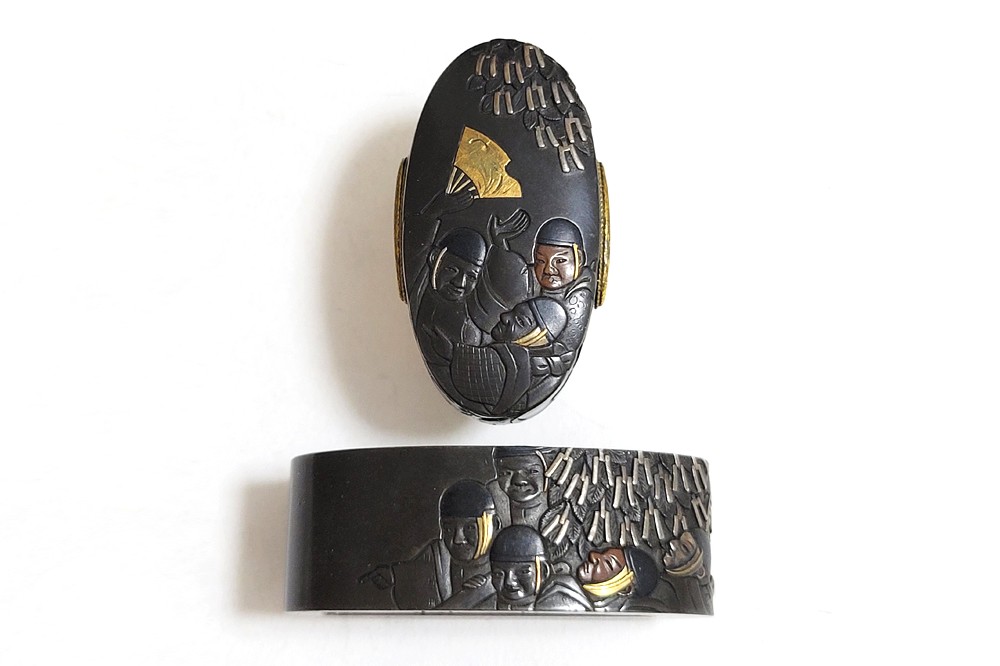
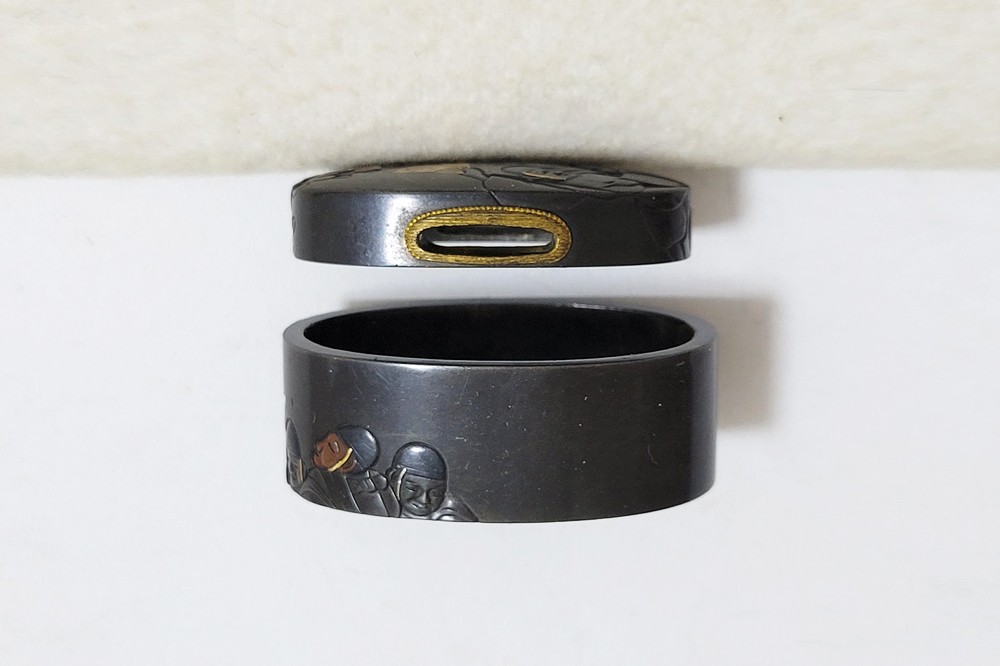
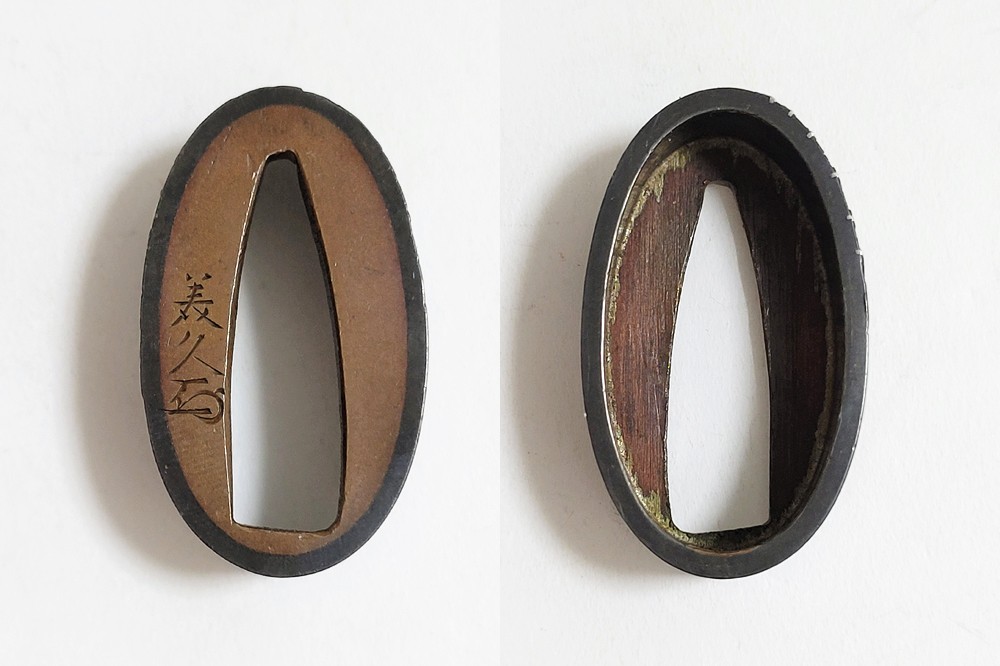
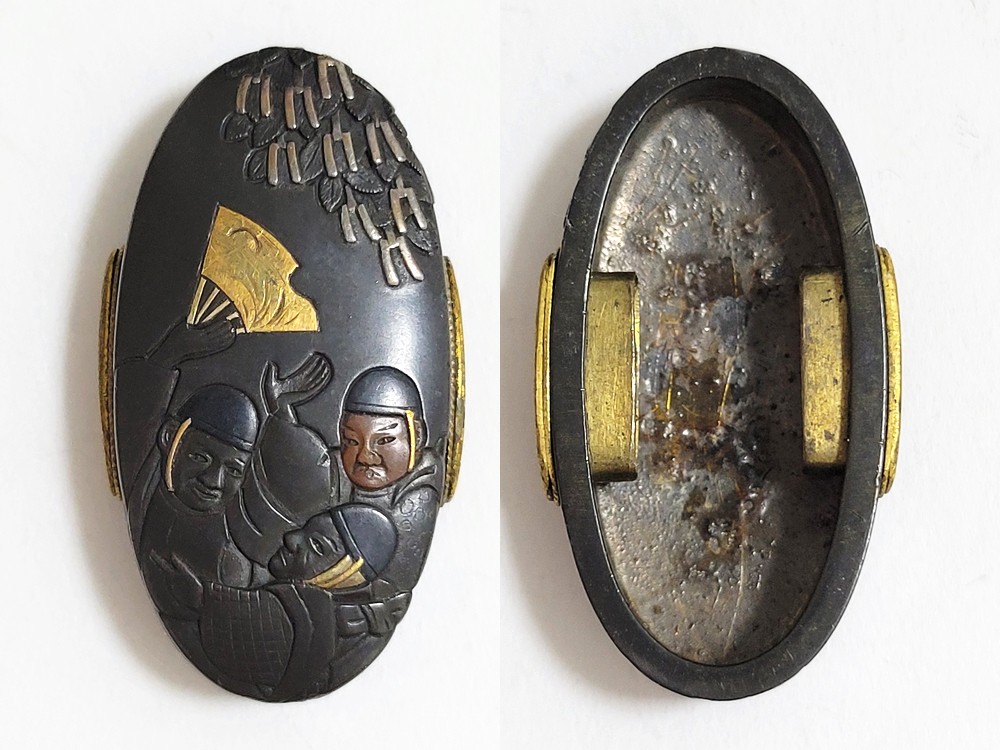
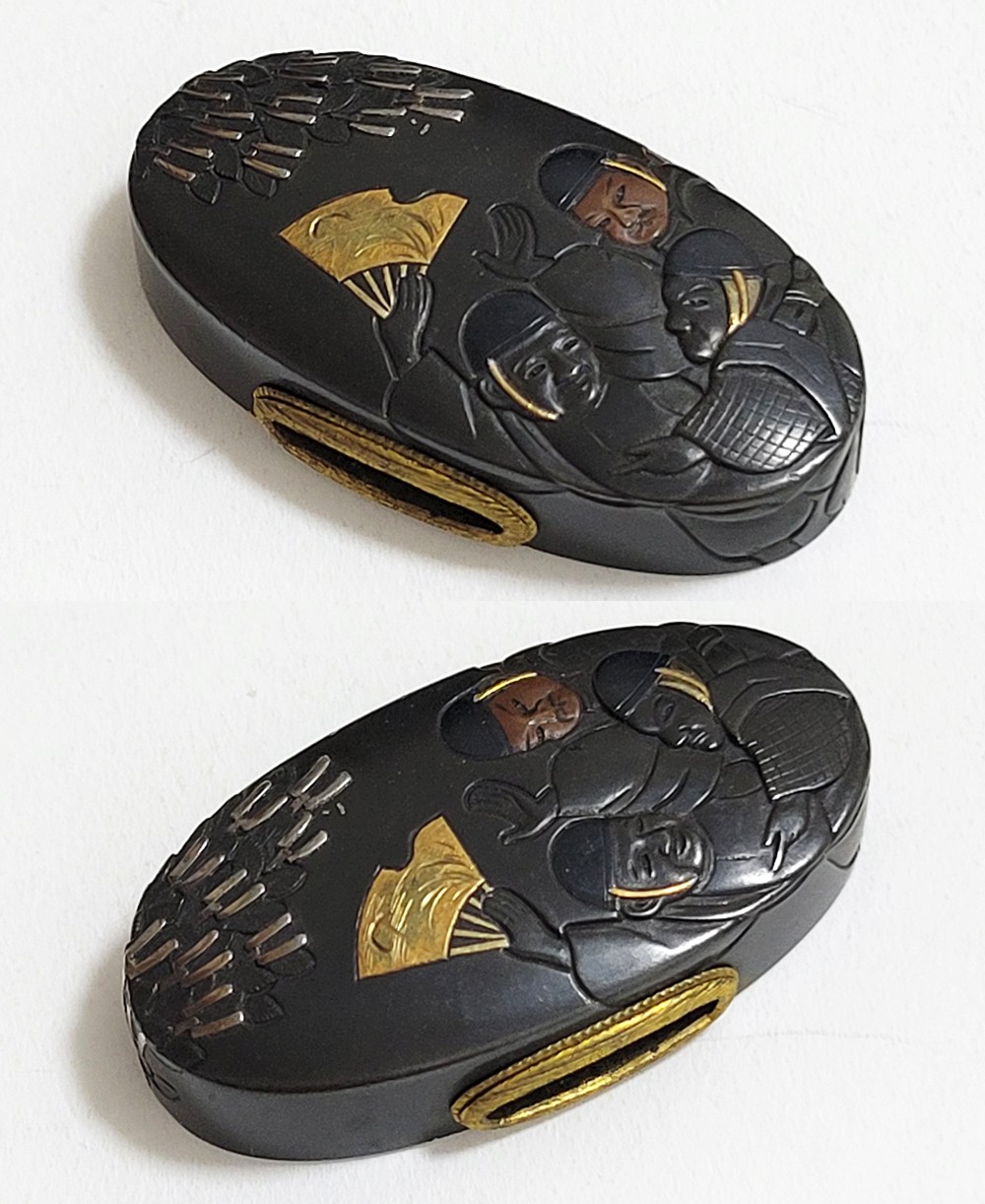
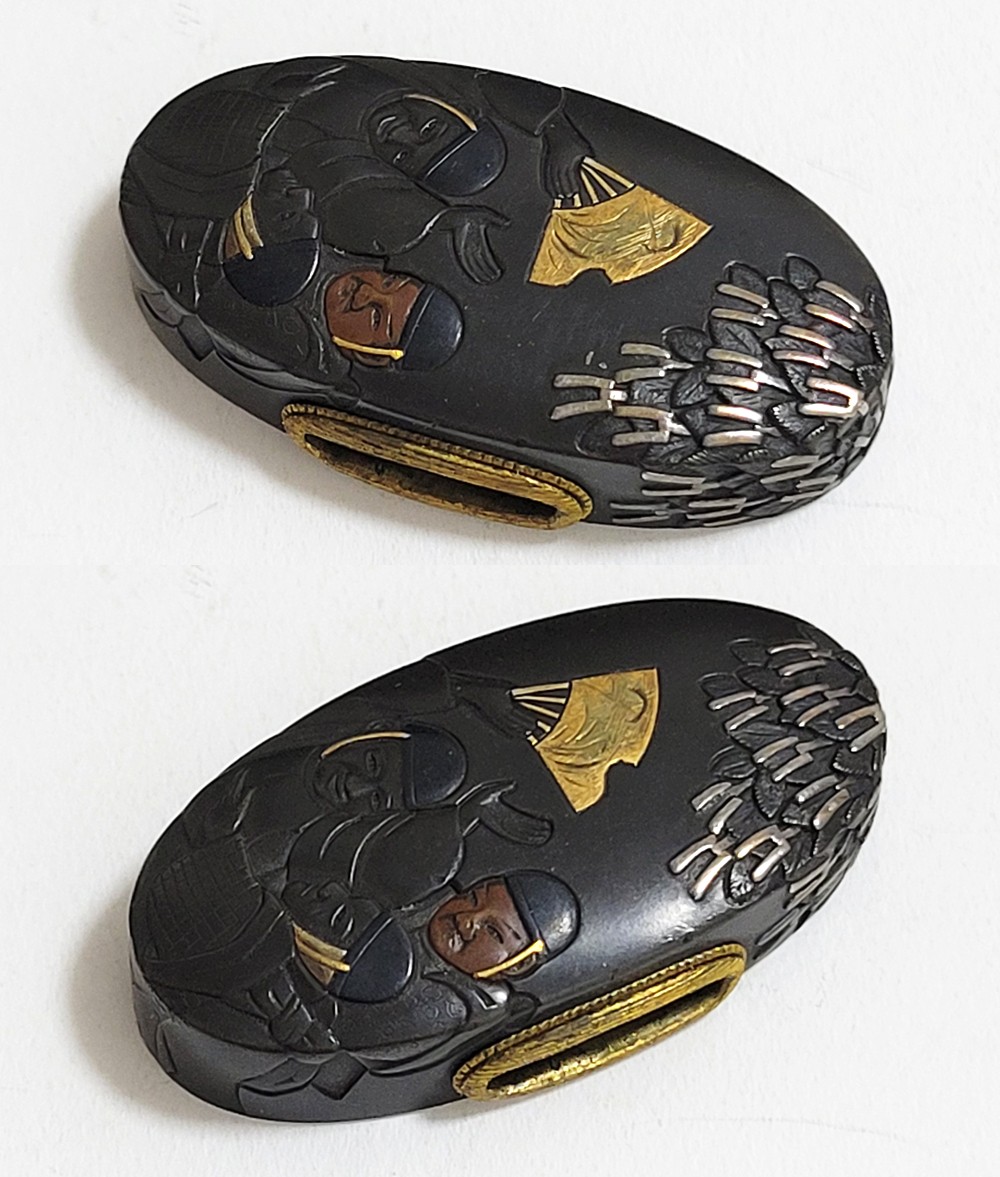
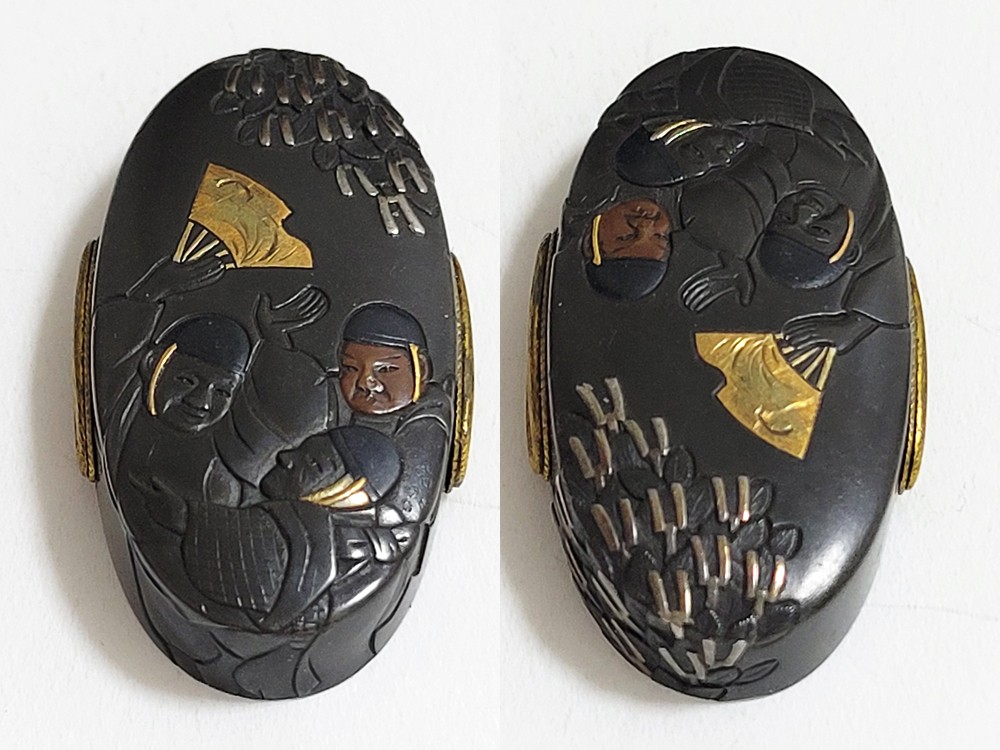
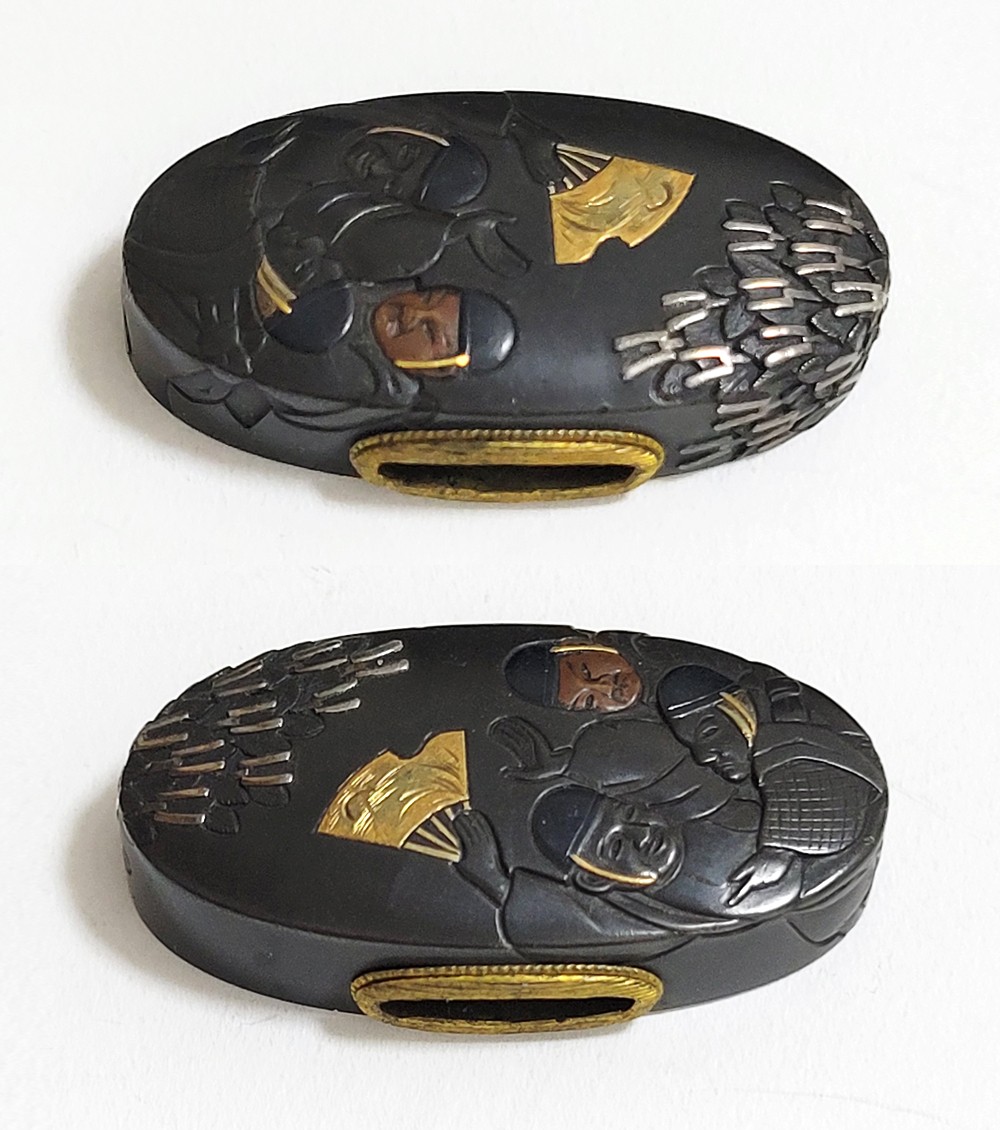
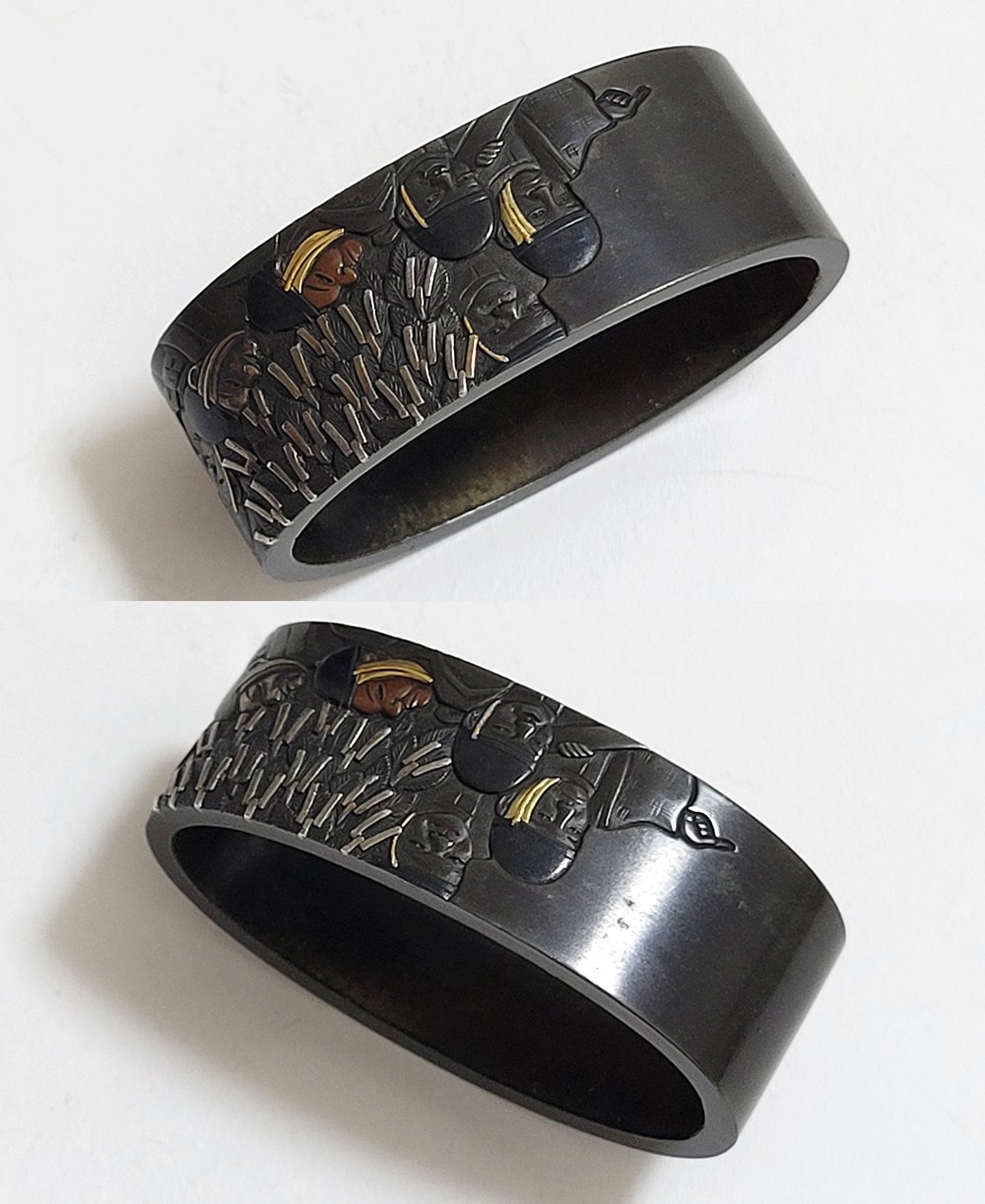
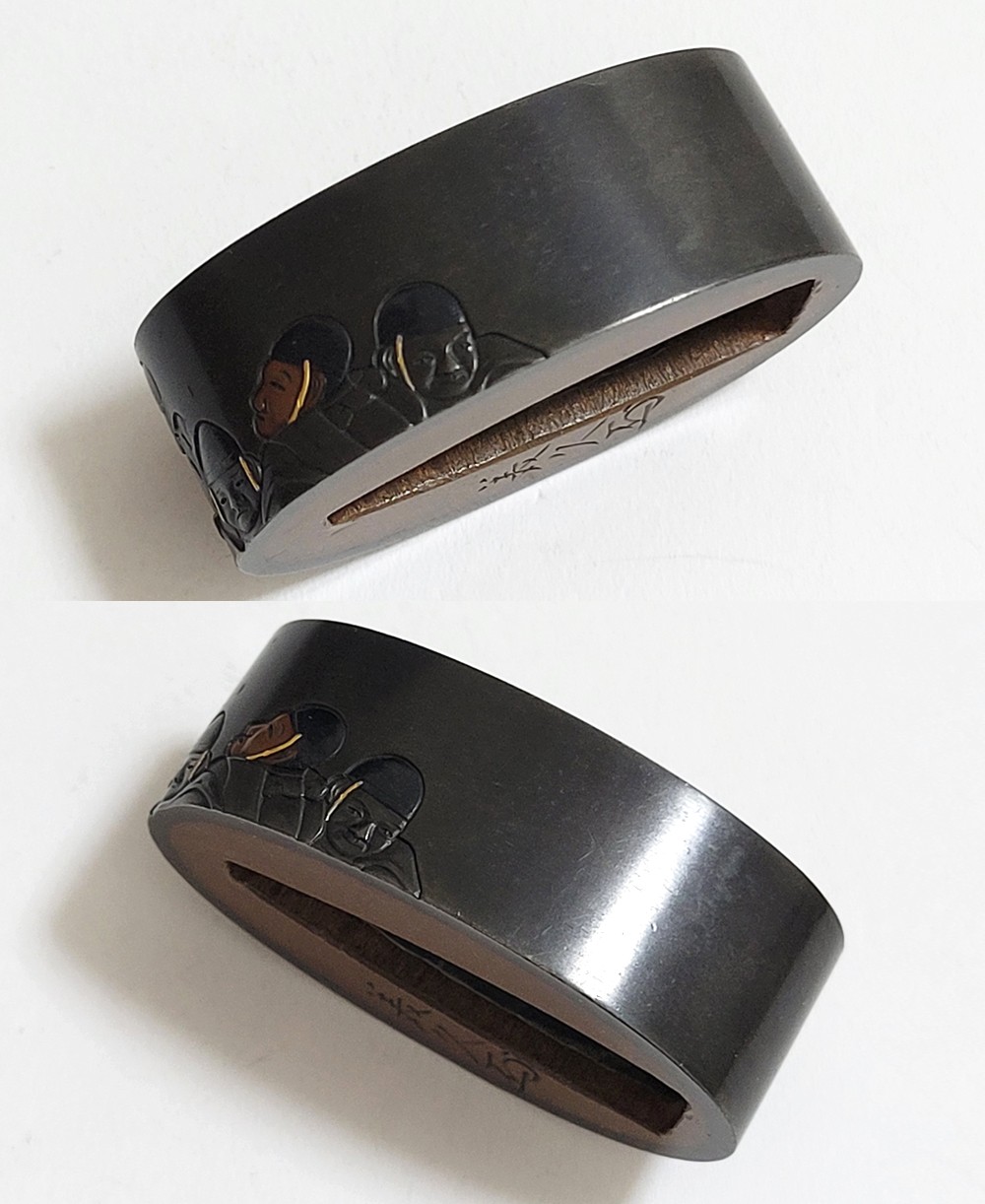
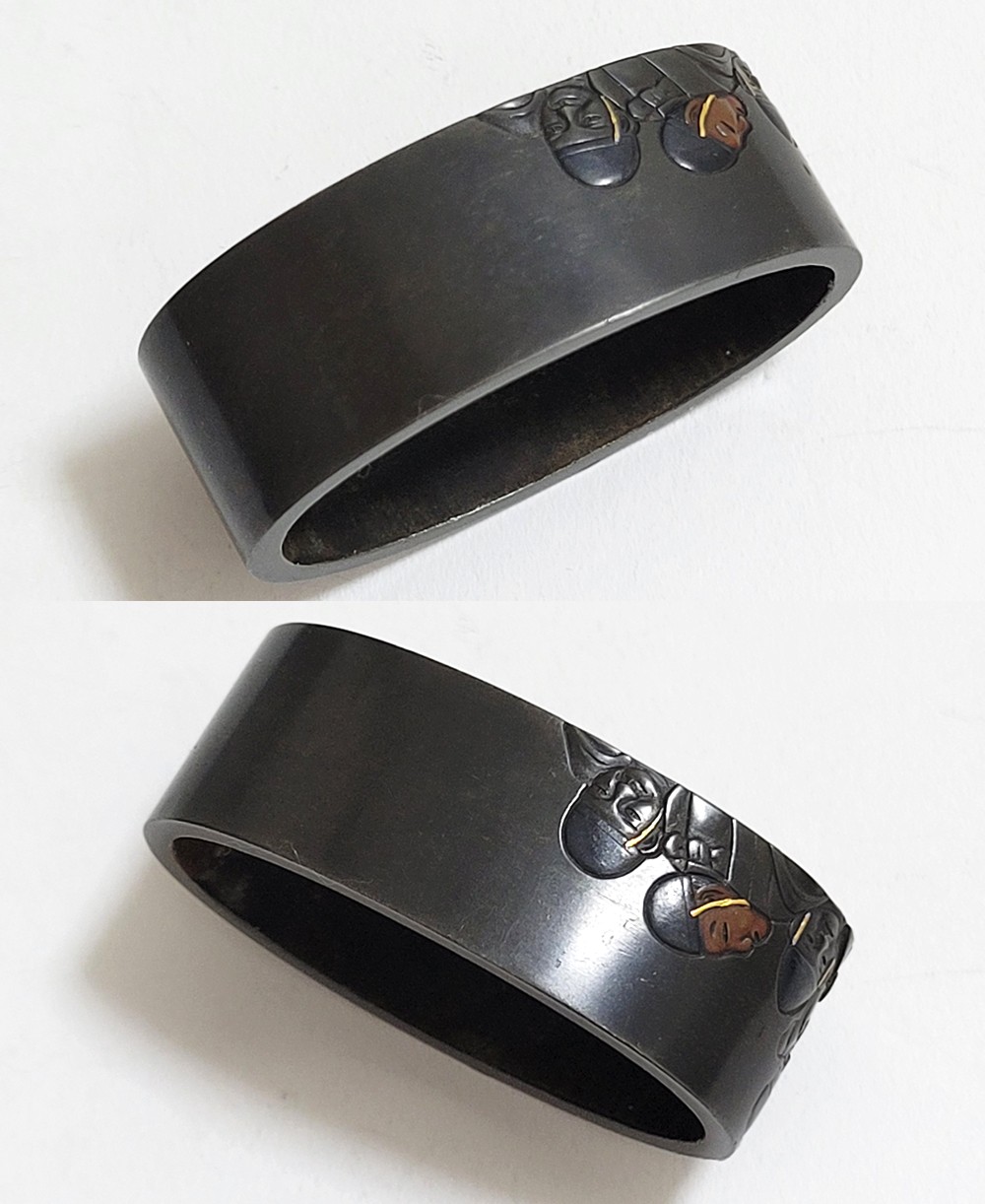
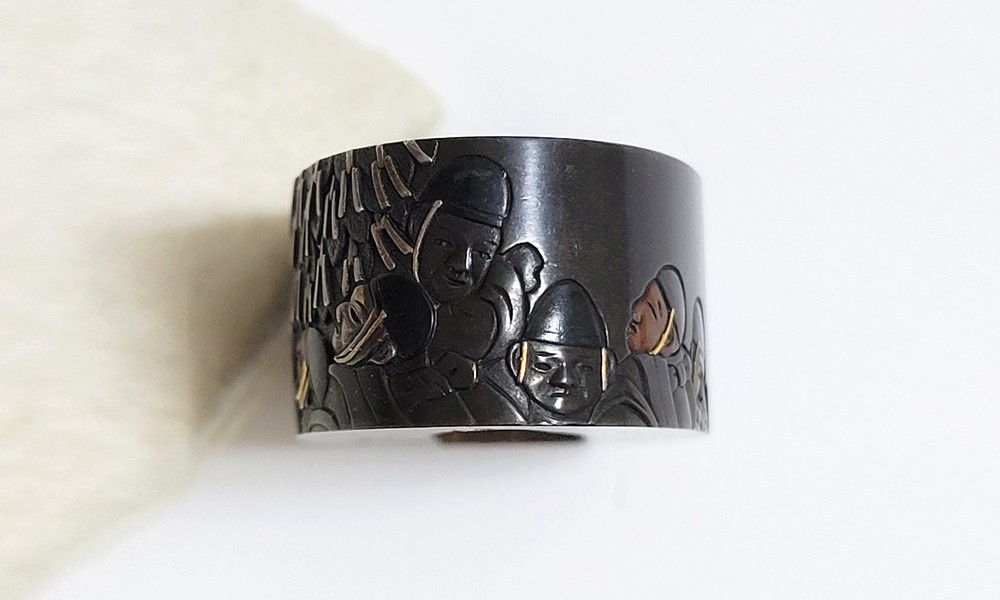
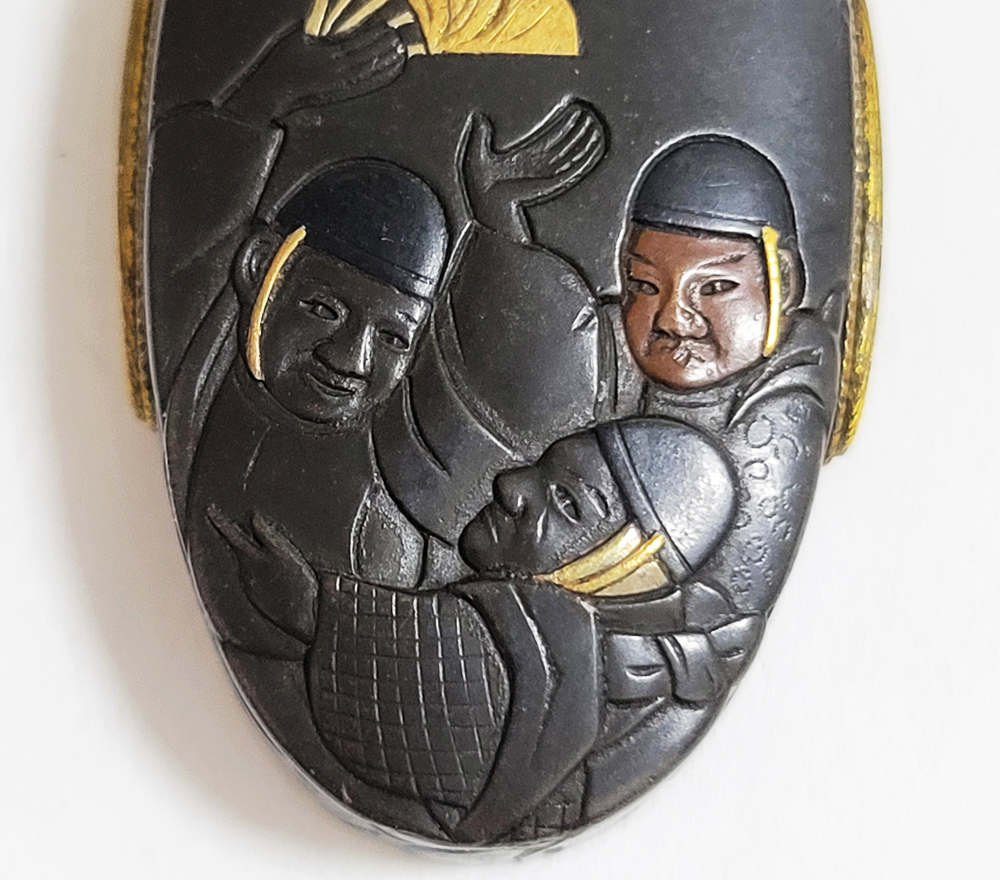
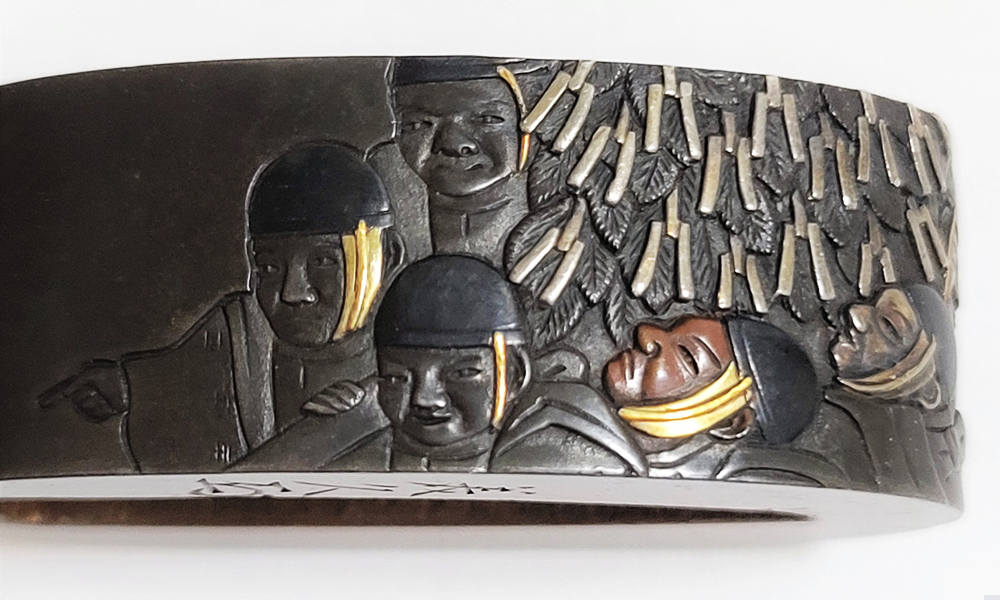
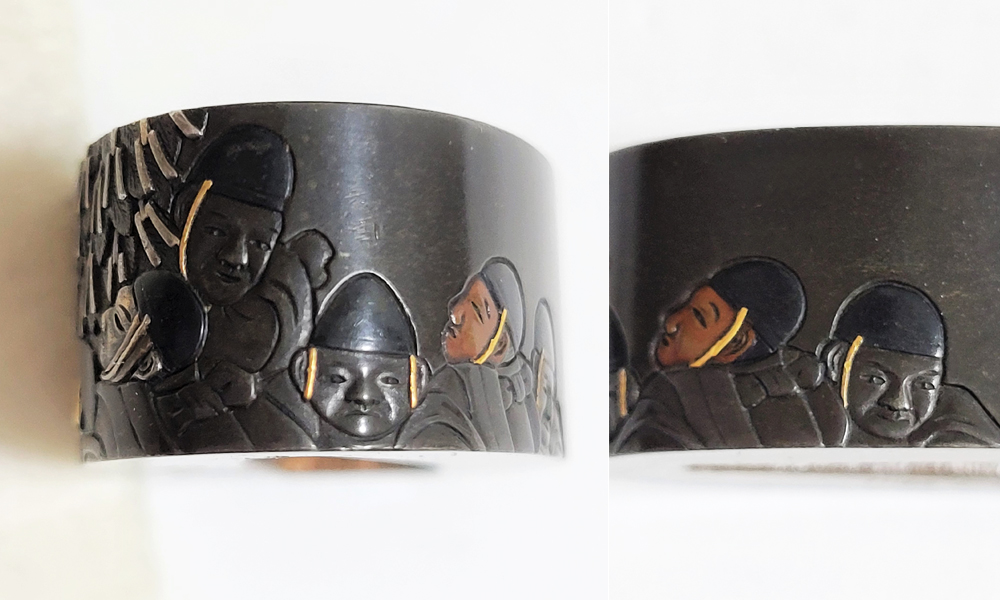
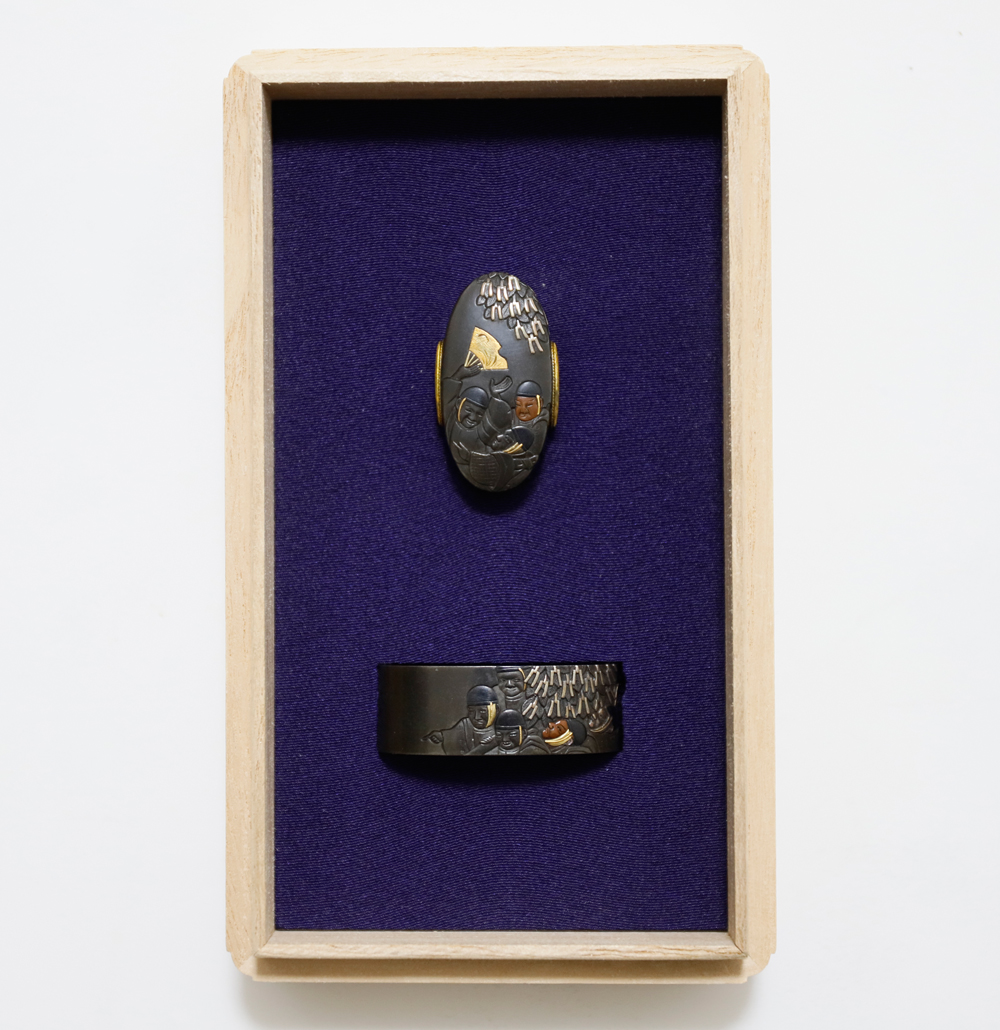
| Sagichō is a New Year’s ritual marking the close of the holiday season, in which New Year decorations and calligraphy are ceremonially burned. It is performed as a sending-off of the New Year, a rite of purification and exorcism, with prayers for good health throughout the year, abundant harvests, and household safety. Depending on the region, it is also known as Dondo-yaki, Dōsojin Festival, or Onibi-yaki. This fuchi-kashira set depicts festival participants dancing and carrying ritual objects beneath numerous tanzaku strips hung from bundles of wood prepared to be burned. The metalworker, Yoshihisa [美久], belonged to the Tamagawa lineage of sword-fitting metalworkers. The lineage began with the first-generation Yoshihisa, a Mito Domain craftsman who studied under Yatabe Michitoshi [谷田部通寿] and continued through six generations into the Meiji period.Based on the kaō (stylized signature), this work is attributed to the second generation. He was the son of the first generation, originally signing as Yoshinori (美則), later succeeding to the name Yoshihisa after his father’s death. He passed away at the age of 57 in Tenpō 6 (1835).Executed in solid workmanship, this is a Sagichō motif fuchi-kashira crafted in polished shibuichi. The fuchi-kashira has passed the Hozon Tōsōgu shinsa in August 2025. |


 Search