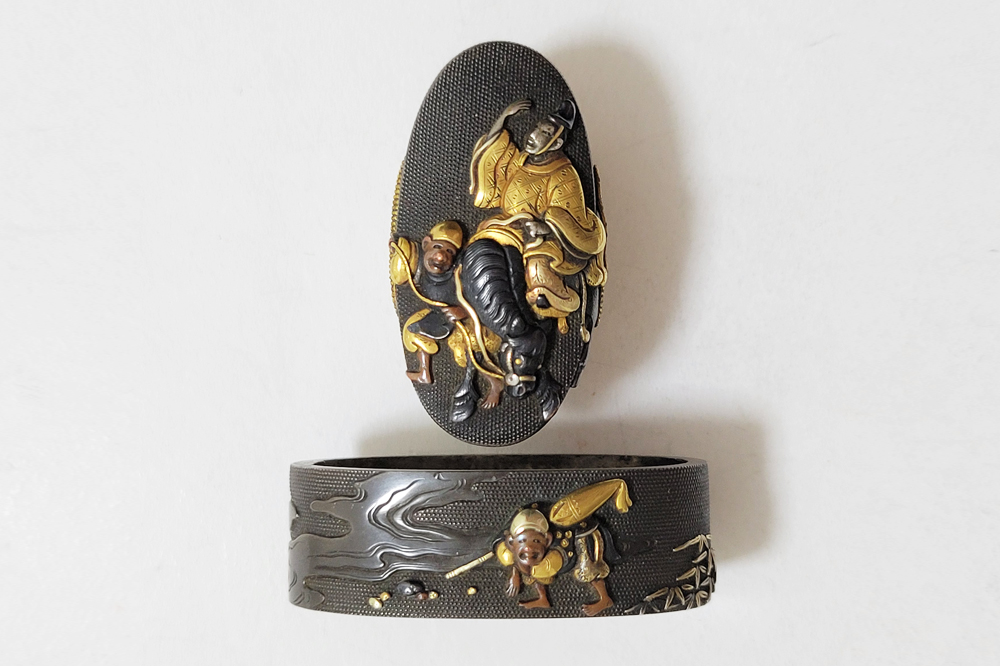
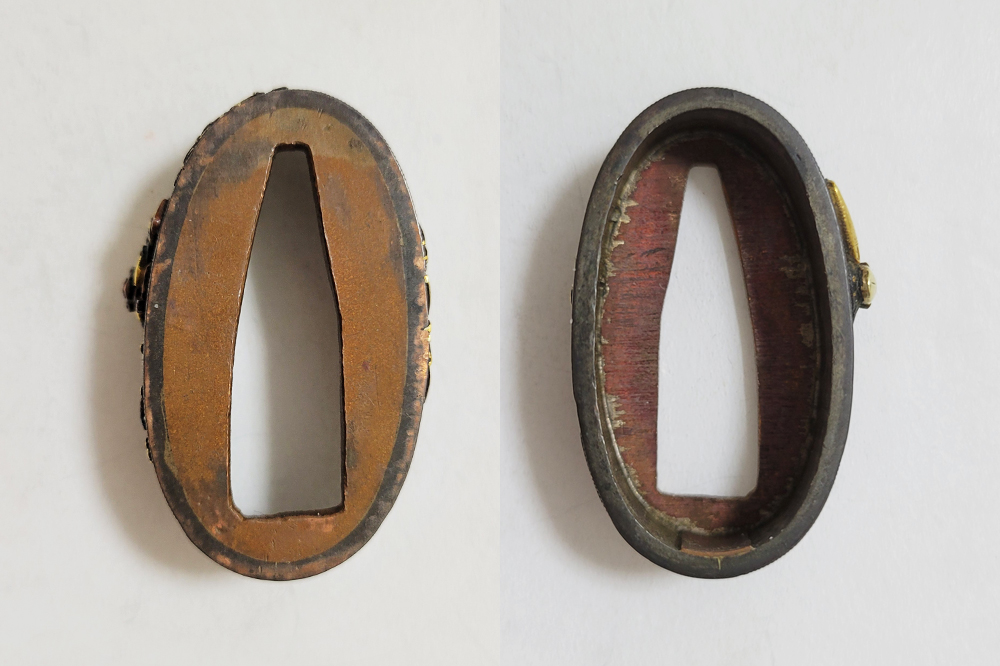
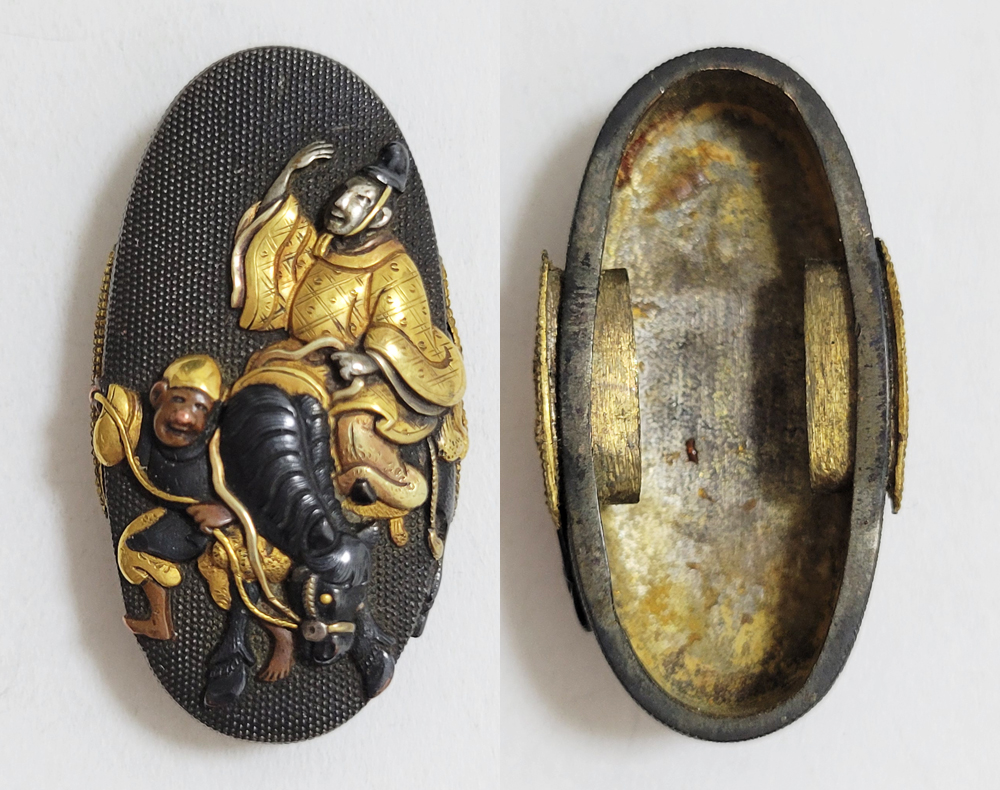
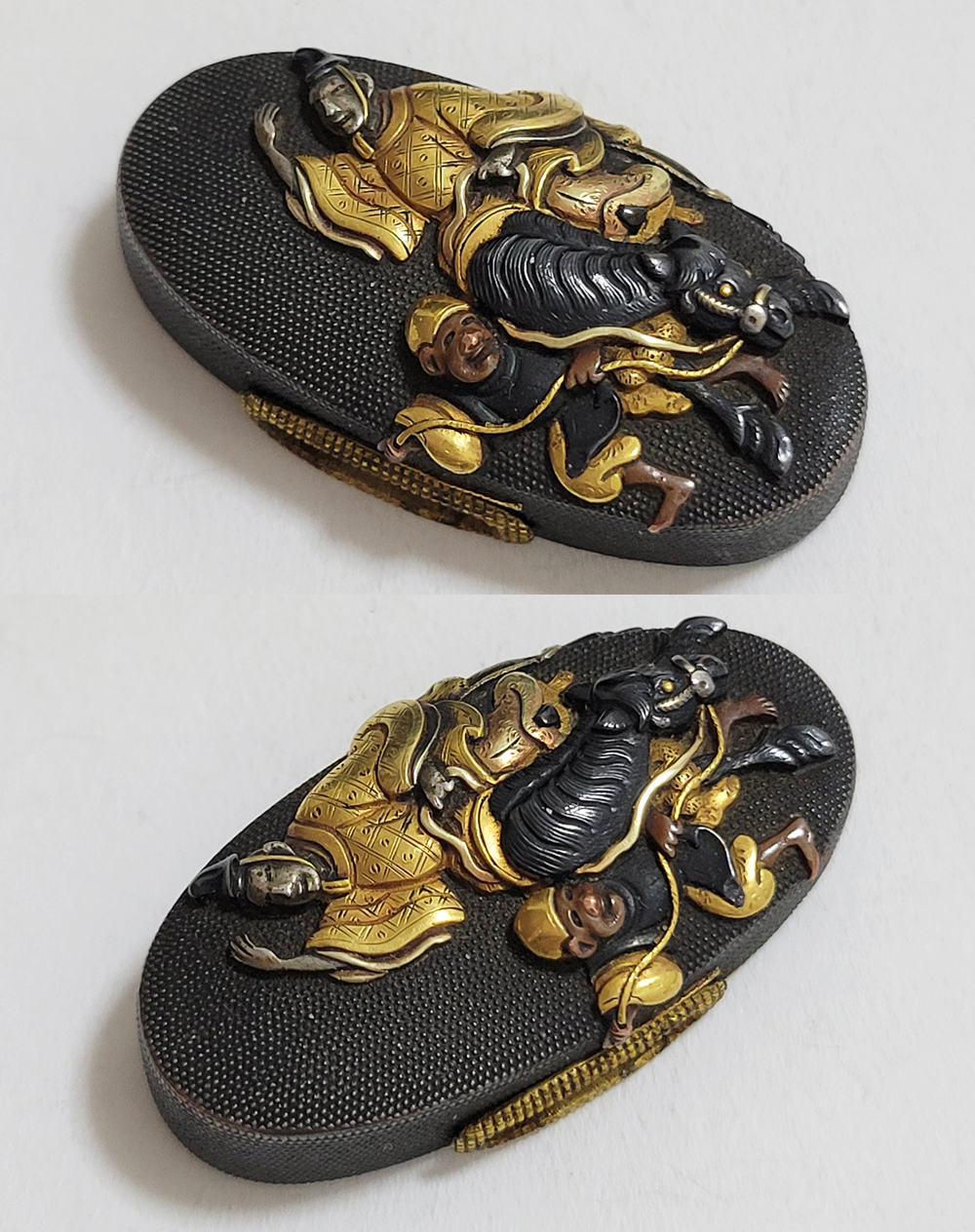
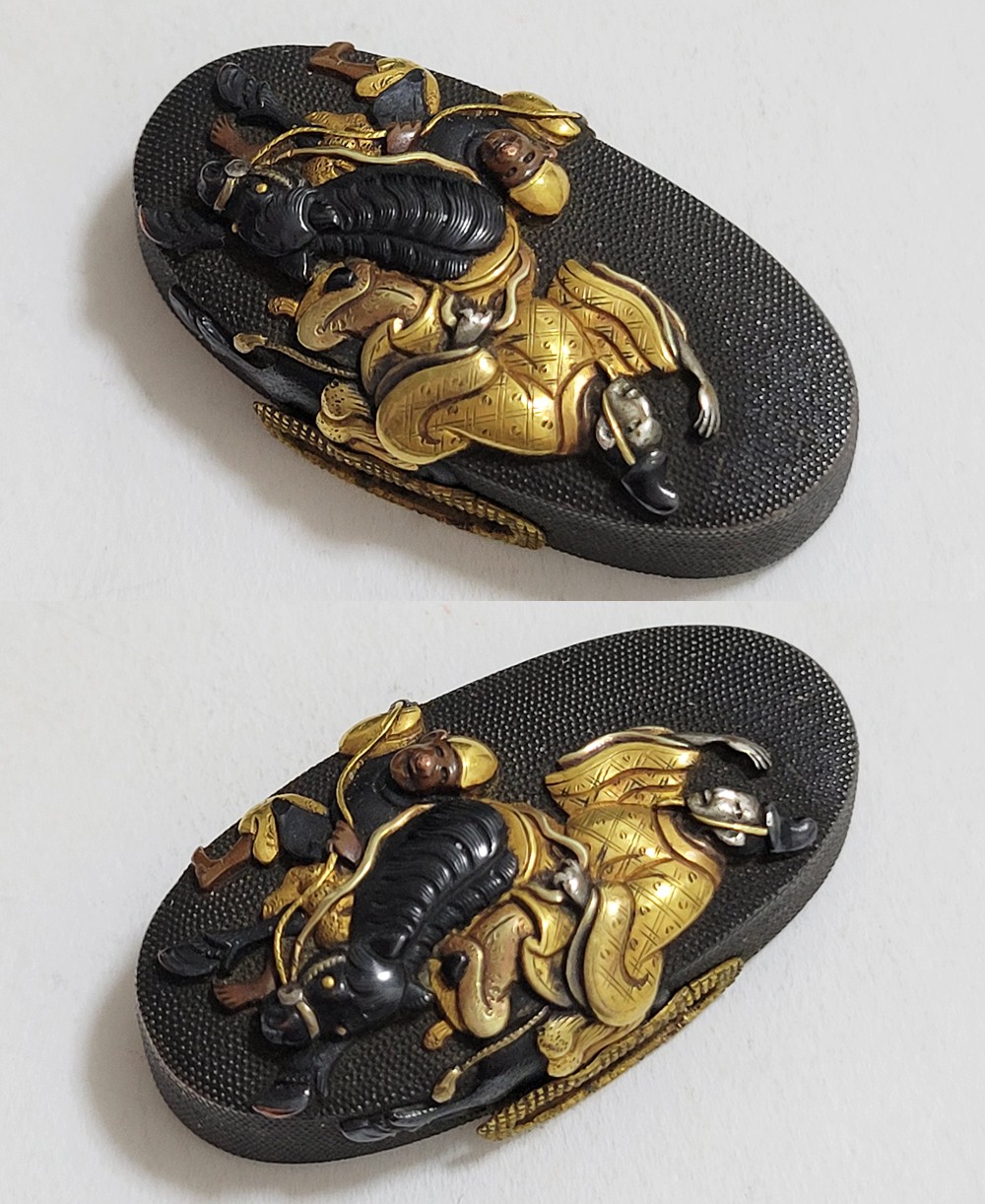
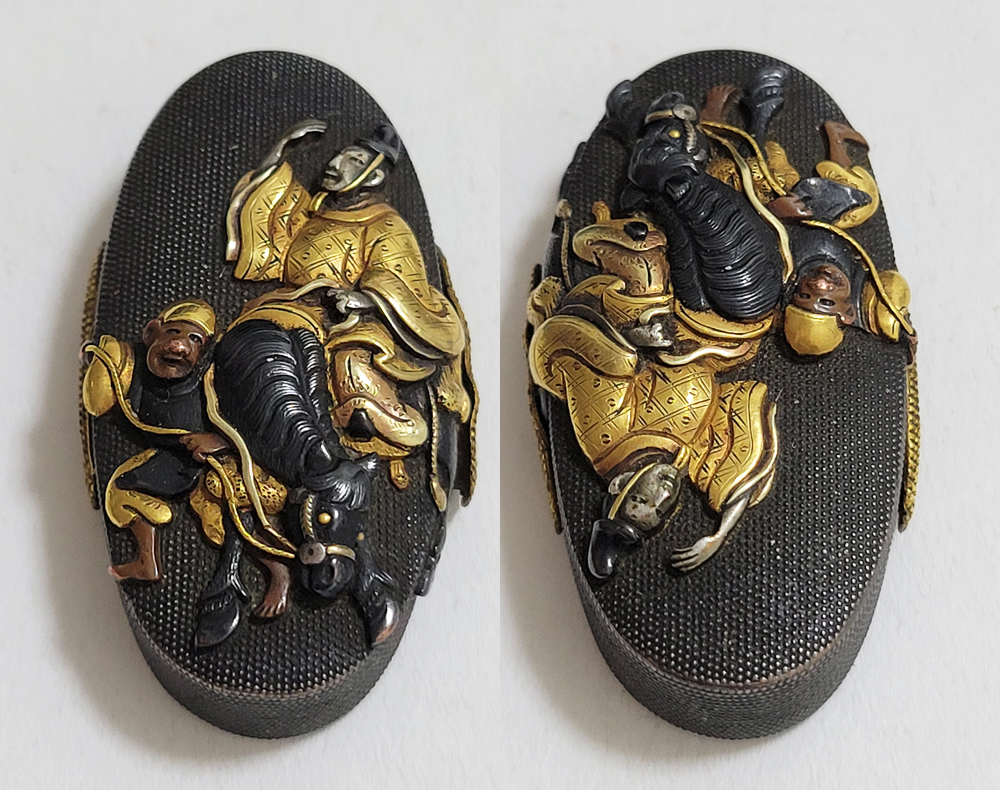
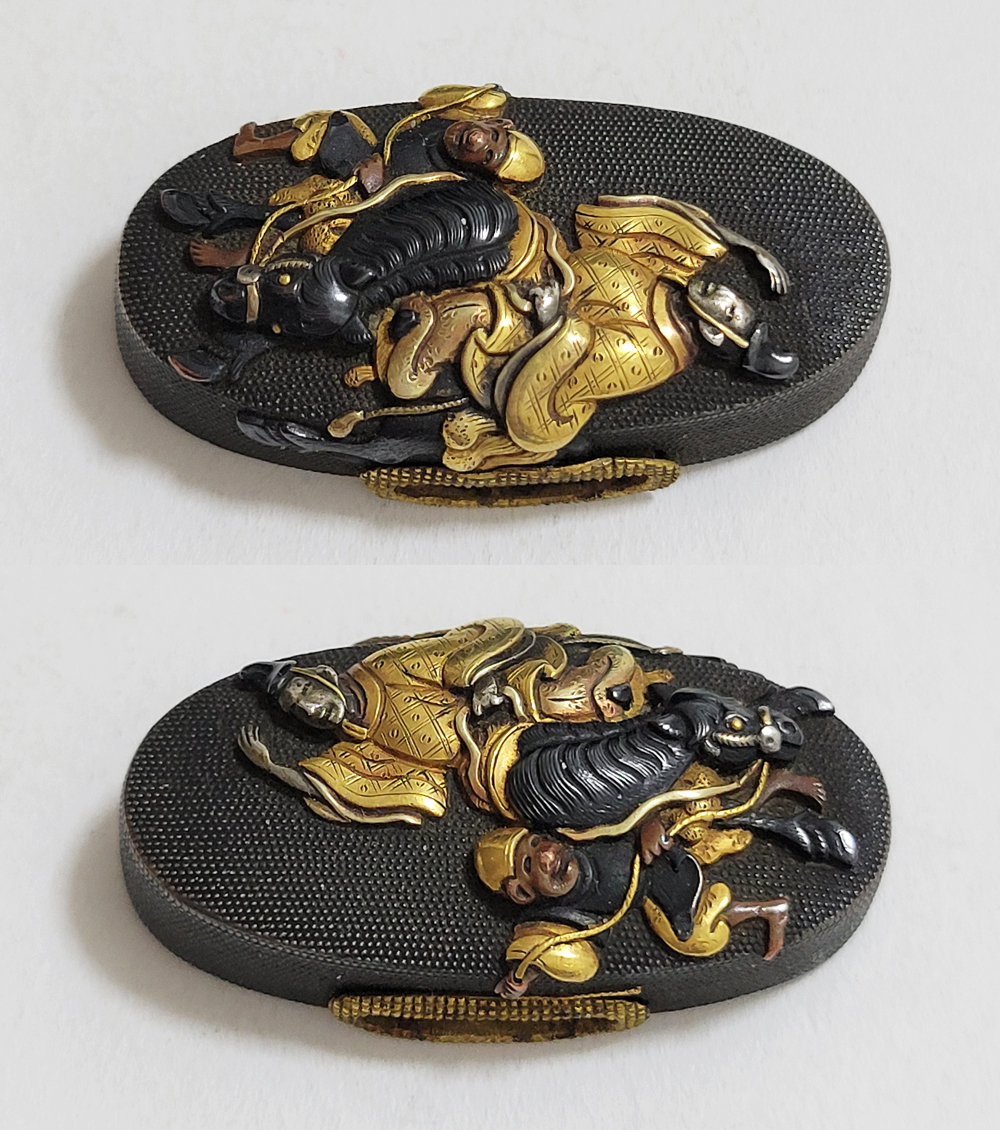
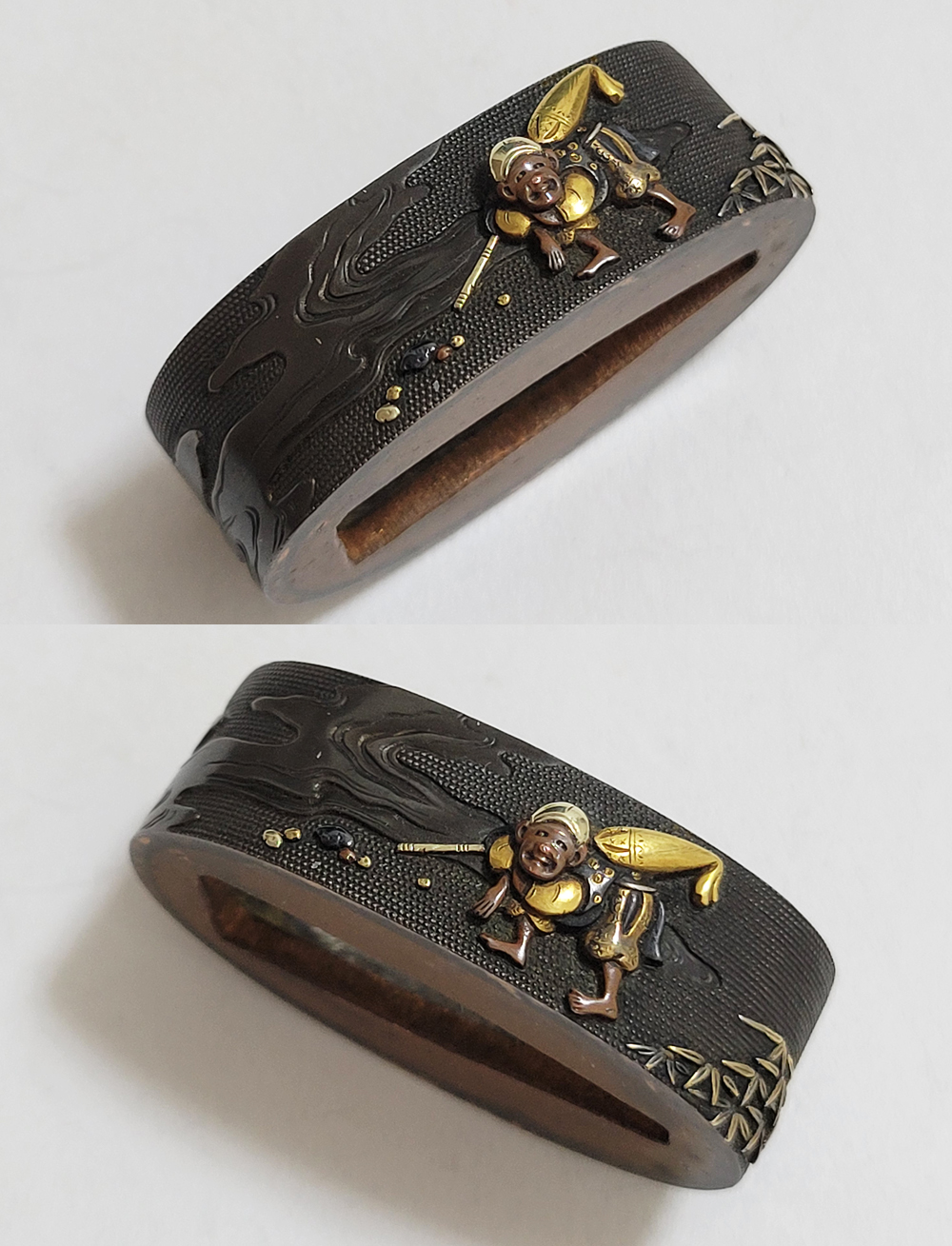
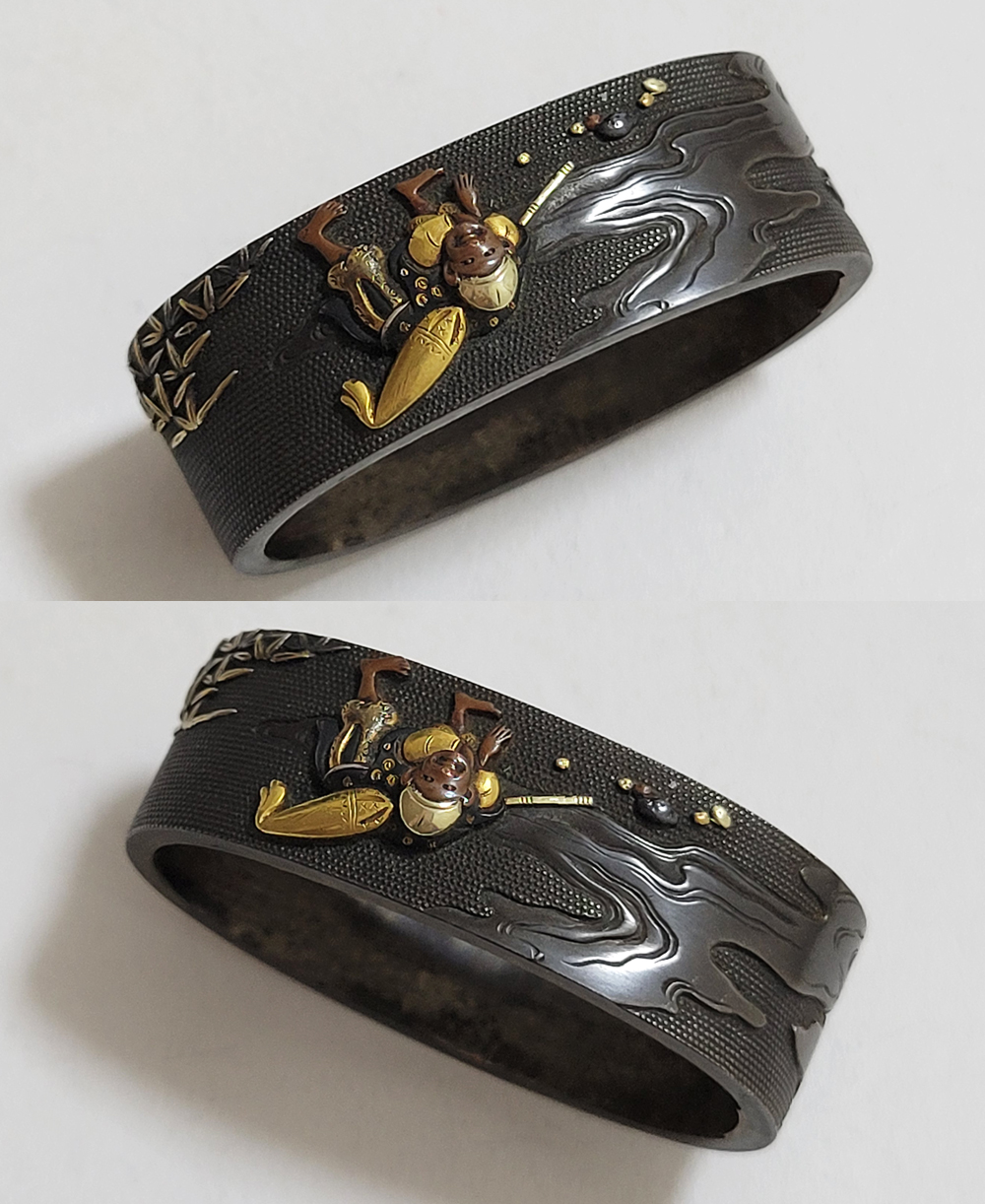
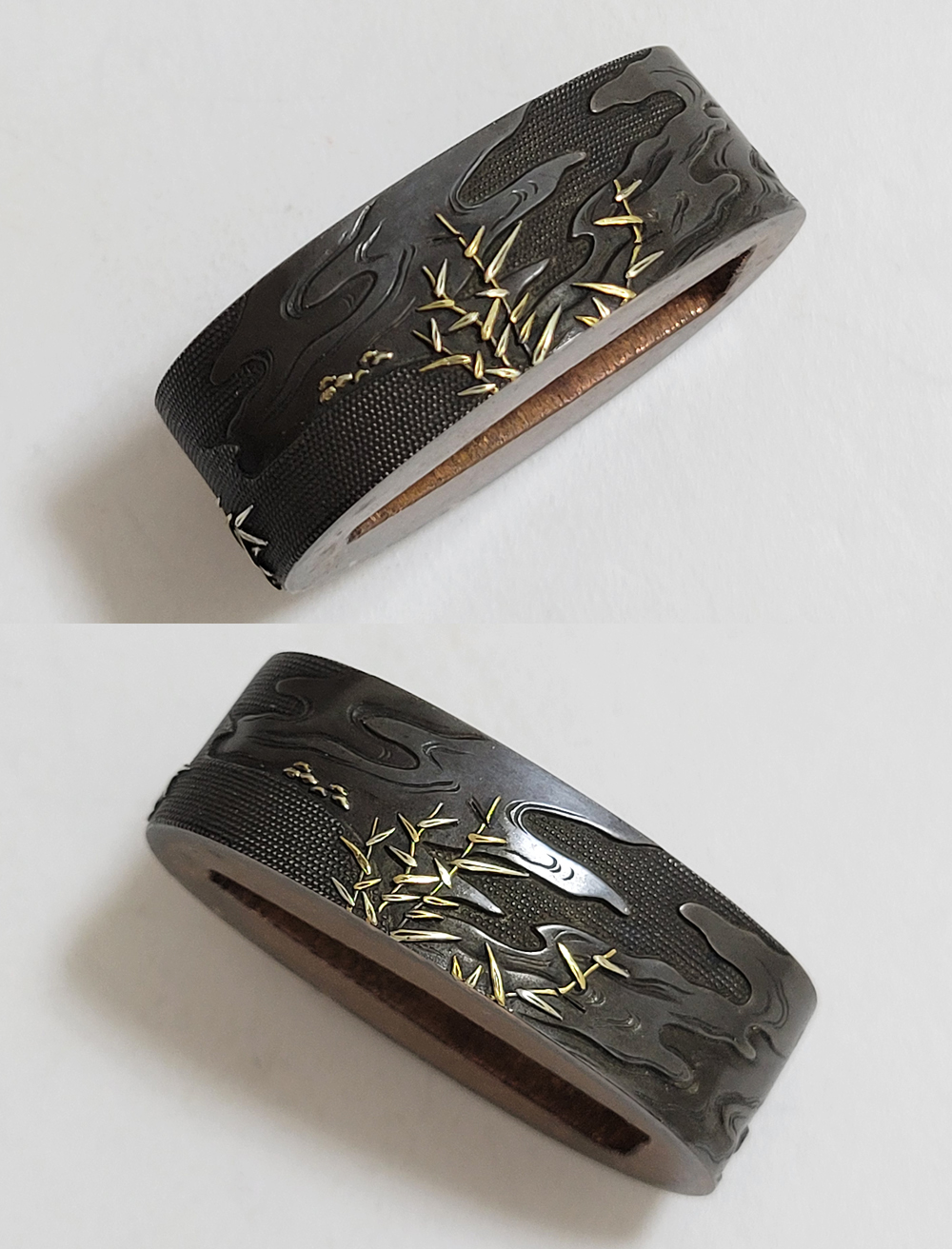
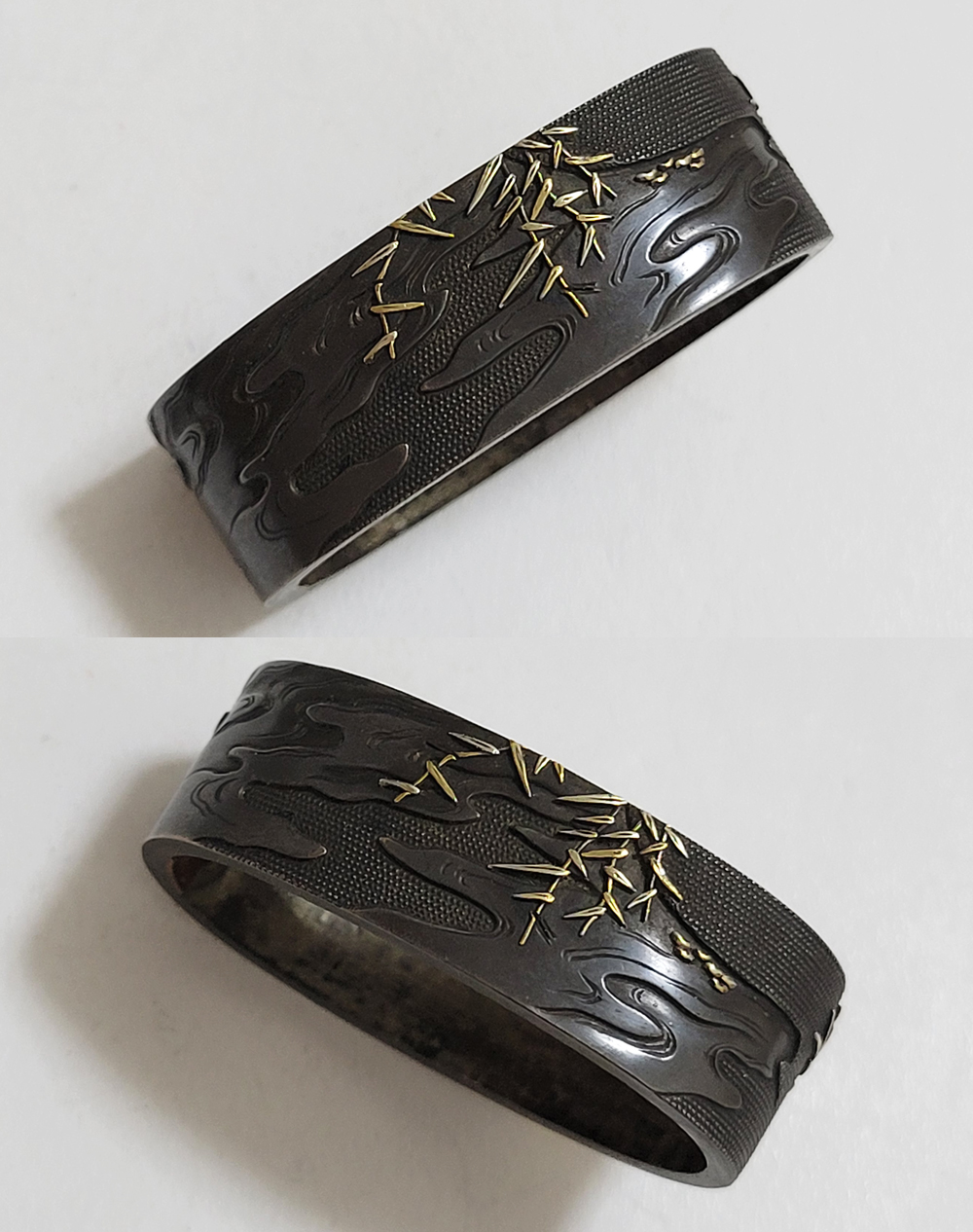
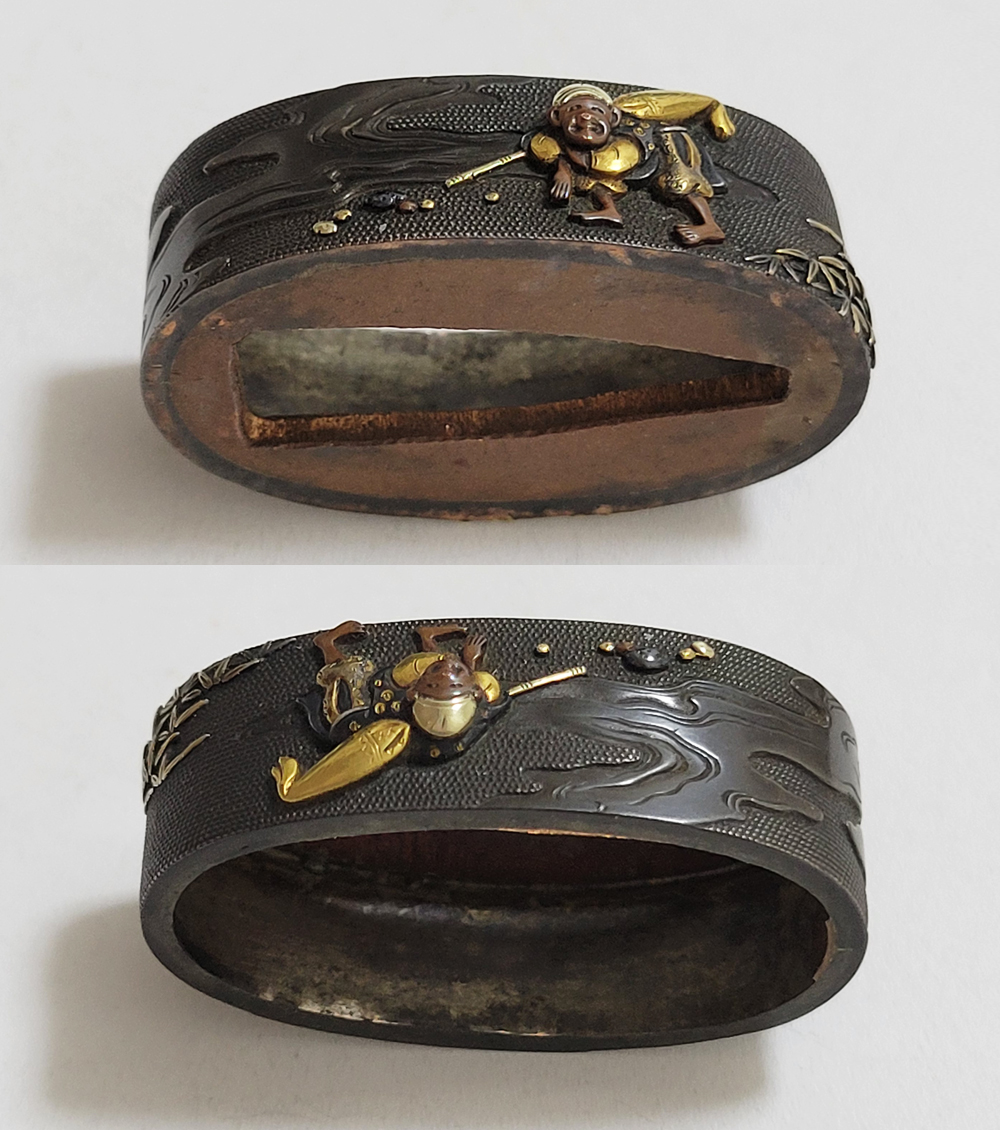
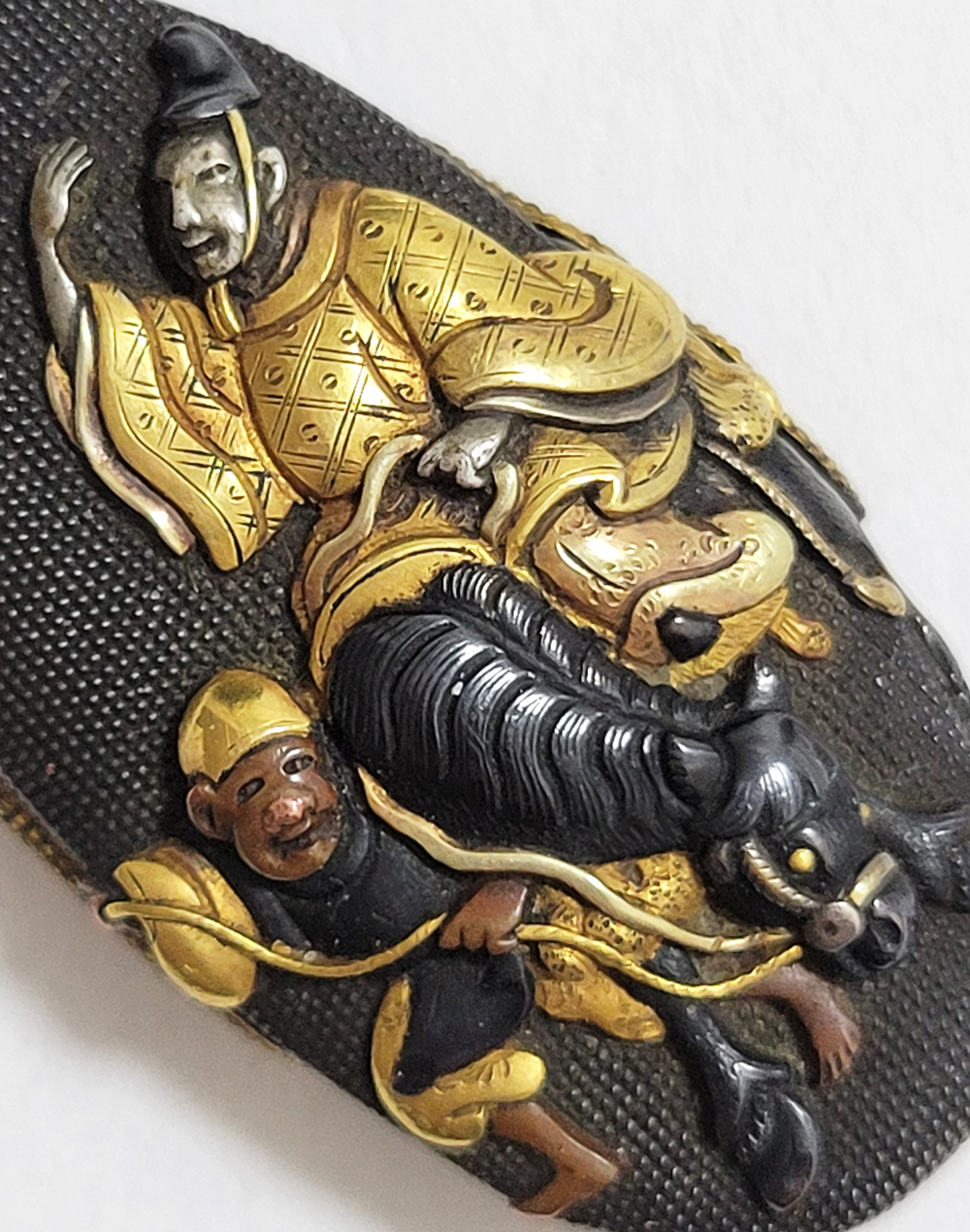
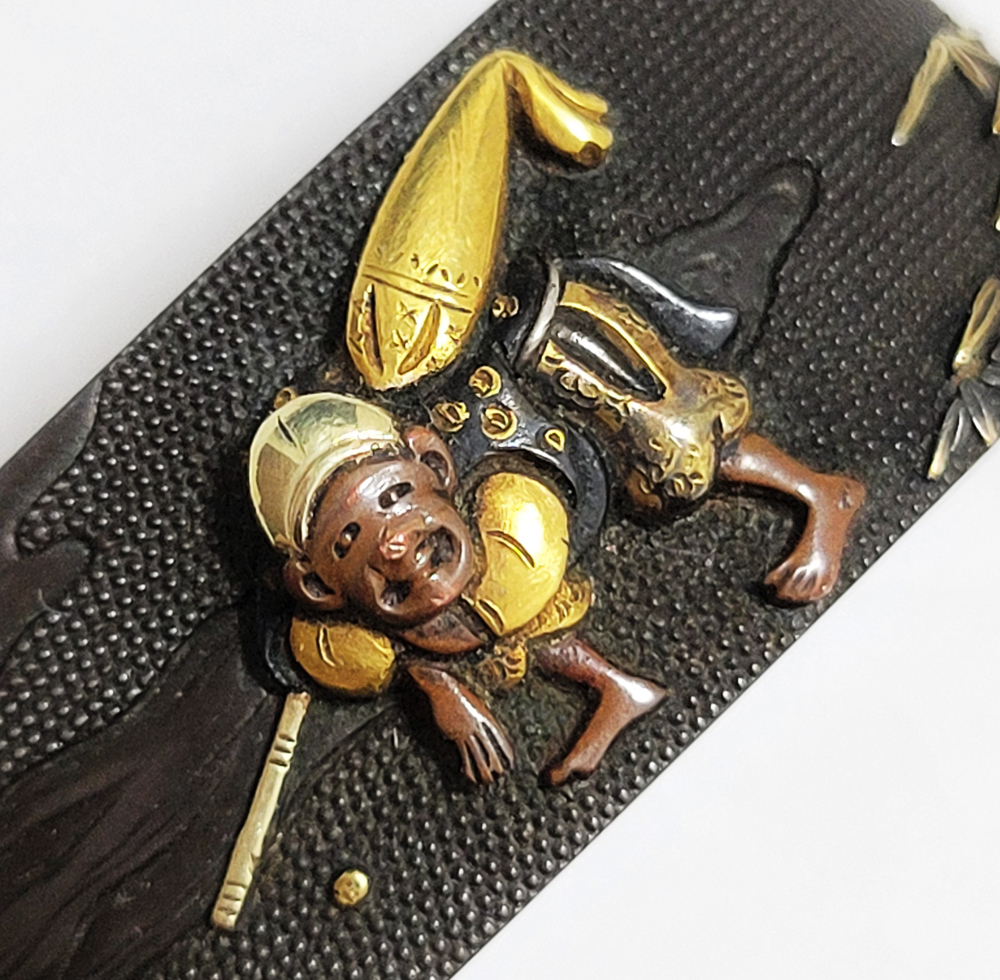
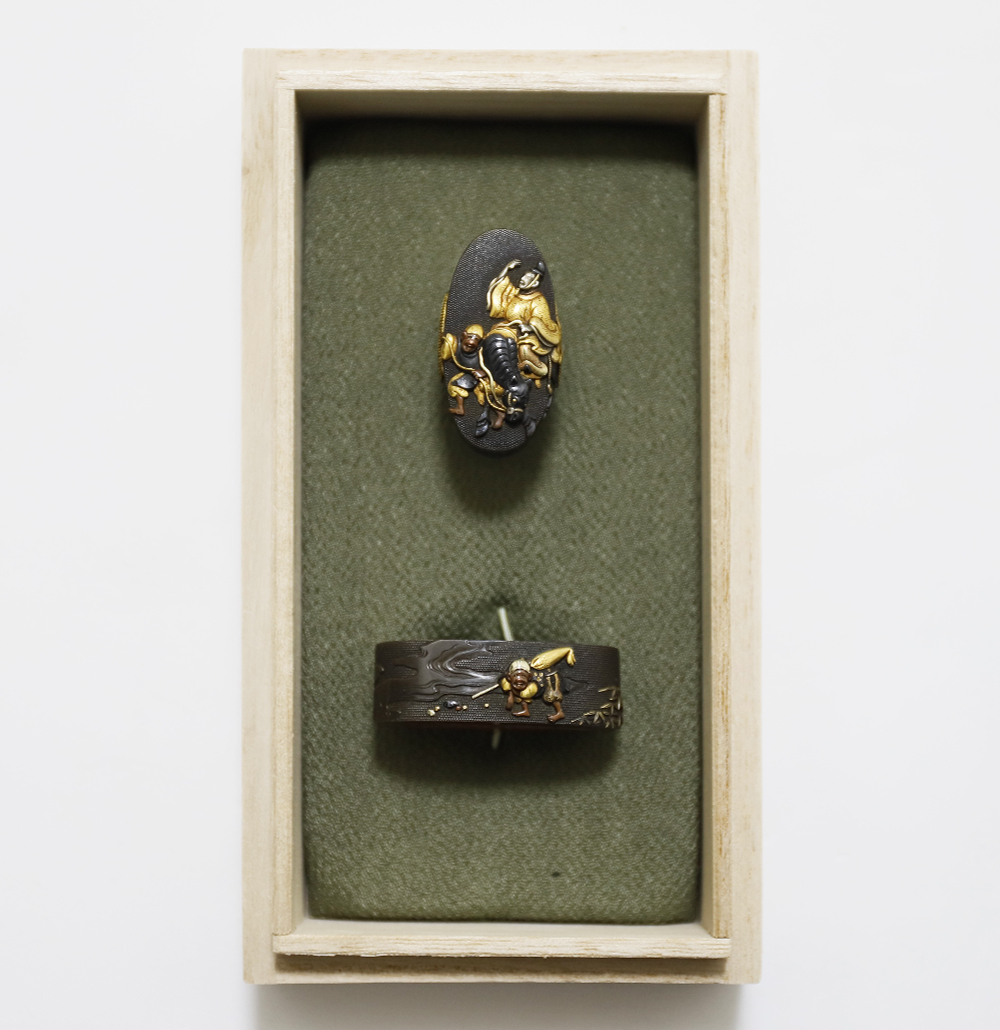
| This work likely represents Ariwara no Narihira in the scene of “Azuma-kudari” (Journey to the East), suggested by the depiction of a Heian nobleman on horseback accompanied by an attendant.“Azuma-kudari,” the ninth episode of the Ise Monogatari, tells of the Heian-period poet Ariwara no Narihira, who leaves his life in the capital of Kyoto and sets out on a journey to the eastern provinces (the Kantō region). The narrative evokes famous scenes such as the irises of Yatsuhashi, the snow of Mount Fuji, and the miyakodori birds of the Sumida River, expressing through poetry the melancholy of travel and the longing for the capital felt in a distant land. It is one of the most celebrated poetic episodes in classical Japanese literature.This fuchi-kashira is executed on a shibuichi nanako-ji ground, the figures rendered in high relief with various colored metals, creating an elegant composition. Judging from the style of workmanship, it is thought to be a product of the Mito metalworking tradition. |


 Search