| Product No. KA-0788 了戒貞能作 | |
|---|---|
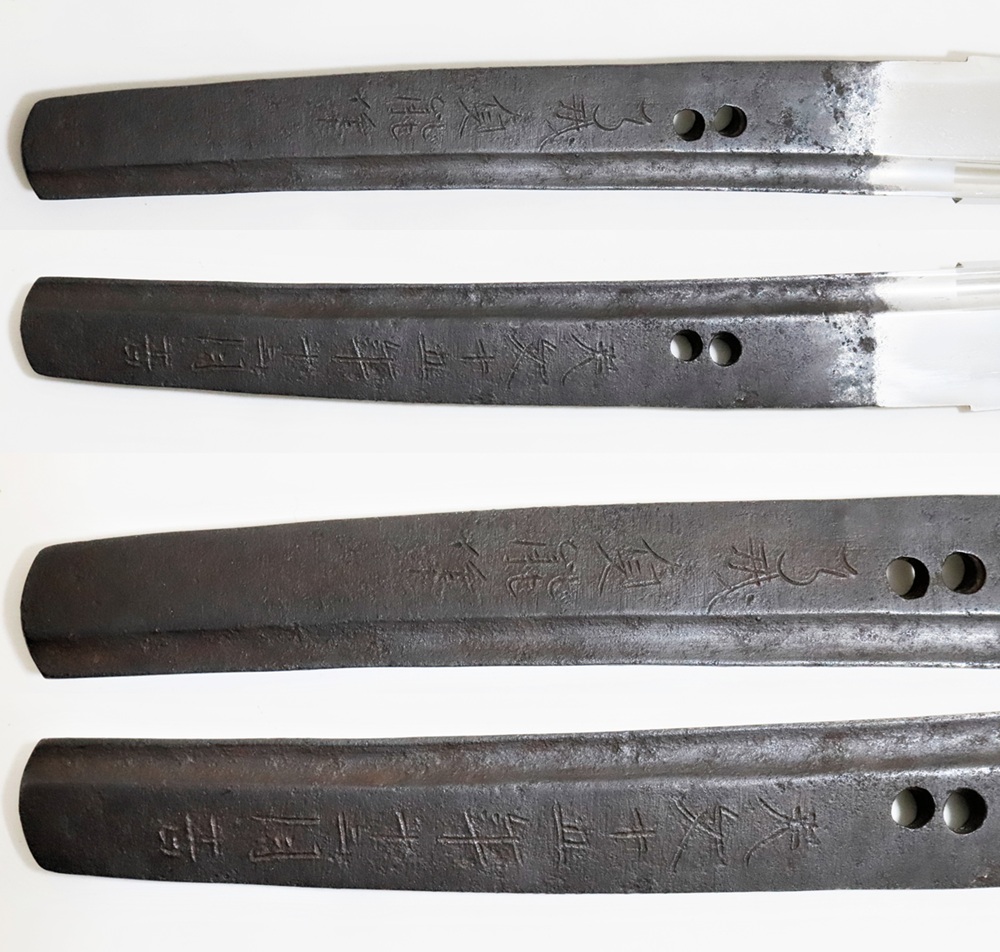
| Mei |
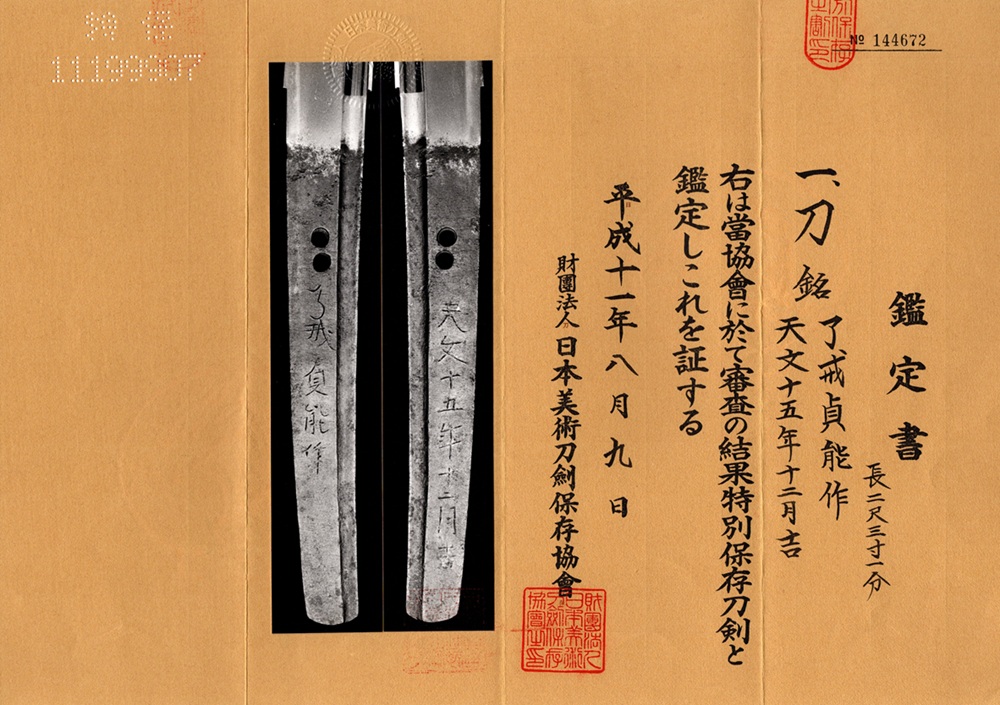
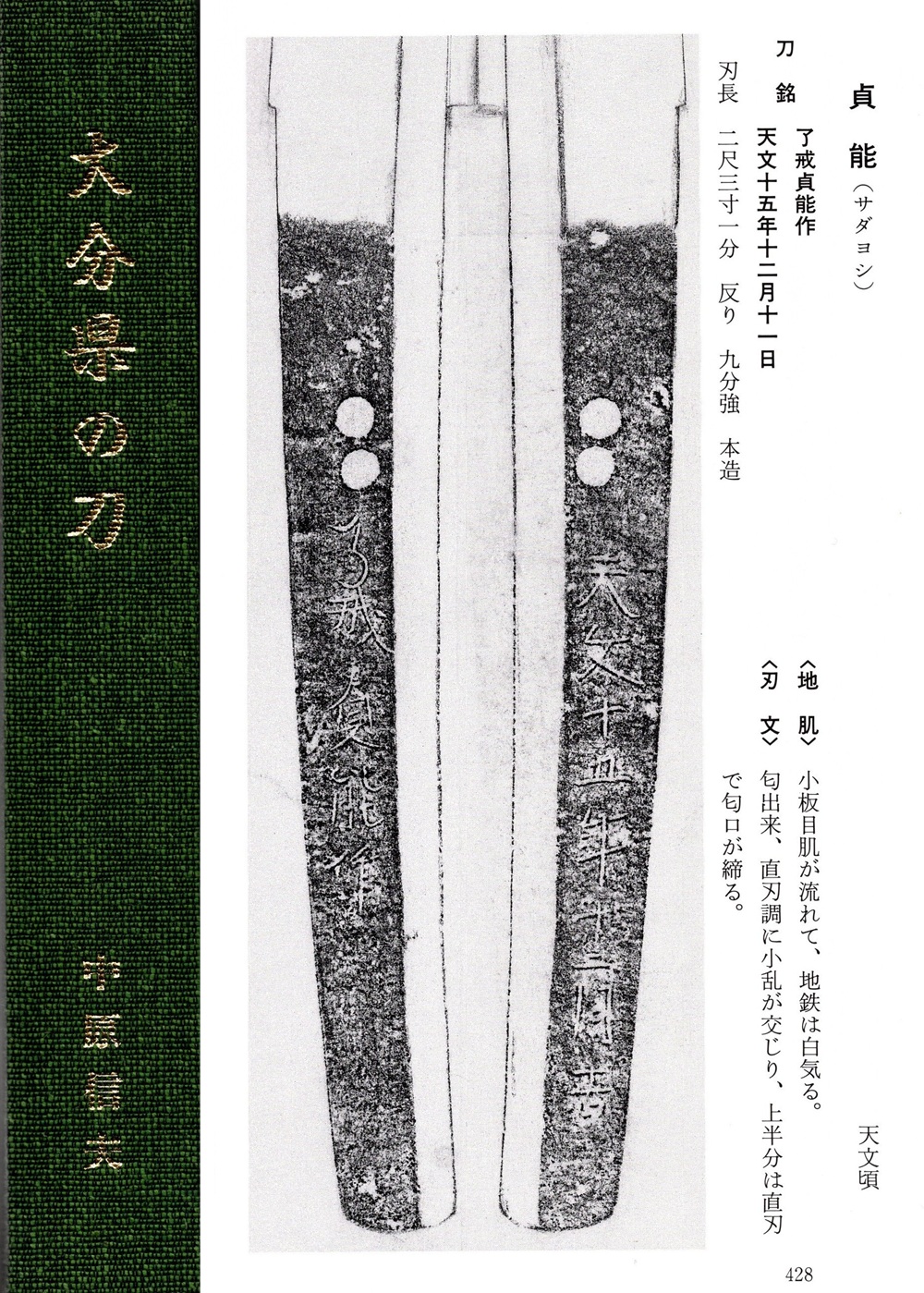
Made by Ryokai Sadayoshi Back: On an Auspicious Day in 1546, the 15th year of Tenbun |
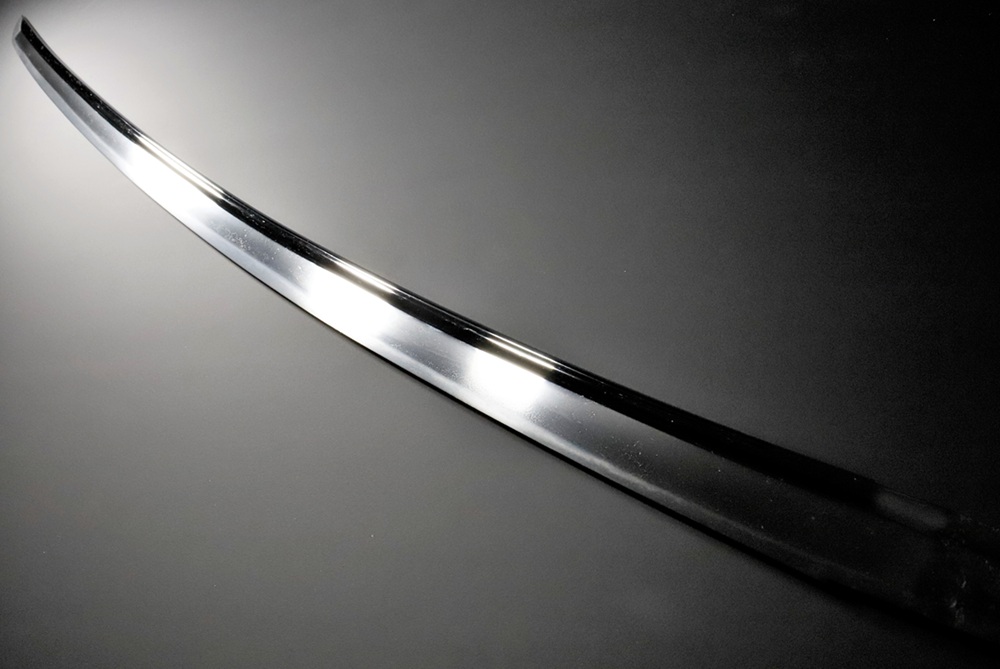
| Shape | Shinogizukuri Iorimune |
| Region | Tsukushi Province |
| Era | Late Edo Period |
| Length |
70 cm 27.6 in |
| Sori (curvature) |
2.8 cm 1.1 in |
| Motohaba |
3.2 cm 1.2 in |
| Sakihaba |
1.9 cm 0.7 in |
| Munekasane |
0.7 cm 0.3 in |
| Status | Tokubetsu Hozon Token |
| Certification Date | August 09, 1999 |
| Registration Authority | Tokyo |
| Registration Date | March 31, 1951 |
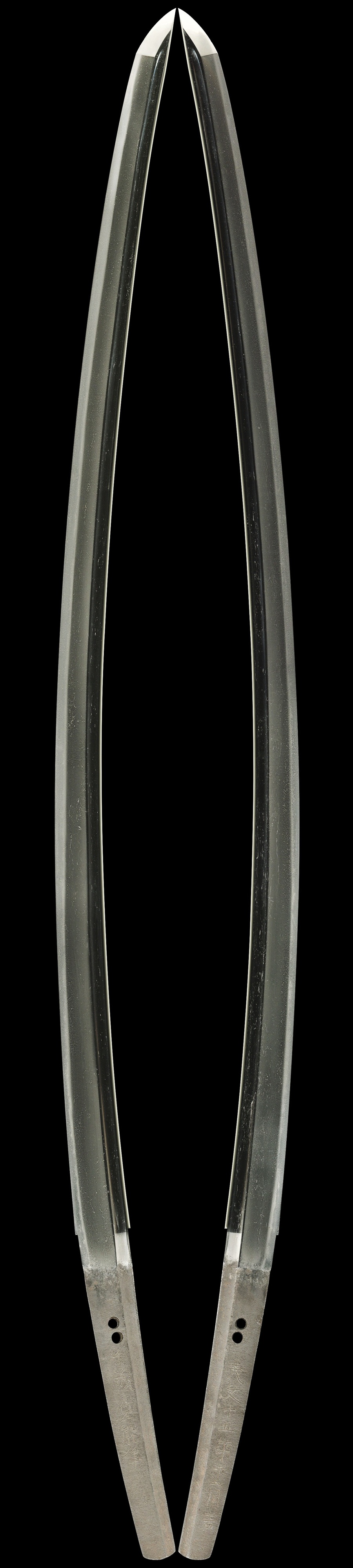
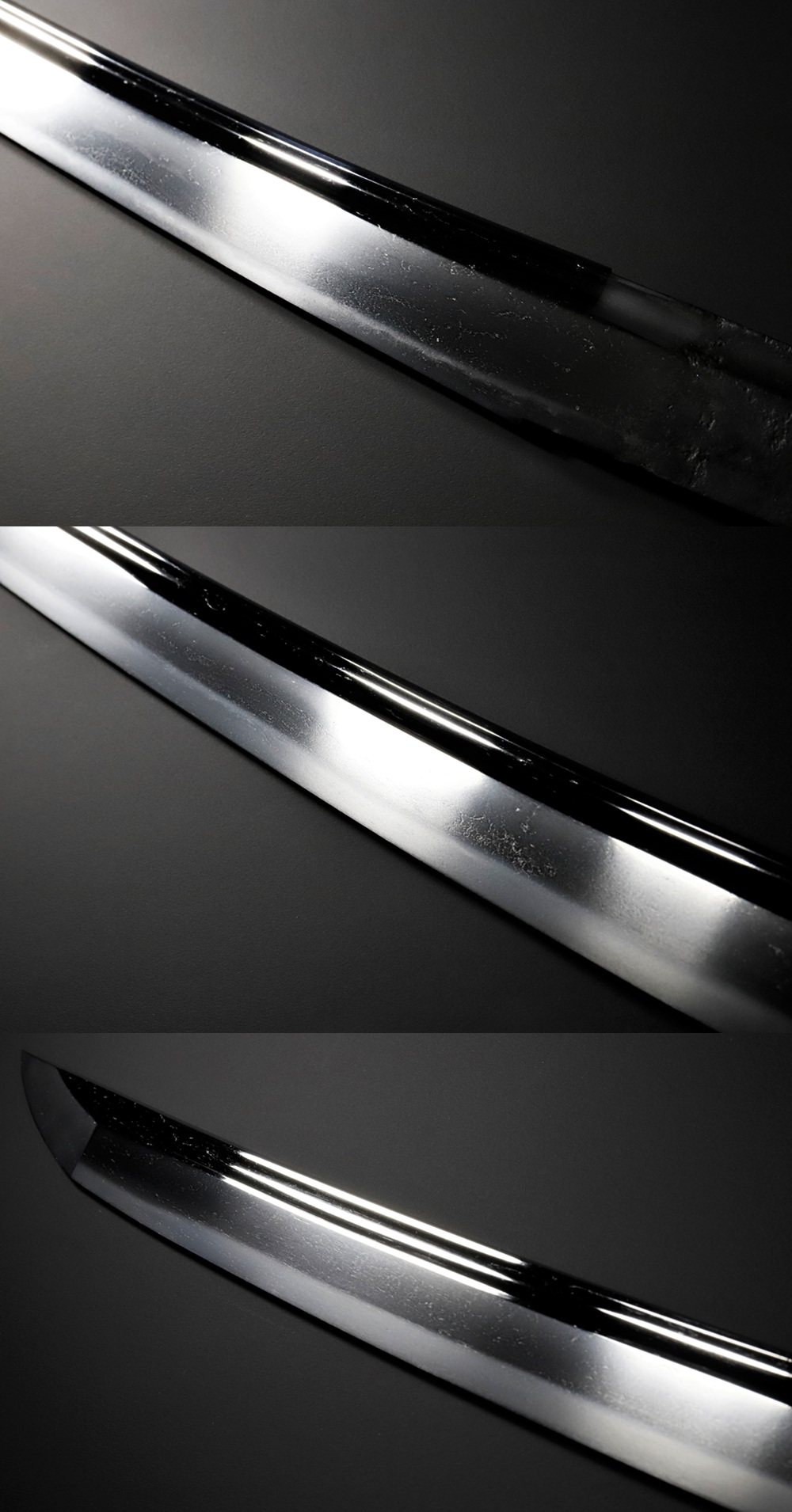
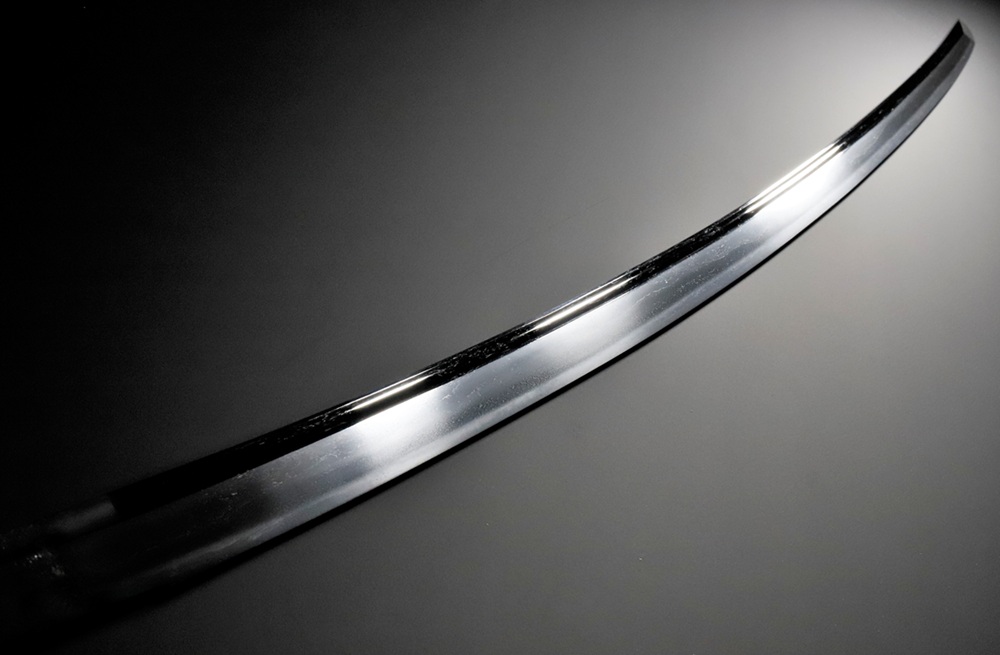
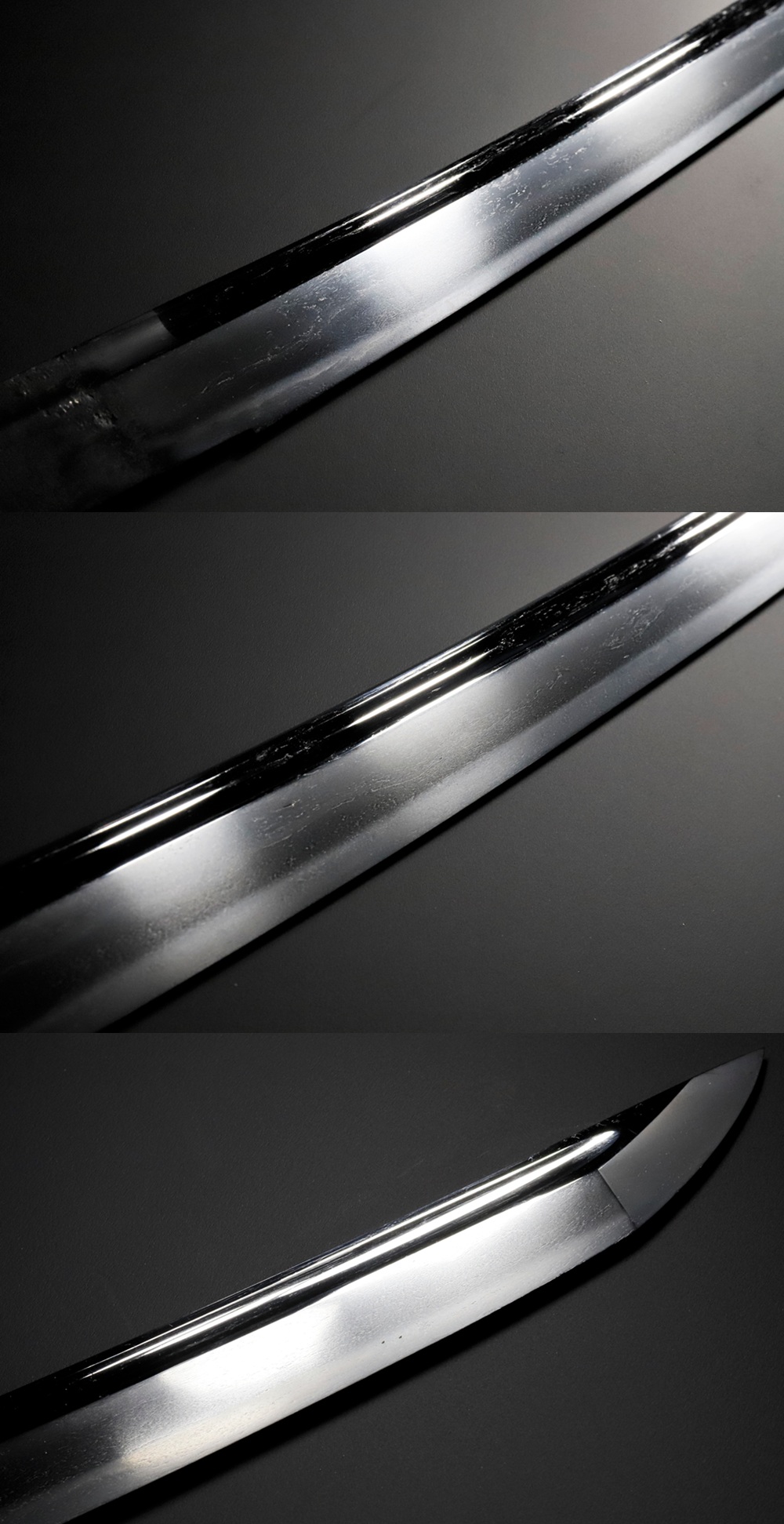
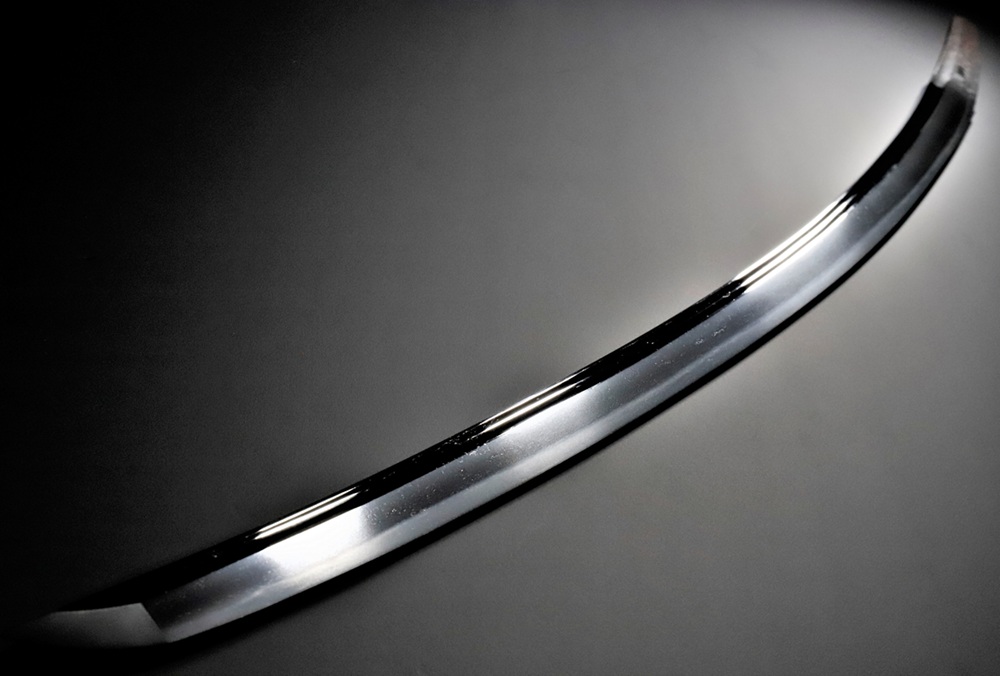
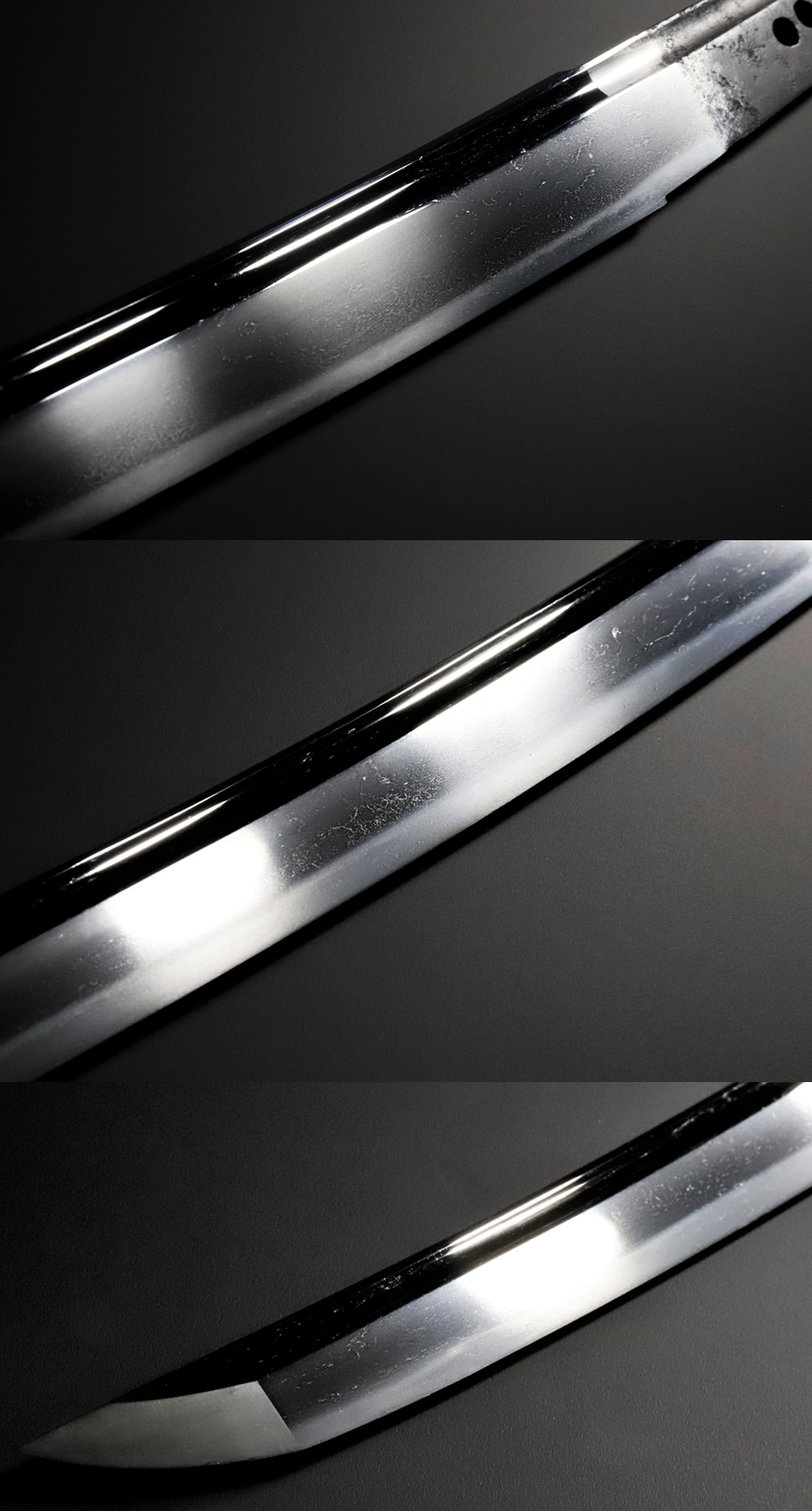
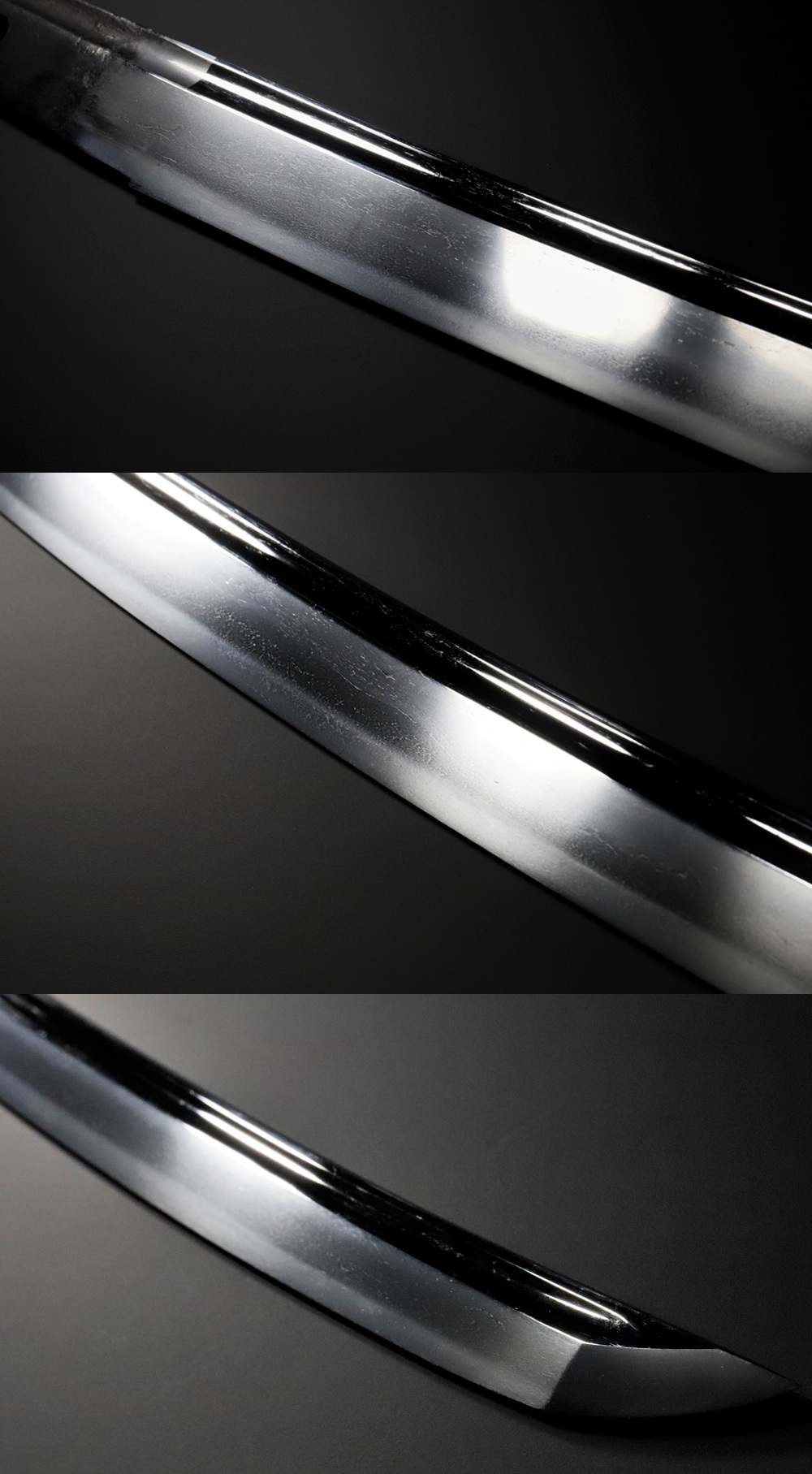
| Jihada (Metal pattern) | Koitame and Itame with shirake-utsuri |
| Hamon (Temper line) | Chu-suguha with ko-ashi, yo and hotsure |
| Engraving | Bohi on each side |
| Bōshi (Point / Tip) | Sugu komaru turn |
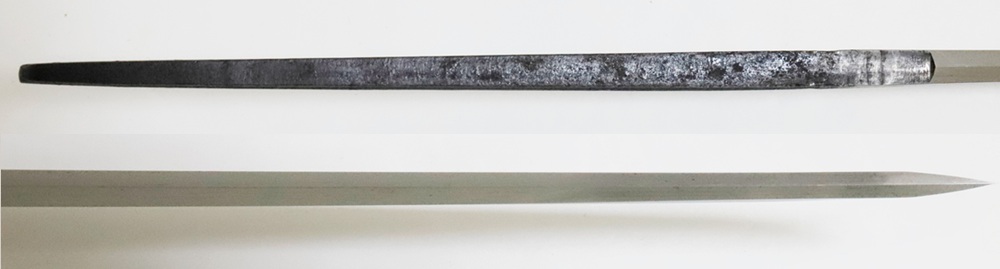
| Nakago (Tang) | Ubu, kiri file and kurijiri end |
| Mekugiana (Rivet holes) | 2 |
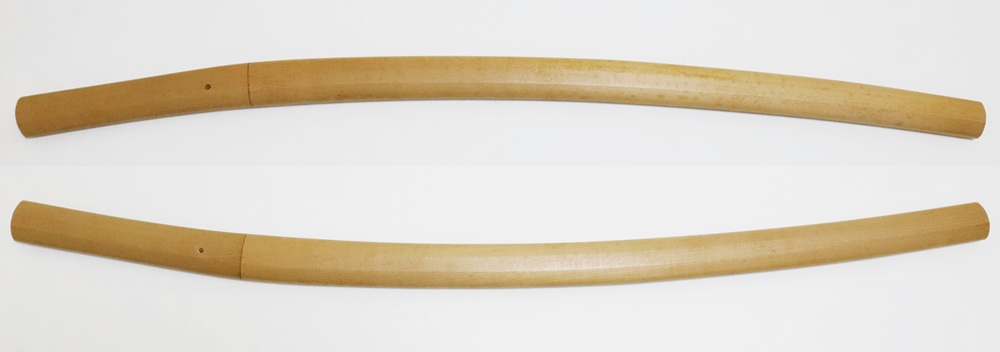
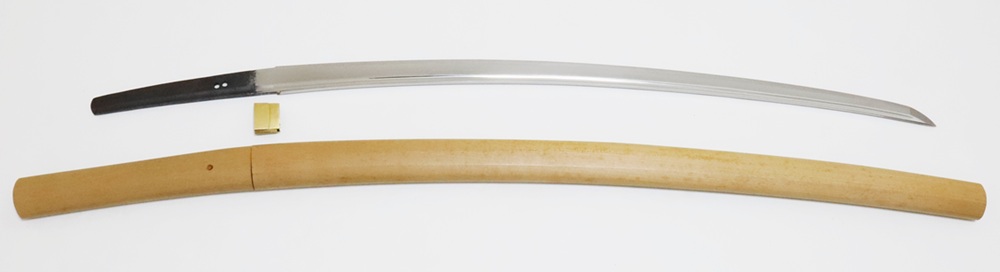
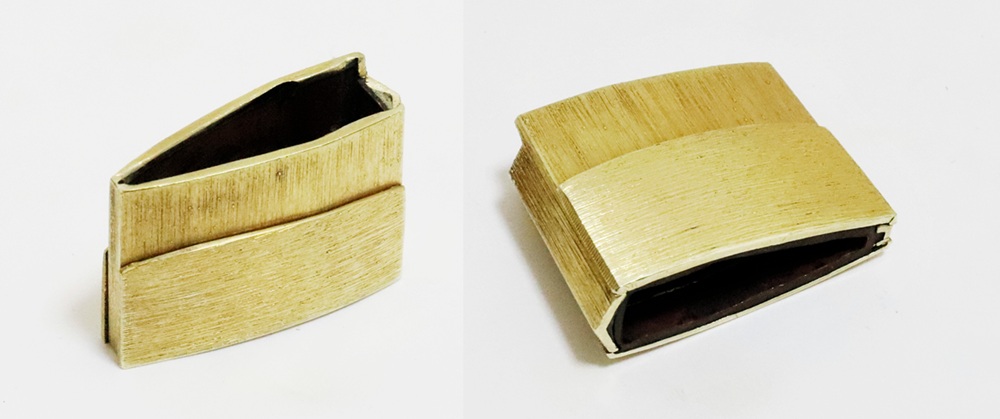
| Habaki | Two part, copper base gold foil with file habaki |
Price |
2,000,000 JPY |
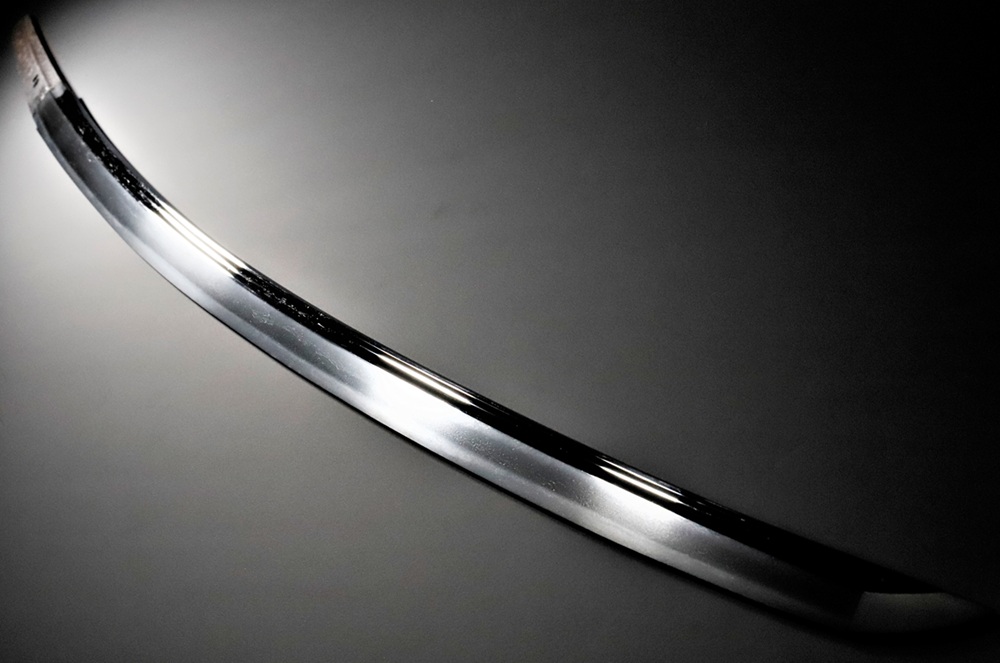
| The Ryōkai school, renowned in Kyoto during the Kamakura and Nanboku-chō periods, saw some members relocate to Kyushu district and branch off during the late Nanboku-chō to early Muromachi periods. Known as Tsukushi Ryōkai, they flourished throughout the Muromachi period, producing numerous craftsmen whose names included the character “Yoshi” (能), such as Yoshisada [能定], Yoshizane [能真], Shigeyoshi [重能], and Masayoshi [正能]. The exact reason for leaving Kyoto remains unclear, though it is thought they responded to invitations from powerful clans in Chikushi, where demand for weapons was high. This katana is a signed sword by Ryōkai Sadayoshi [了戒 貞能], bearing the date of the 15th year of Tenbun (1546). The condition of the nakago tang is exceptionally fine. It is long blade for its period, with ample width and thickness, and exhibits the deep curvature characteristic of the Sengoku period. The kitane forging shows ko-itame grain pattern intermixed with itame grain, displaying extensive shirake-utsuri. The hamon temper is chu-suguha pattern with ko-ashi and yo, showing hotsure. It is a fine sword of high quality, reminiscent of the ancient work of Ryōkai in Yamashiro Province. Registered in Tokyo in the 26th of Showa, 1951, which is so called 'Daimyo-toroku'. It passed the Tokubetsu Hozon Token shinsa in 1999. |

 Search