| Product No. KA-0791 出雲大掾藤原吉武 | |
|---|---|
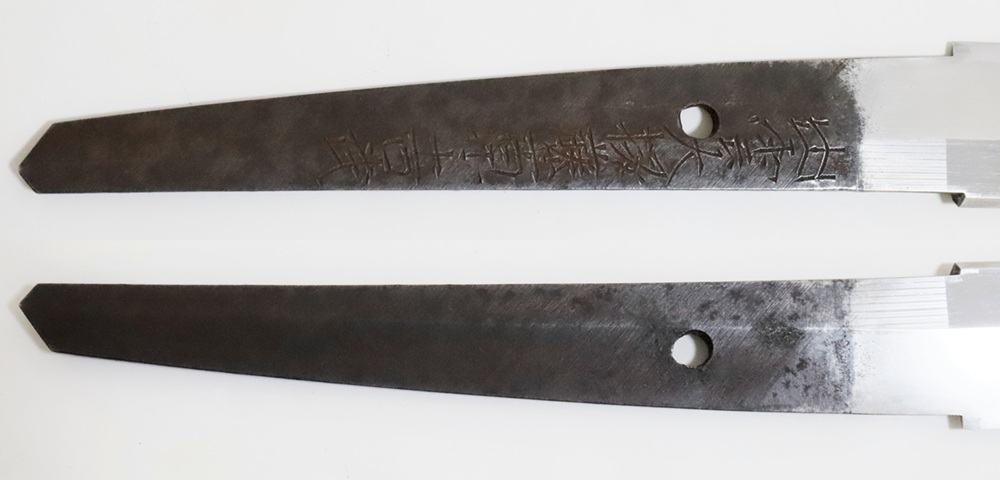
| Mei |
Izumo Daijo Fujiwara Yoshitake Back: -- |
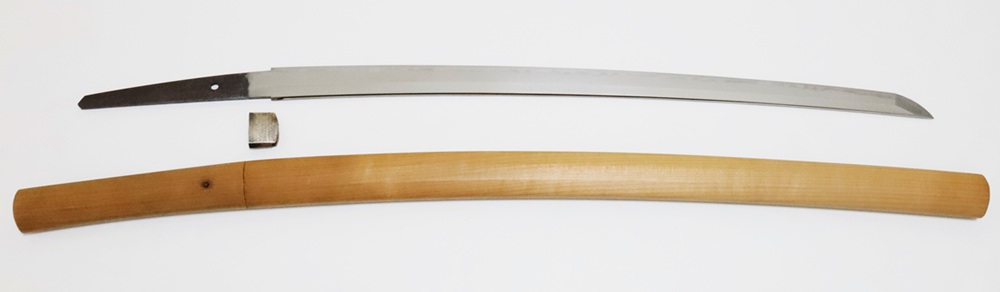
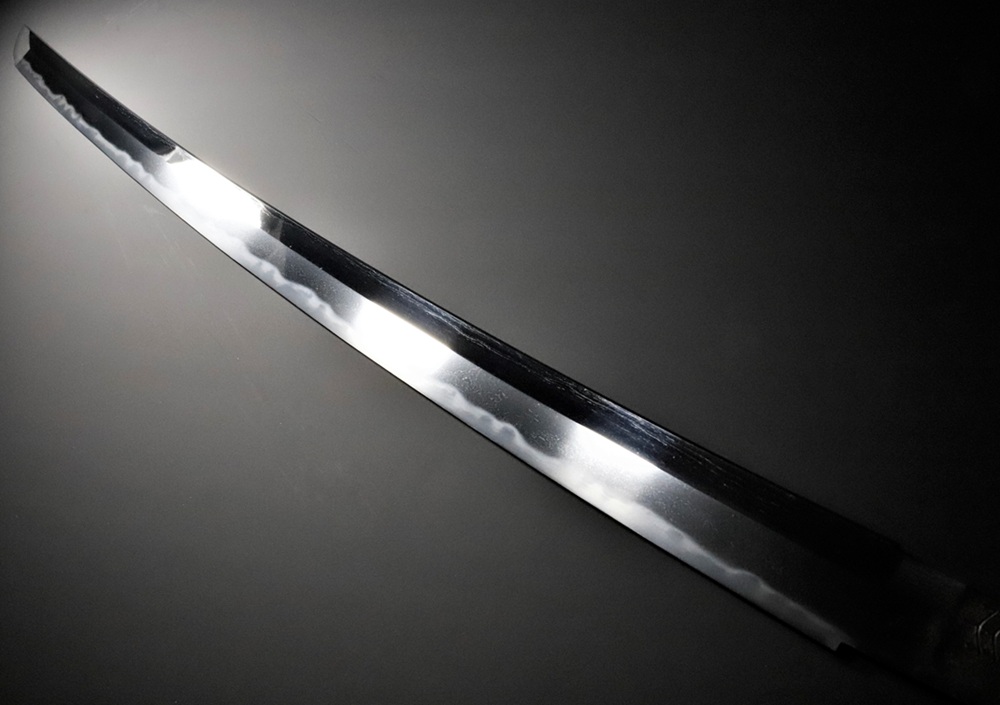
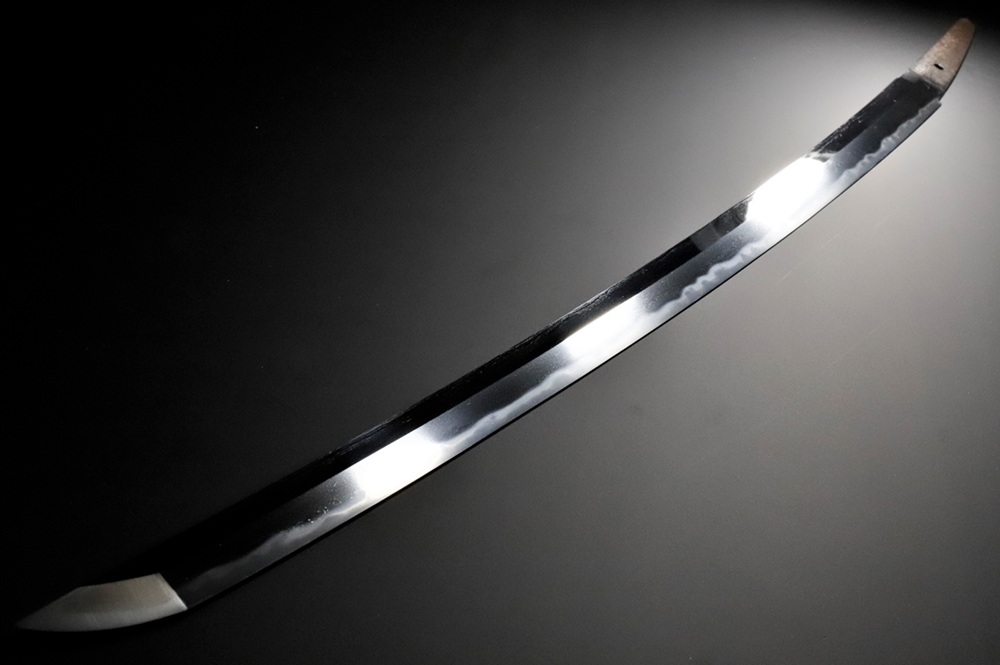
| Shape | Shinogizukuri Iorimune |
| Region | Originally Kyoto in Yamashiro Province, later Edo in Musashi Province |
| Era | Early Edo Period |
| Length |
64 cm 25.2 in |
| Sori (curvature) |
1.3 cm 0.5 in |
| Motohaba |
3.4 cm 1.3 in |
| Sakihaba |
2.4 cm 0.9 in |
| Munekasane |
0.7 cm 0.3 in |
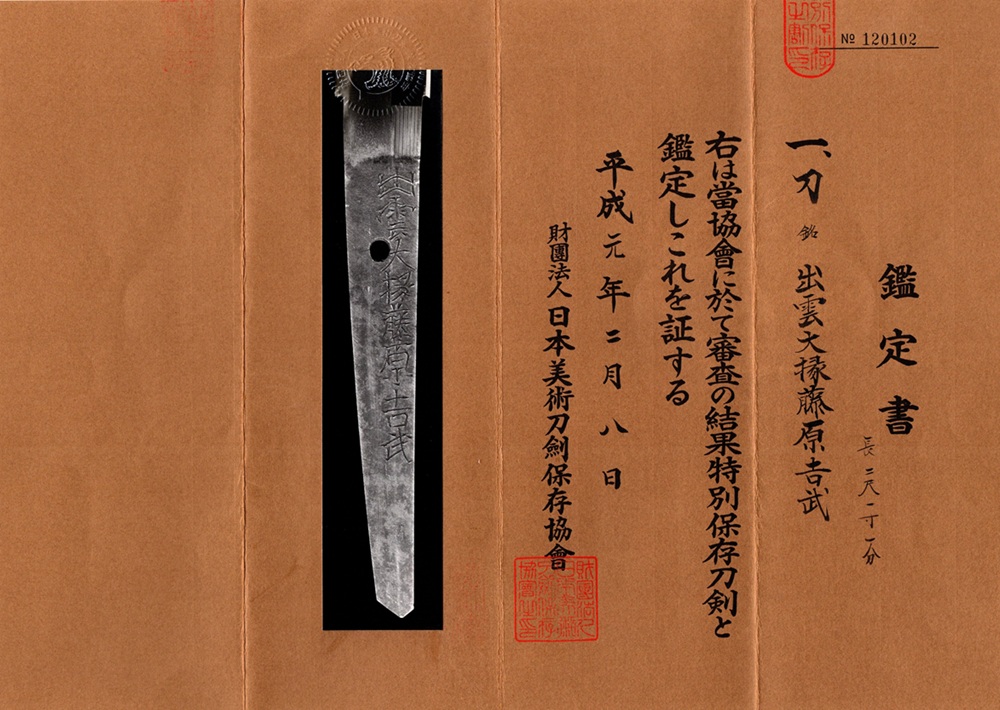
| Status | Tokubetsu Hozon Token |
| Certification Date | February 08, 1989 |
| Registration Authority | Tokyo |
| Registration Date | December 24, 1987 |
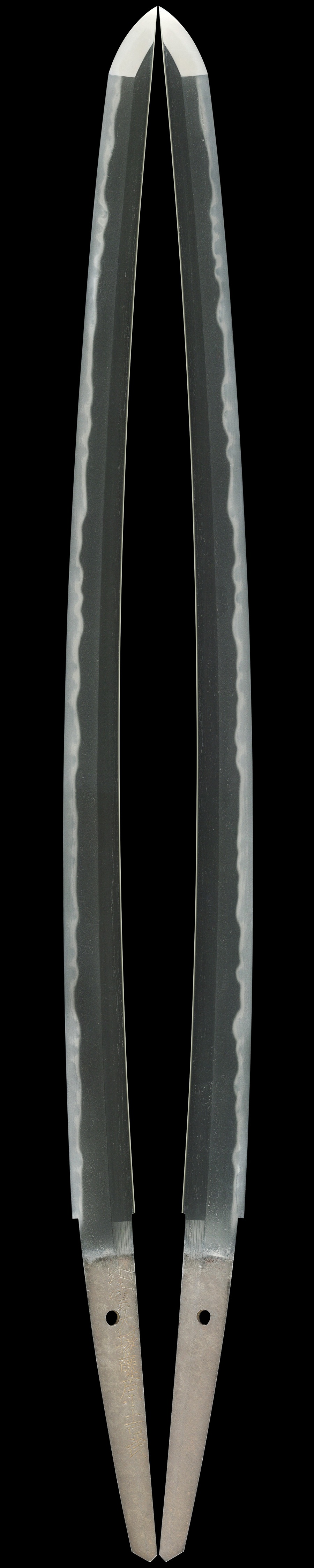
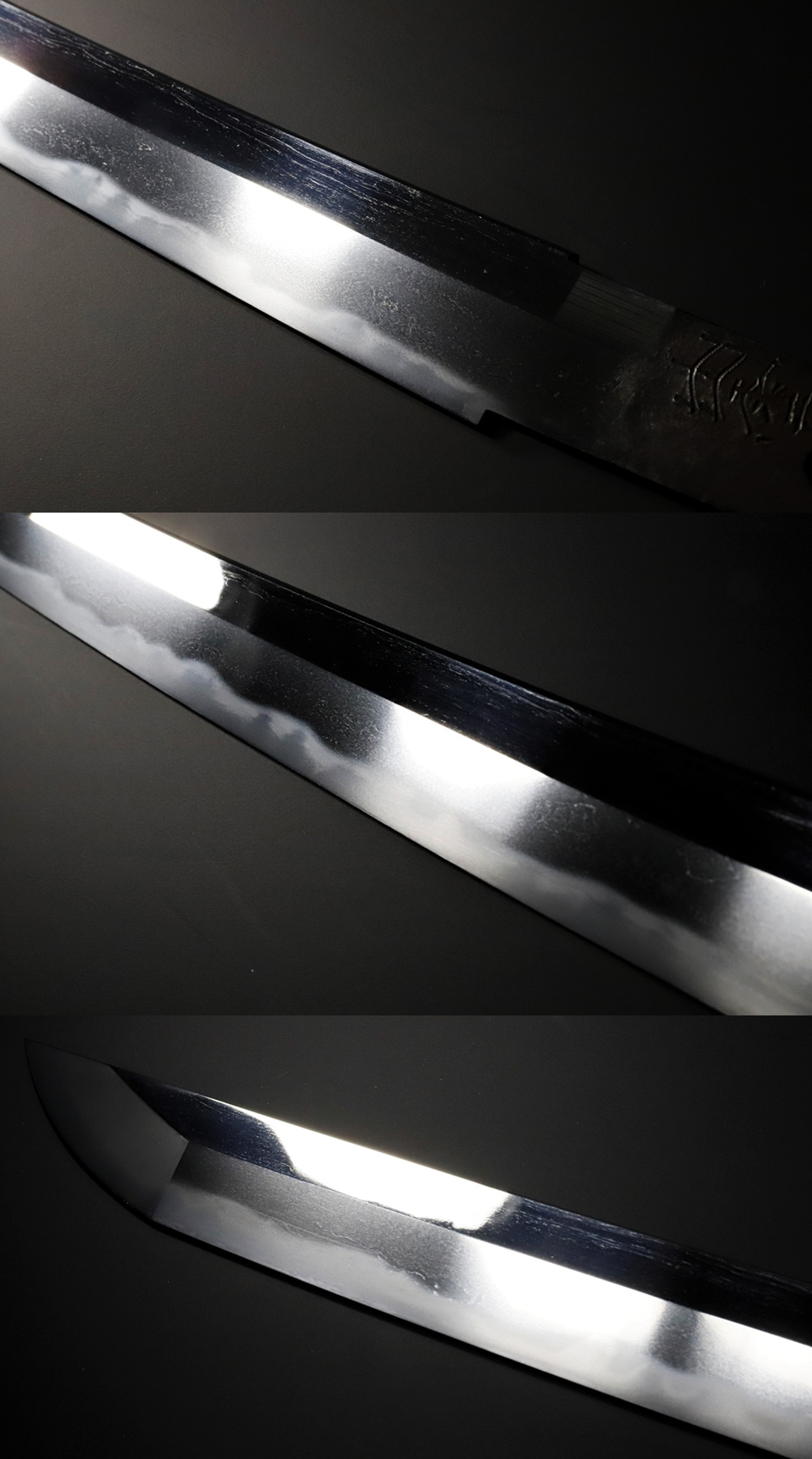
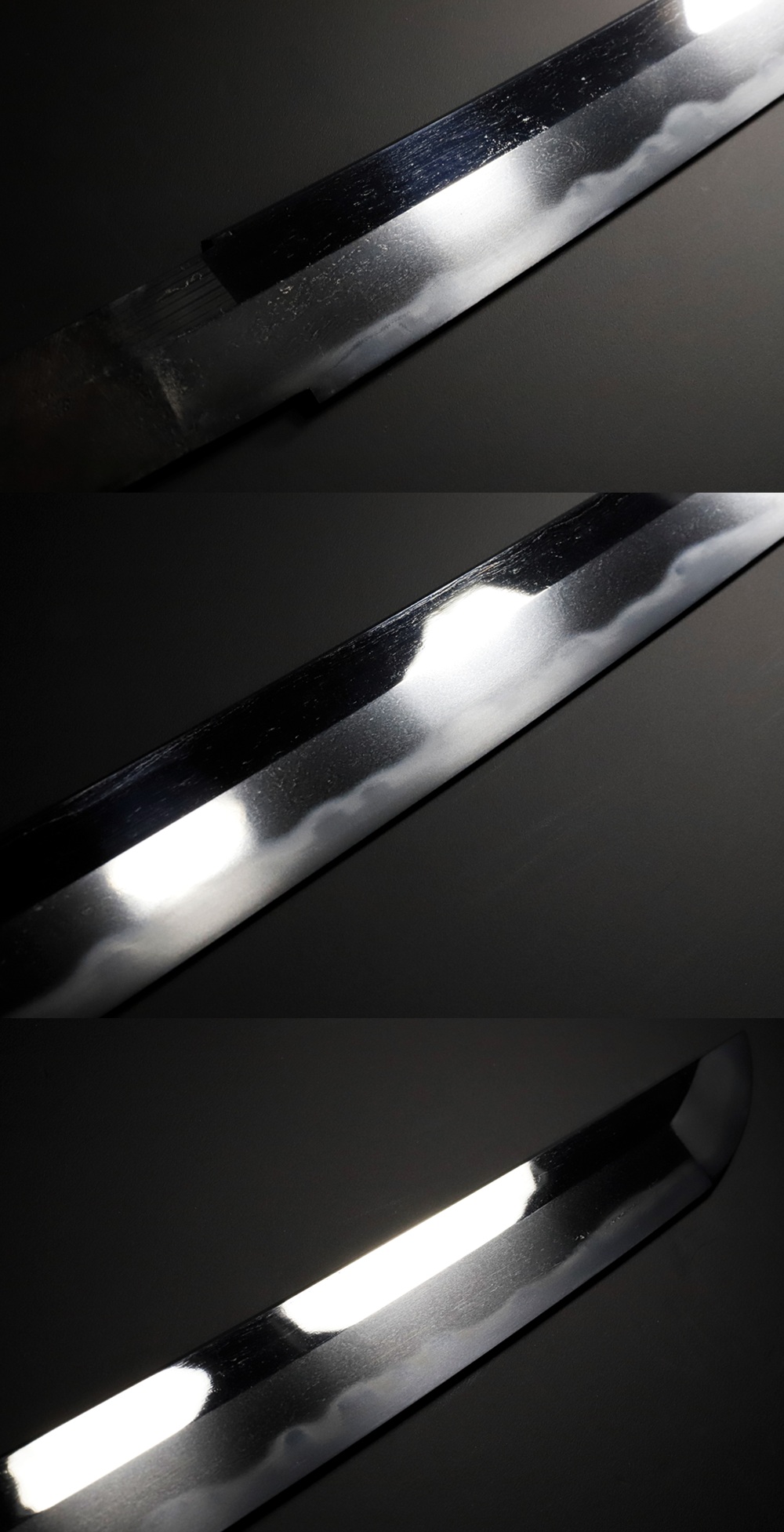
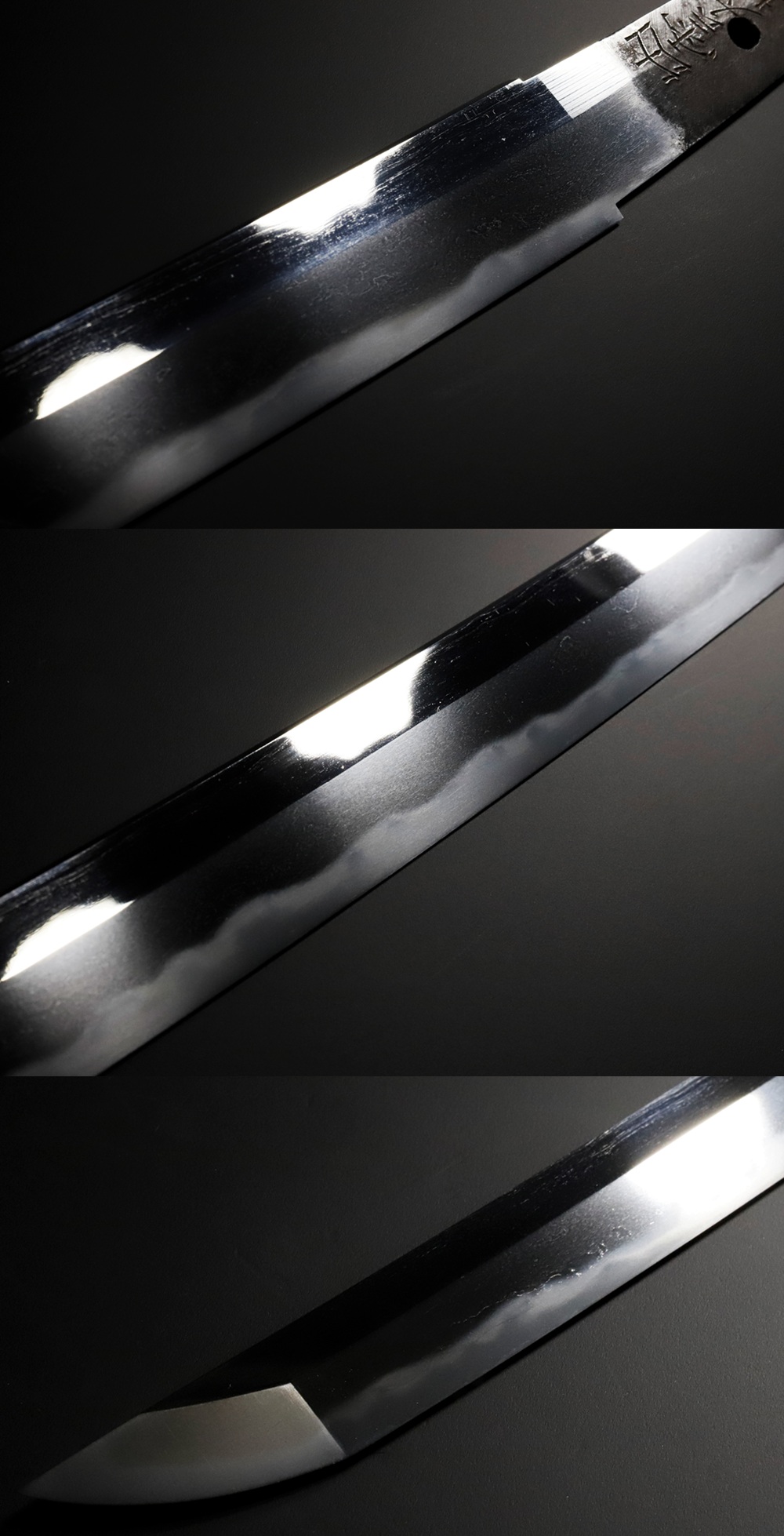
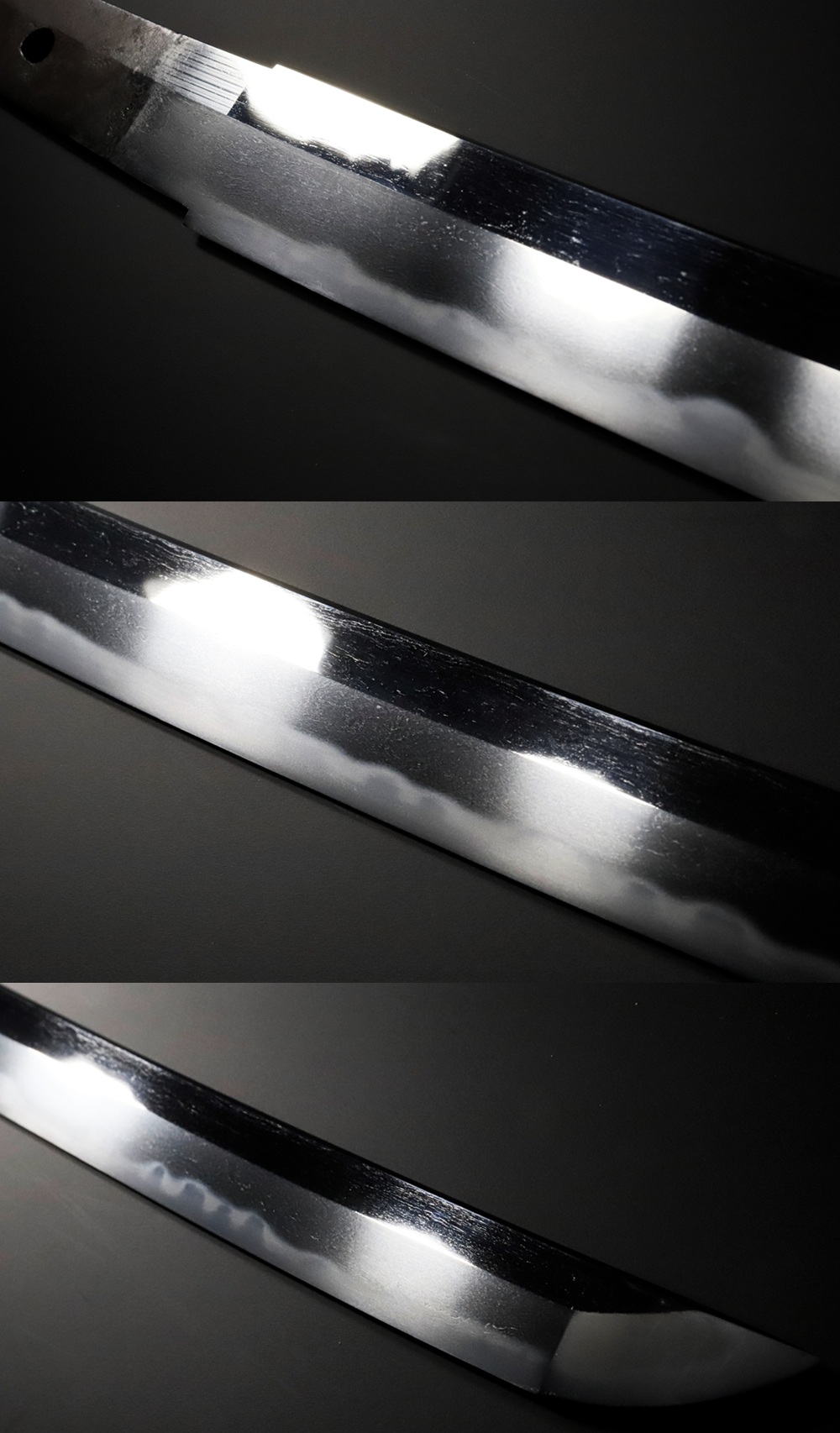
| Jihada (Metal pattern) | Dence Itame with mokume, jinie and chikei |
| Hamon (Temper line) | Gunome-midare with konie |
| Bōshi (Point / Tip) | Sugu komaru turn |
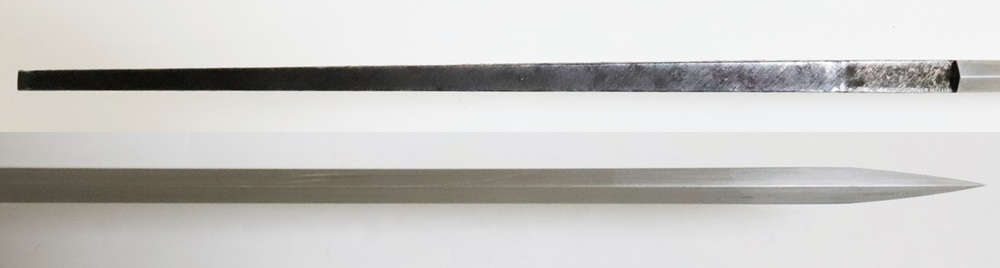
| Nakago (Tang) | Ubu, sujikai with kesho file and an iriyama end |
| Mekugiana (Rivet holes) | 1 |
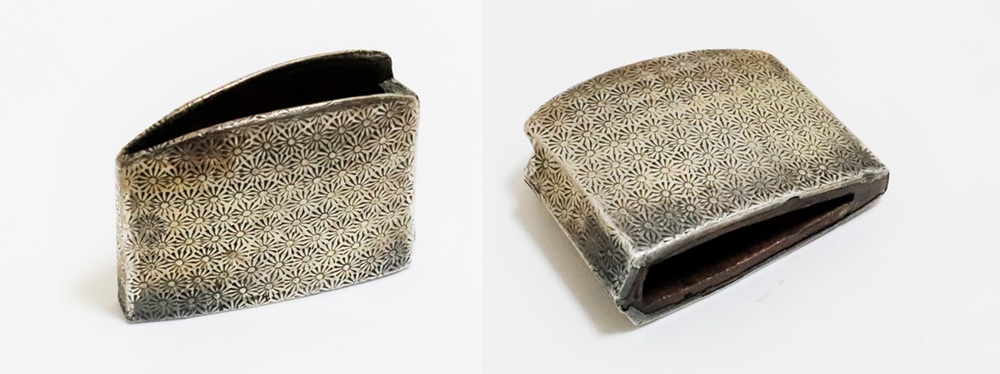
| Habaki | Copper base silver foil with chrysanthemum pattern habaki |
Price |
750,000 JPY |
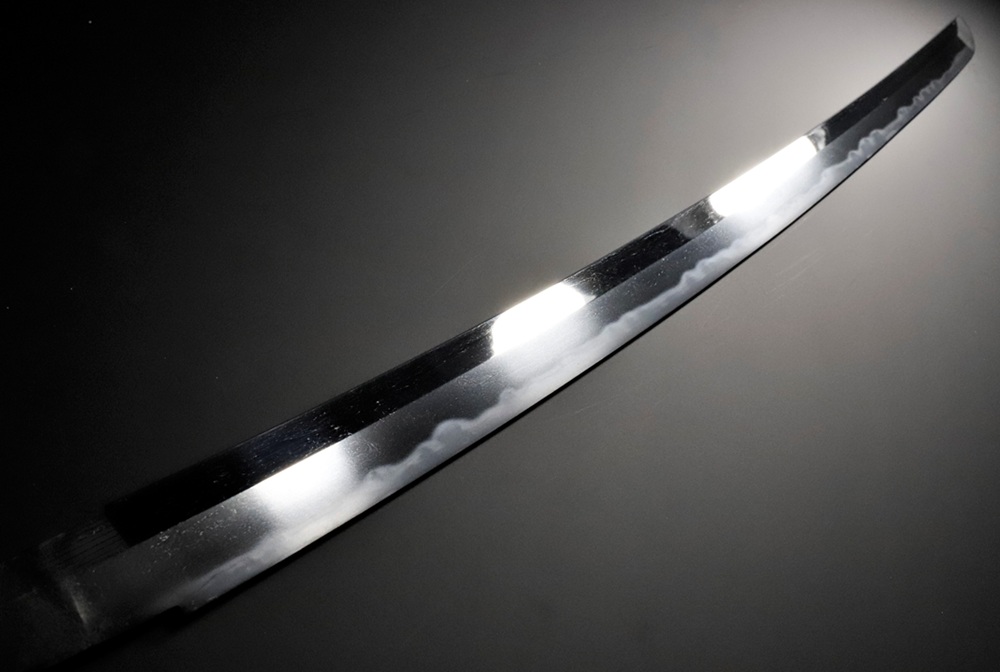
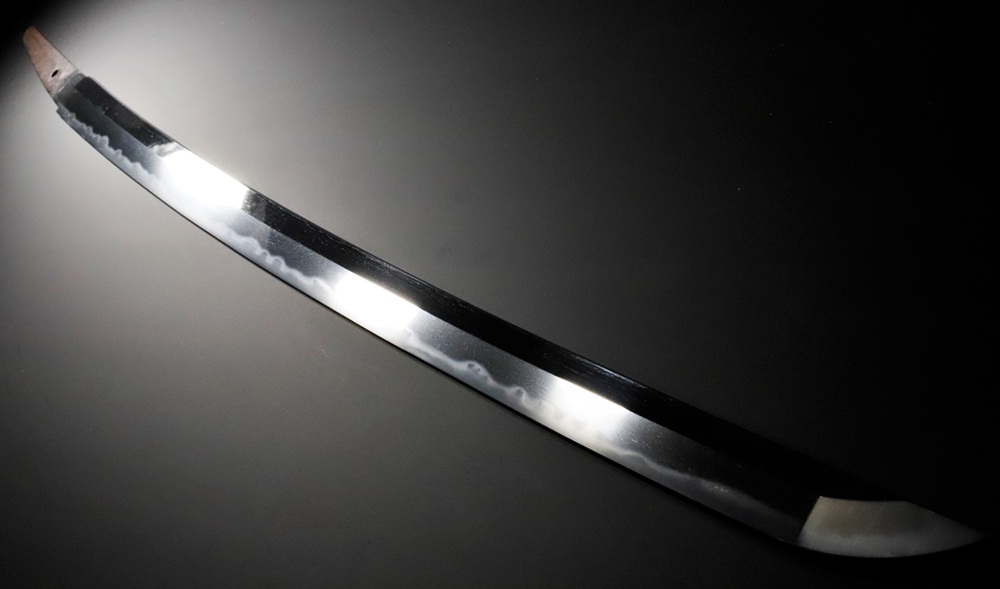
| Izumo Daijō Fujiwara Yoshitake (the first generation) was originally from Yamashiro Province. He was the son of Horikawa Kunitake of the Horikawa school, who resided in Heianjō (Kyoto). Later he moved to Edo (Musashi Province), where he developed close relations with the Hōjōji school and produced collaborative works with smiths such as Hōjōji Masateru. He died in Genroku 7 (1694).This blade shows a well-forged itame-hada mixed with mokume, with ji-nie and chikei appearing in the surface. The hamon is a nie-based gunome-midare with ko-nie and sunagashi activity. The nakago is in good condition, and both the jigane and hamon are healthy and well preserved.It was designated Tokubetsu Hozon Tōken (NBTHK) in 1989. |

 Search