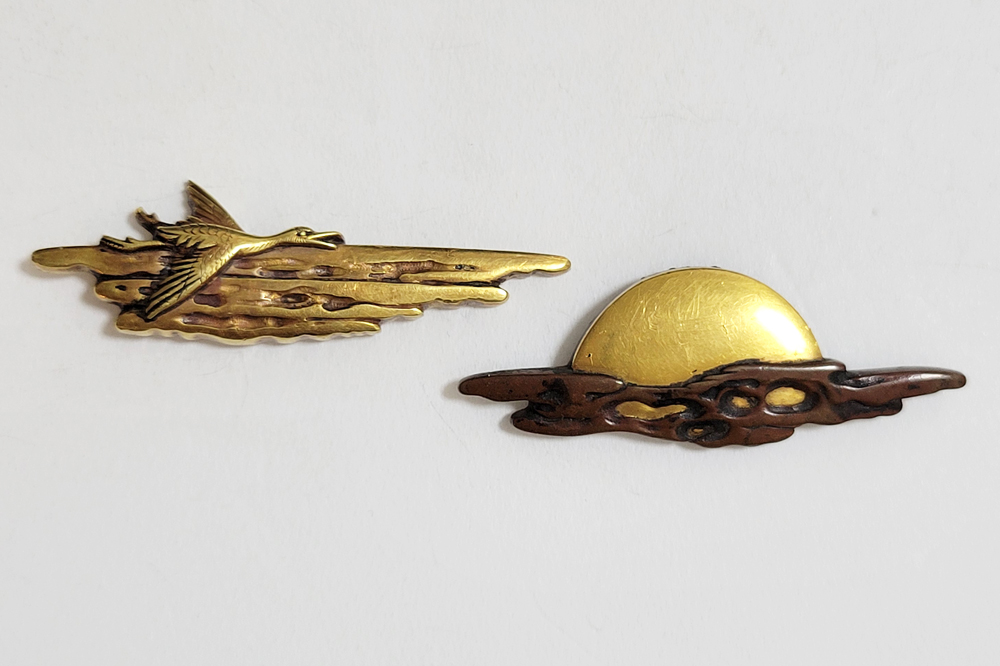
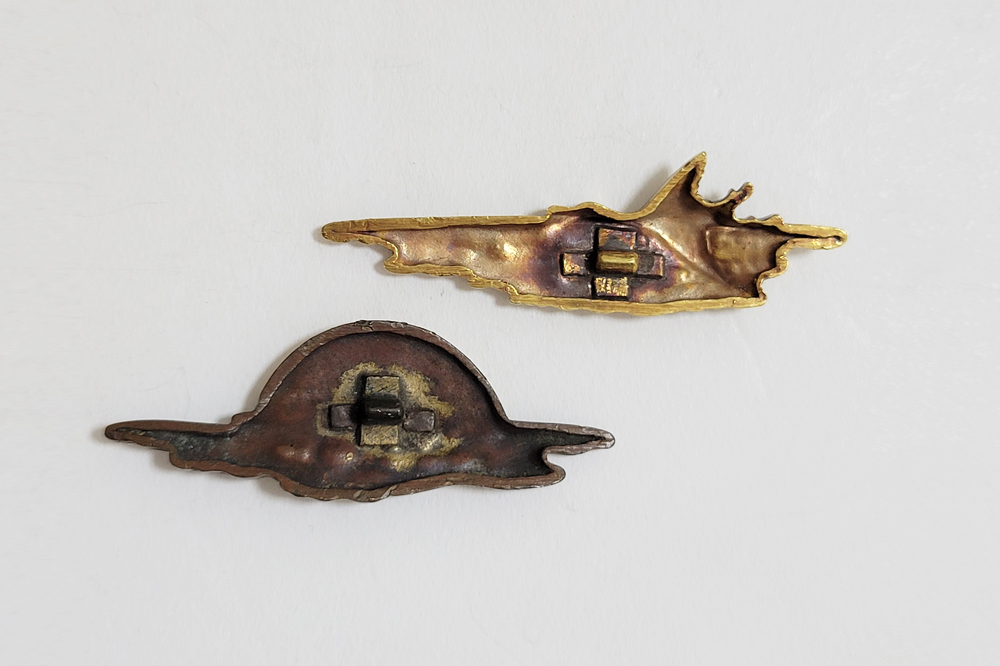
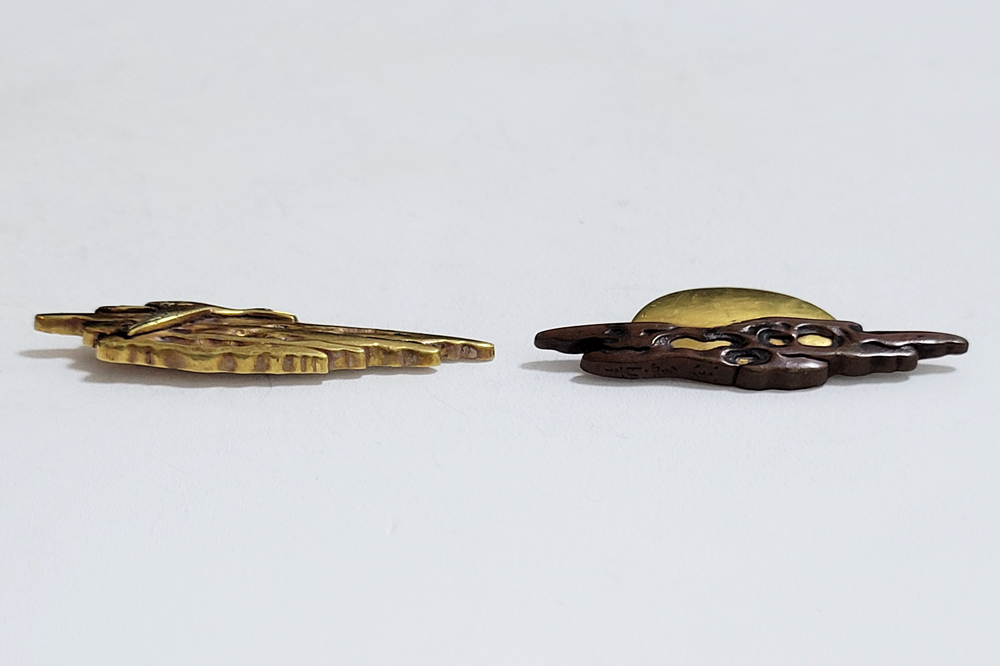
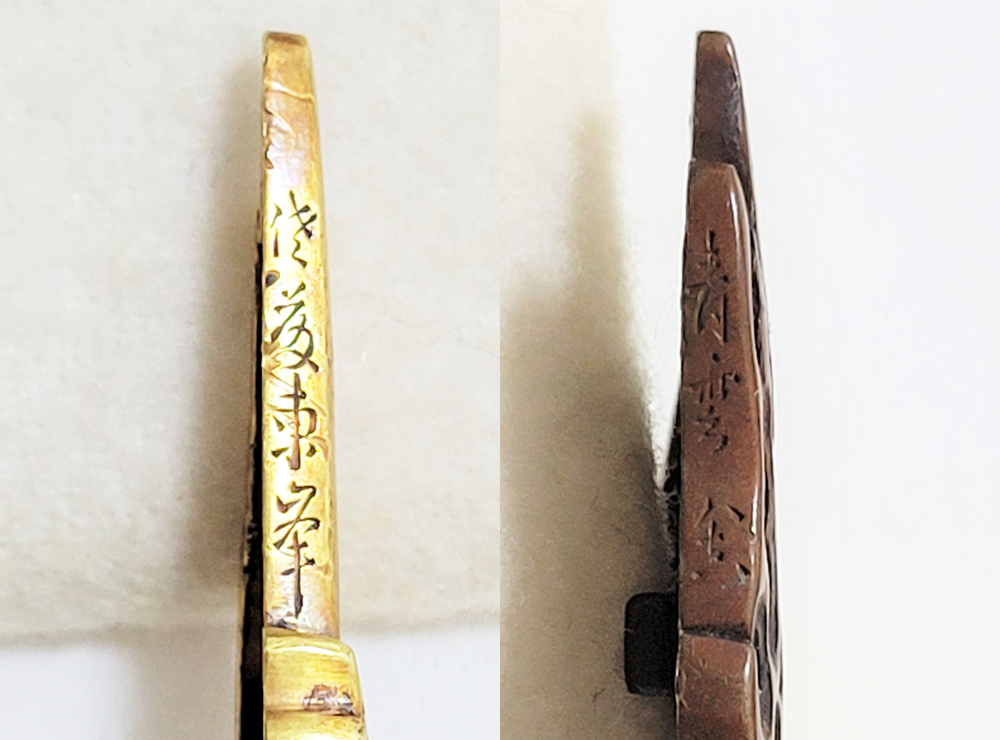
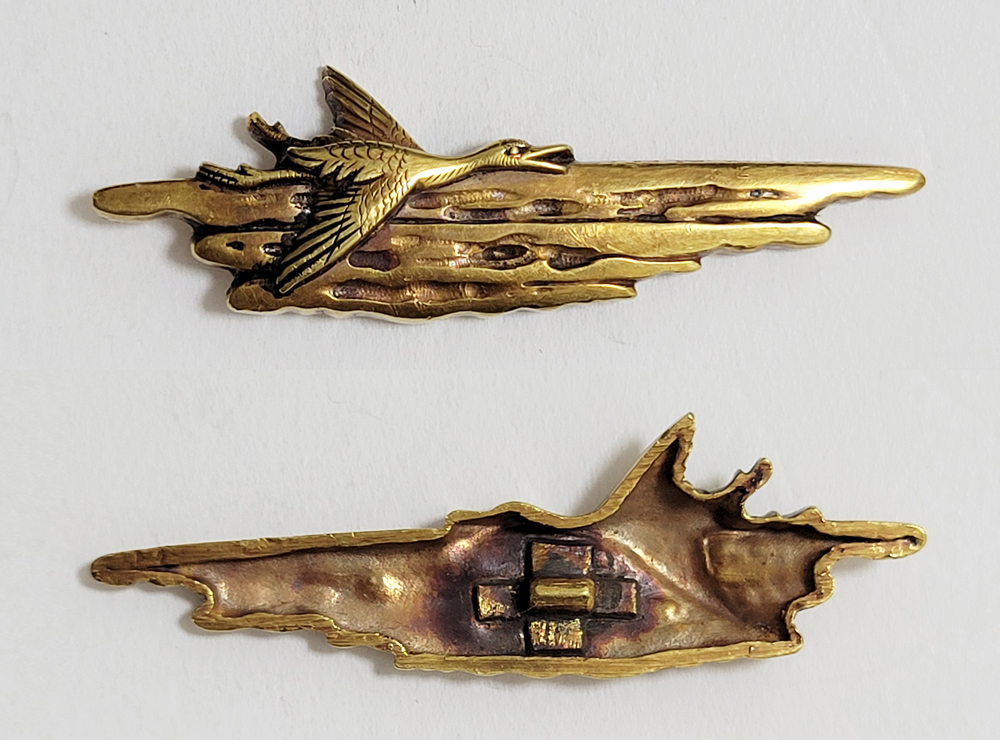
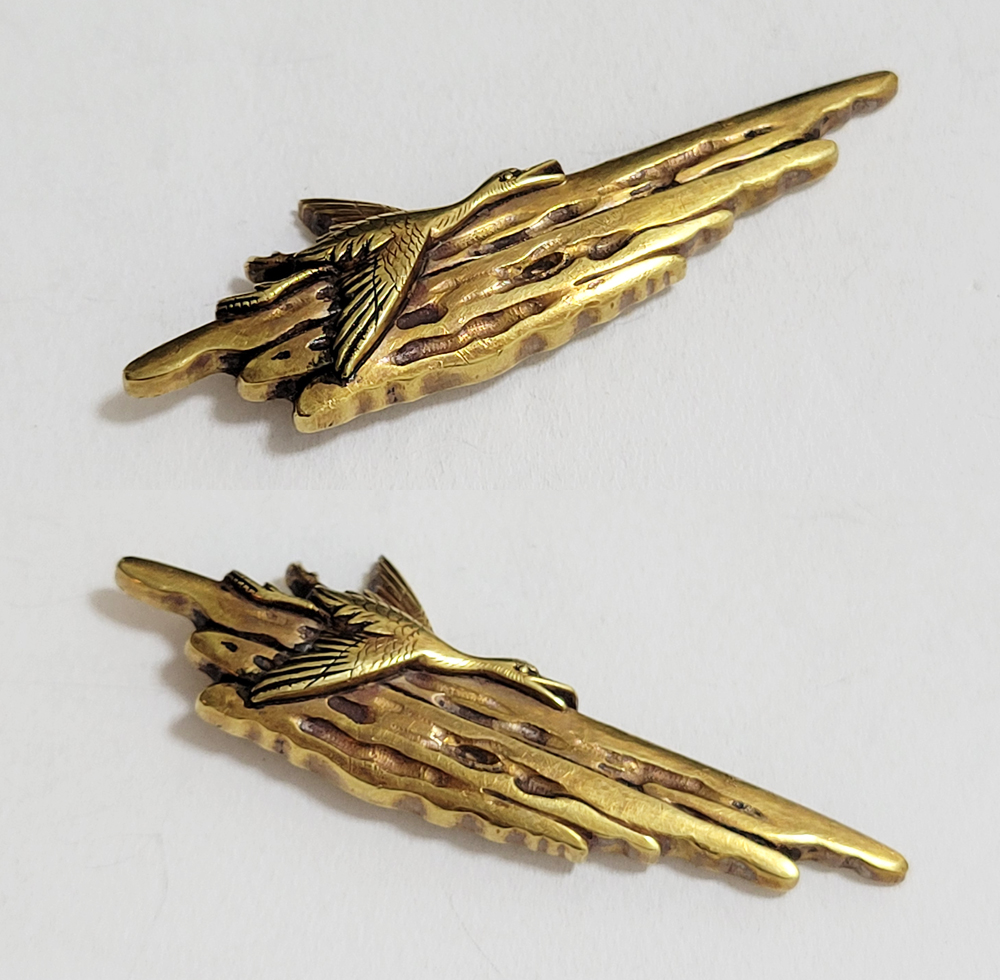
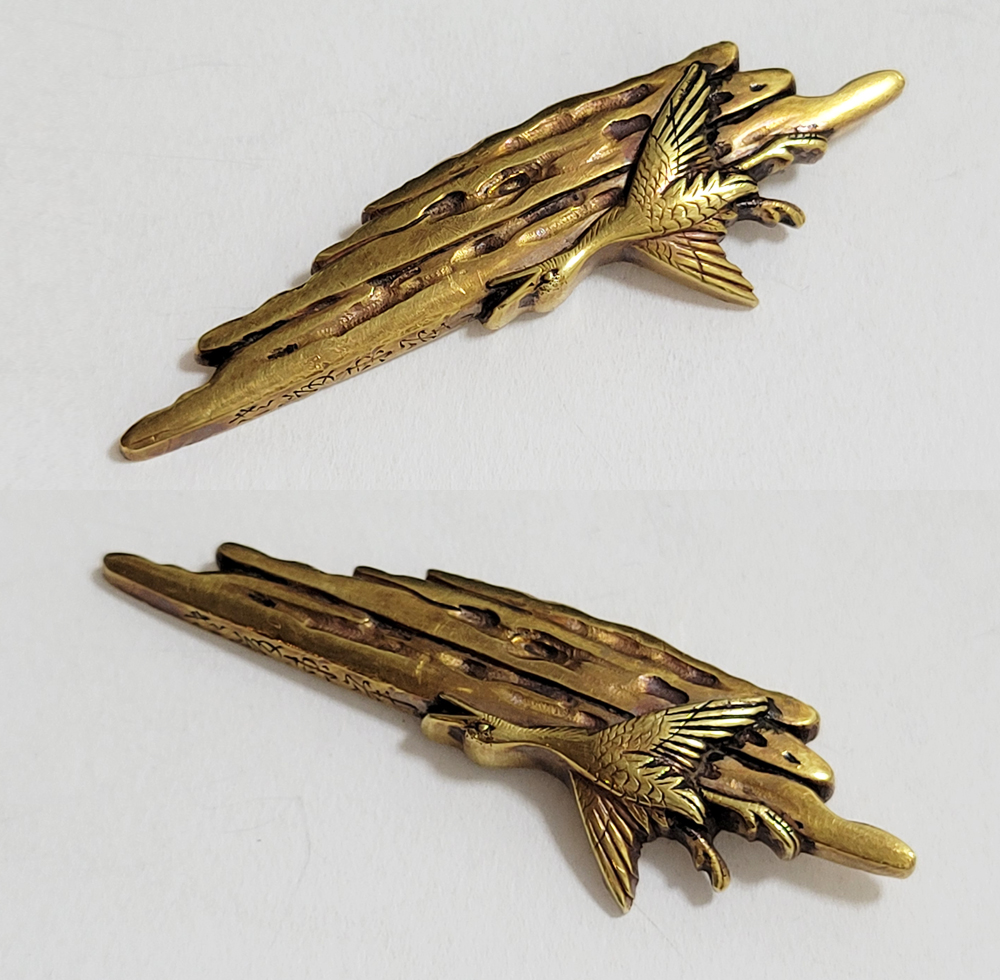
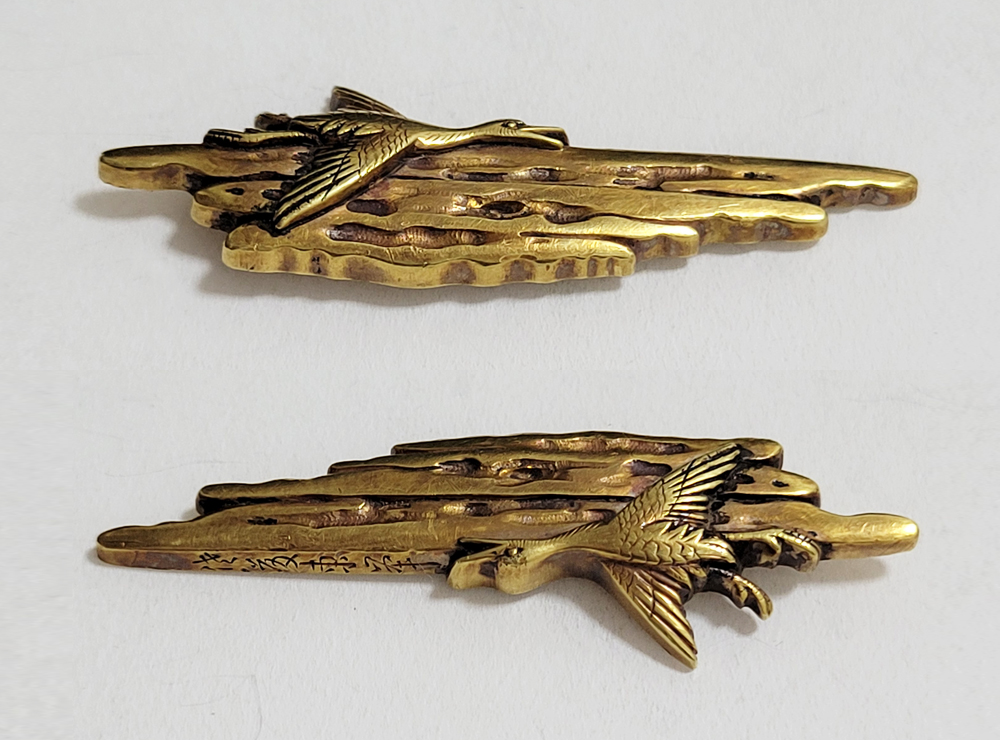
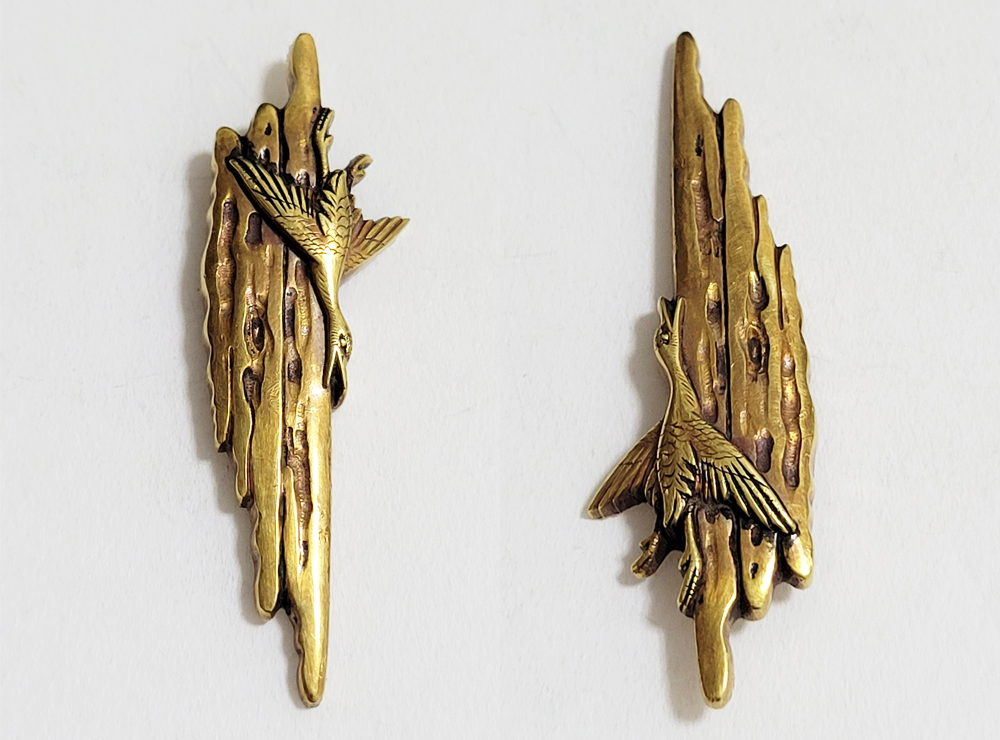
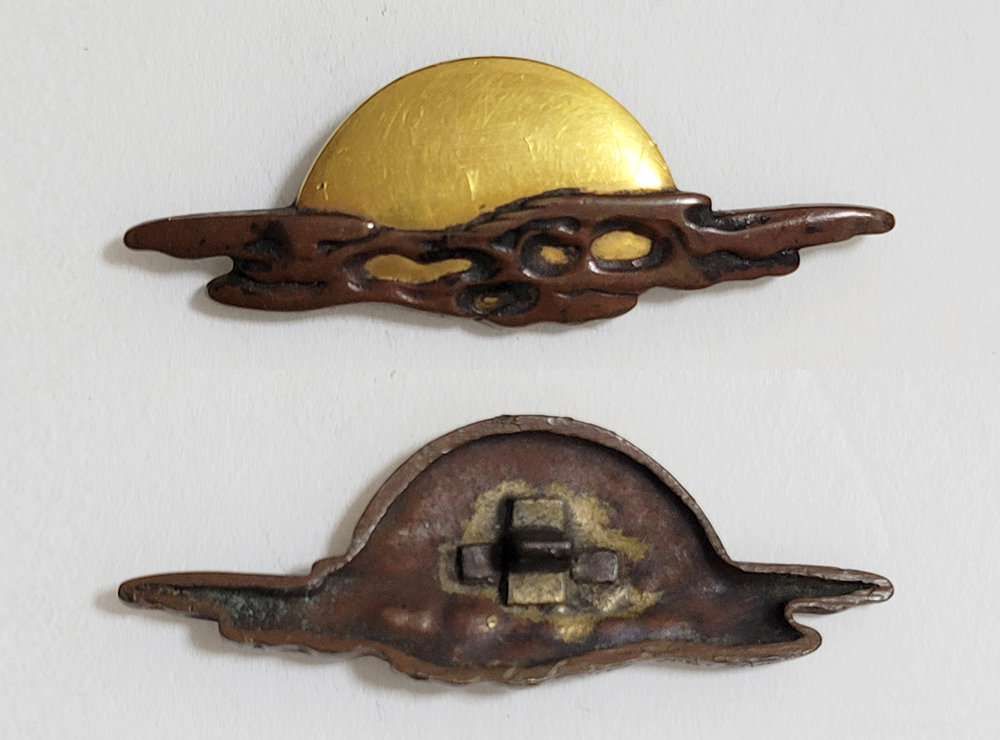
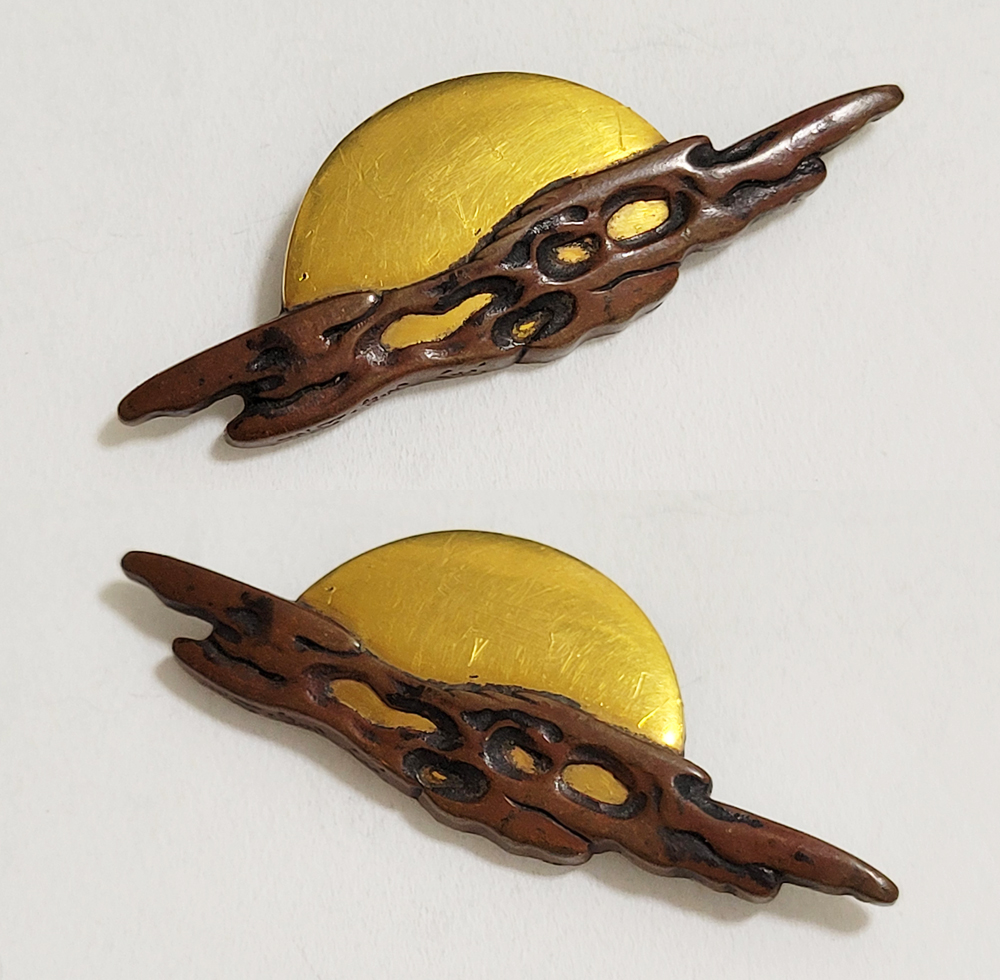
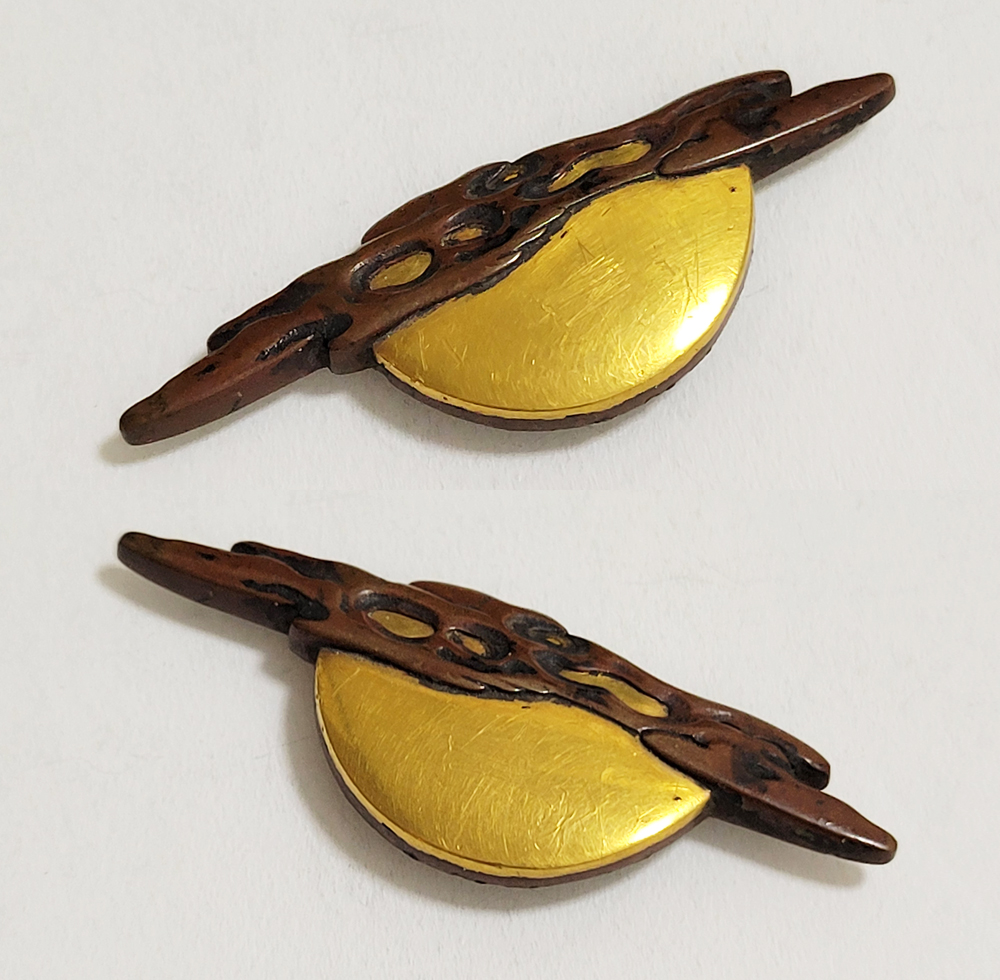
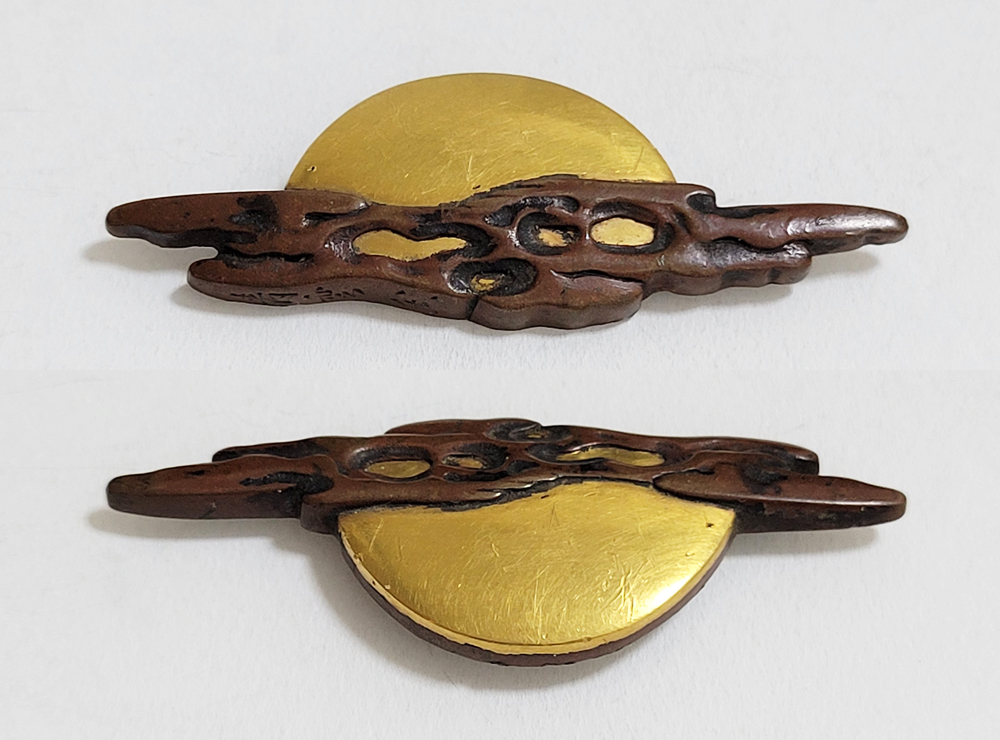
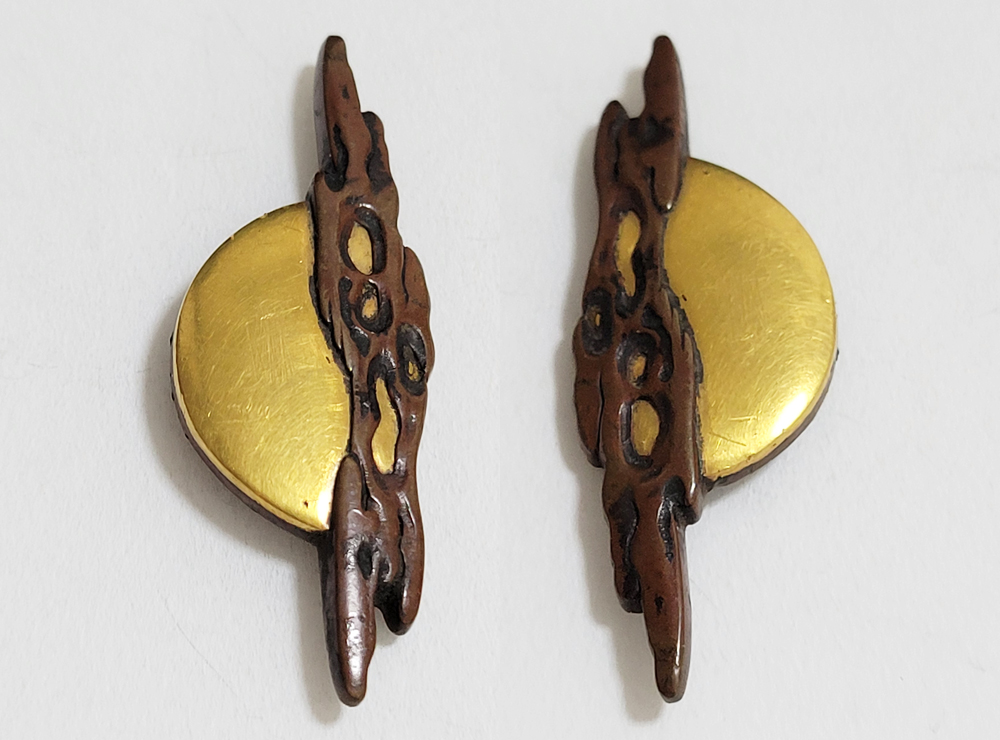
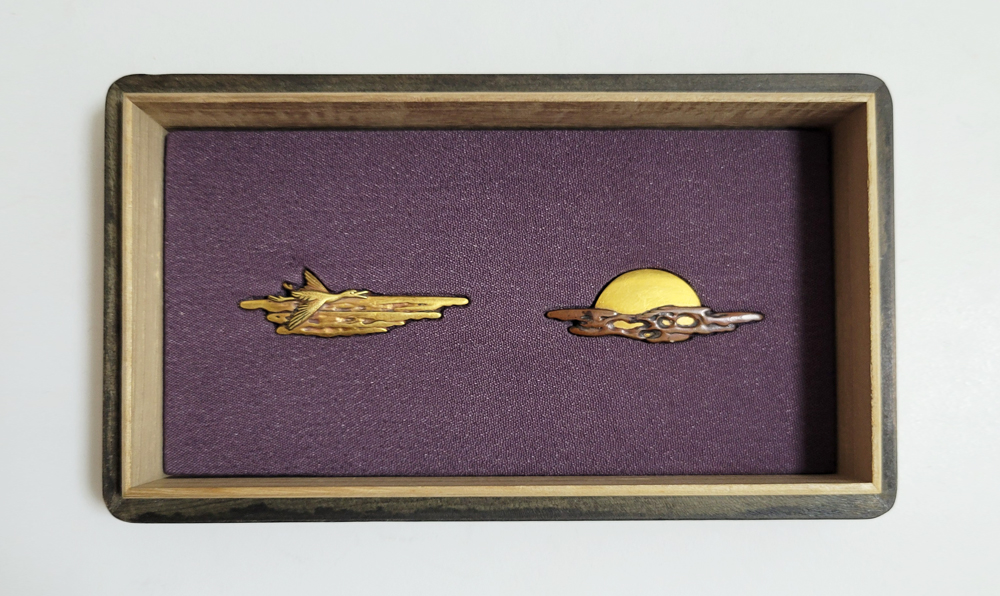
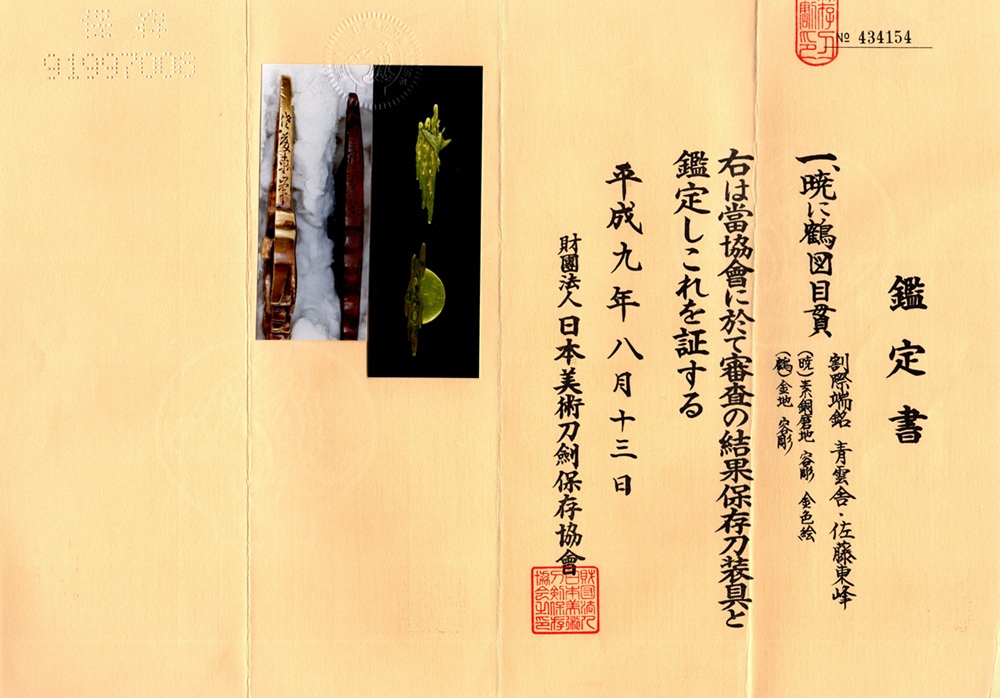
| “The Crane and Dawn” is an auspicious design combining the crane, a symbol of longevity and felicitous fortune, with the dawn, representing renewal, rebirth, and a good omen.The sword-fittings metalworker Satō Tōhō (佐藤東峰) was a disciple of Gotō Tōjō (後藤東乗). He was born in Bunsei 7 (1824), and at the age of fifteen was granted the privilege of bearing a surname and wearing swords, and was permitted access to the Fushimi-no-miya household. He received a character from his master’s name and adopted the art name Tōhō. His junior fellow disciple included Araki Tōmei (荒木東明). He died in Ansei 6 (1859) at the age of 36.This work is a pair of menuki depicting “Cranes at Dawn,” signed wari-kibata-mei “Seiunsha (青雲舎) – Satō Tōhō (佐藤東峰).” It was formerly in the collection of the noted collector Takenouchi Hiroshi (竹ノ内博), whose paulownia box bears his three-bamboo-leaves seal, and is illustrated in Shumi no Menuki (趣味の目貫) (1969), edited by Wakayama Takeshi and Takenouchi Hiroshi. It has passed the Hozon Tosogu shinsa in 1997 |

 Search