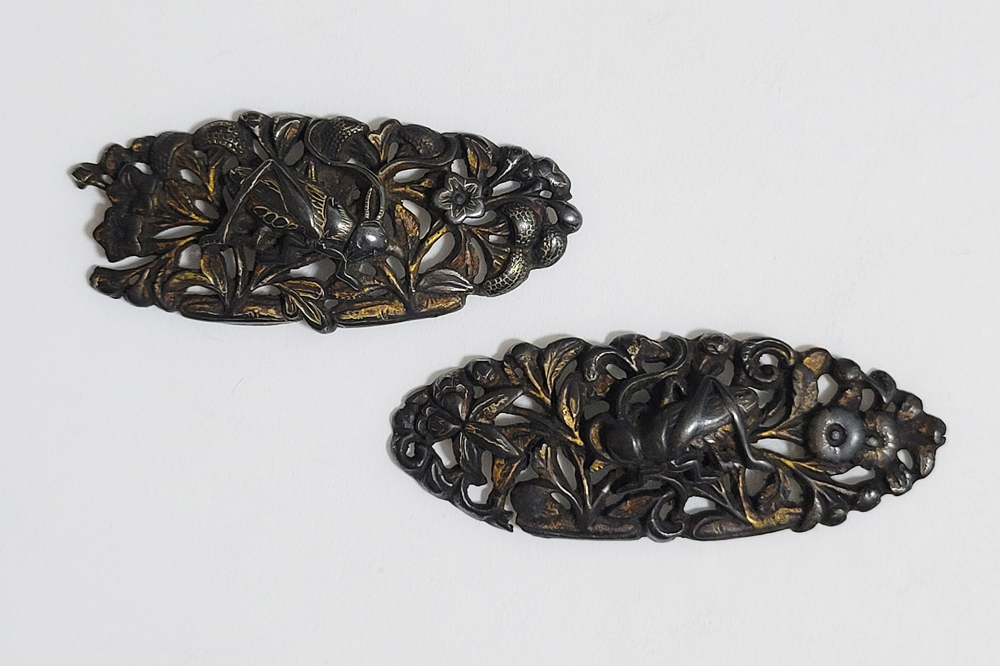
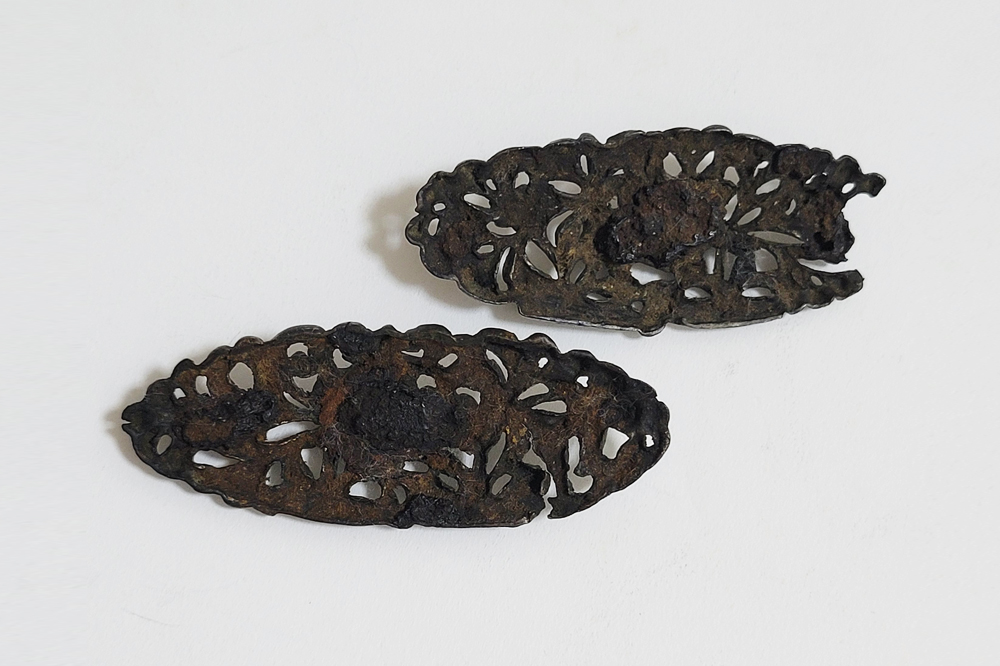
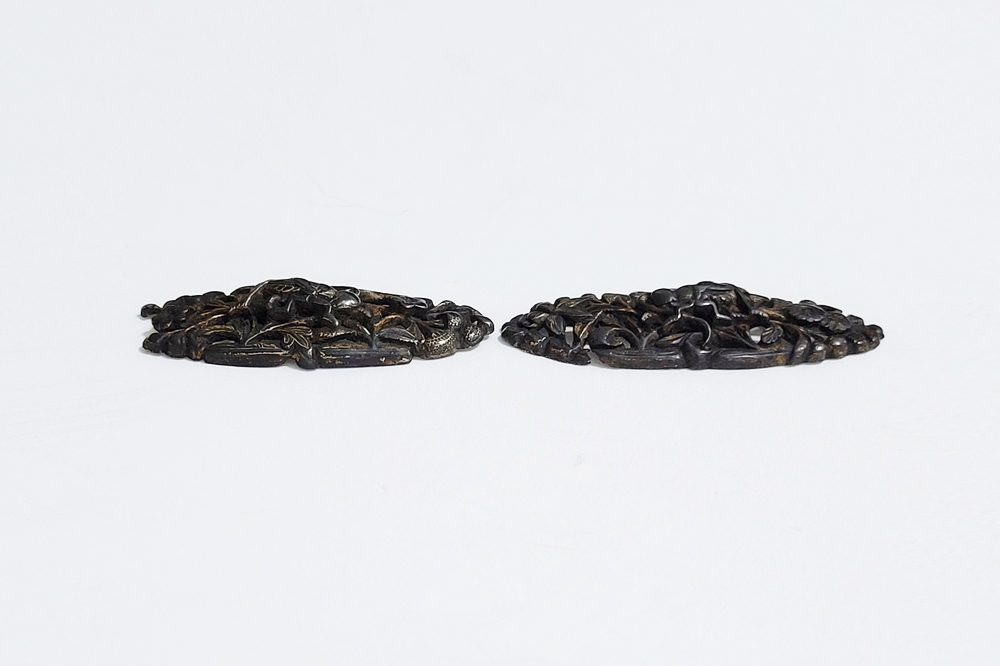
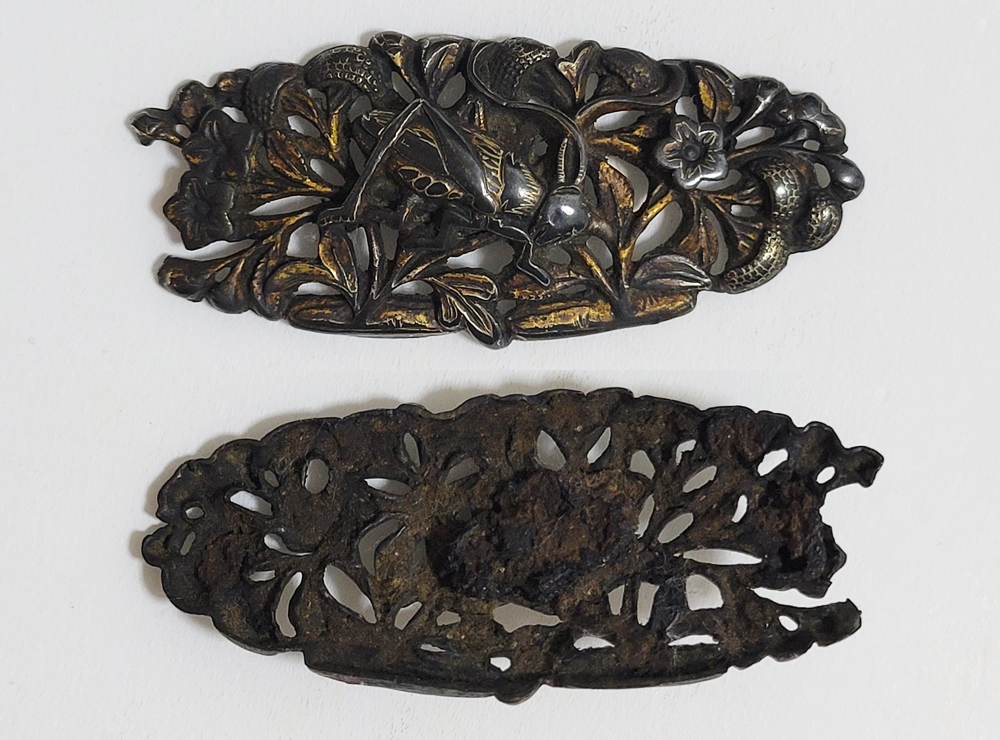
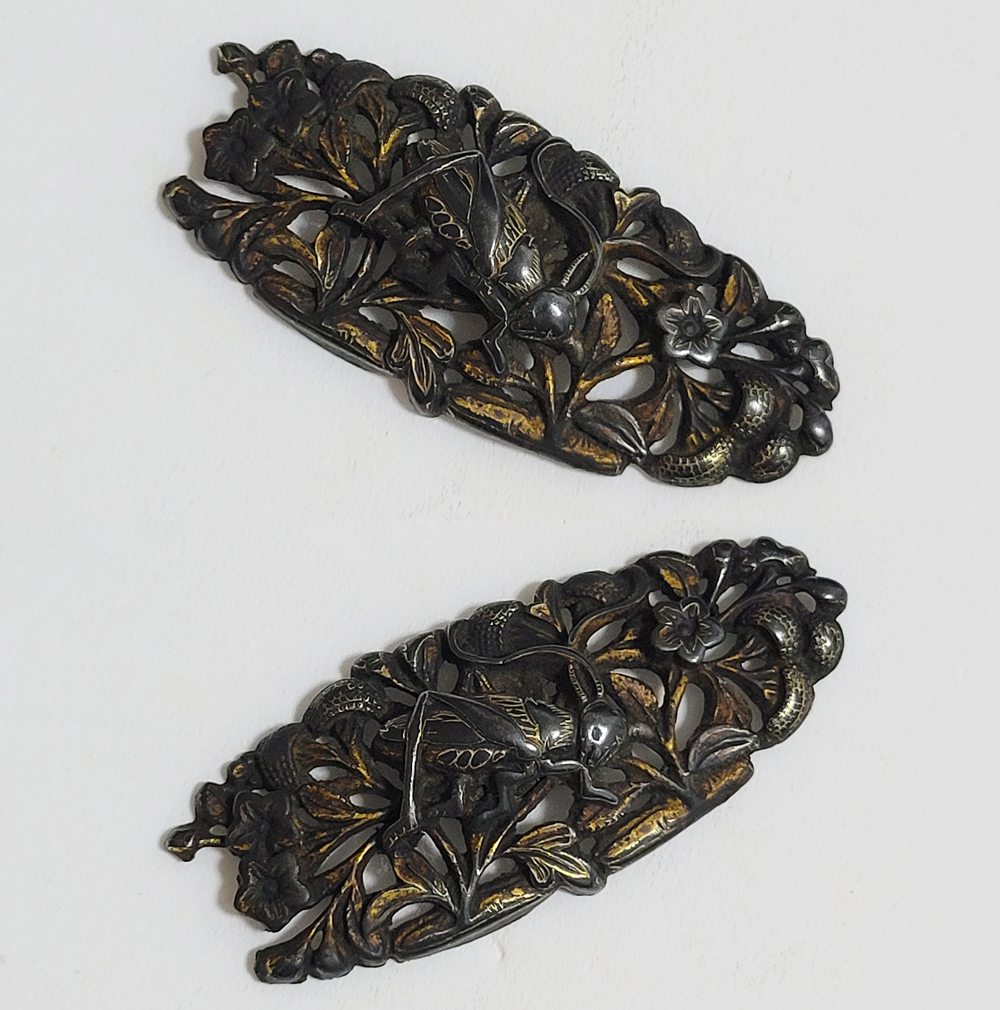
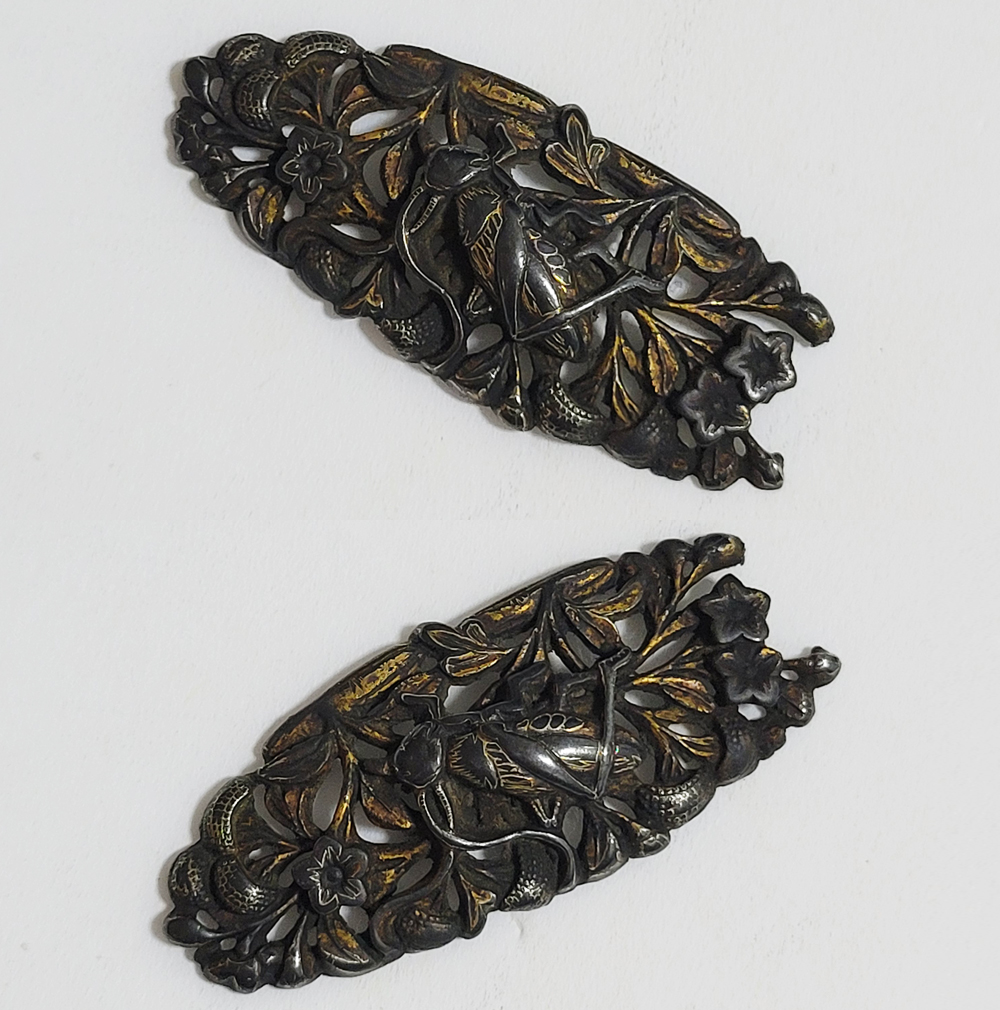
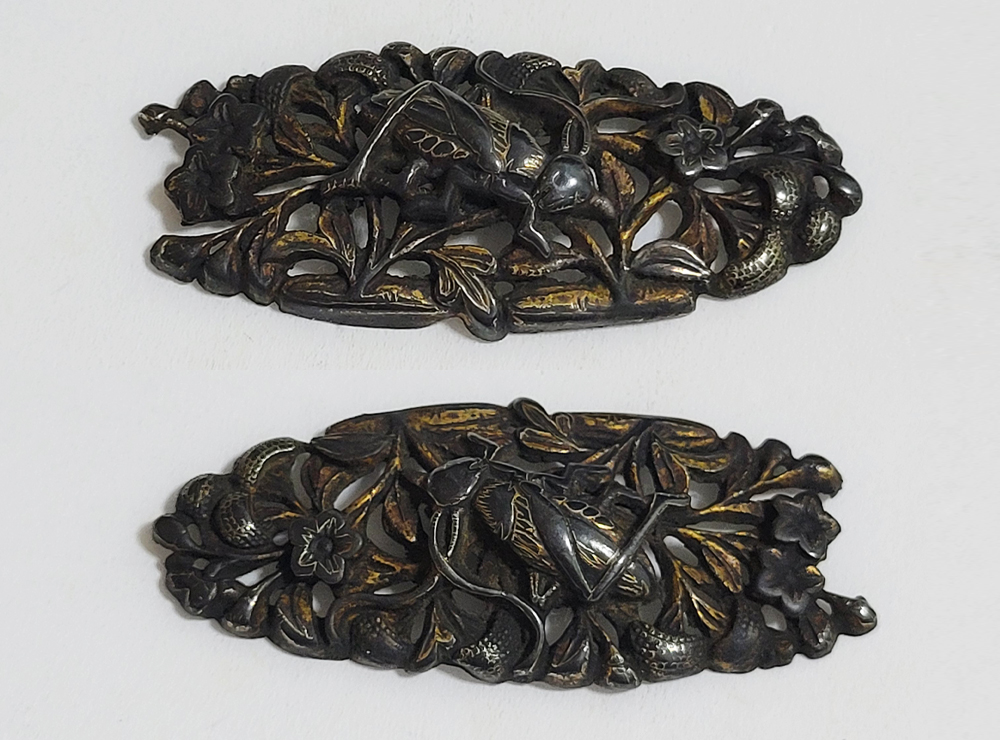
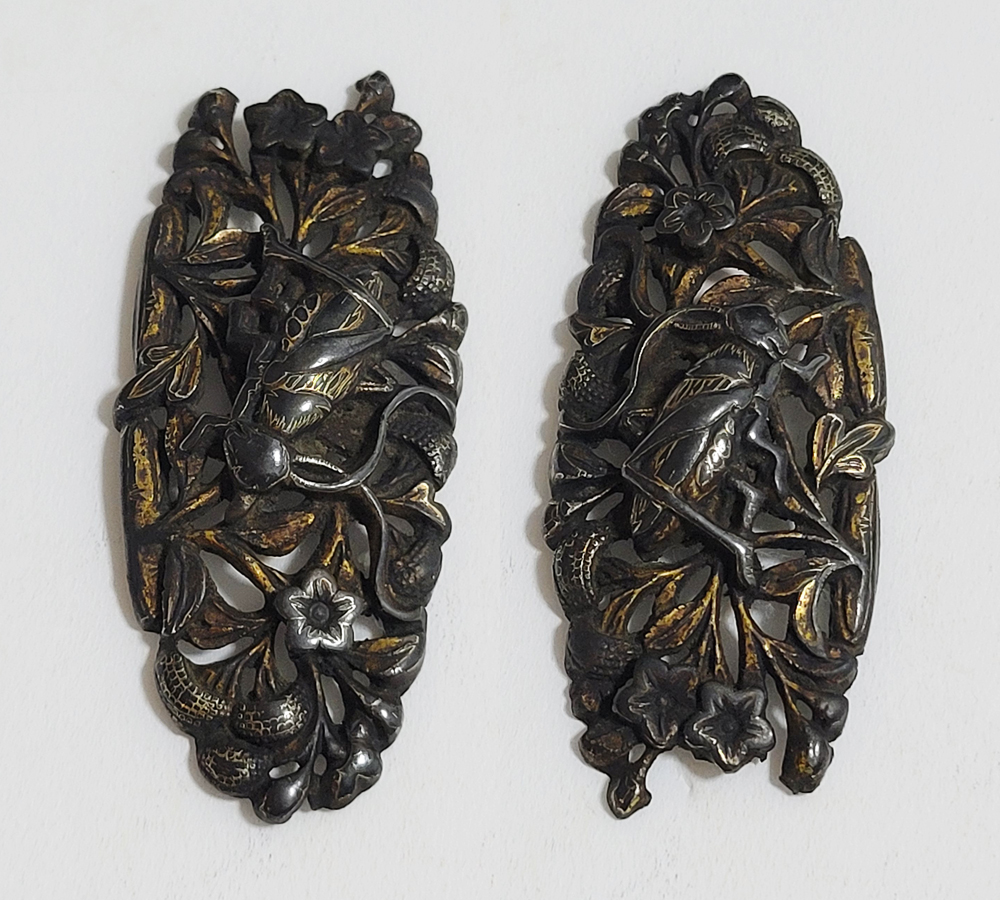
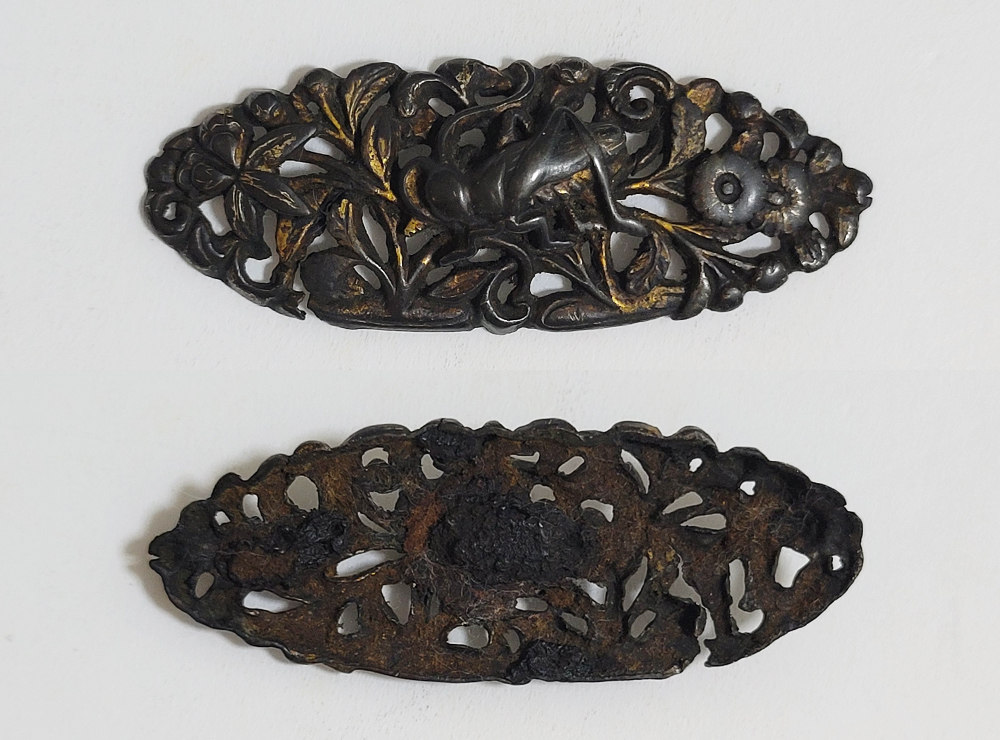
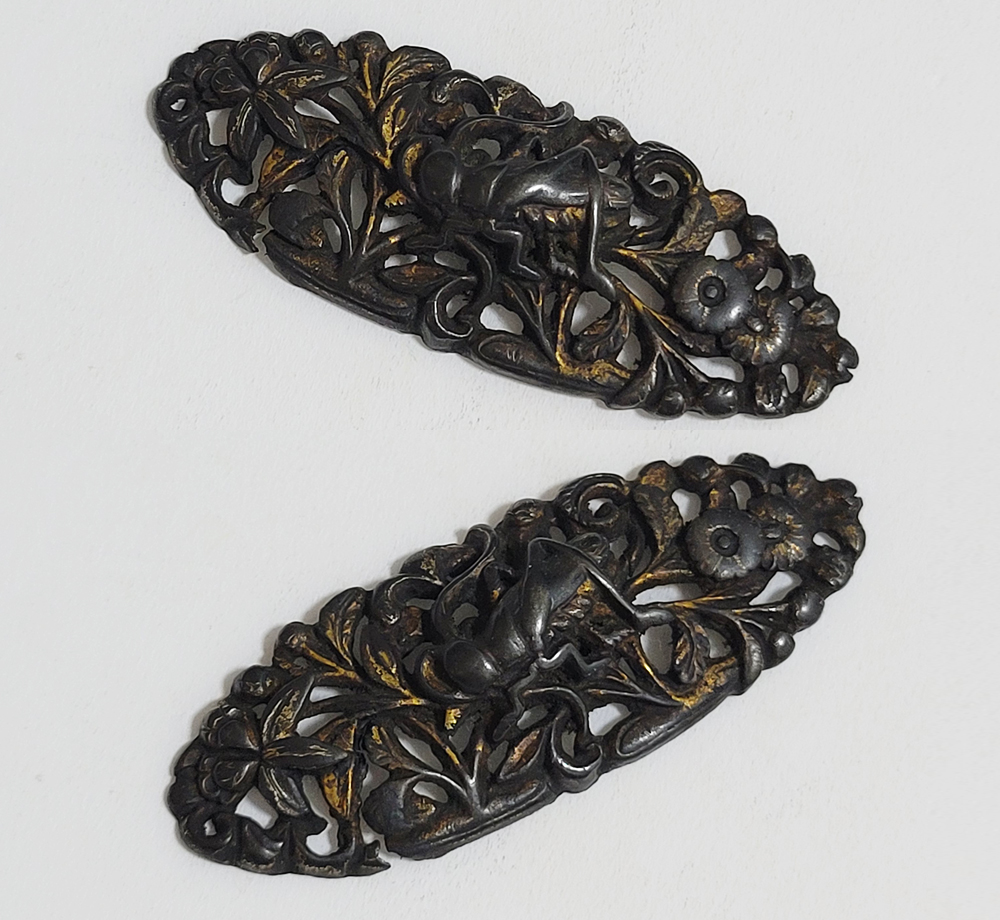
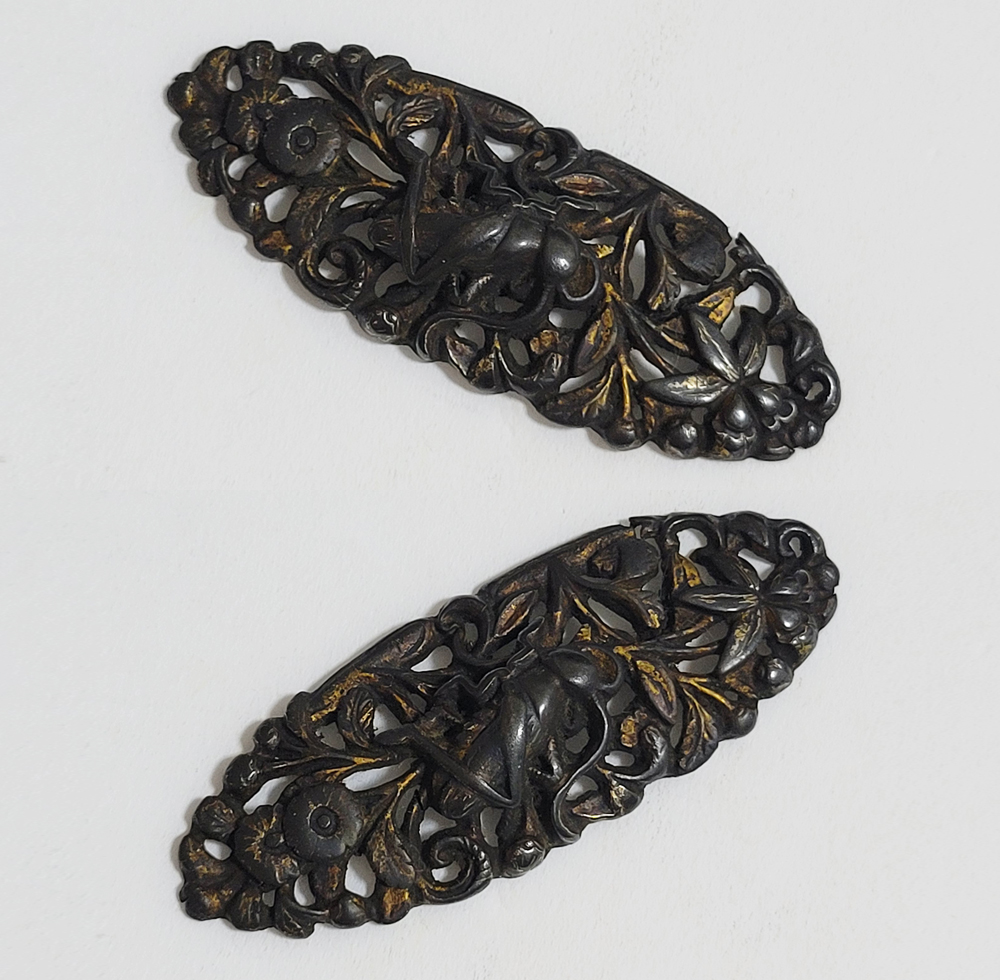
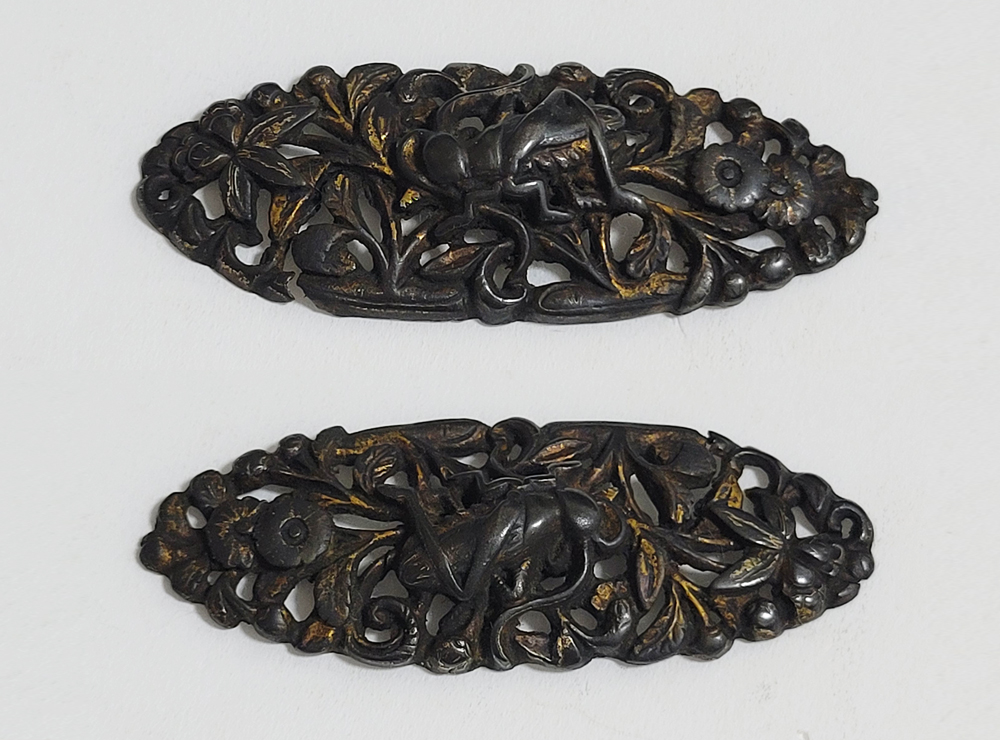
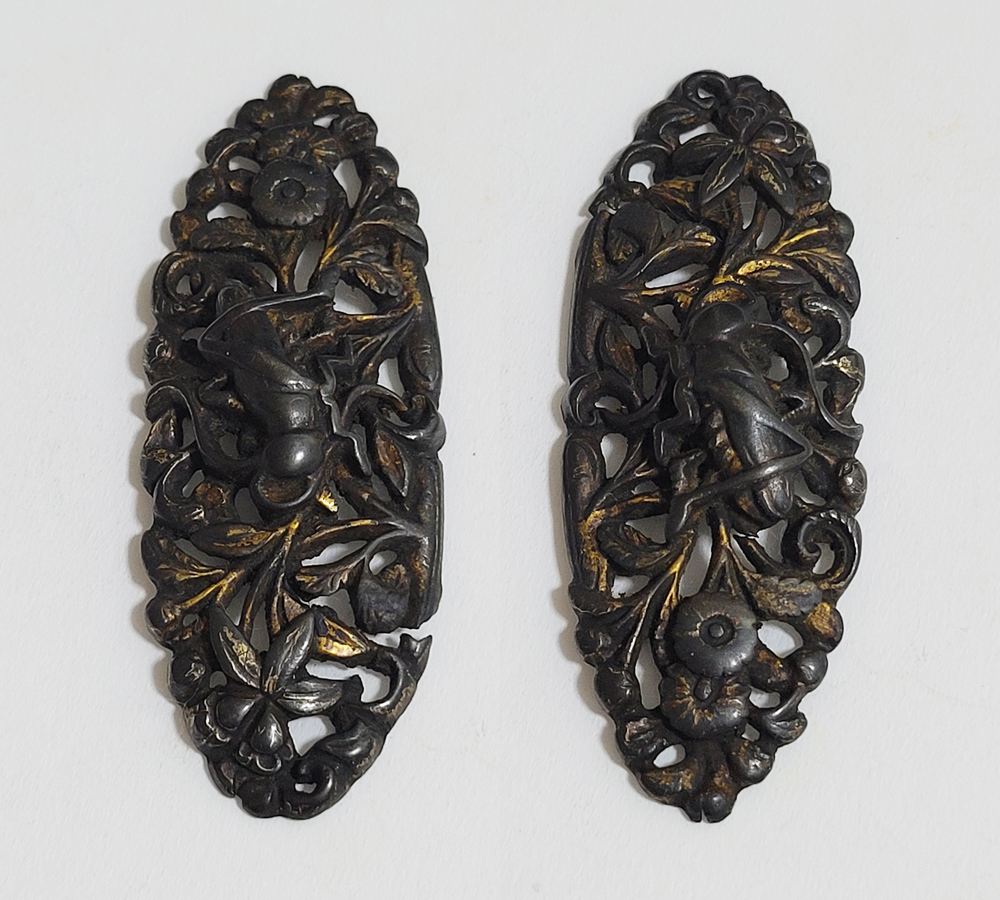
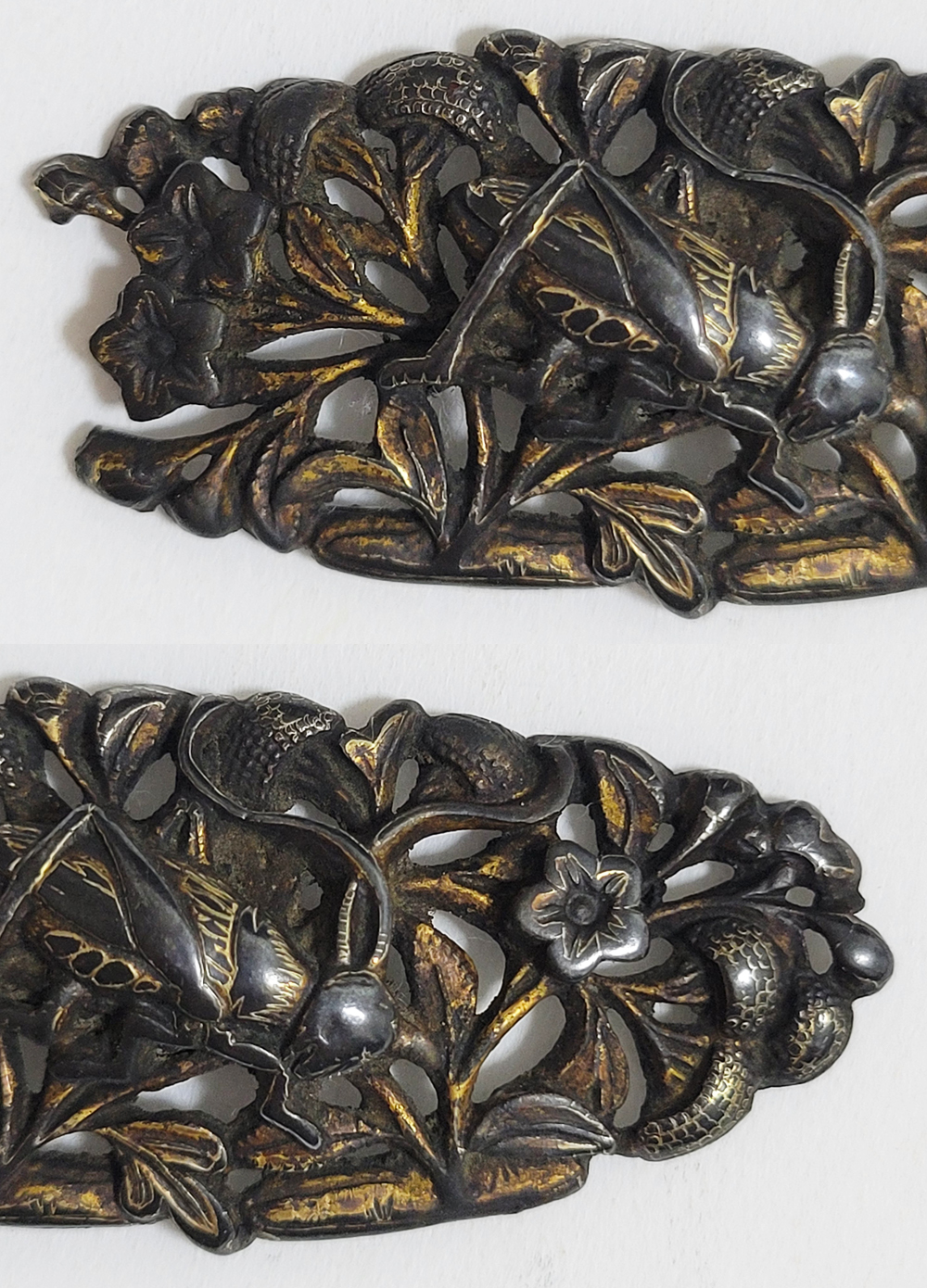
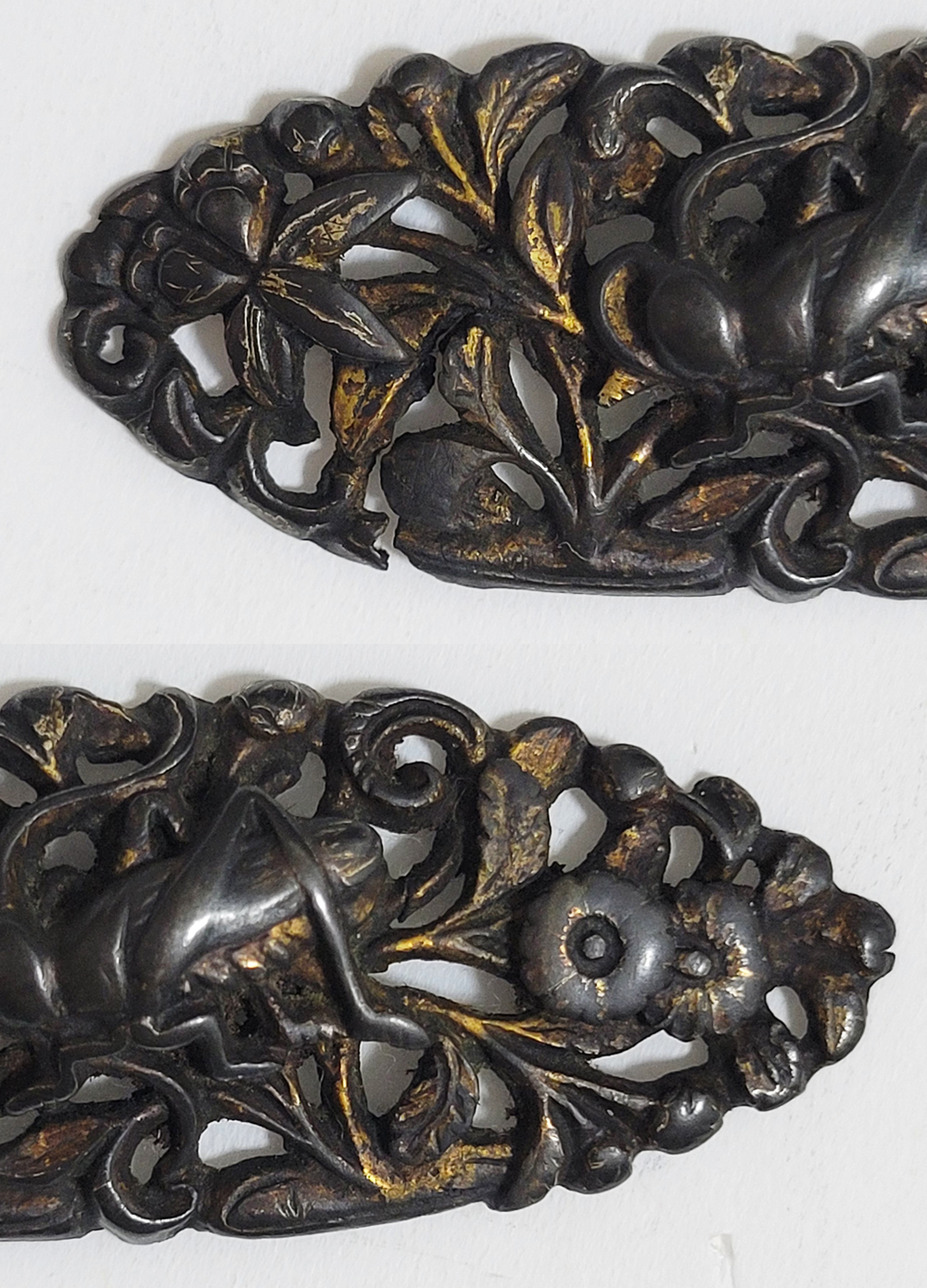
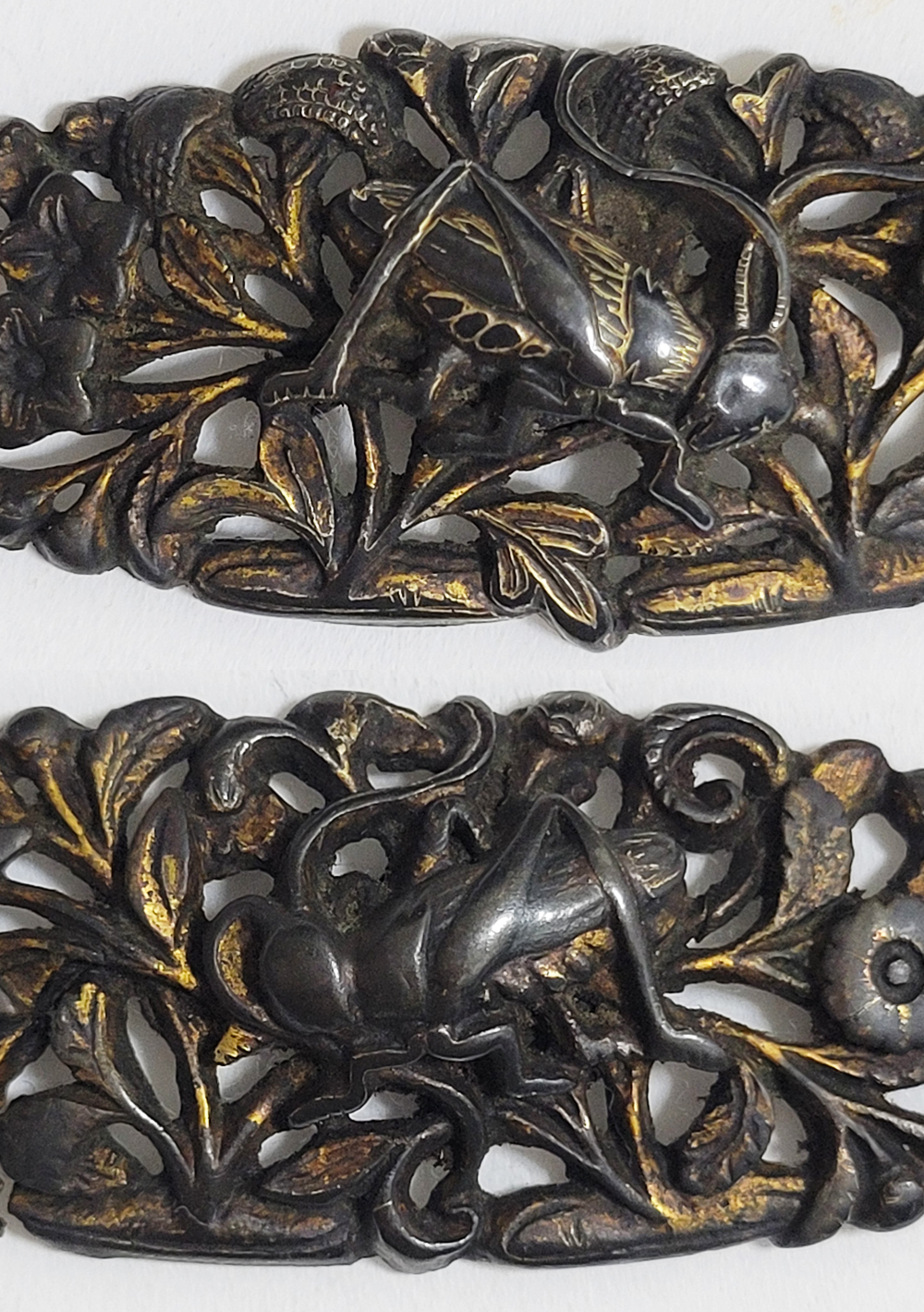
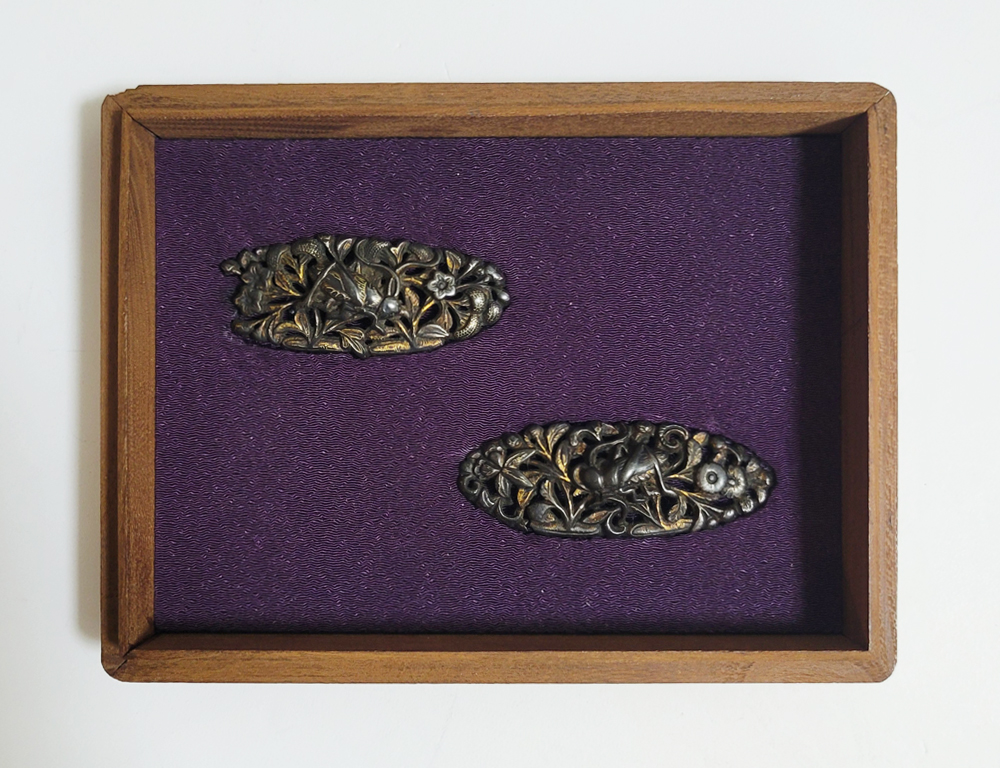
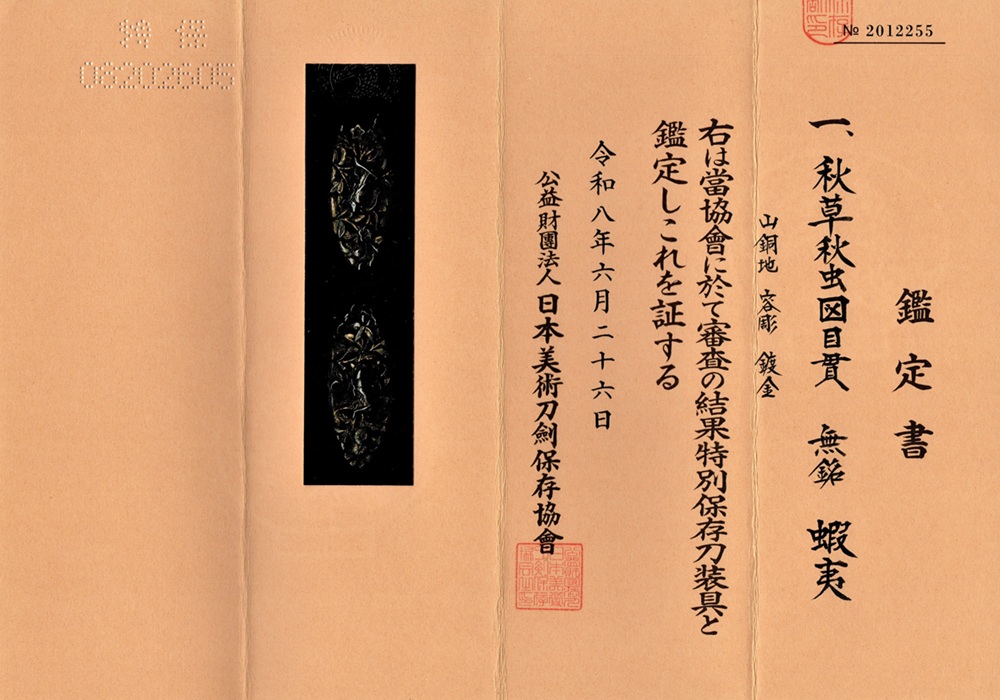
| Ezo menuki are characterized by relatively large designs executed in katachibori with openwork carving and a thin layer of gold plating. Over time, much of the gold plating has worn away, revealing the underlying metal. Their designs are generally bold and powerful. Although known as Ezo menuki, these fittings were produced in mainland Japan for trade with the Ainu people, reportedly being exchanged for bear skins and other goods. This pair is a typical example of Ezo menuki, although it is regrettable that the left end of the omote menuki is partially missing. Judging from their rich, aged patina and characteristic workmanship, these menuki are believed to date to no later than the Momoyama period. They passed the NBTHK Tokubetsu Hozon Tosogu shinsa in 2026. |

 Search