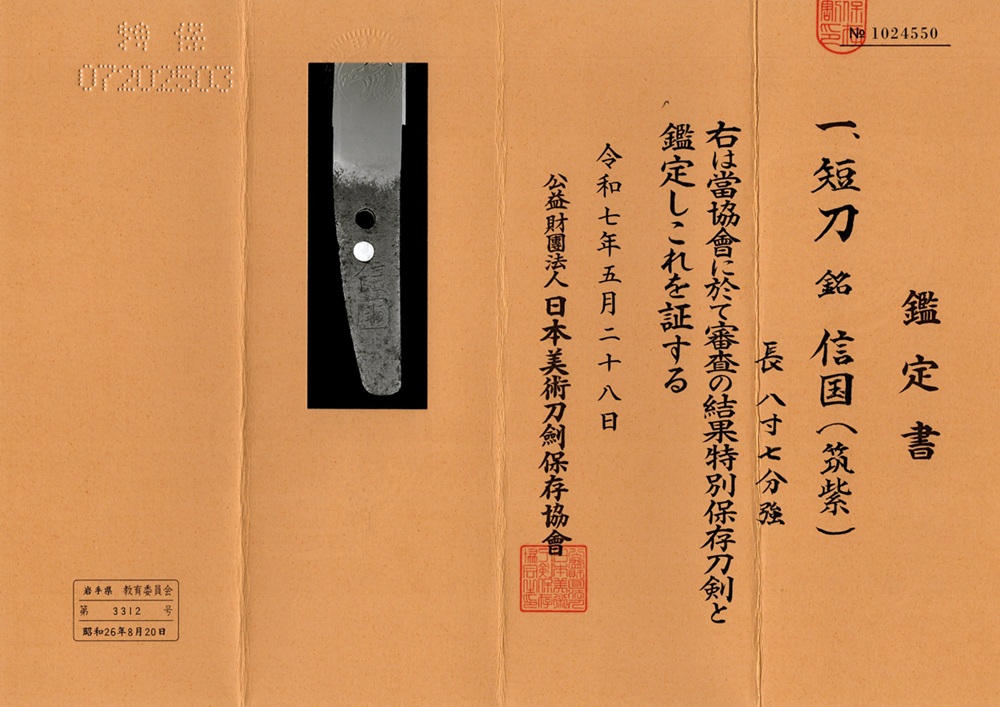
| Product No. TAN-0394 信国(筑紫) | |
|---|---|
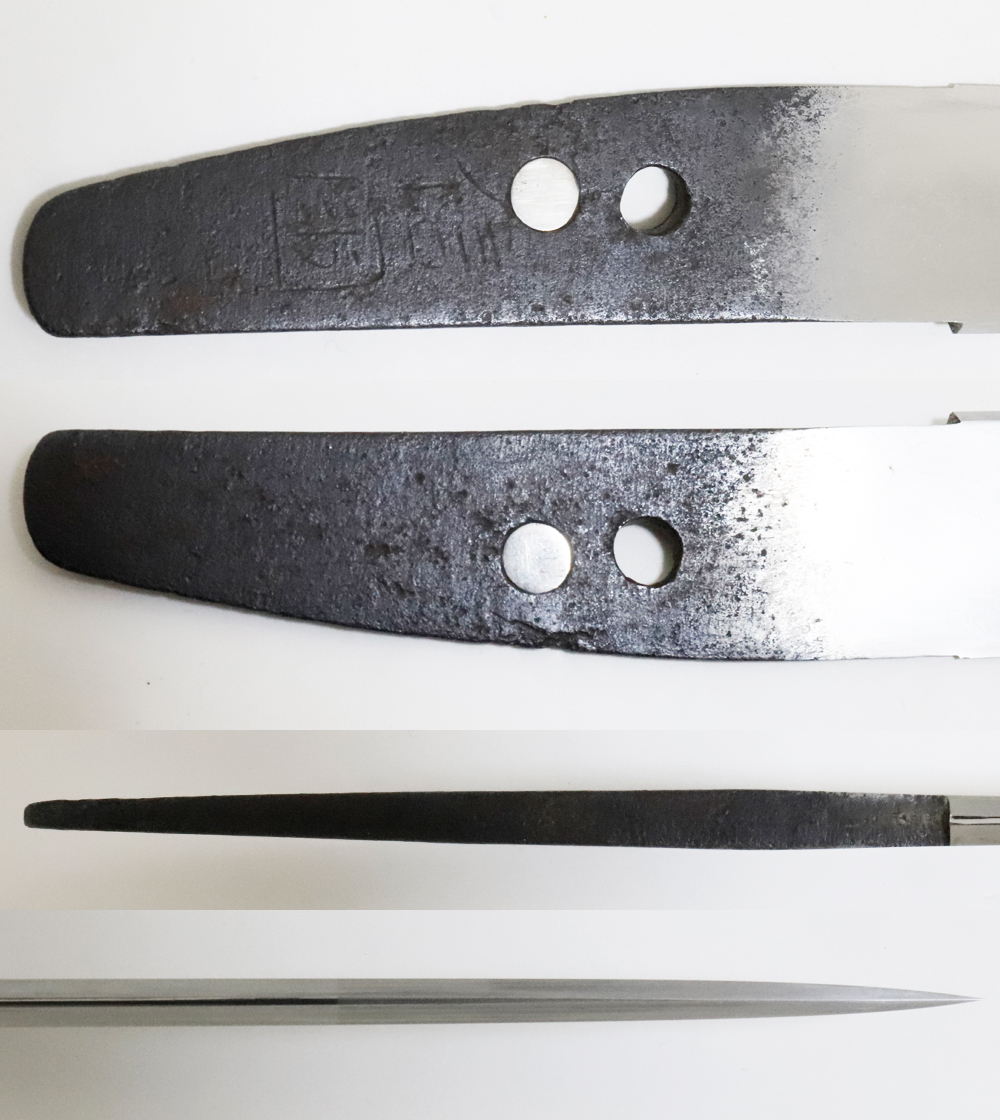
| Mei |
Nobukuni (Chikushi) Back: -- |
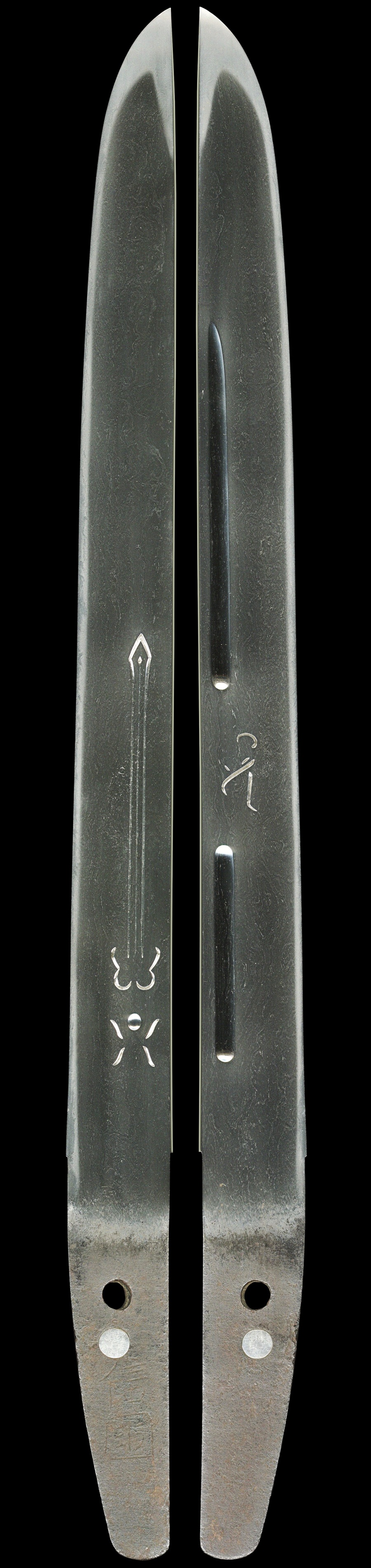
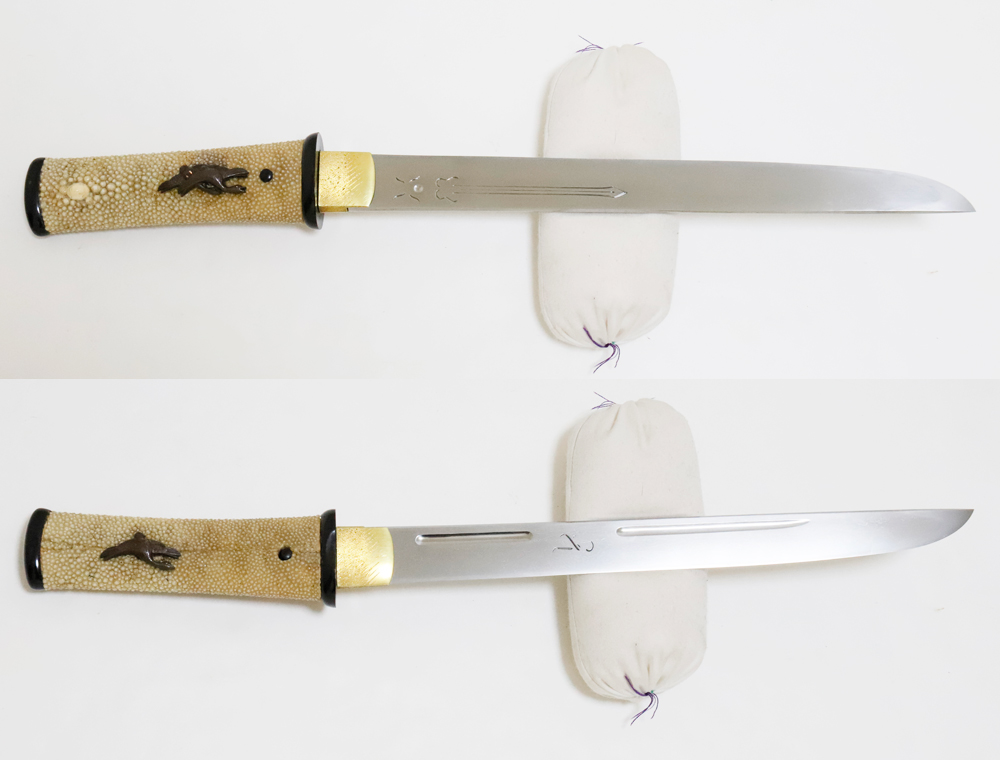
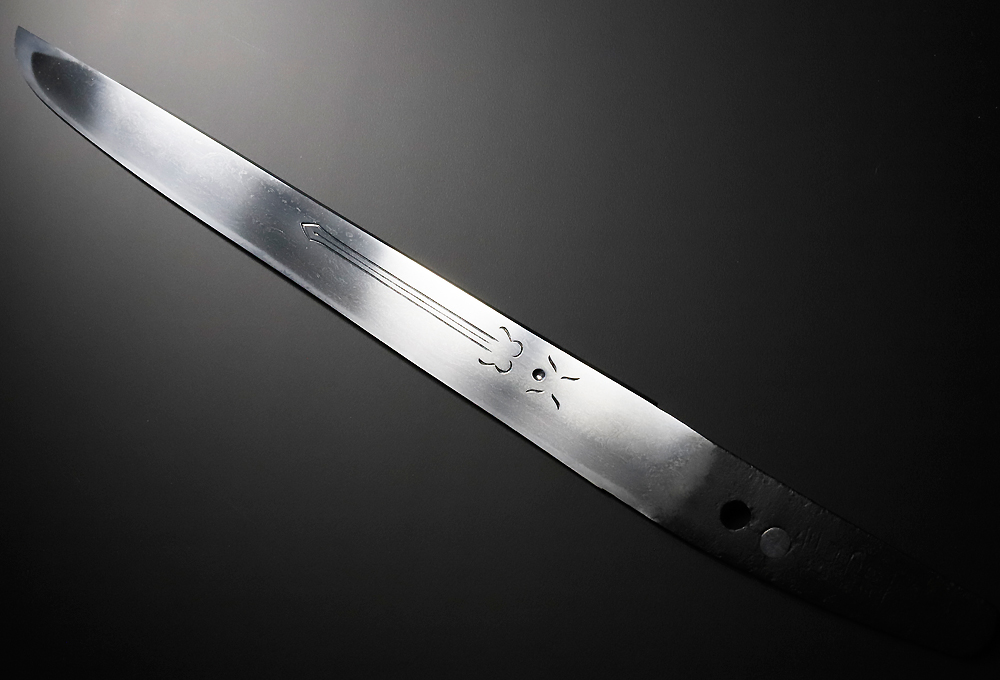
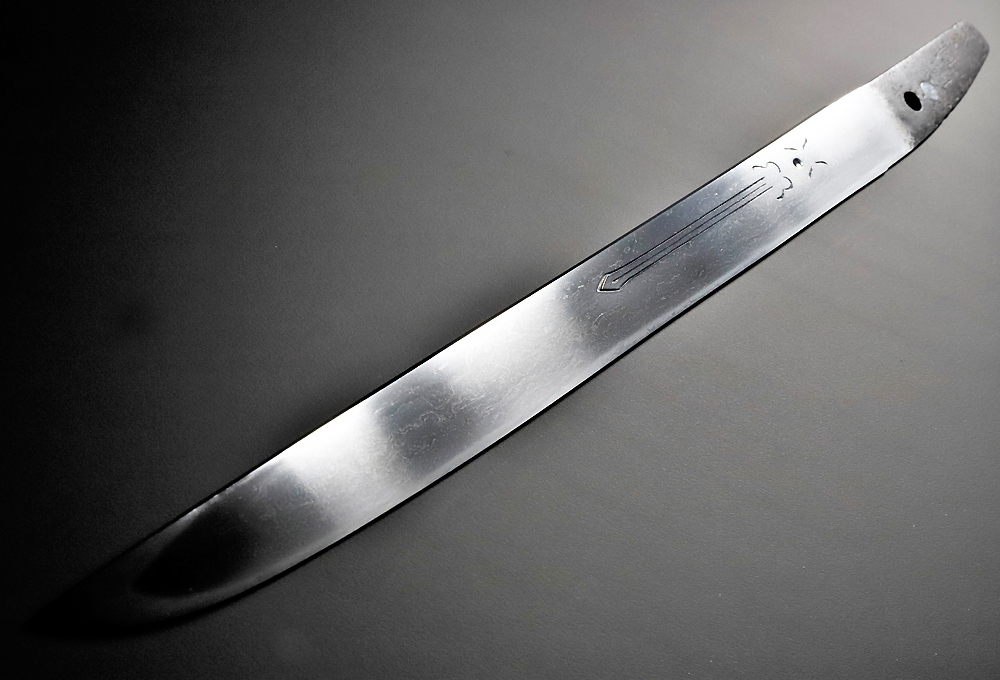
| Shape | Hira-zukuri with a mitsu-mune. Standard mihaba, thin kasane, and an elegant shape with takenoko-zori (bamboo shoot curvature). |
| Region | Buzen Province |
| Era | Early Muromachi period |
| Length |
26.5 cm 10.4 in |
| Motohaba |
2.5 cm 1.0 in |
| Munekasane |
0.5 cm 0.2 in |
| Status | Tokubetsu Hozon Token |
| Certification Date | May 28, 2025 |
| Registration Authority | Iwate Prefecture |
| Registration Date | August 20, 1951 |
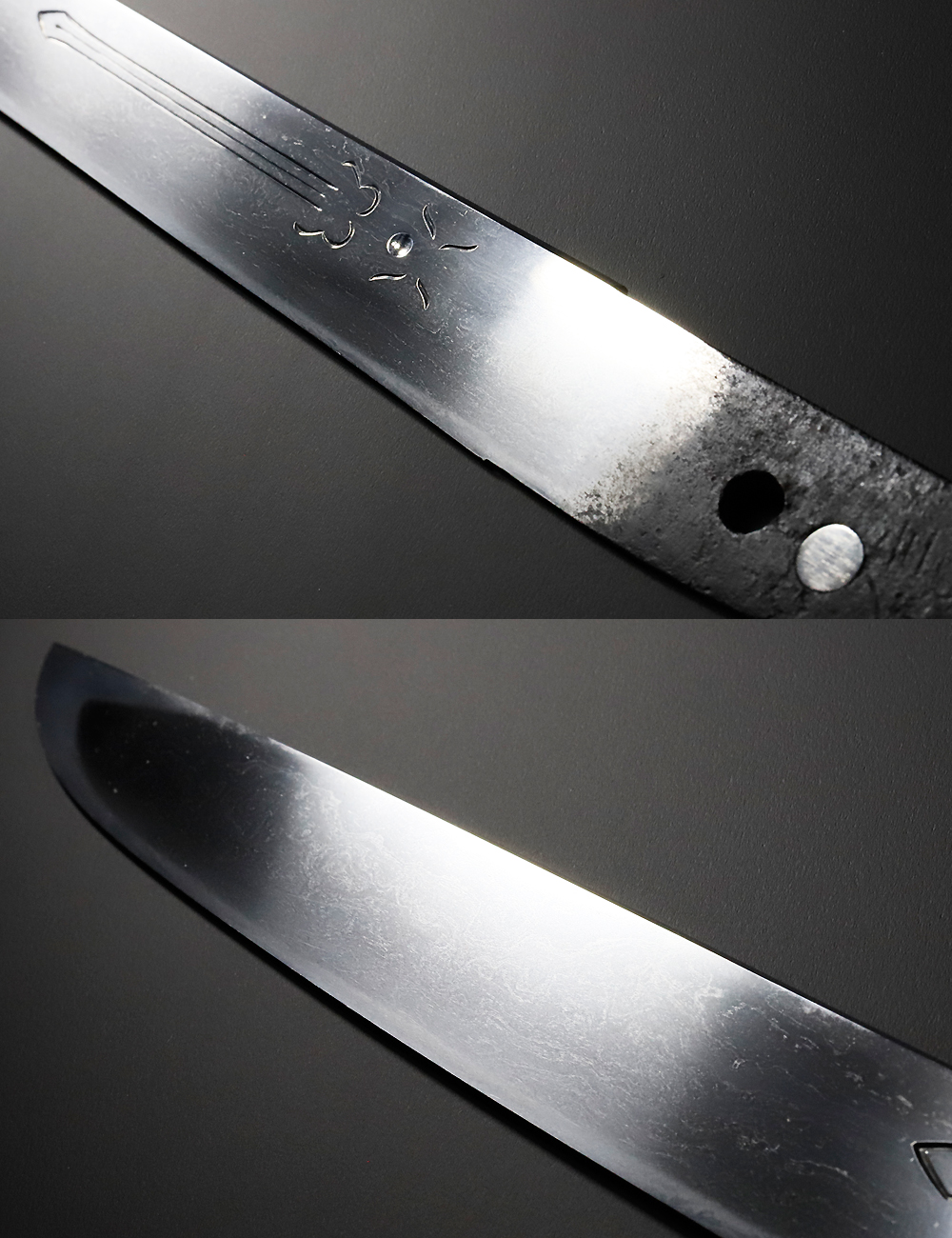
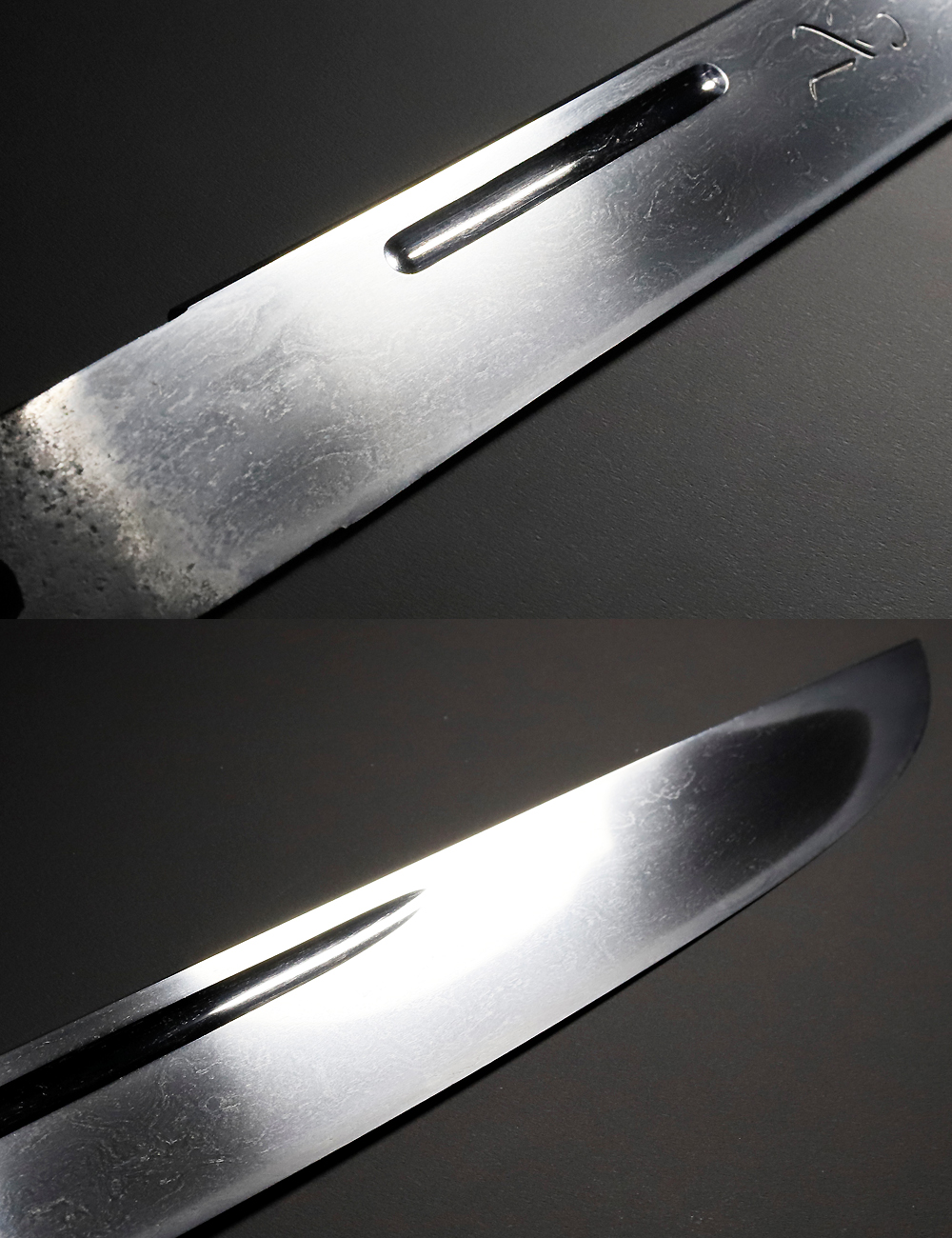
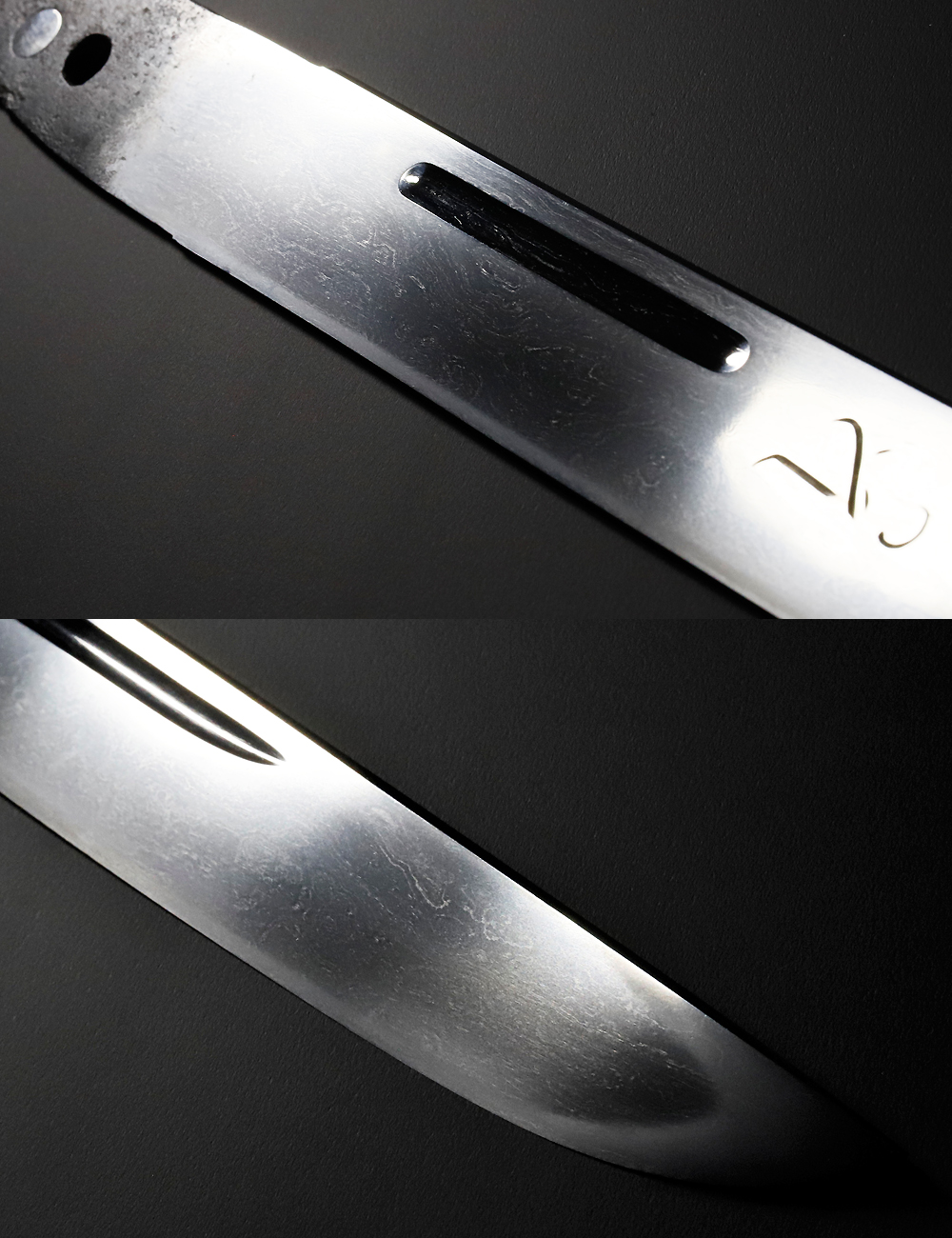
| Jihada (Metal pattern) | Itame-hada mixed with mokume-hada, with some flowing grain patterns. |
| Hamon (Temper line) | Narrow suguha-based ko-midare with some hotsure (fraying). |
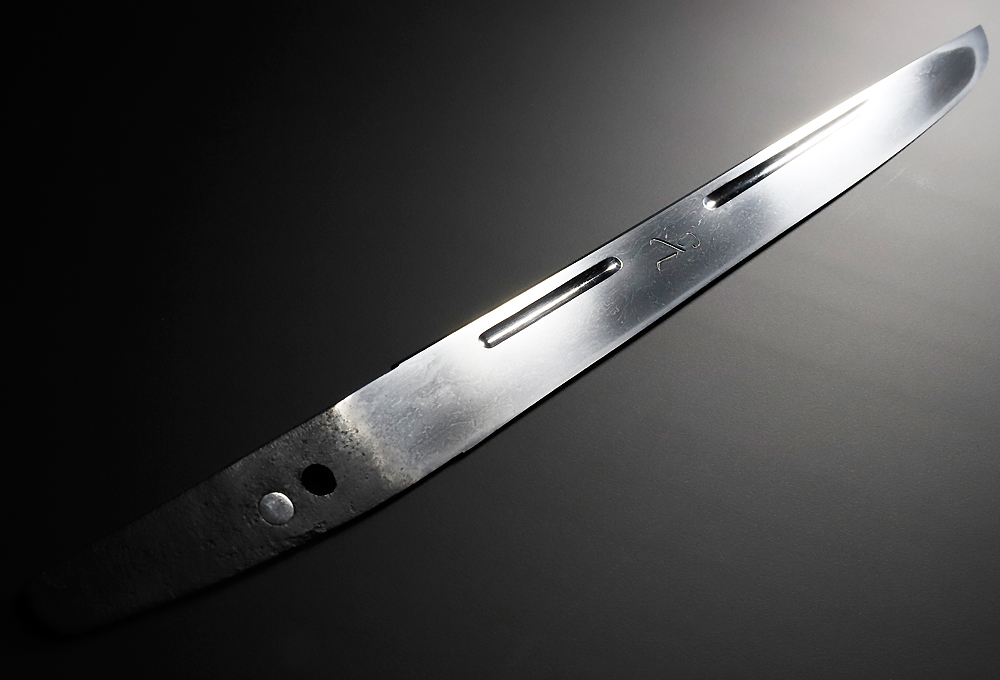
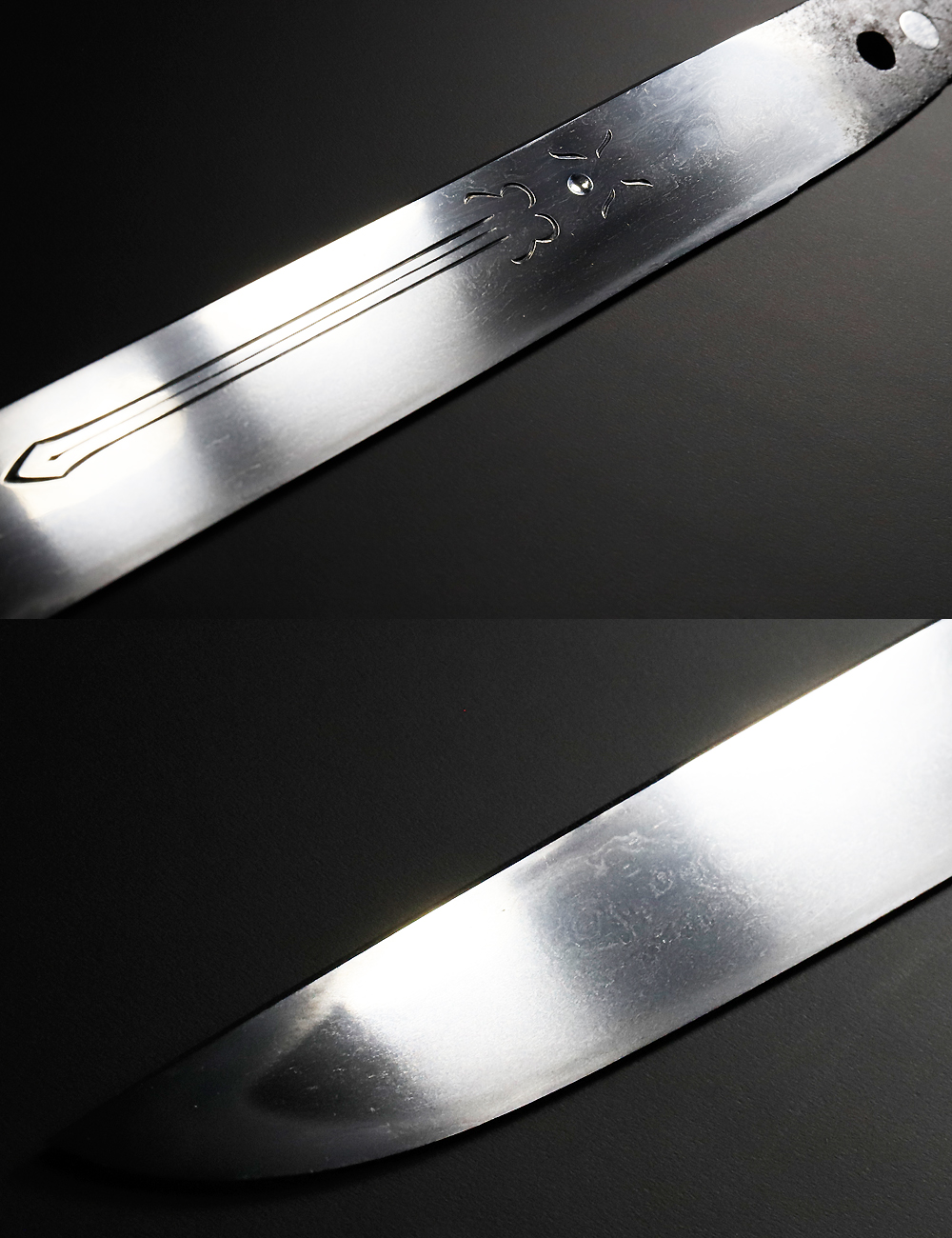
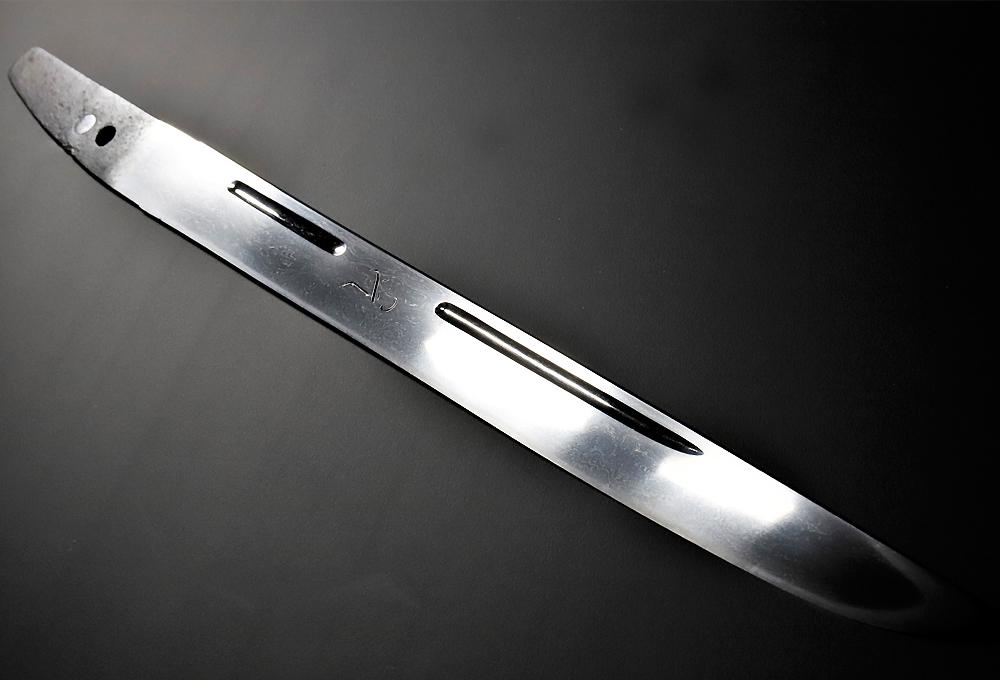
| Engraving | Omote (Front): Su-ken (straight sword) with tsume-renge (clawed lotus). Ura (Reverse): Bo-hi (groove) with a Sanskrit character representing Bishamonten, accompanied by an overlapping koshi-hi (short groove). |
| Bōshi (Point / Tip) | Slightly irregular with a rounded turn. |
| Nakago (Tang) | Ubu (unaltered), with kiri file marks and a kuri-jiri end. Tanagobara-style shape (fish-belly shape). |
| Mekugiana (Rivet holes) | 2 |
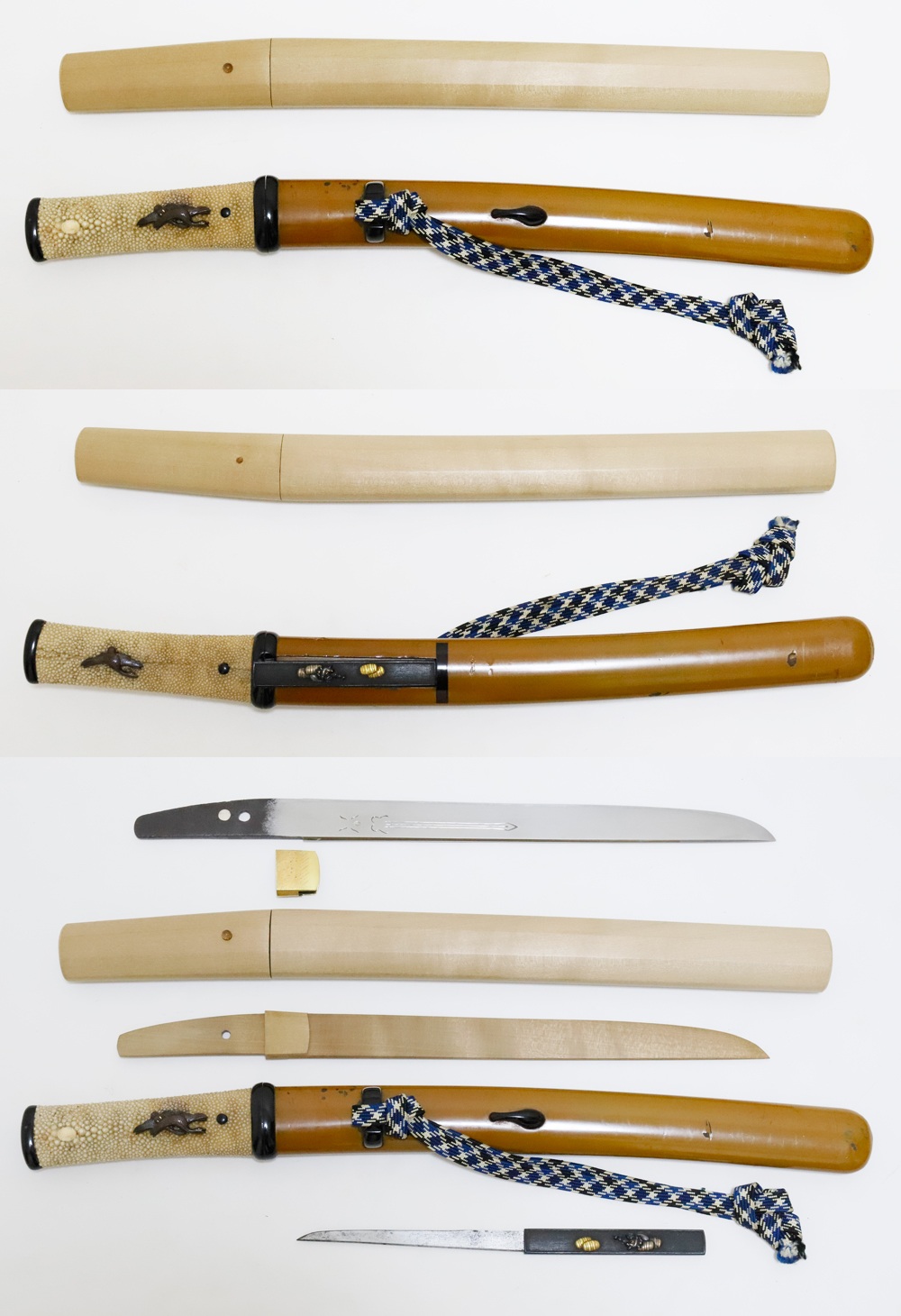
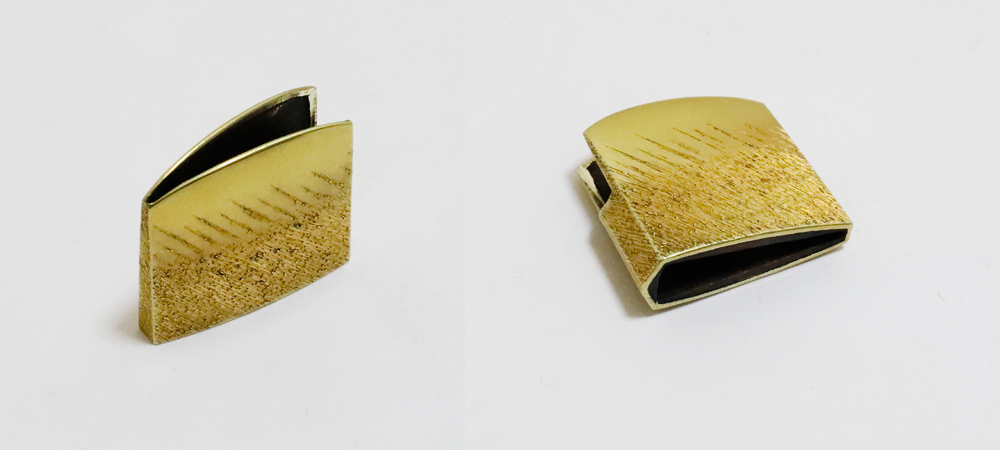
| Habaki | Copper base, gold-foiled habaki with Yujō-style file marks around the lower section. |
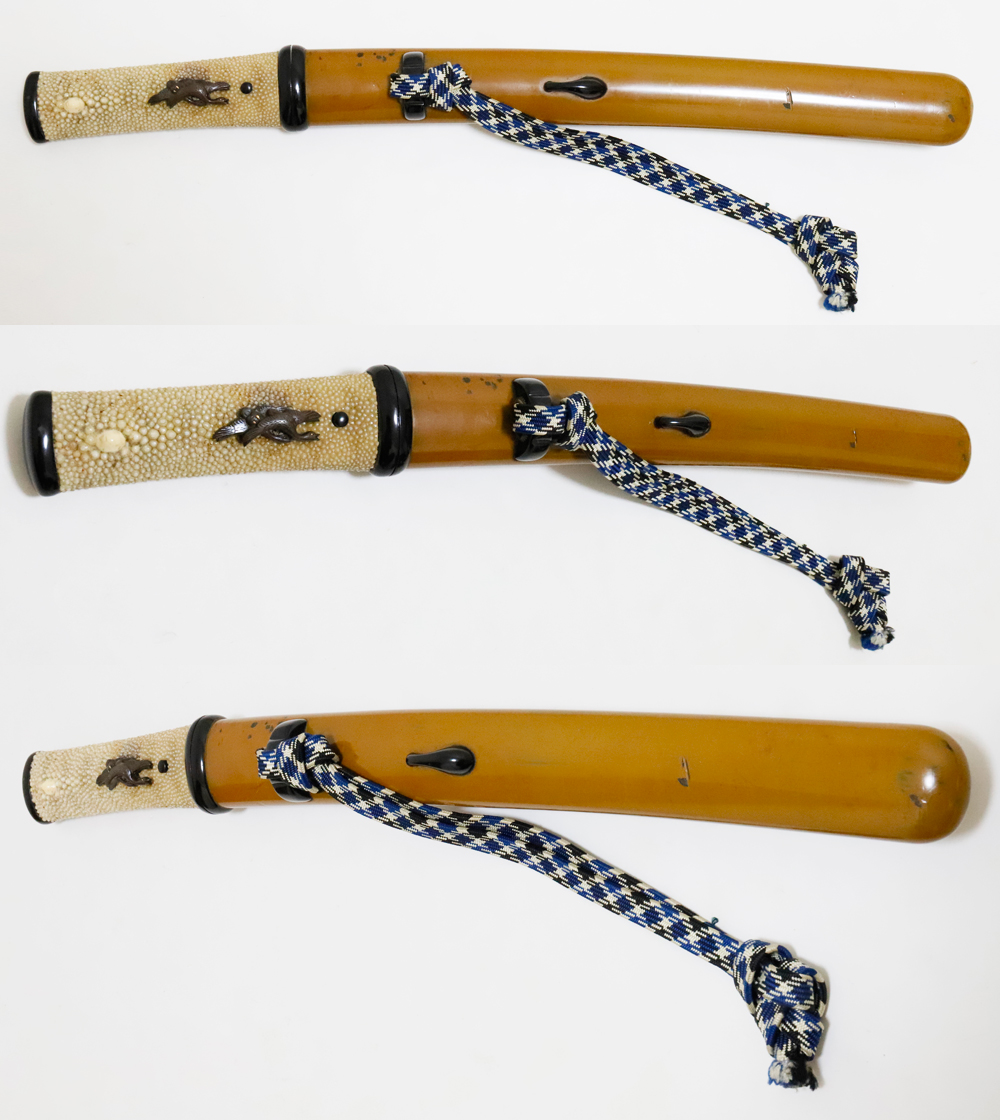
| Mountings | Koshirae-tsuki |
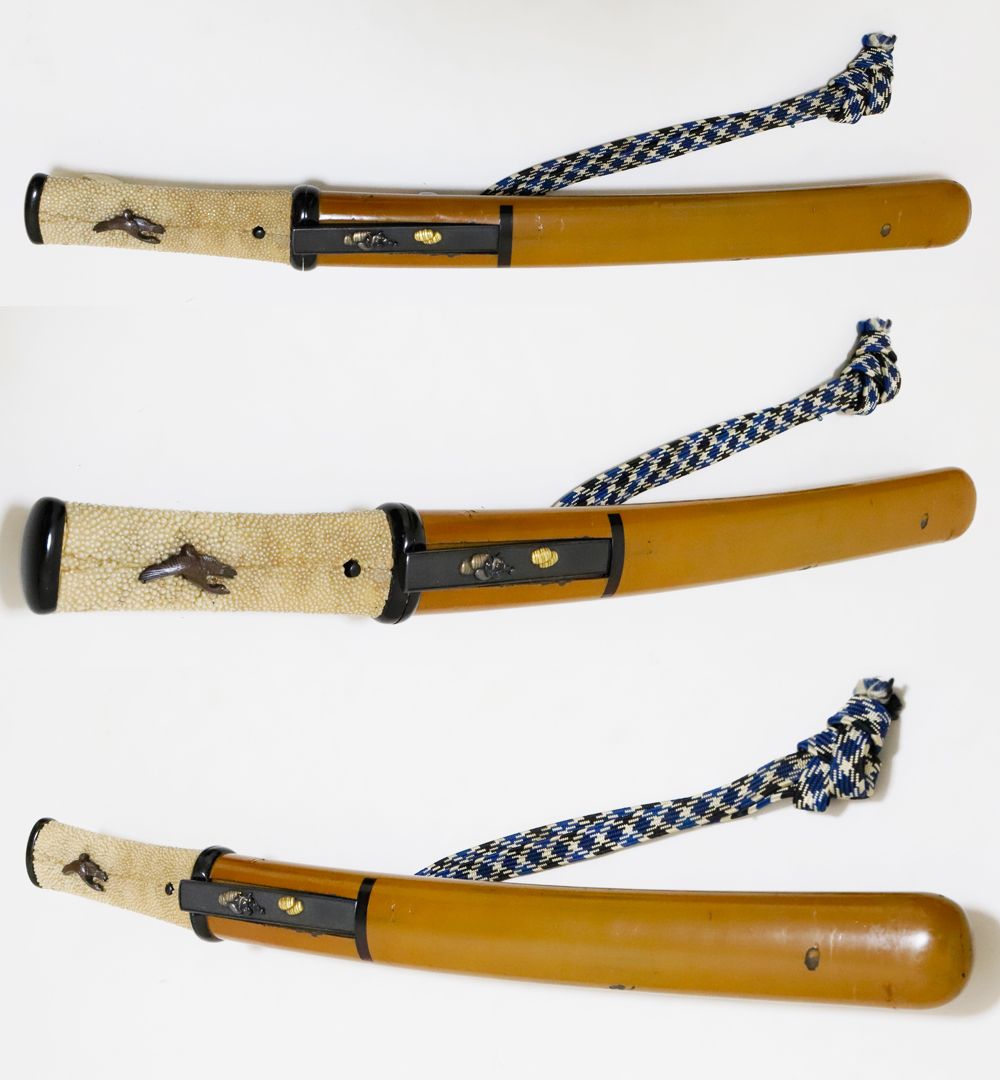
| Koshirae | Aikuchi Koshirae with a Brown Lacquered Saya |
| Koshirae Length |
45.5 cm 17.9 in |
| Tsuka Length |
12.7 cm 5.0 in |
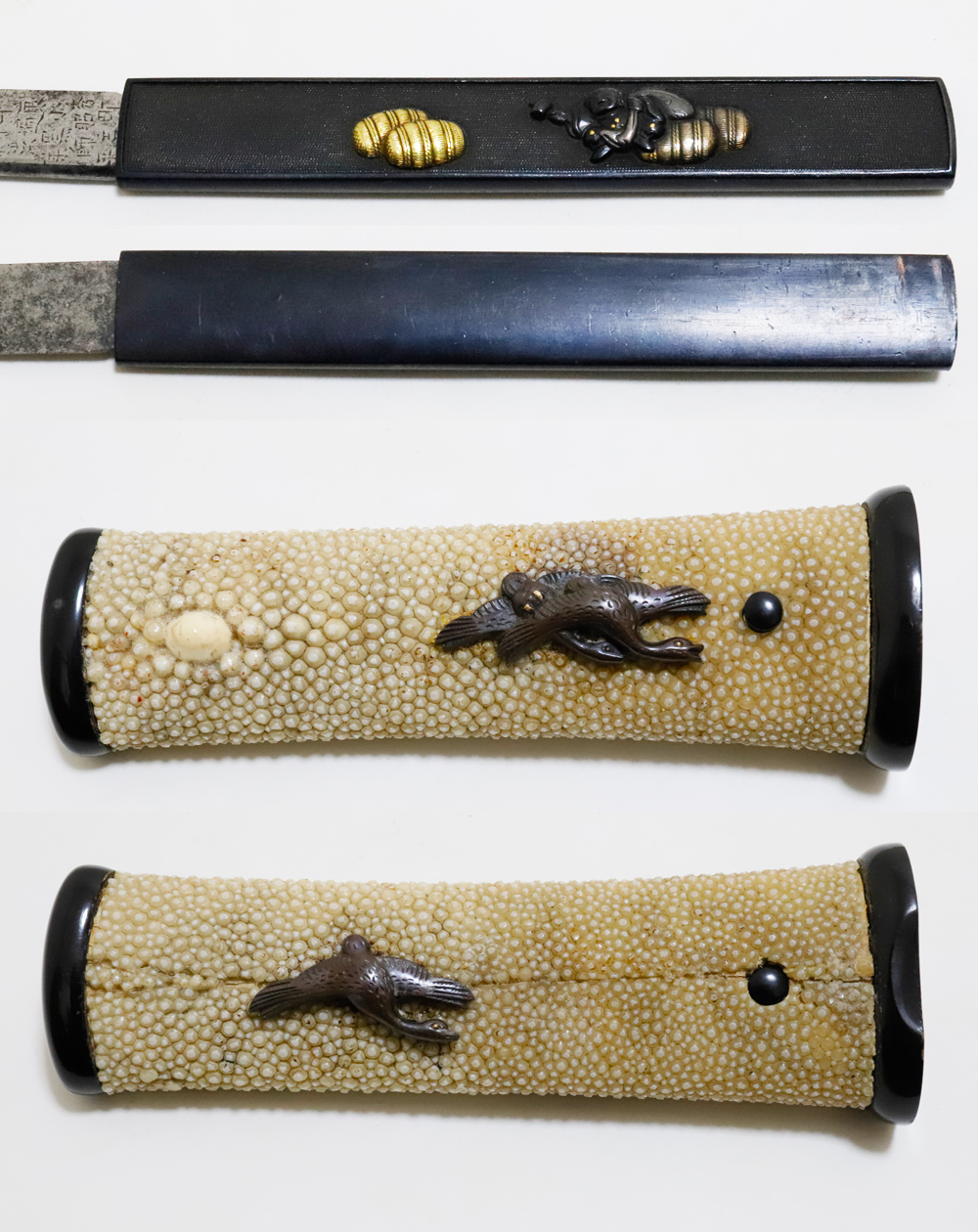
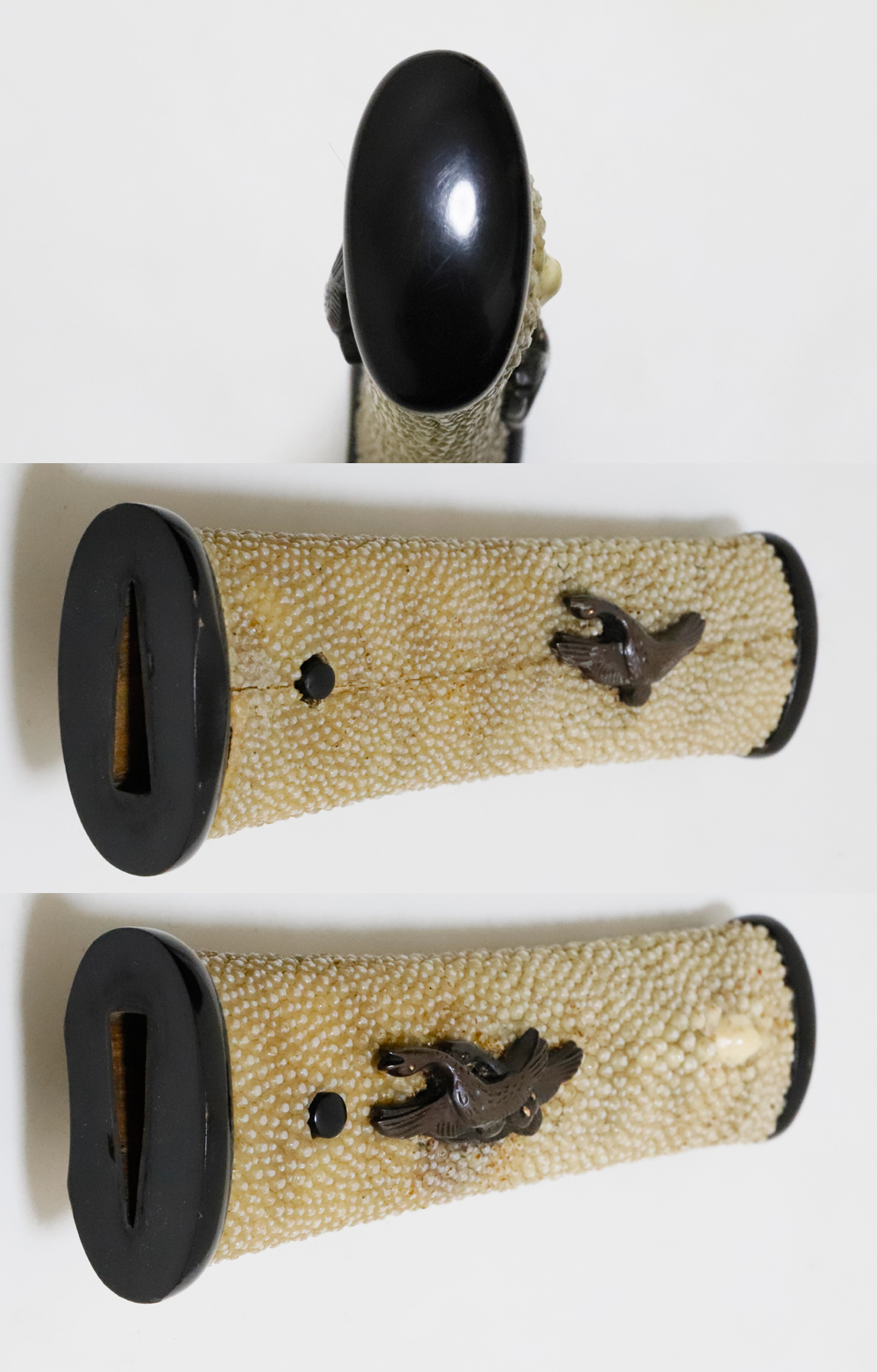
| Menuki | Descending Wild Geese Design, Copper ground, katachibori (three-dimensional carving), gold iroe decoration. |
| Fuchigashira | Black lacquered horn. |
| Kozuka | Daikokuten Design, Shakudo nanako ground, inlaid iroe decoration. |
| Other details | Tsuka: White rayskin with exposed menuki (dashi-menuki style). Koiguchi, Kurikata, and Kaerizuno: Black lacquered horn. |
Price |
500,000 JPY |
| The Nobukuni school was a distinguished school of swordsmiths established in Kyoto, Yamashiro Province, during the Nanbokucho period. The first-generation Nobukuni is said to have descended from the lineage of Ryokai of the Rai school and is also traditionally believed to have studied under Soshu Sadamune. While primarily following the Yamashiro tradition, the school incorporated influences from the Soshu tradition and became particularly renowned for its exceptional horimono (blade carvings).During the Muromachi period, Yoshiie, traditionally regarded as a son of the third-generation Nobukuni, moved to Usa District in Buzen Province, where he forged swords in the service of the Ajimu family. In contrast to the Kyo-Nobukuni school, which flourished in Kyoto, the branch that settled in Kyushu became known as Chikushi Nobukuni. This lineage continued through successive generations, and its swordsmiths later served the Fukuoka domain during the Edo period. This tanto is attributed to Chikushi Nobukuni of the early Muromachi period. It has an elegant hira-zukuri shape with a mitsu-mune, standard mihaba, thin kasane, and graceful takenoko-zori (bamboo shoot curvature). The forging consists of slightly prominent itame-hada mixed with mokume-hada and flowing grain patterns. The hamon is a narrow suguha-based ko-midare with some hotsure (fraying). The omote (front) is carved with a su-ken (straight sword) and tsume-renge (clawed lotus), while the ura (reverse) features a bo-hi, a Sanskrit character representing Bishamonten, and a koshi-hi, all carved in a single line. These varied and finely executed carvings on both sides of the blade reflect the tradition of the Nobukuni school, which was especially renowned for its horimono, and are among the highlights of this tanto. With its refined jigane and hamon inherited from the Yamashiro Nobukuni tradition, together with its intricate blade carvings, this is an elegant tanto attributed to Chikushi Nobukuni of the early Muromachi period. The blade passed the NBTHK Tokubetsu Hozon Token shinsa in 2025. It is accompanied by an Aikuchi Koshirae with a Brown Lacquered Saya. |

 Search