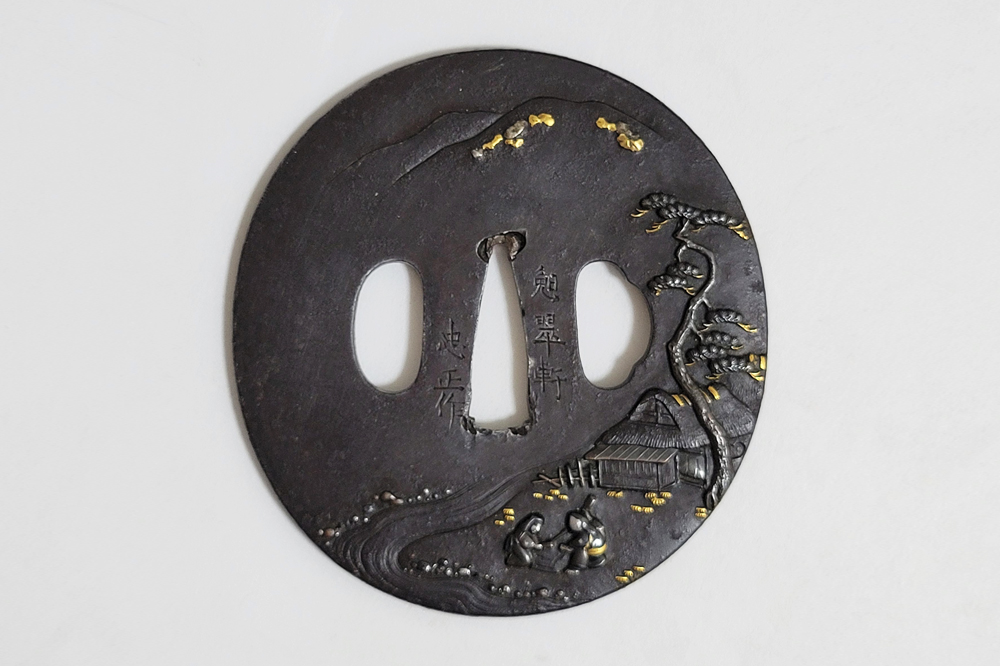
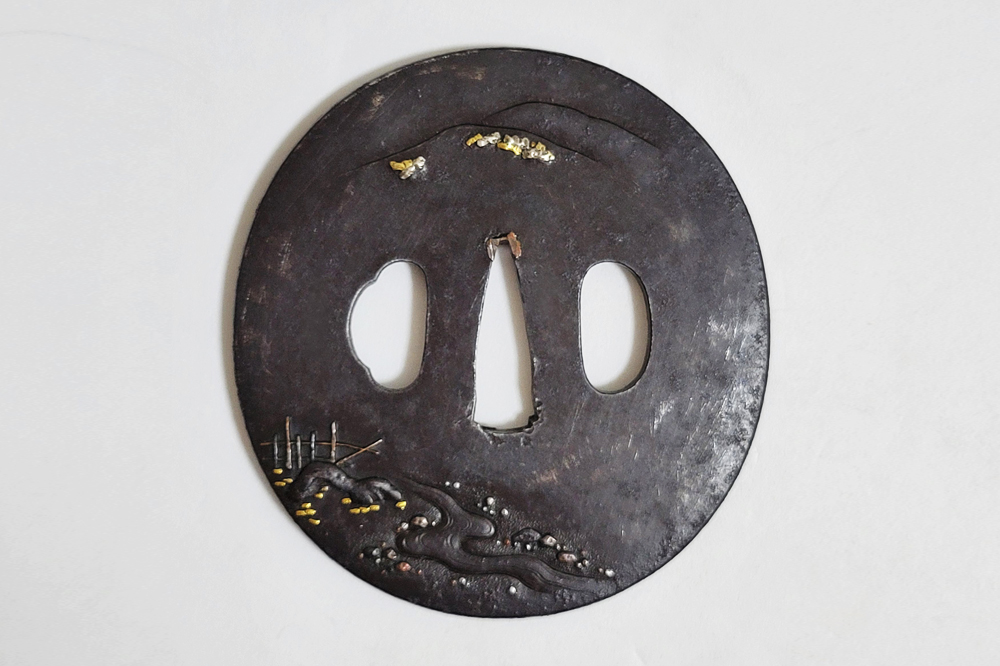
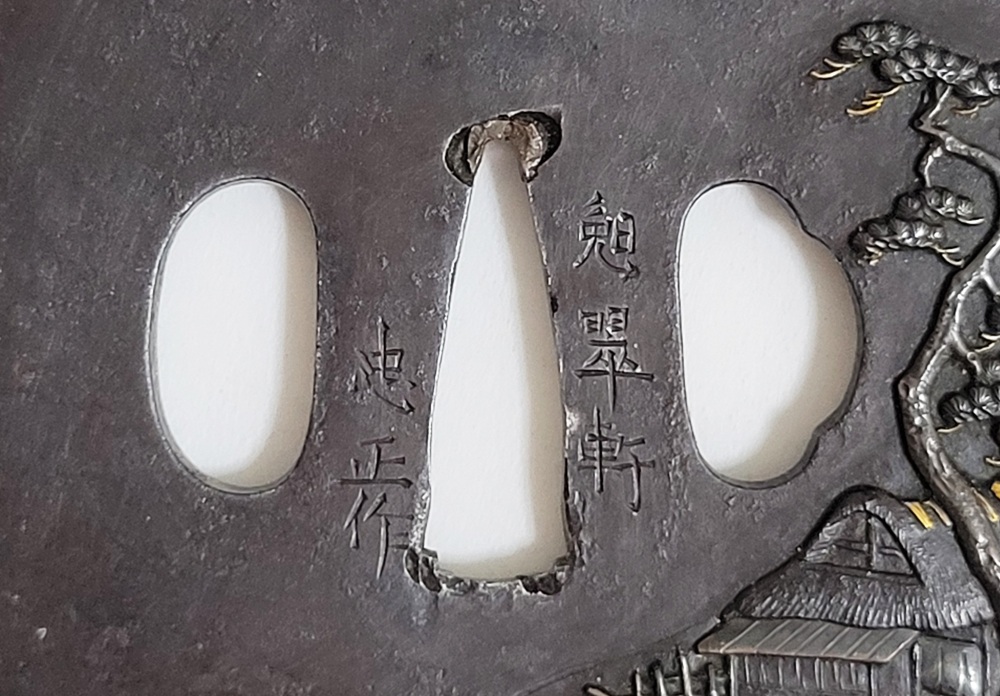
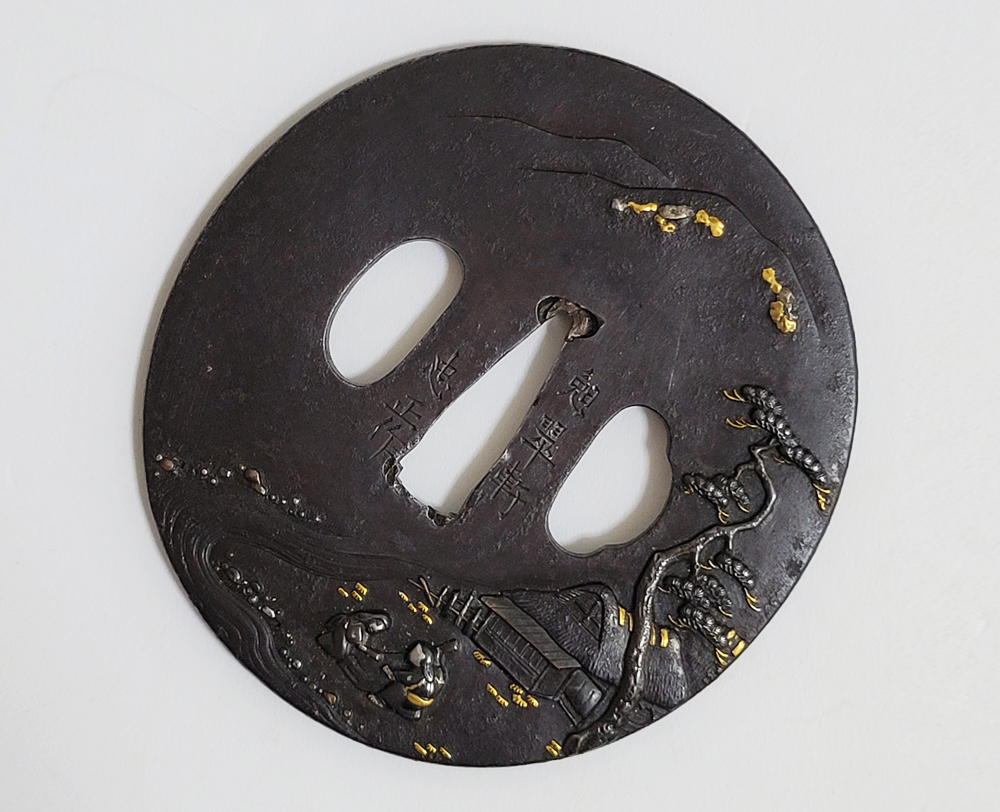
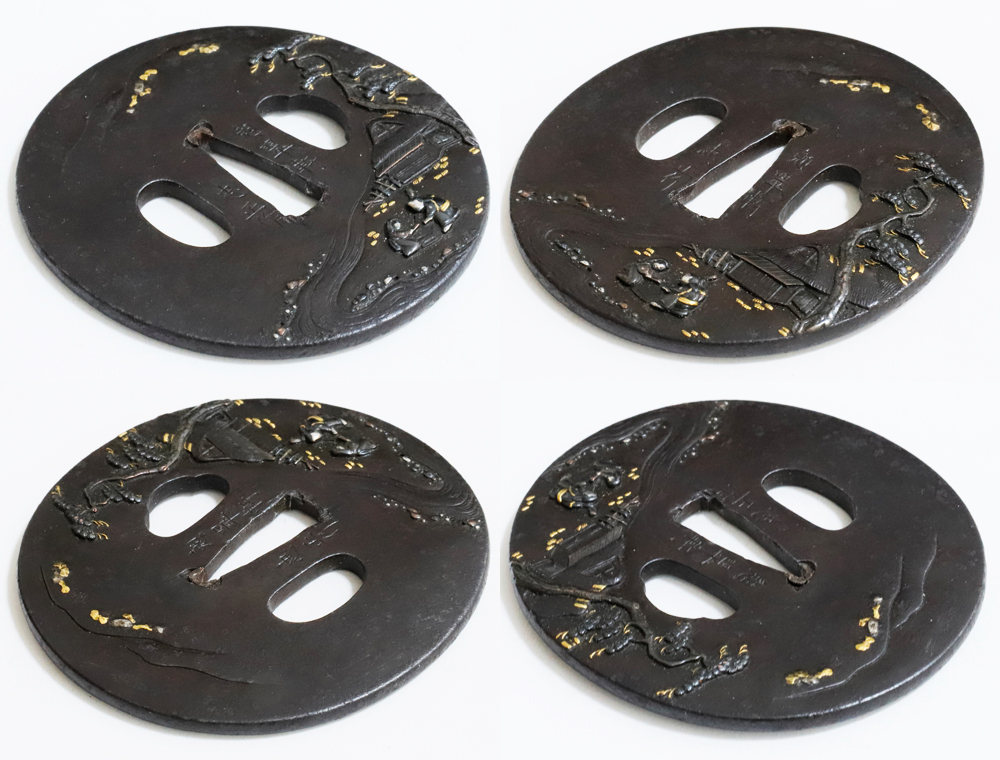
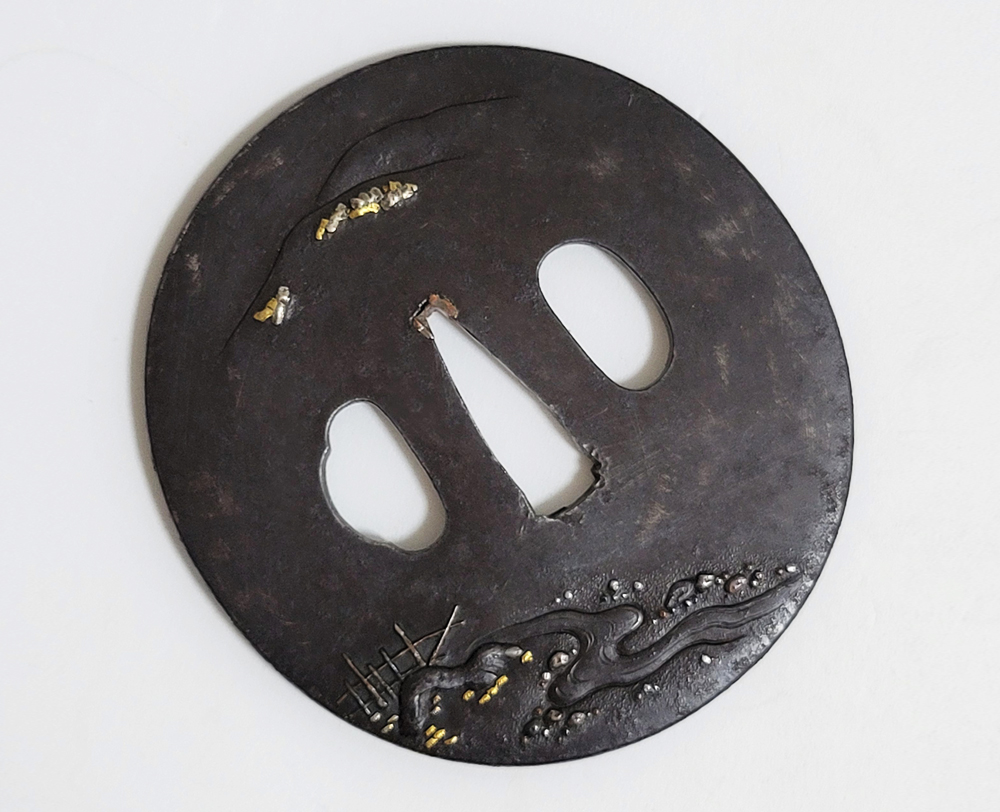
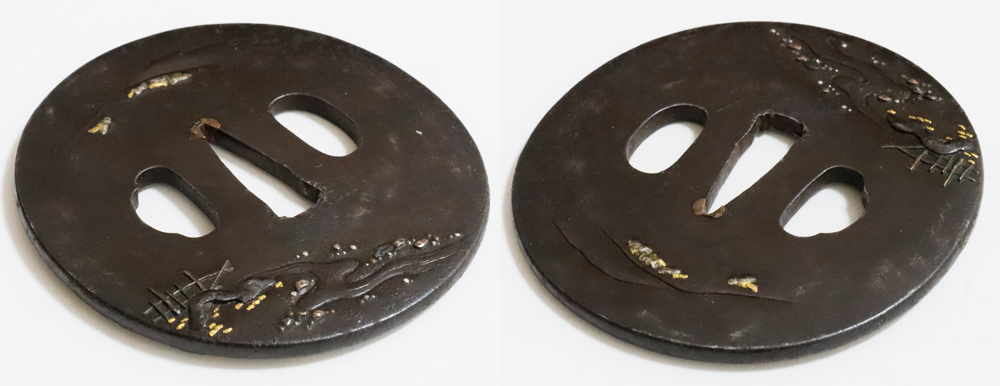
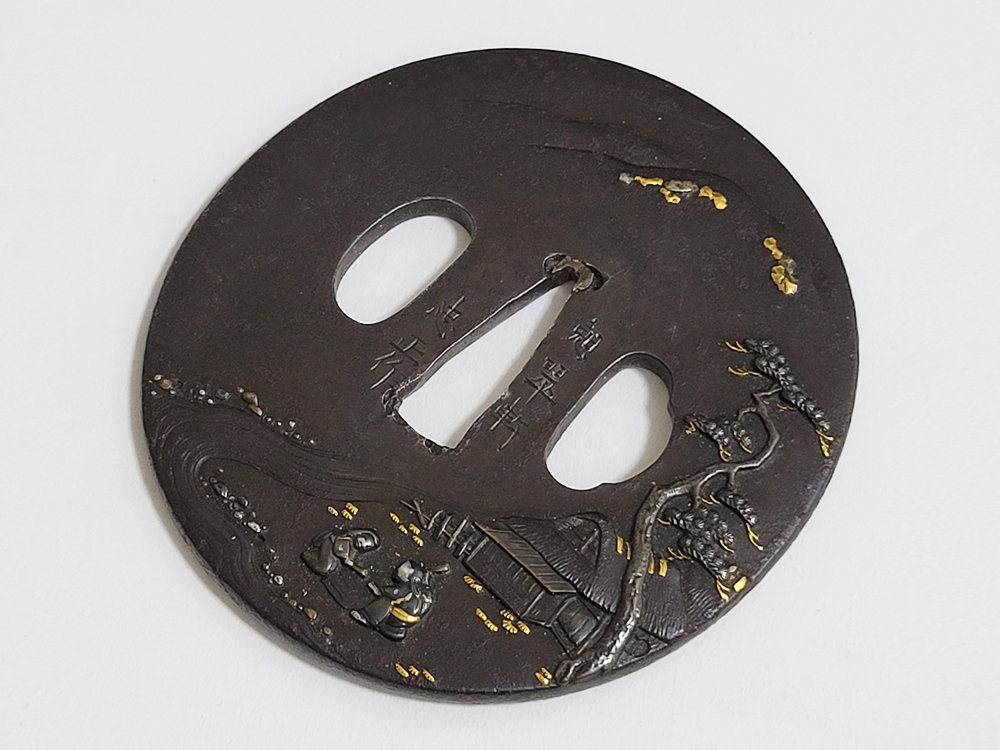
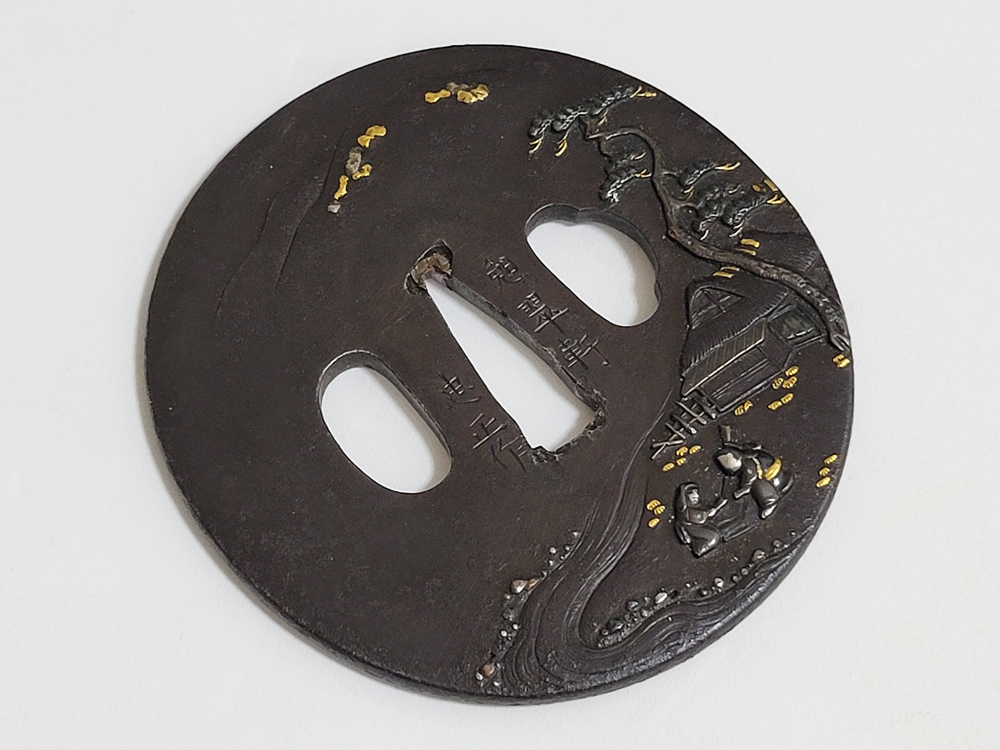
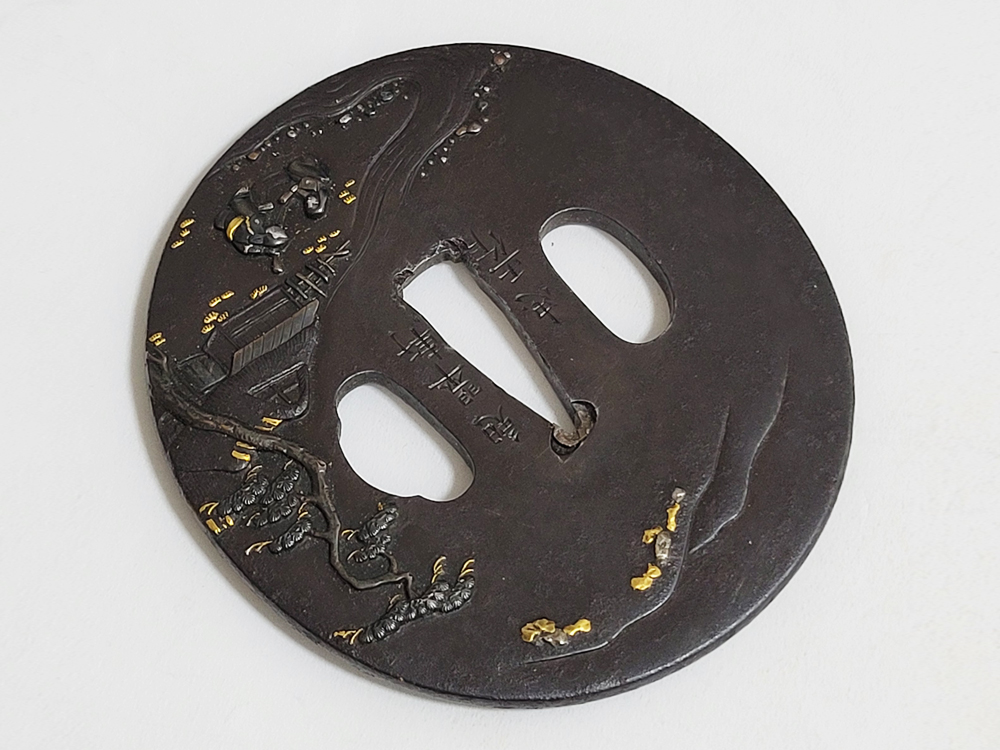
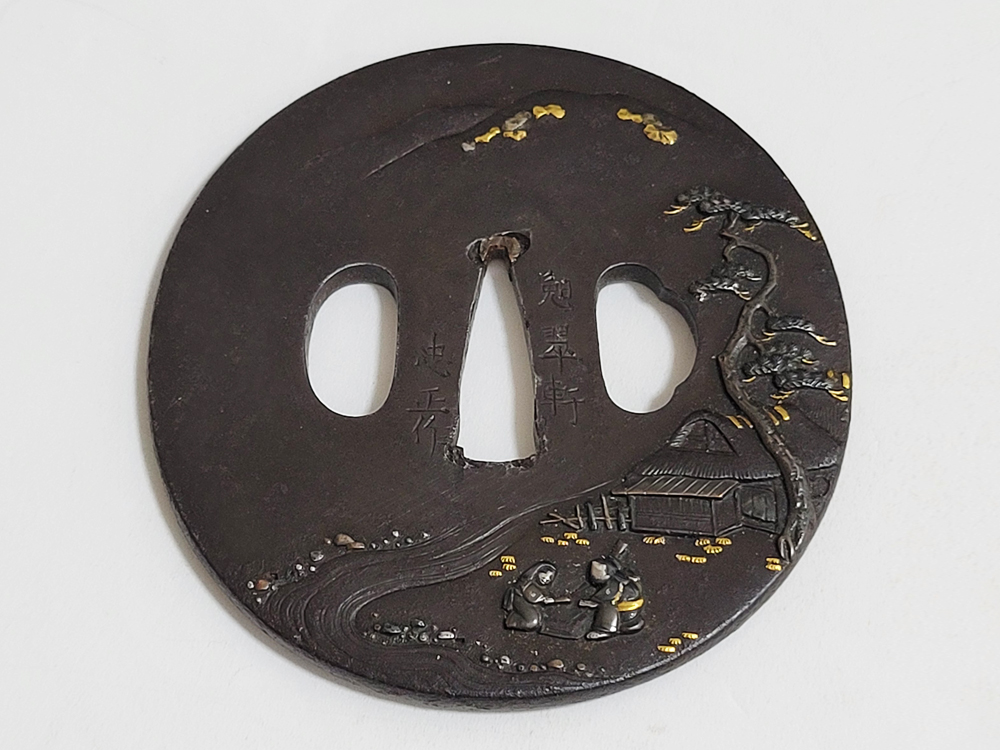
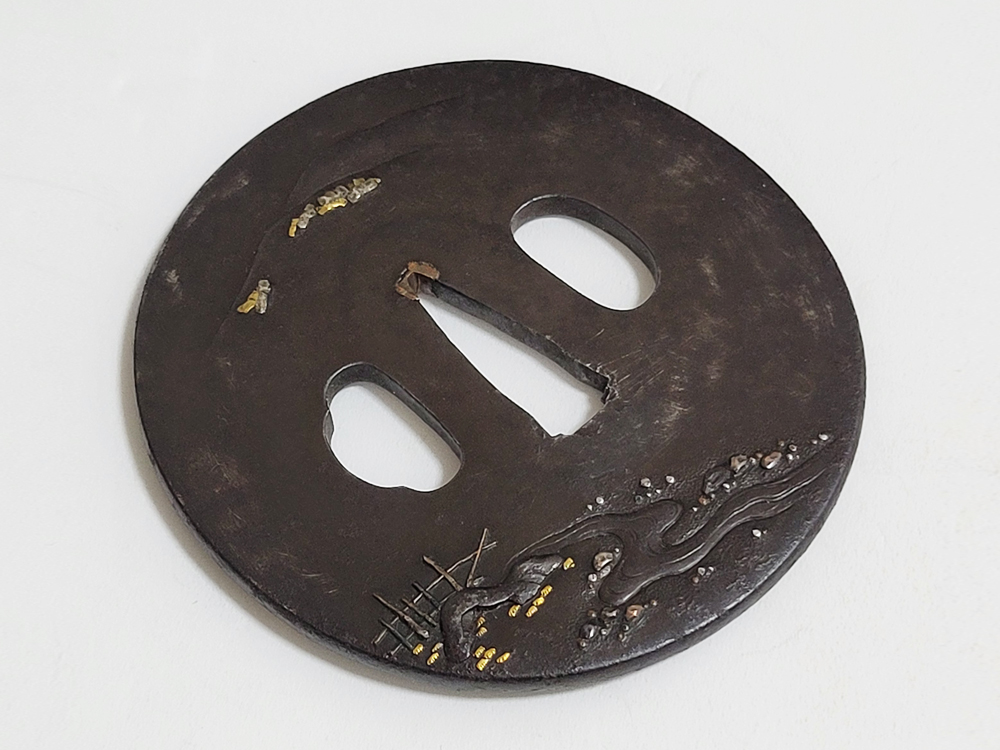
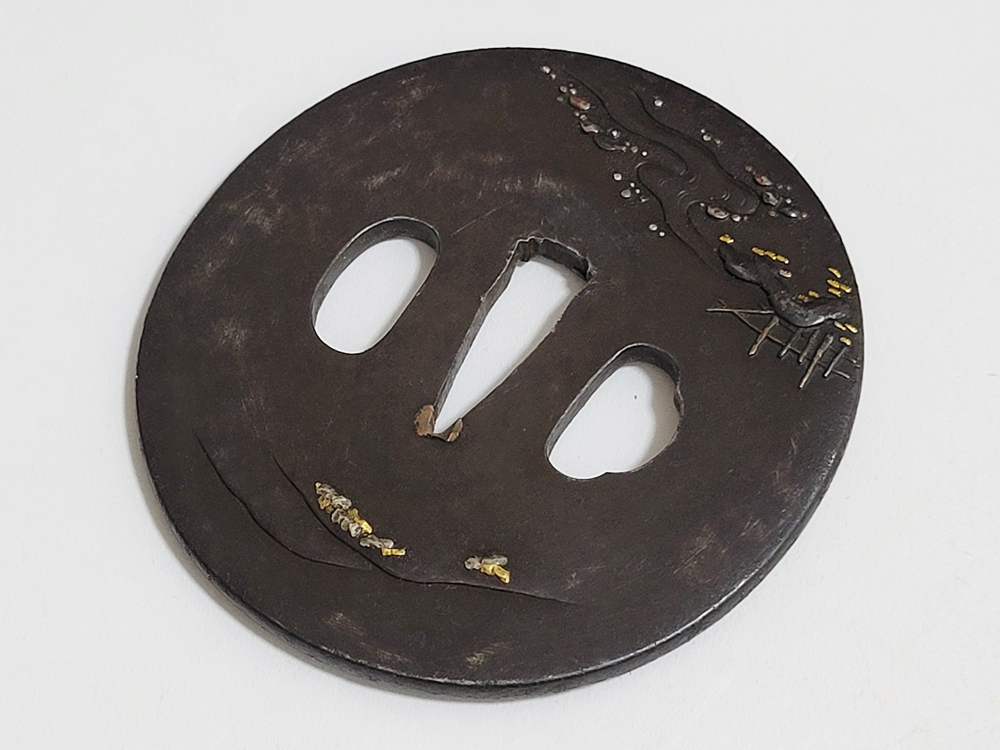
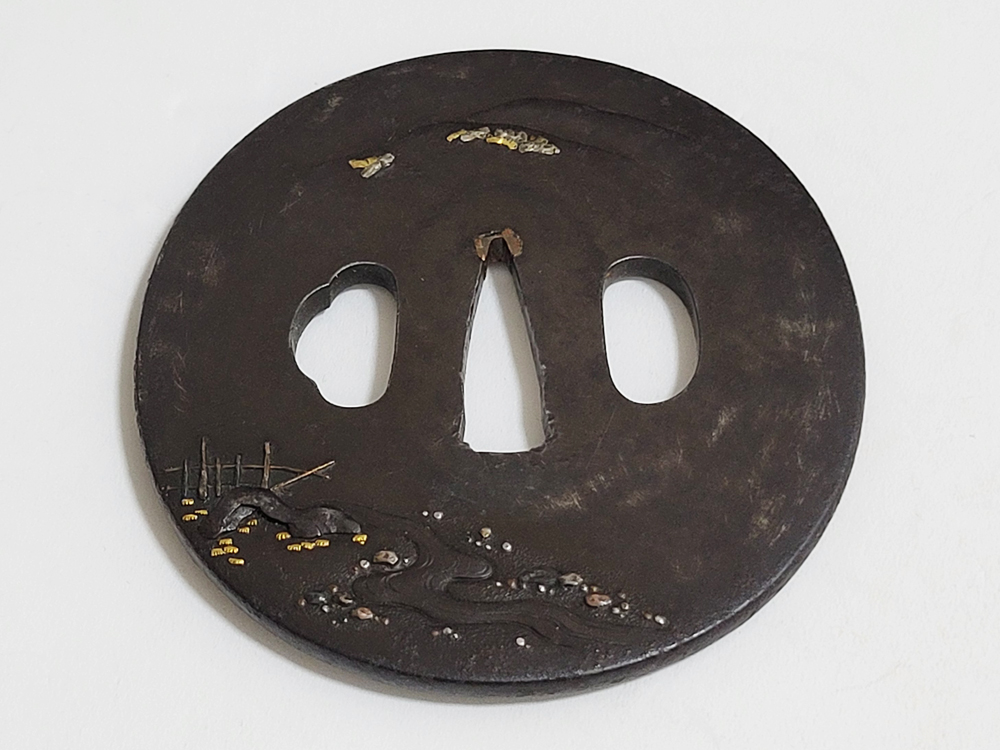
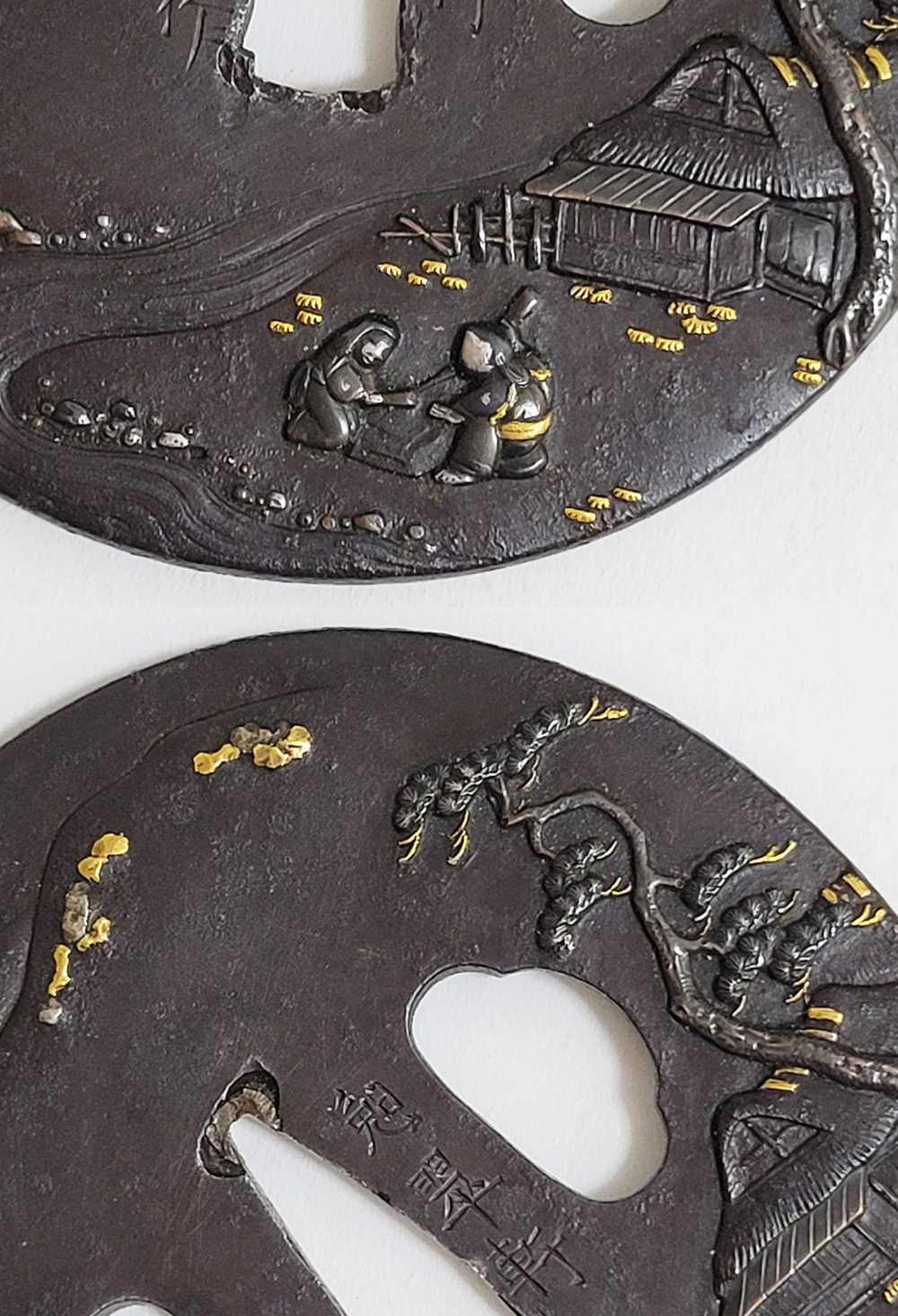
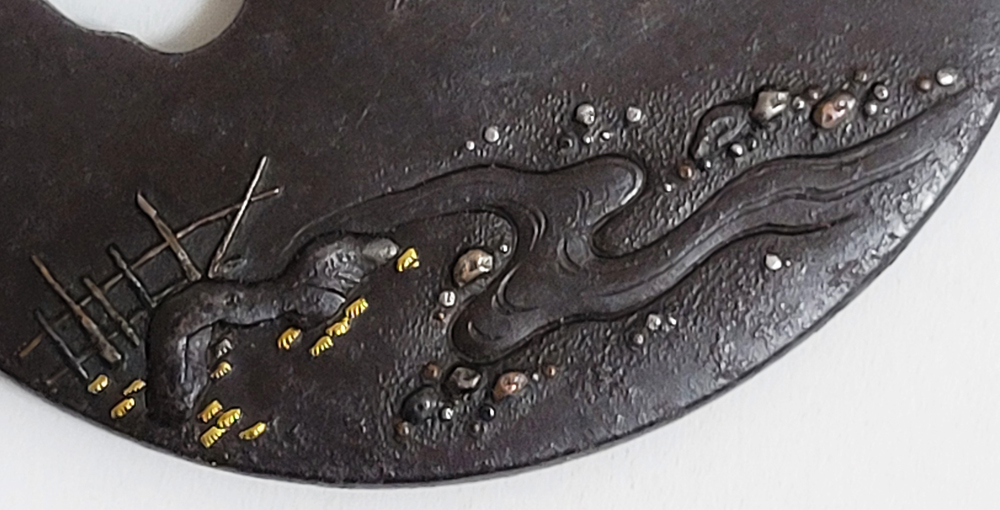
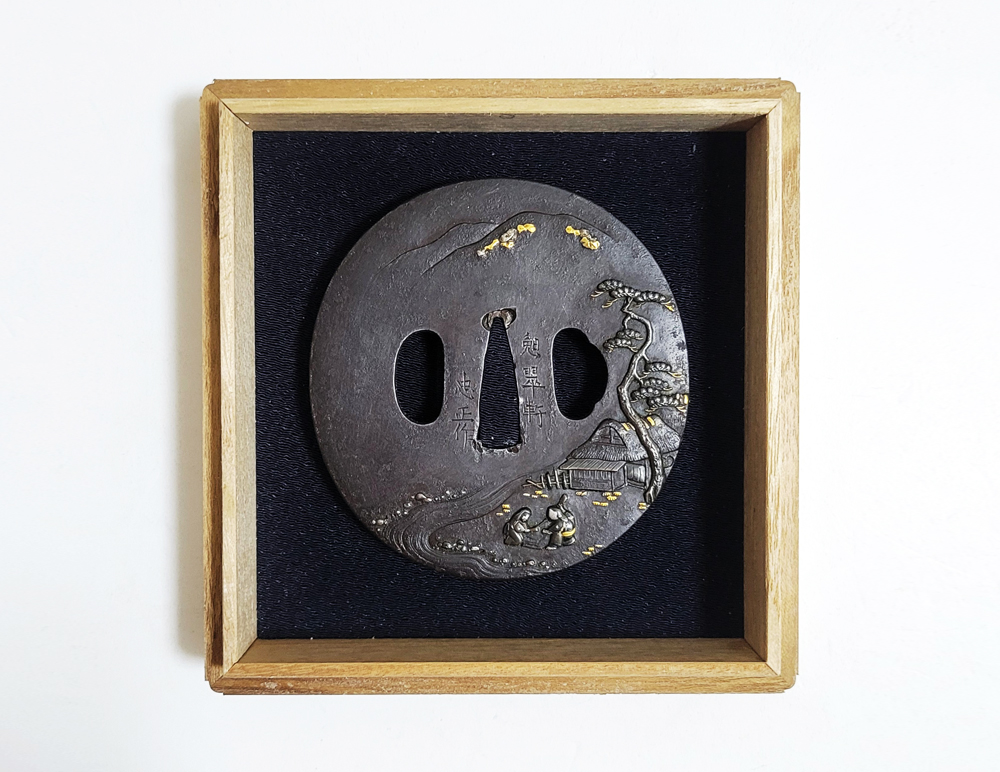
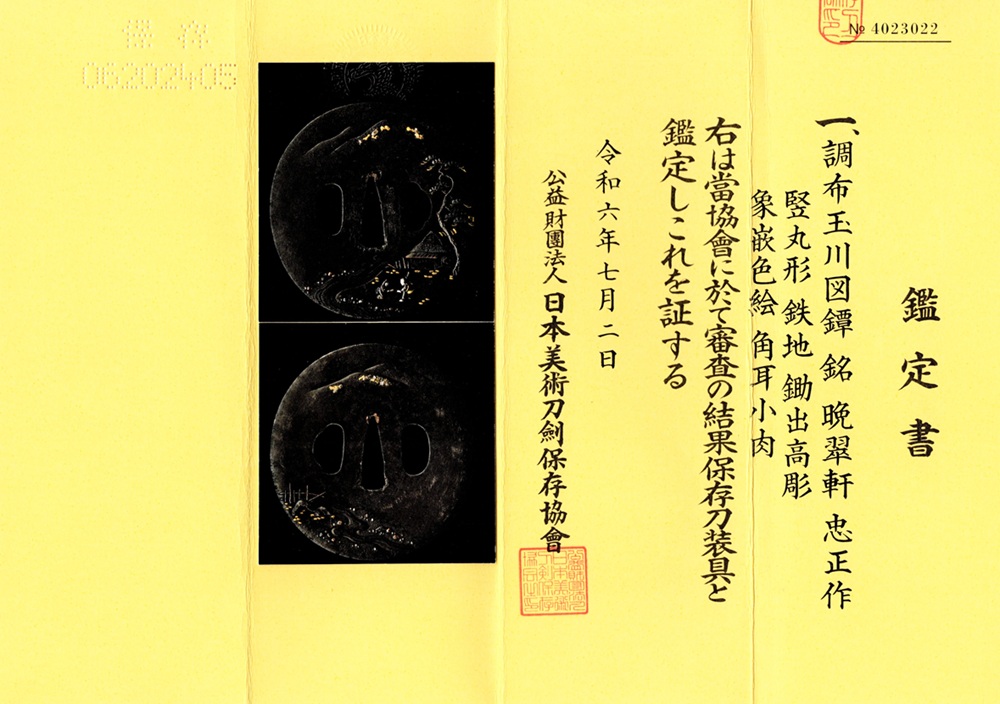
| This tsuba, titled “Chōfu Tamagawa,” is the work of Bansuiken Tadamasa and is accompanied by an NBTHK Hozon certificate.“Chōfu Tamagawa” refers to a classical theme depicting a riverside scene where cloth is washed and beaten. “Chōfu” originally denotes a place where cloth was produced for tribute to the imperial court, while “Tamagawa” (“Jewel River”) refers to a beautiful river—especially the Tama River in Musashi Province. The design shows figures engaged in washing and fulling cloth along the riverbank.The subject derives from an Azuma-uta (Eastern Song) in the Man’yōshū:“Like the cloth washed again and again in the Tamagawa, how deeply I am drawn to this girl.”The poem expresses a man’s passionate love for a woman engaged in cloth bleaching, admiring both her beauty and the purity of the scene.Bansuiken Tadamasa was a metalworker from Aizu in Mutsu Province active in the mid-Edo period.This piece passed the 2024 NBTHK Hozon Tōsōgu shinsa. |

 Search