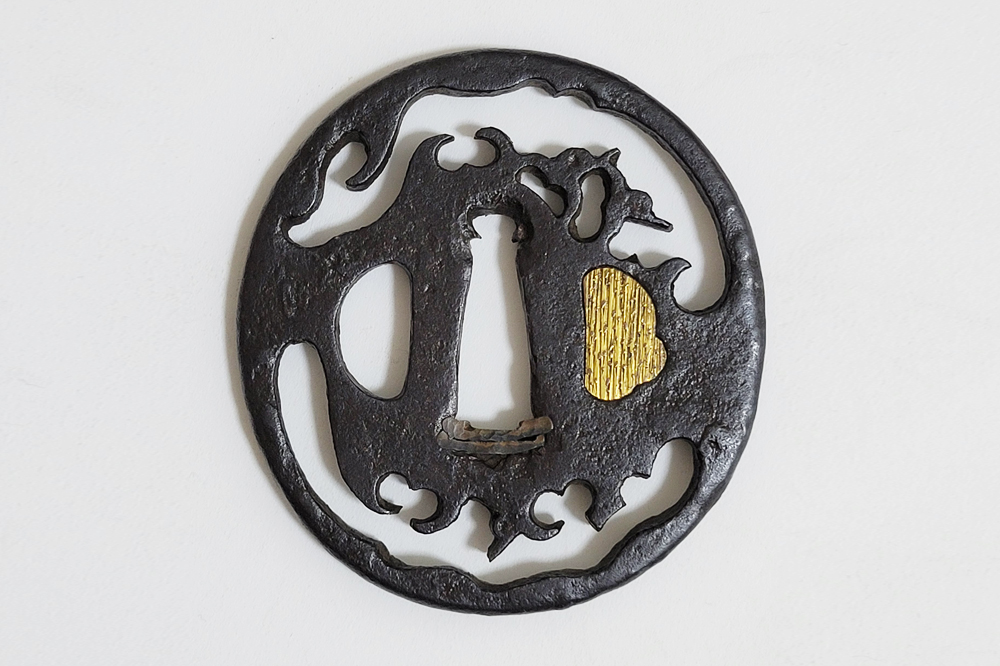
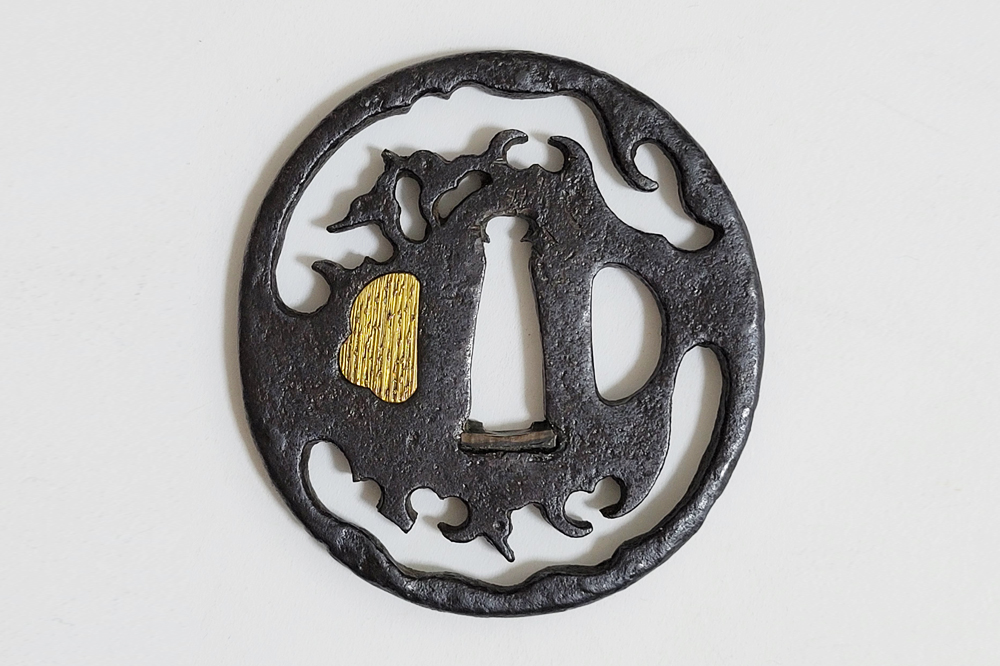
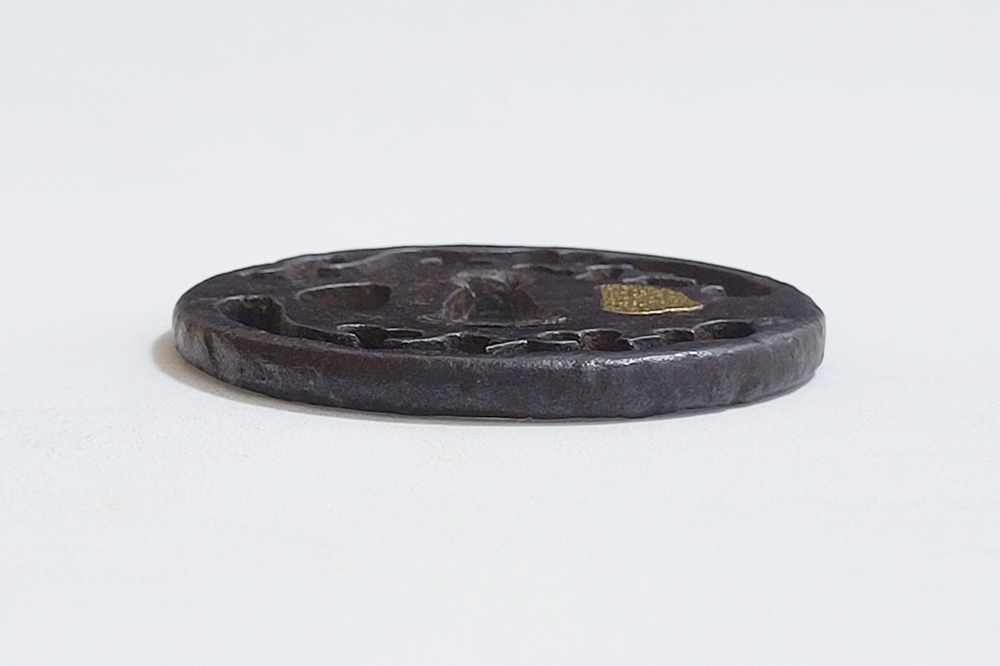
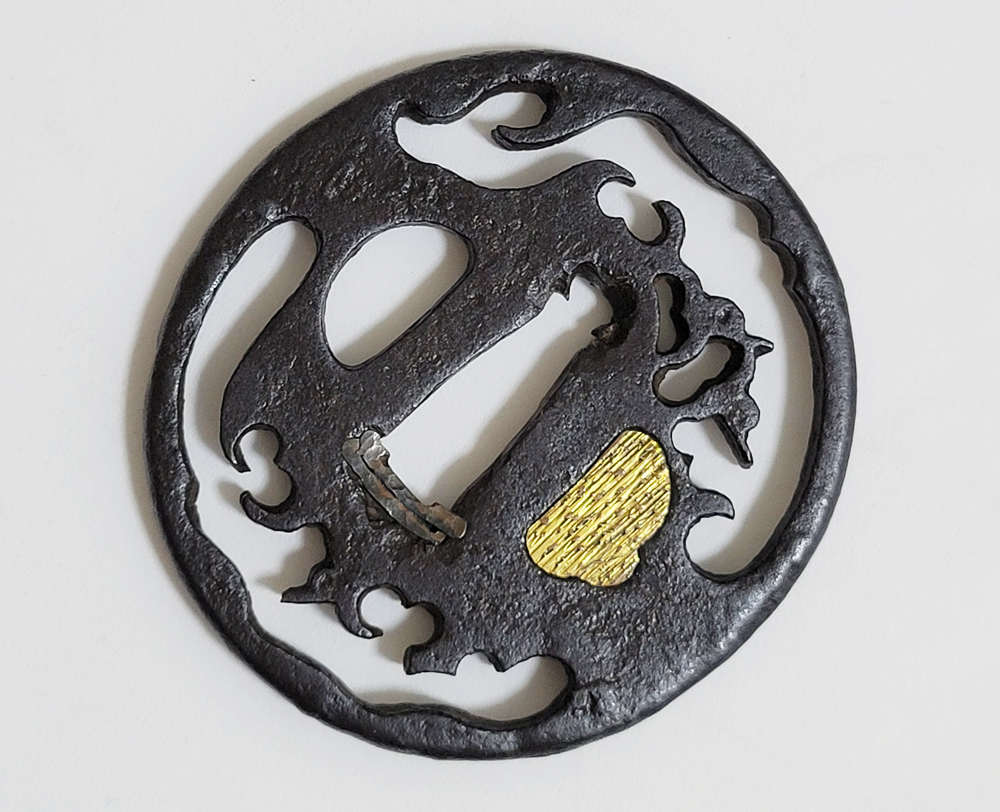
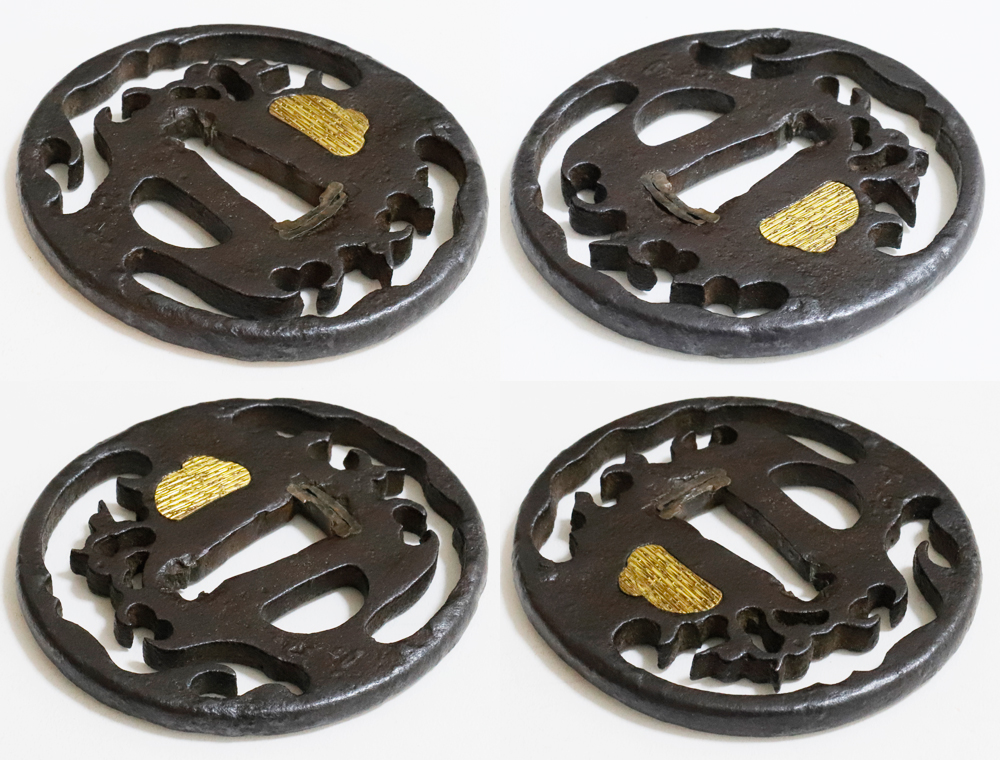
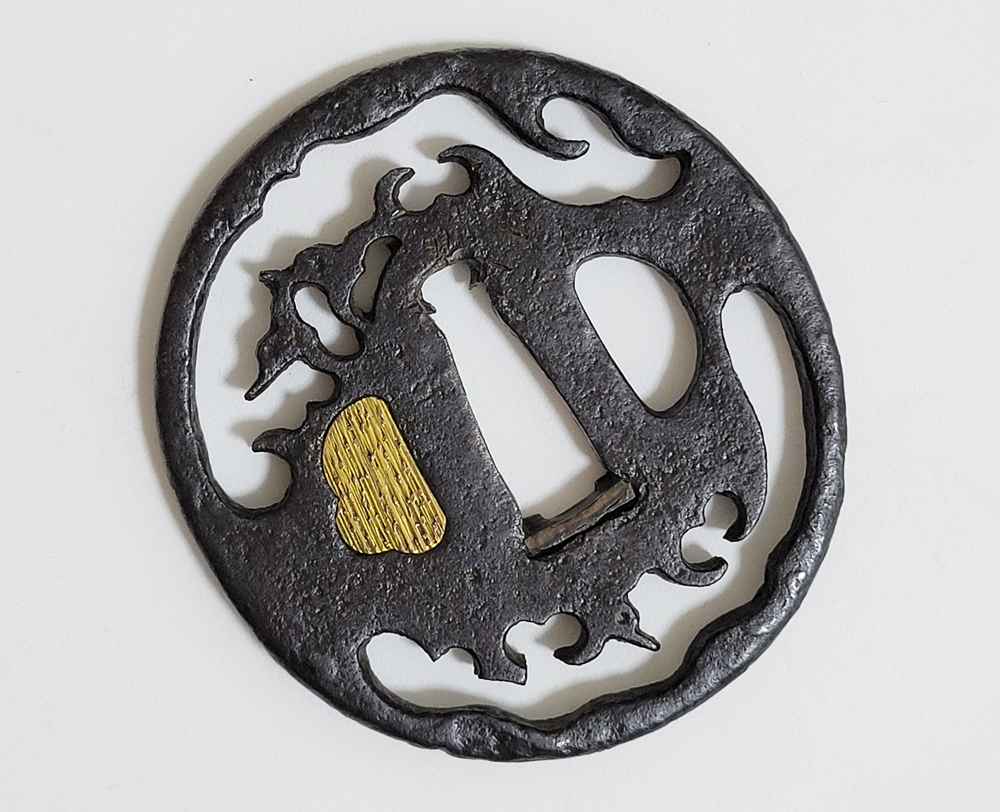
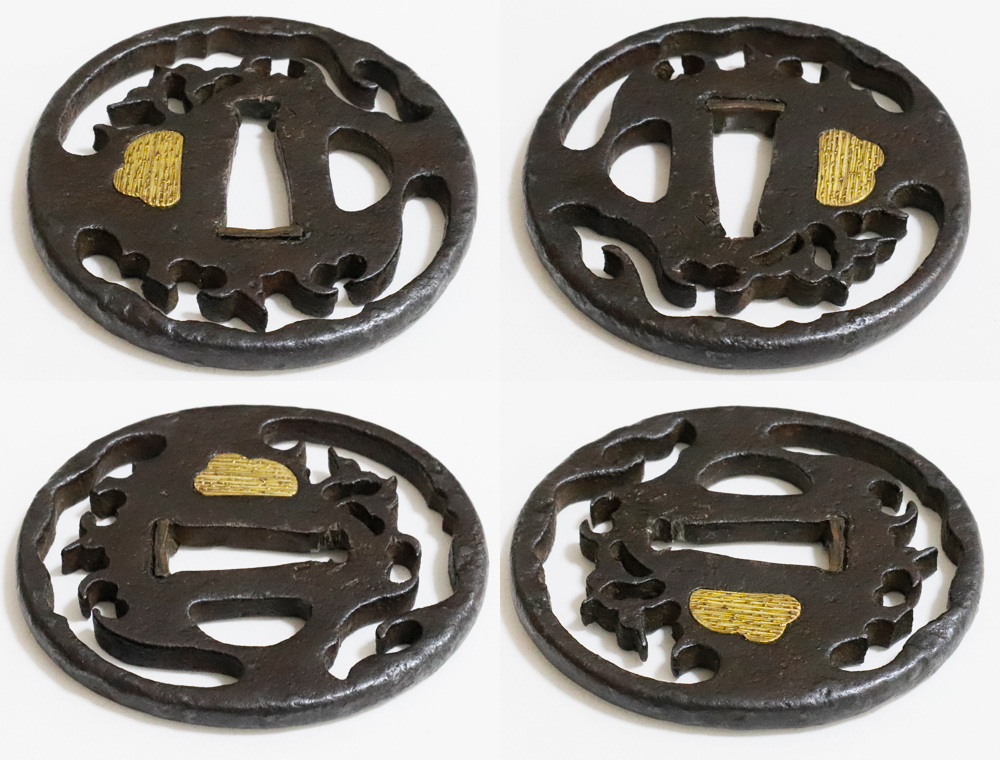
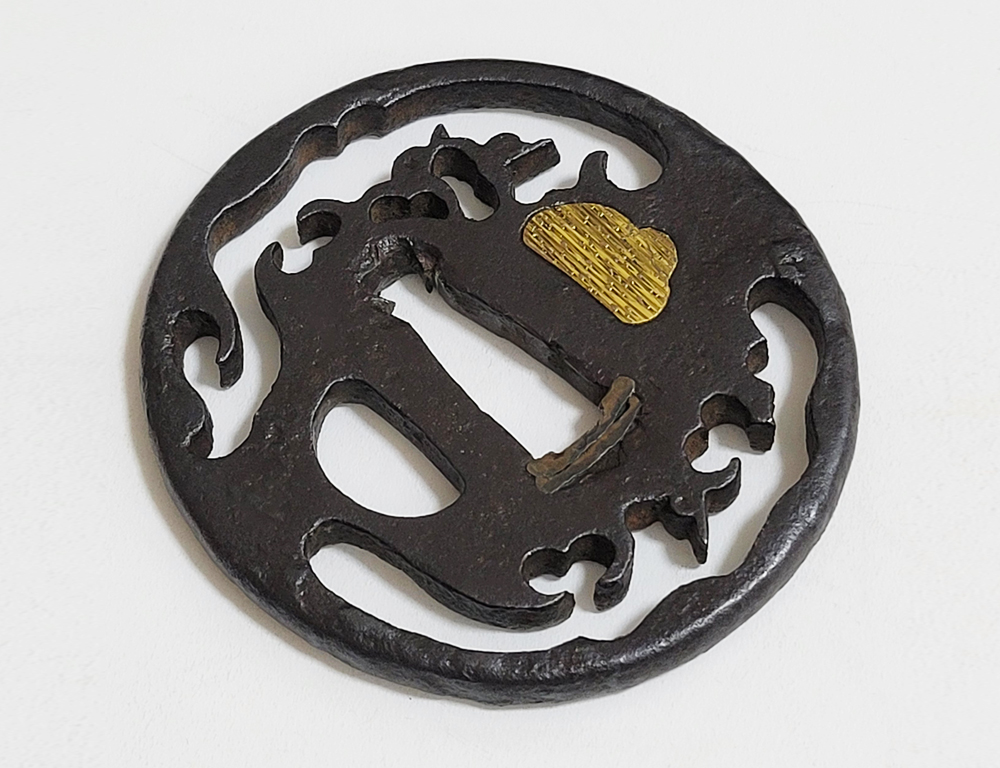
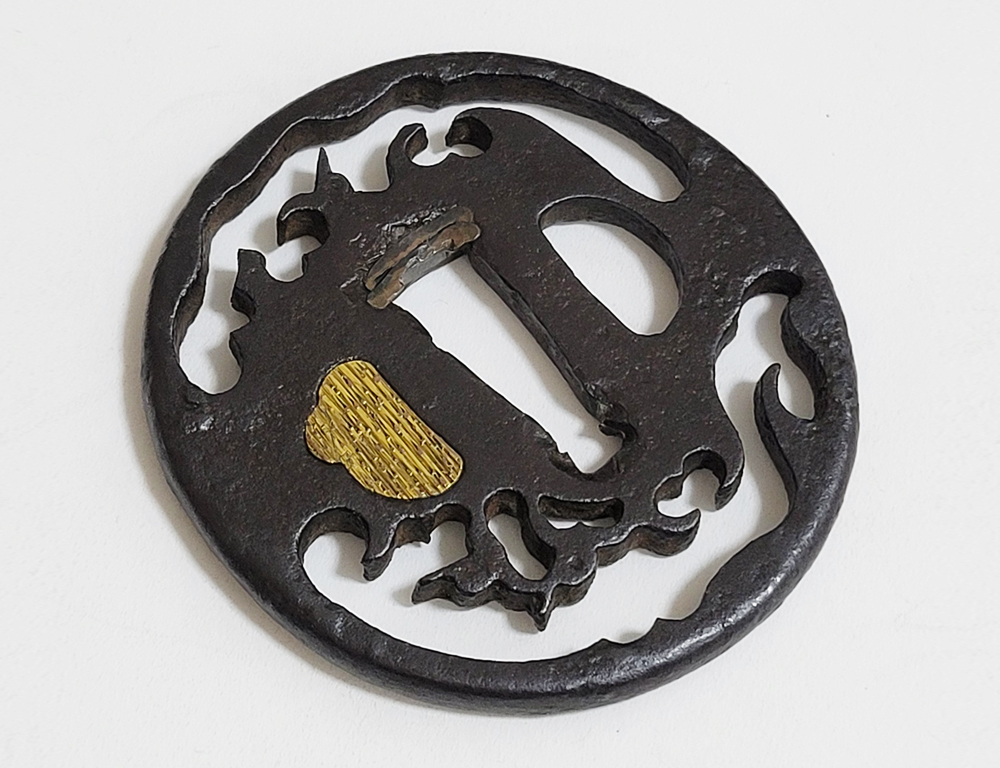
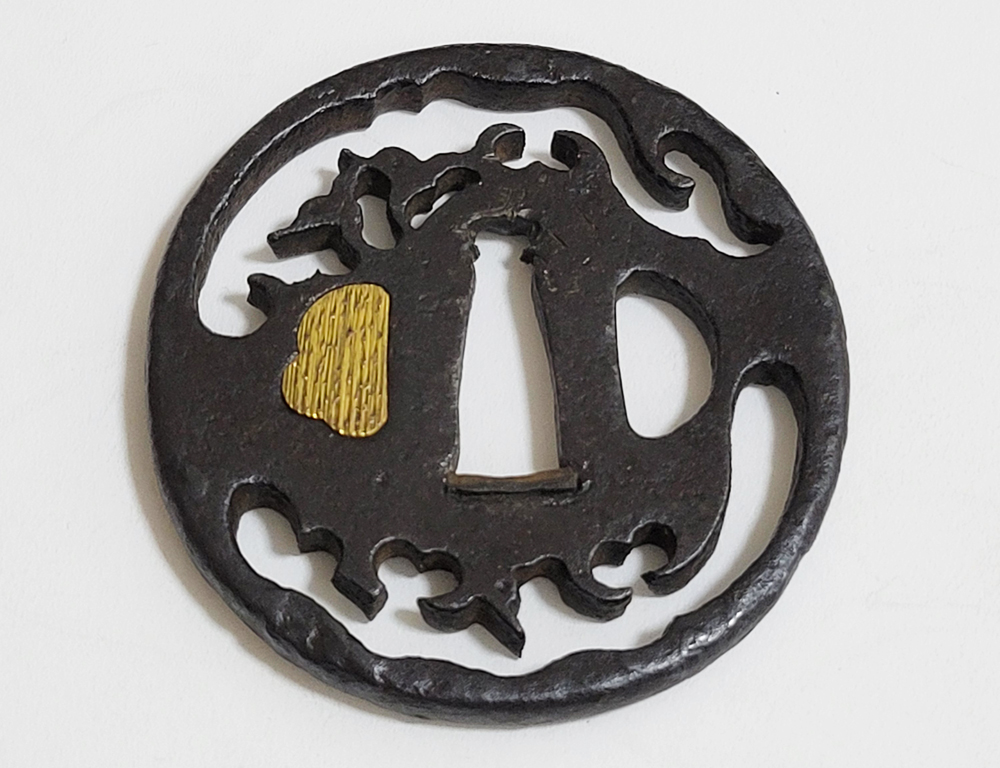
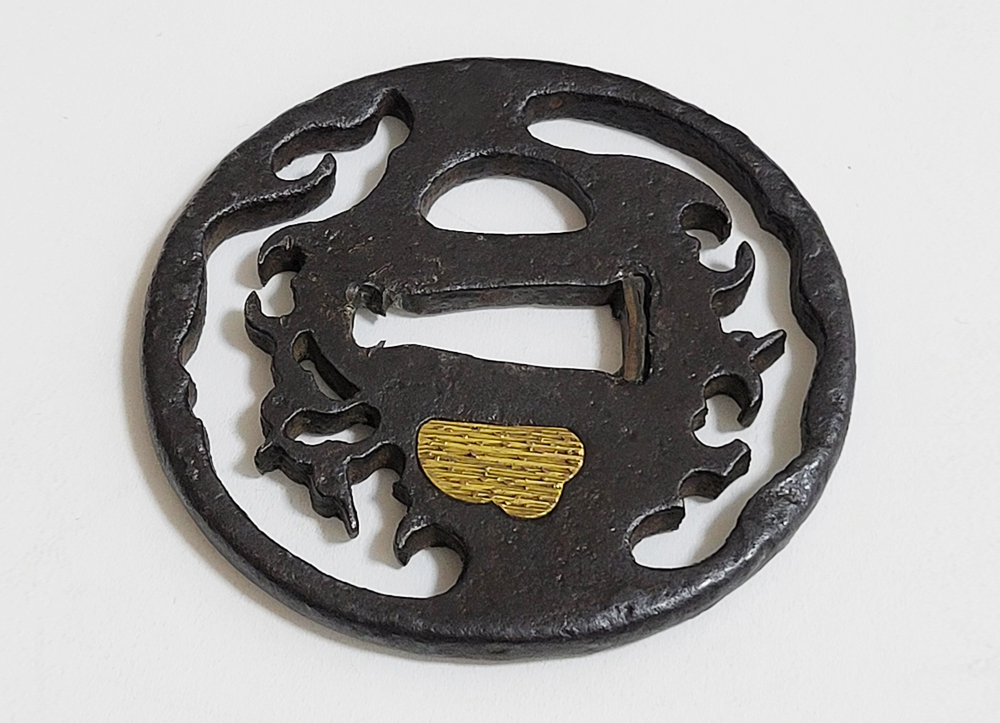
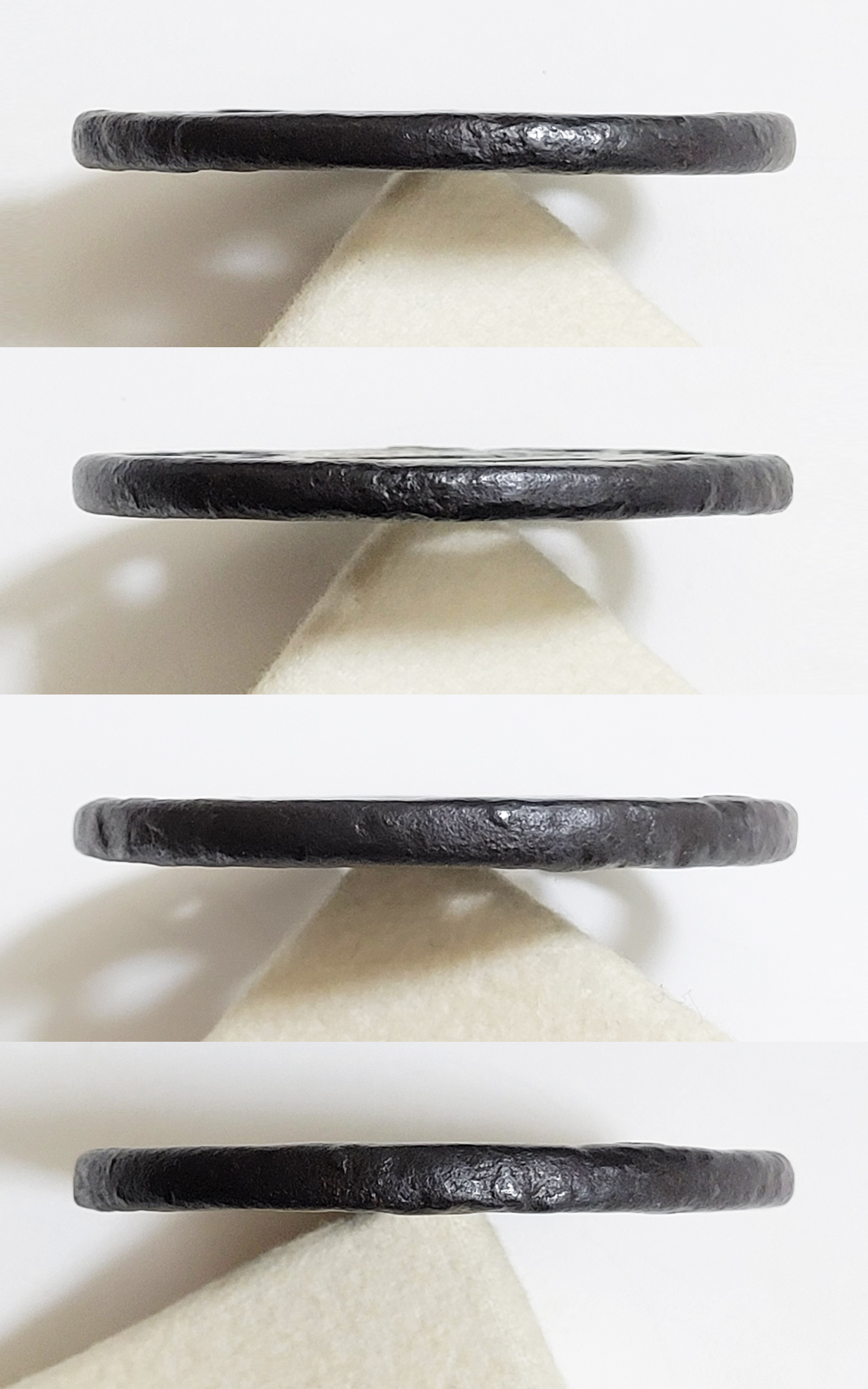
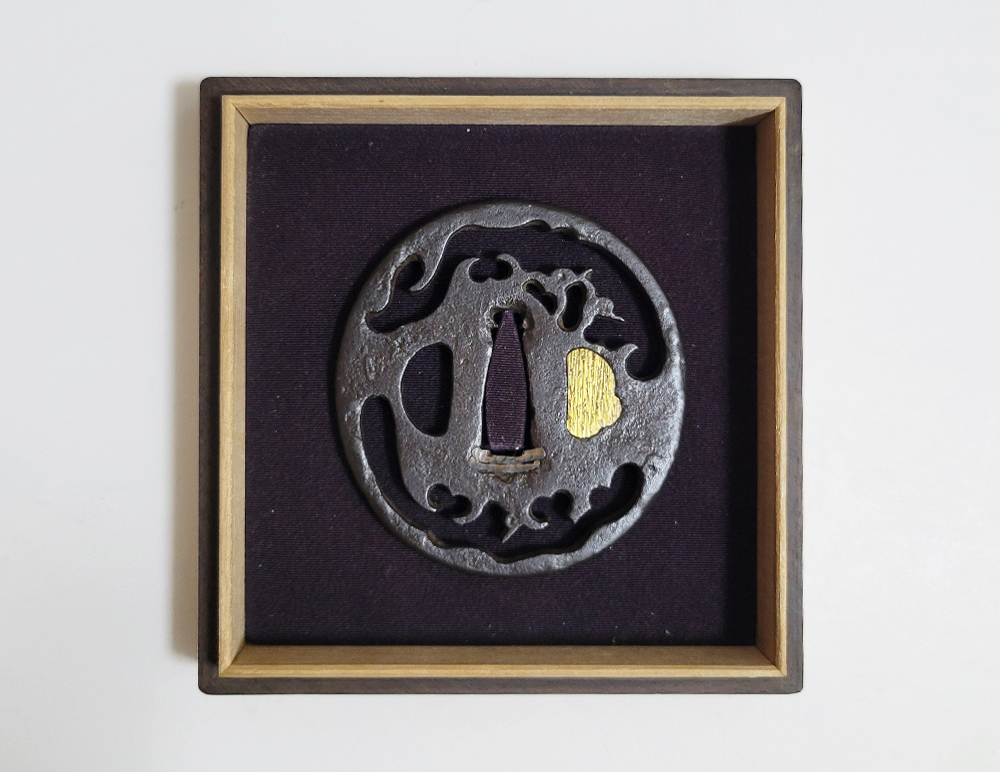
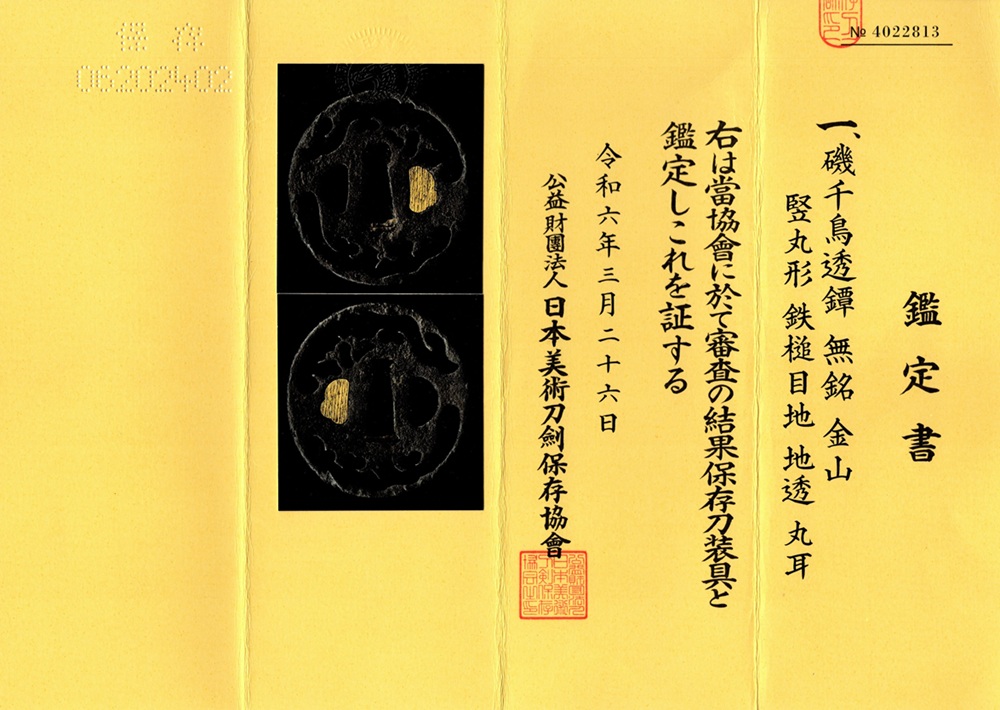
| This is an iron sukashi tsuba attributed to the Kanayama school.Kanayama tsuba were produced in the Owari region, reaching their peak during the Sengoku period, and are generally considered to have later merged into what is known as Owari sukashi tsuba in the Edo period. They are typically small in size, round in shape, and relatively thick, often featuring angular rims and abstract openwork designs. The iron tends to have a dark tone with a strong heat-treated character, and the rims frequently show prominent tekkotsu, resulting in a dense and tightly forged appearance.While sharing similarities with Owari tsuba, Kanayama work is regarded as more rustic, possessing a deeper sense of austerity and refined elegance.This example shows particularly fine iron quality and conveys a dignified and refined presence.The design depicts “Isochidori,” stylized plovers flying along a rocky seashore with rough waves. As chidori are often shown flying together in flocks, the motif symbolizes overcoming hardships—such as rough seas—through unity, often interpreted as the strength of family or partnership.This piece passed the Hozon Tosogu shinsa in 2024. |

 Search