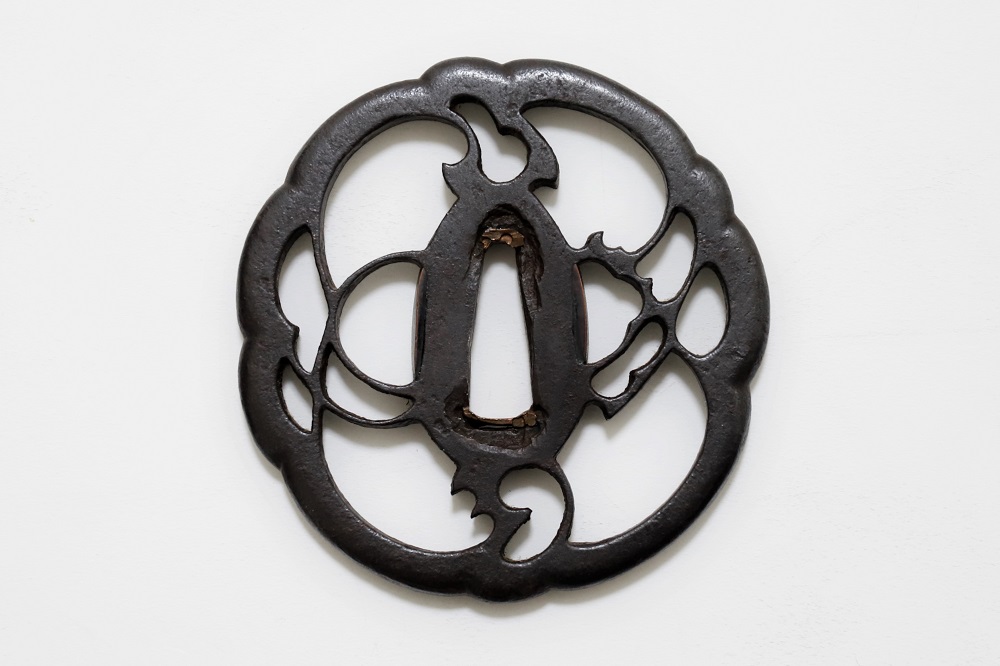
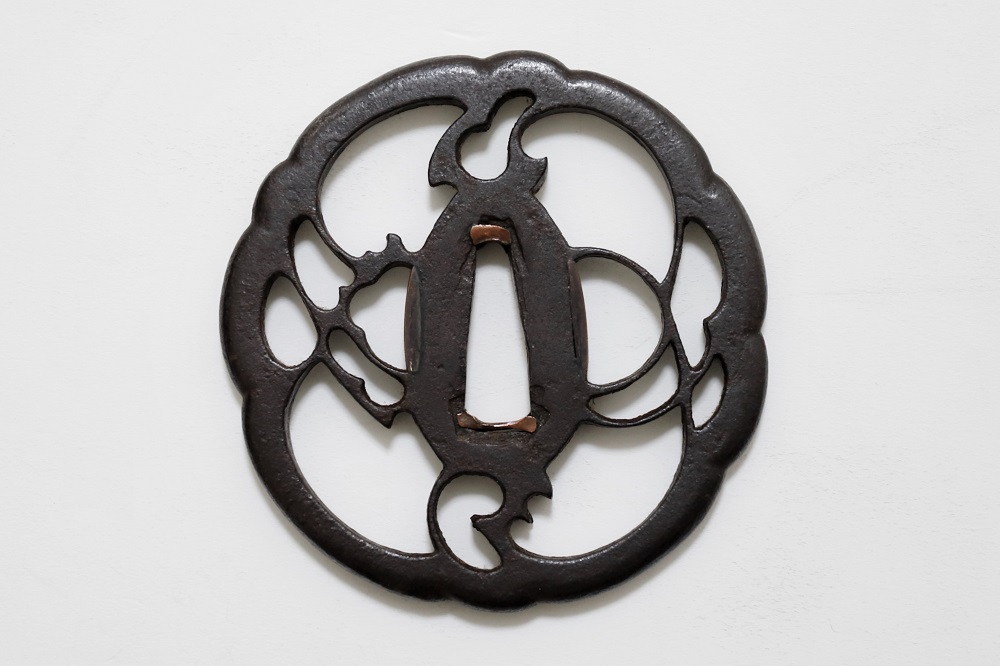
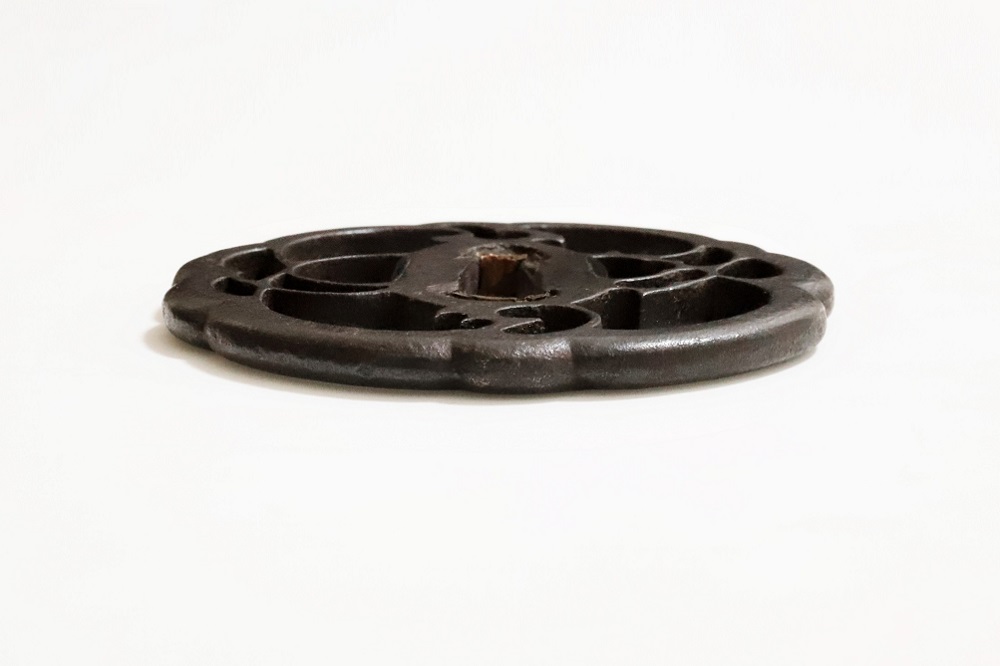
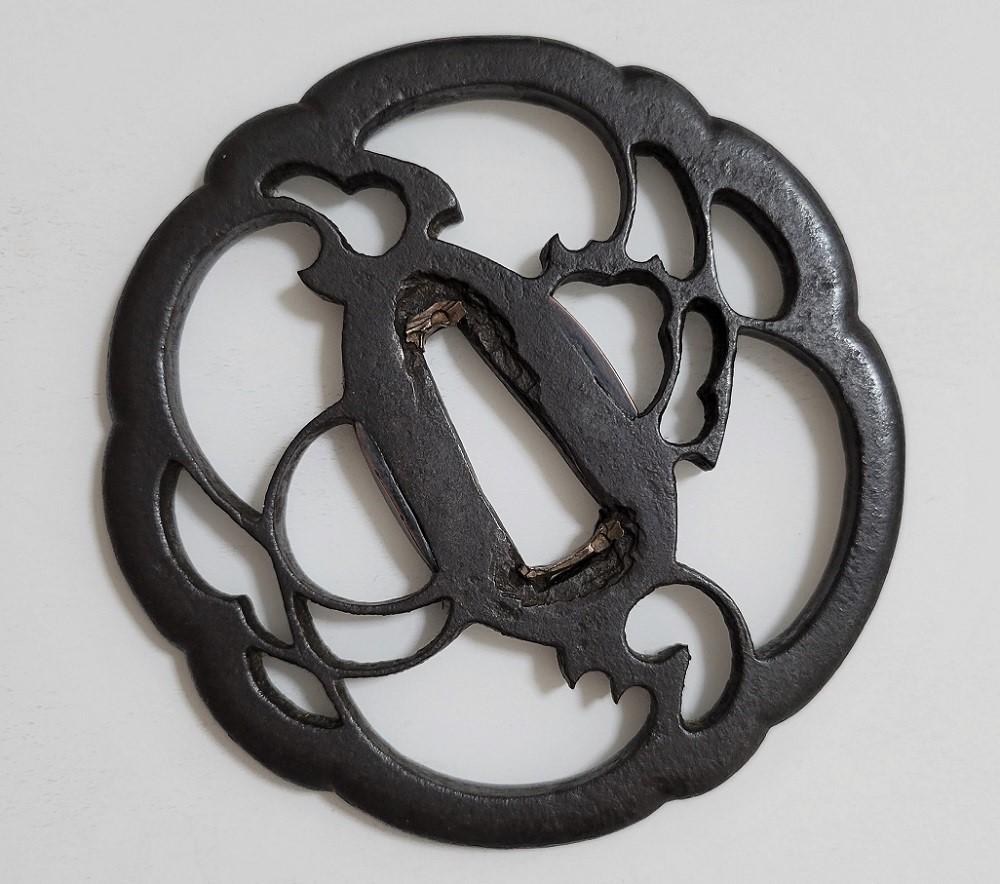
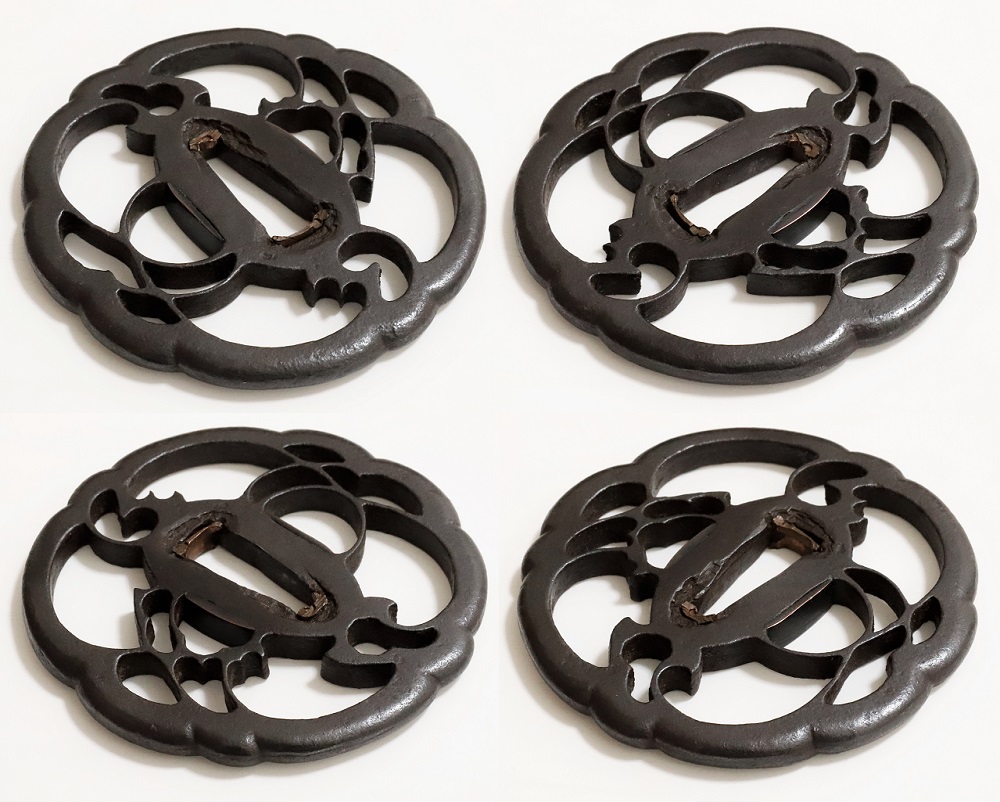
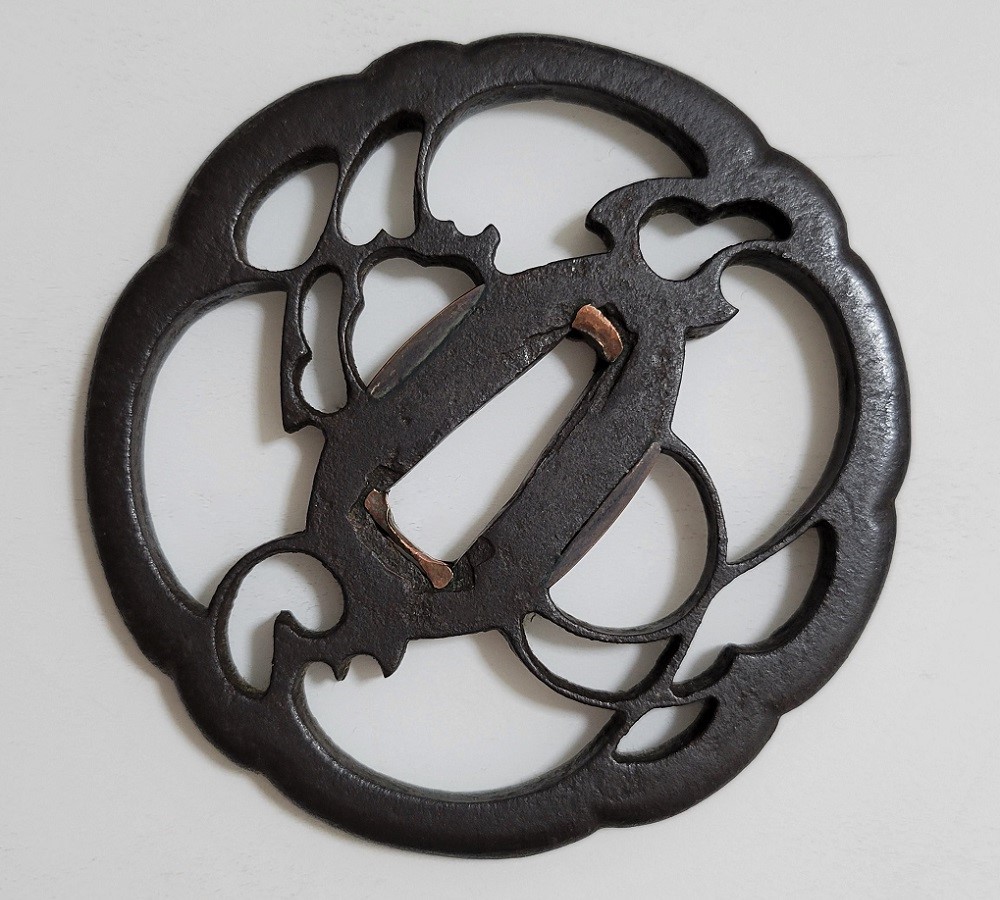
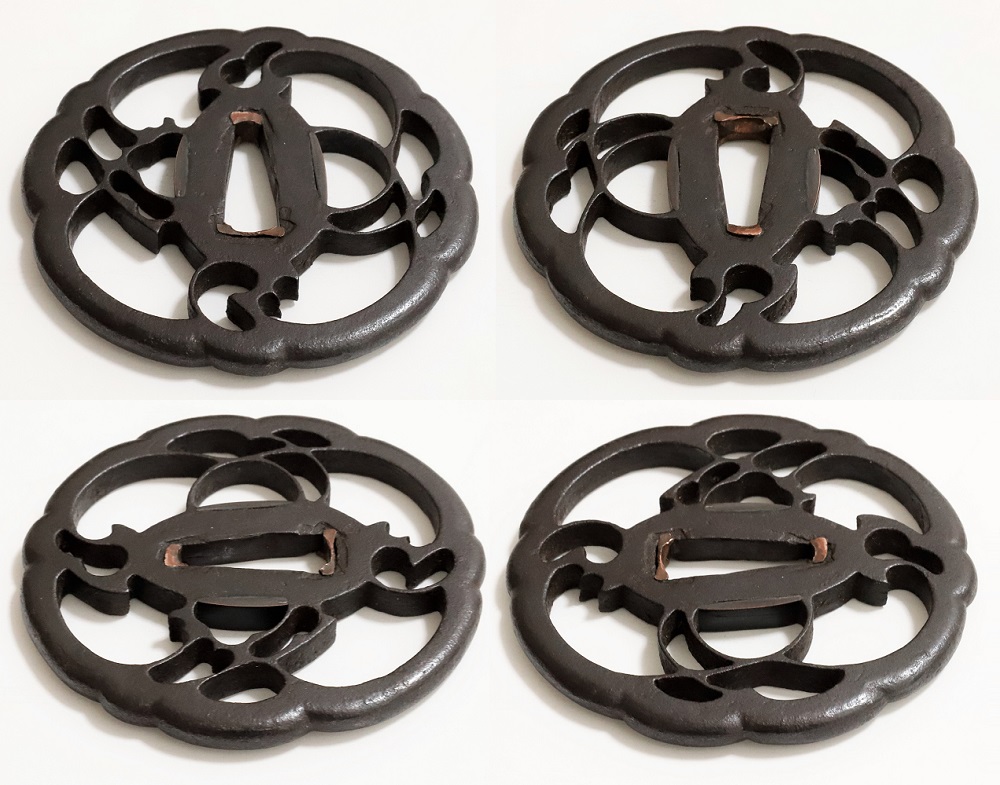
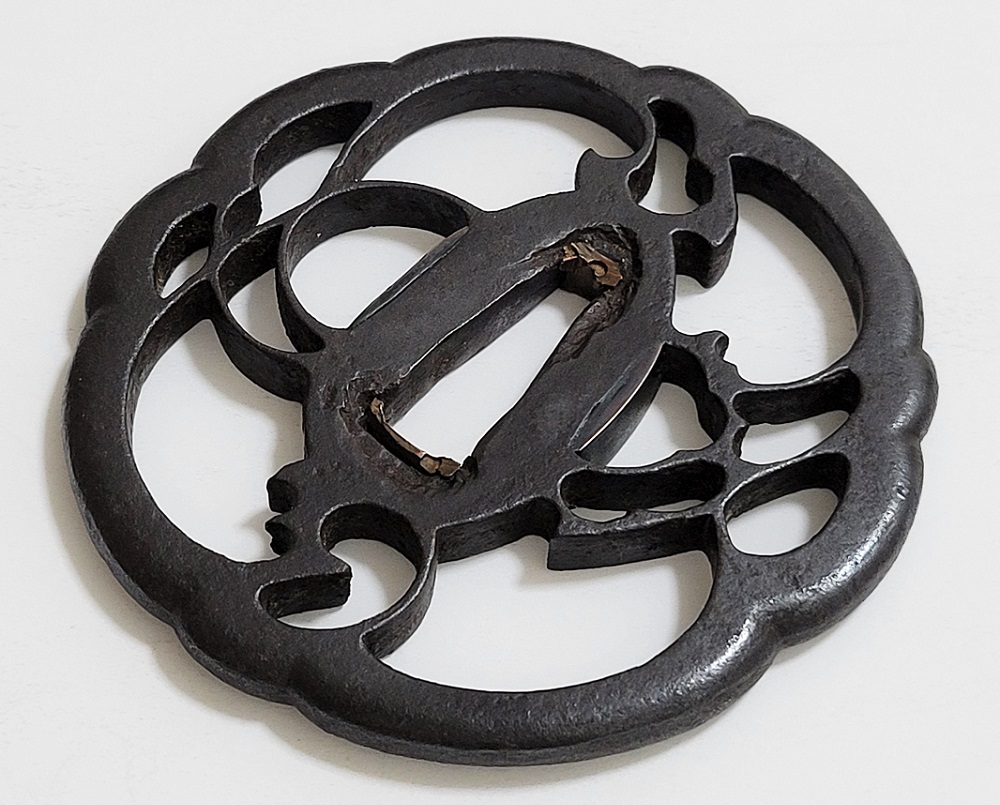
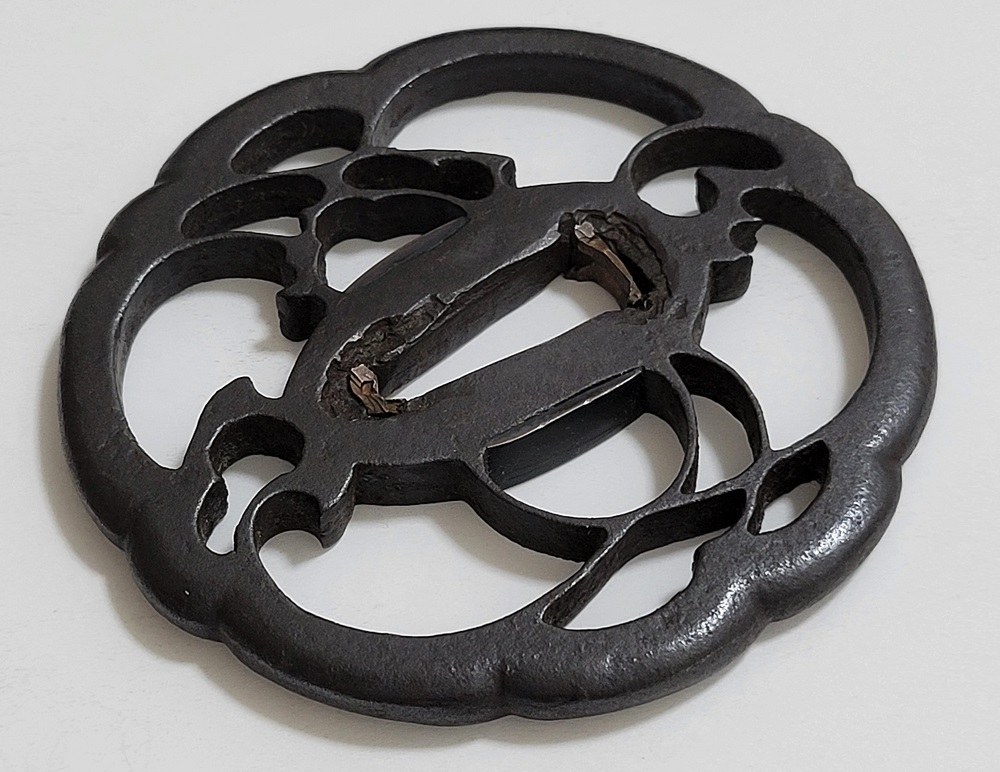
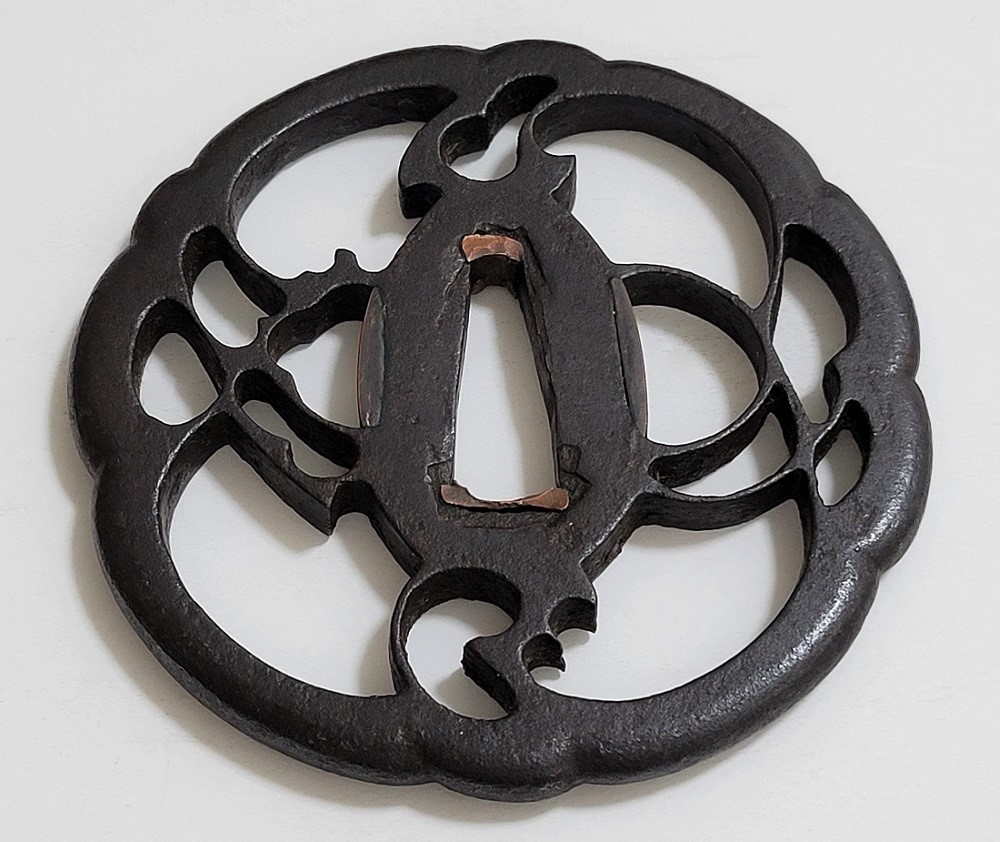
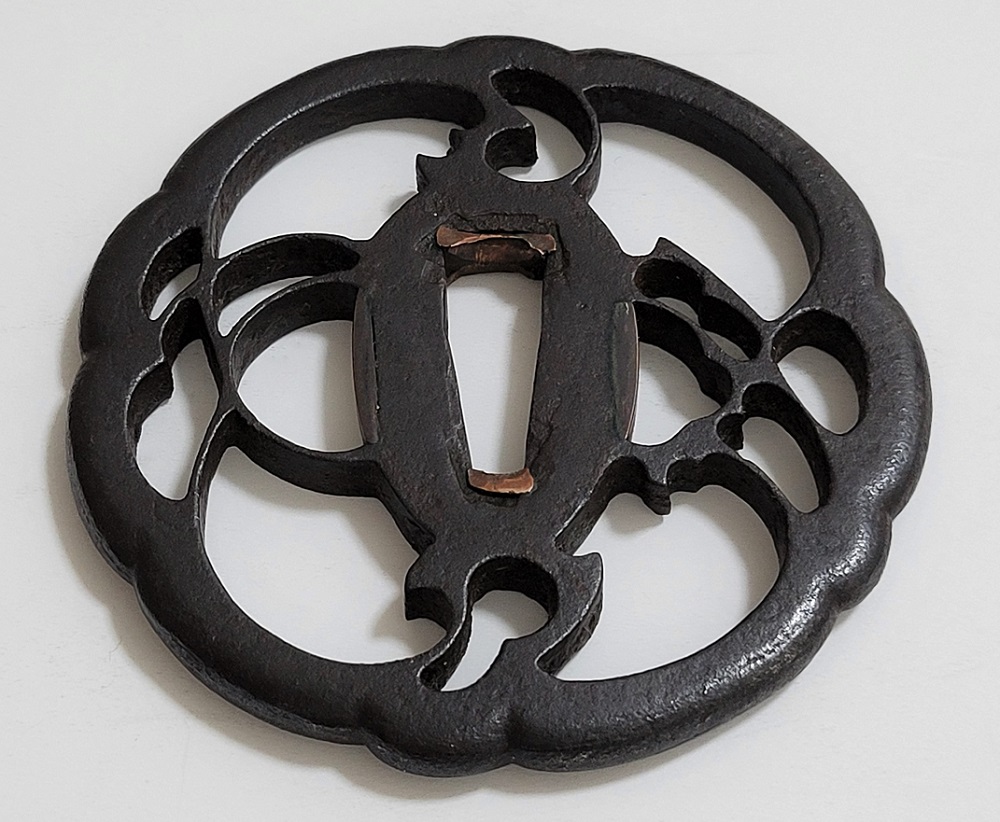
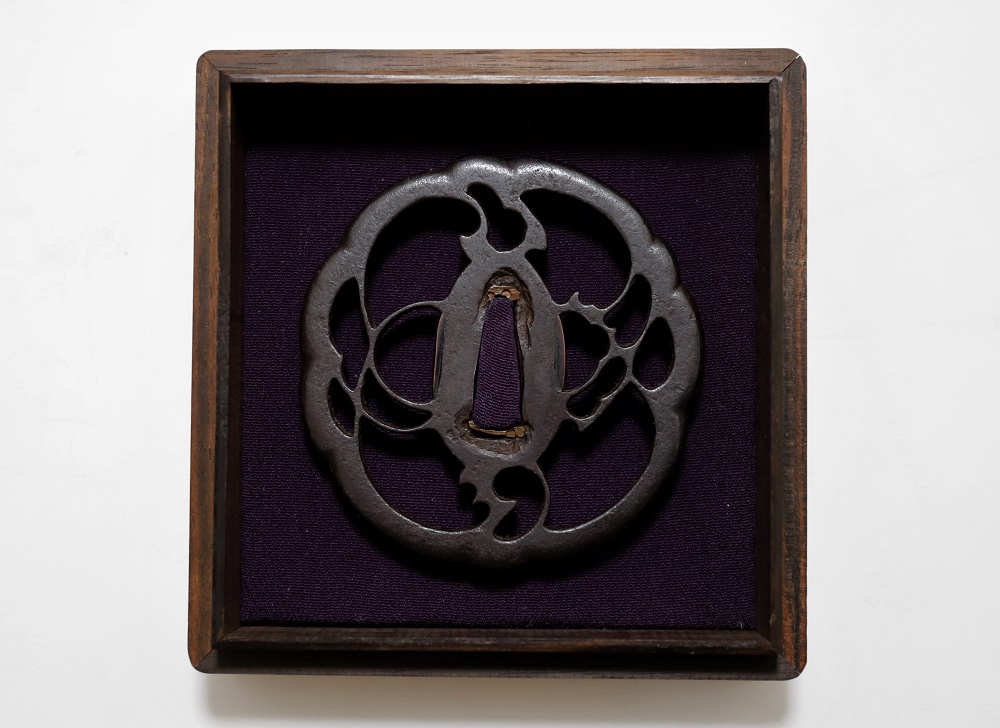
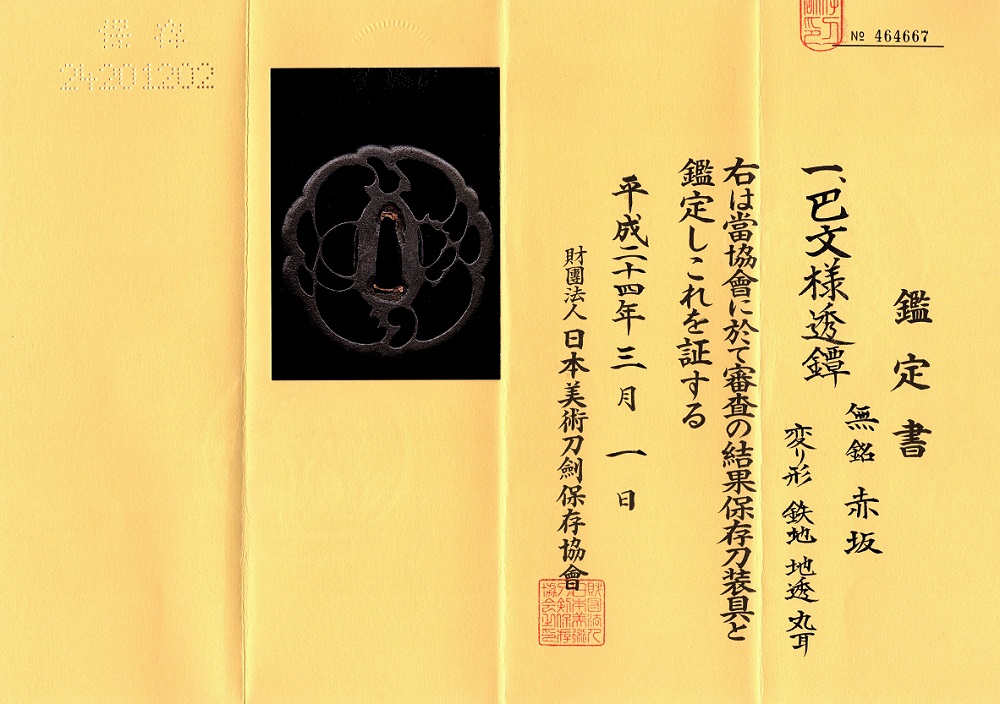
| The tomoe (tomoe-mon) is a traditional Japanese motif, said to derive from the shape of a curved jewel, resembling a magatama. It has been widely used in family crests, shrine and temple emblems, and is also seen on drums and roof tiles. The design is associated with protective meanings, such as warding off evil and preventing fire.This tsuba is of somewhat large and thick, irregular form, forged from well-refined iron with careful construction. The rim shows visible forging marks, giving it a bold and unrestrained character typical of Akasaka work. While the accompanying paper identifies the design as openwork of tomoe motifs, the composition—enclosed by pampas grass (susuki) and formed into an irregular shape—closely resembles the “Musashino sukashi” style seen in Akasaka tsuba.It passed the NBTHK Hozon Tosogu shinsa in 2012. |

 Search