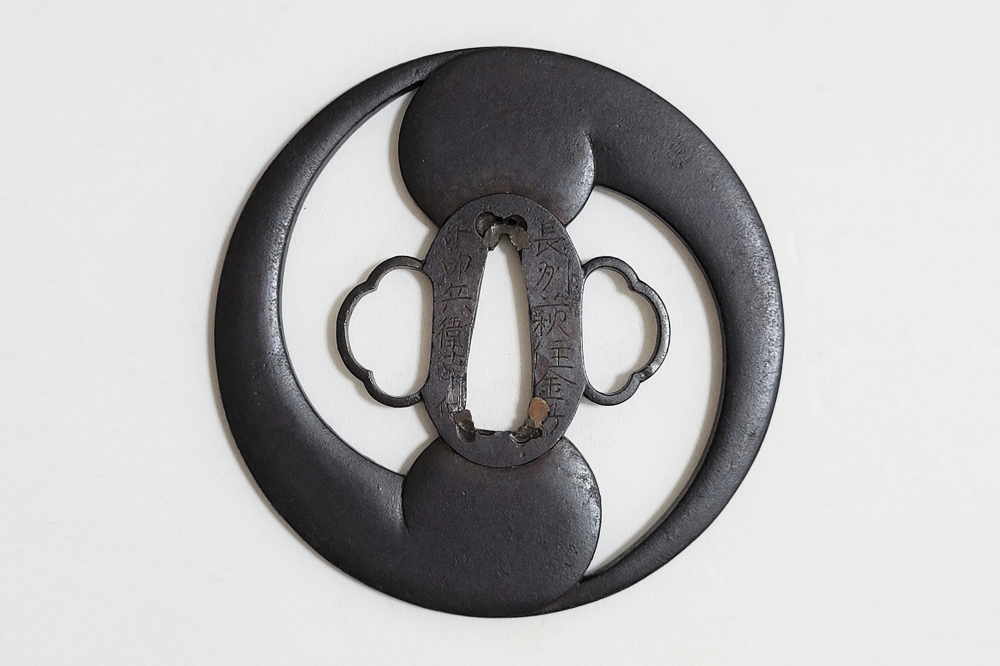
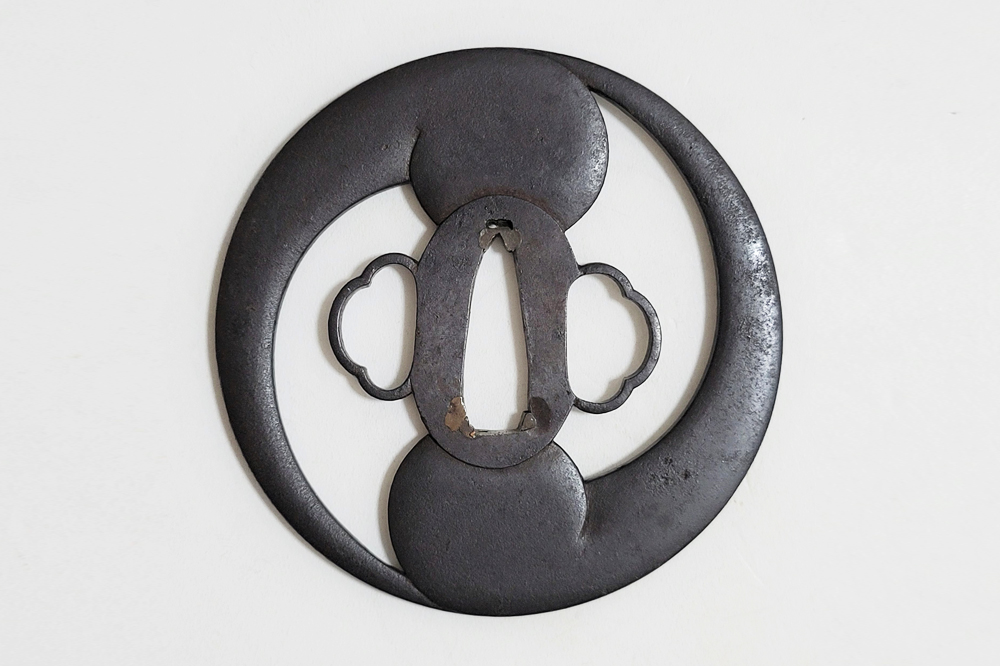
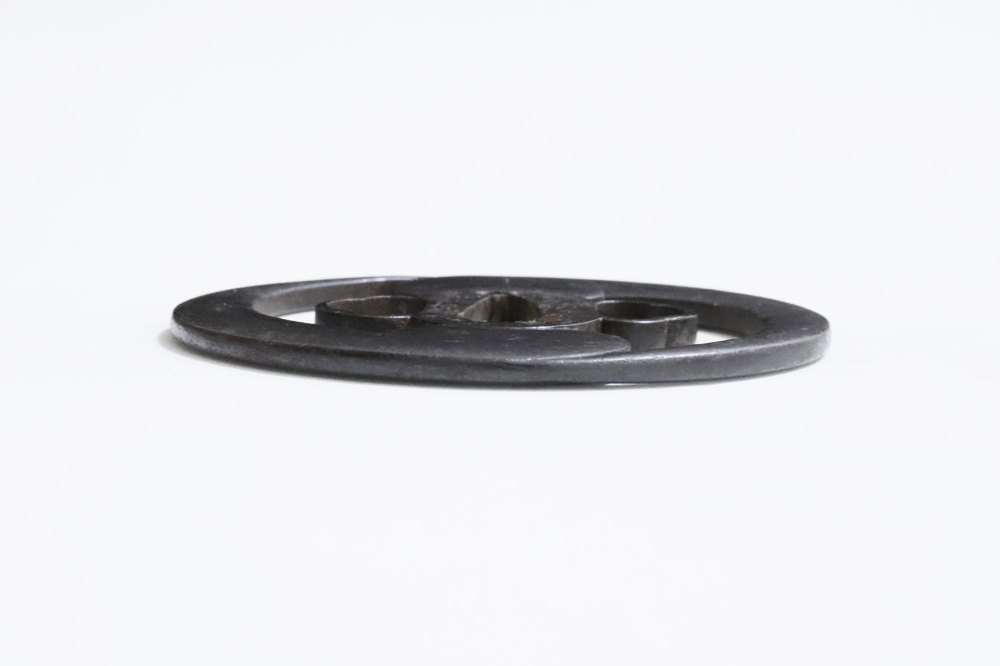
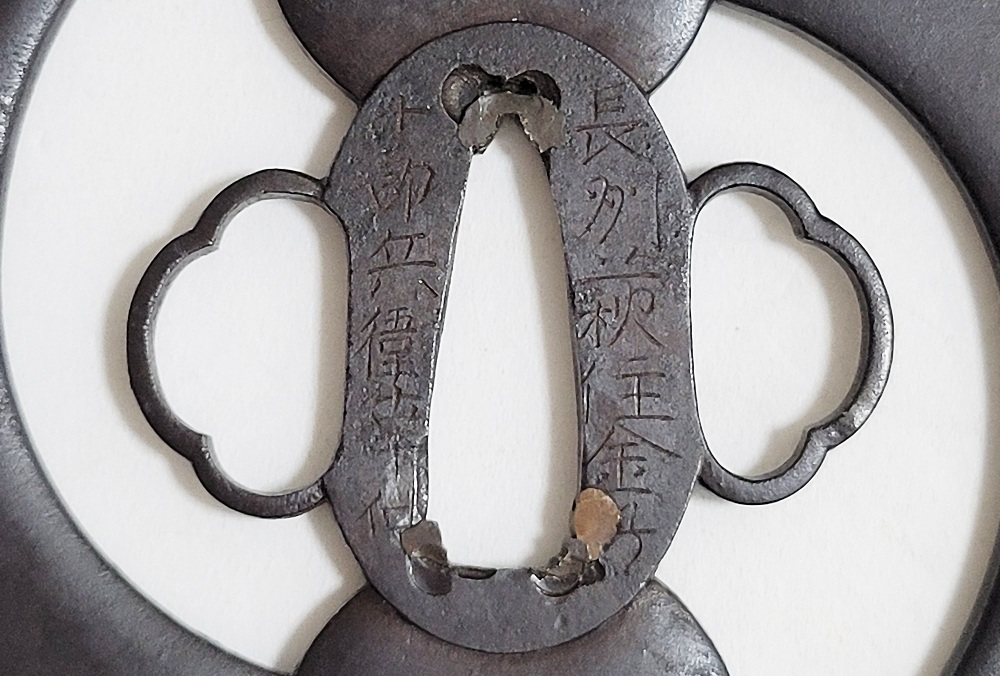
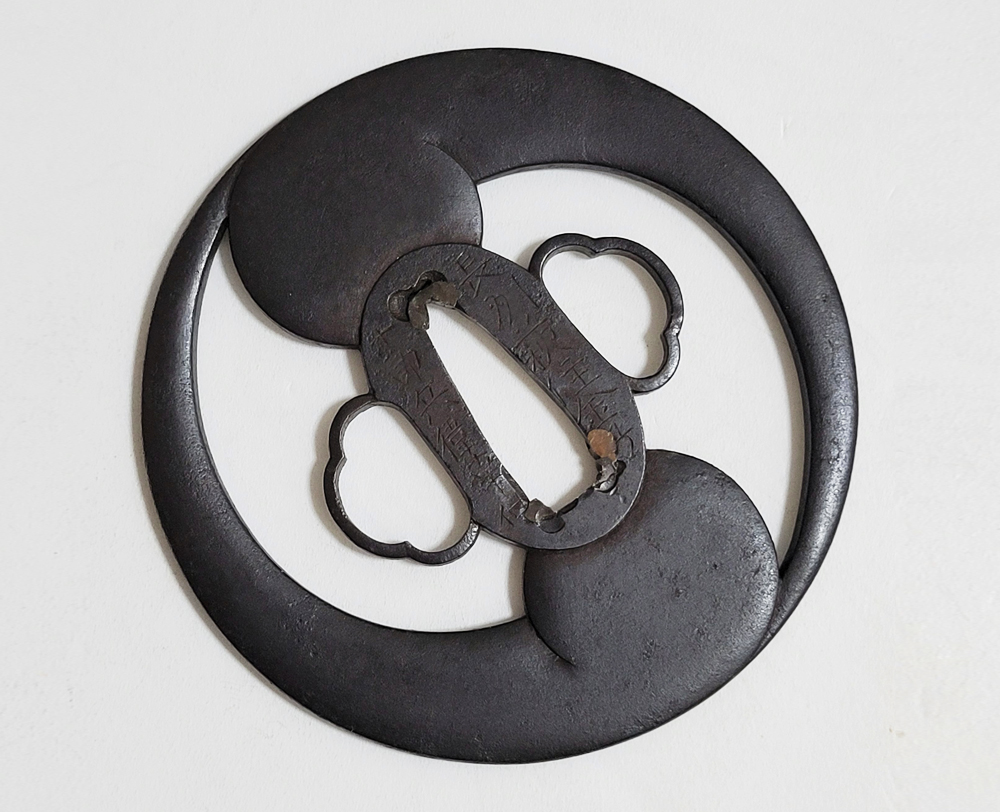
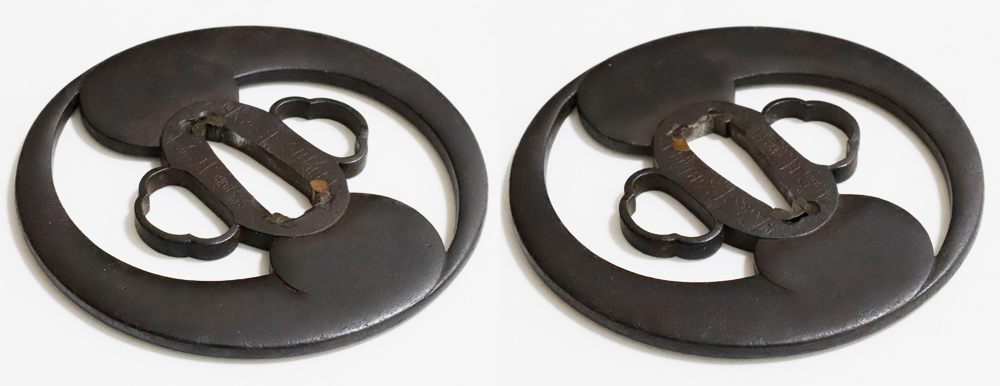
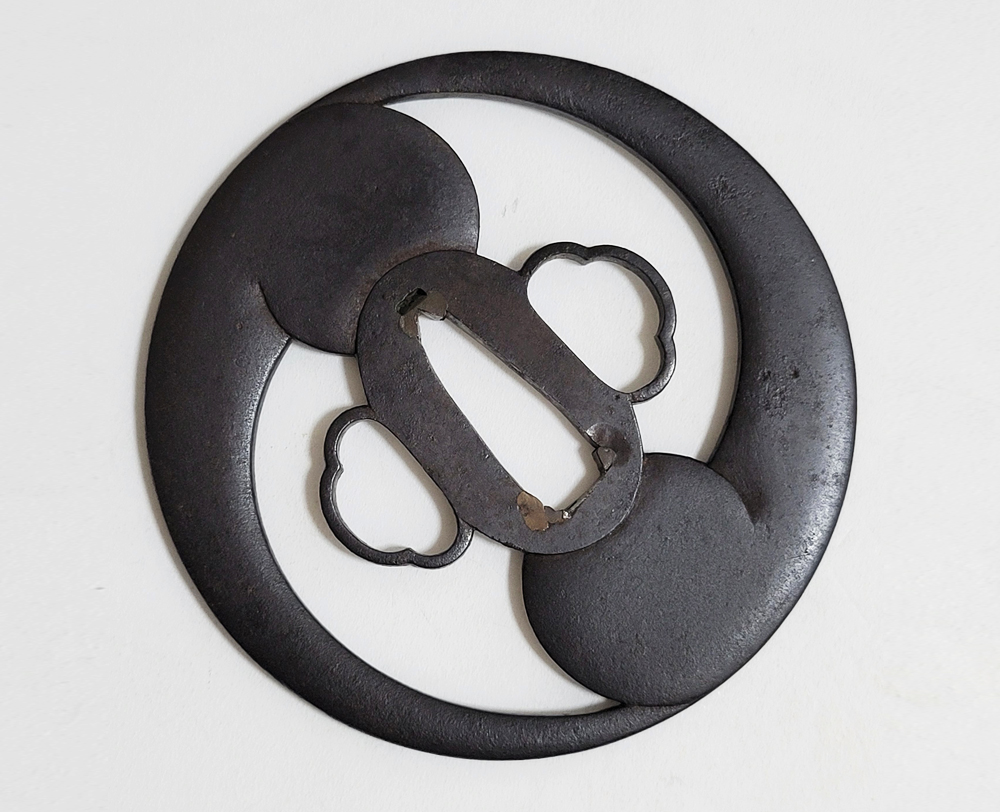
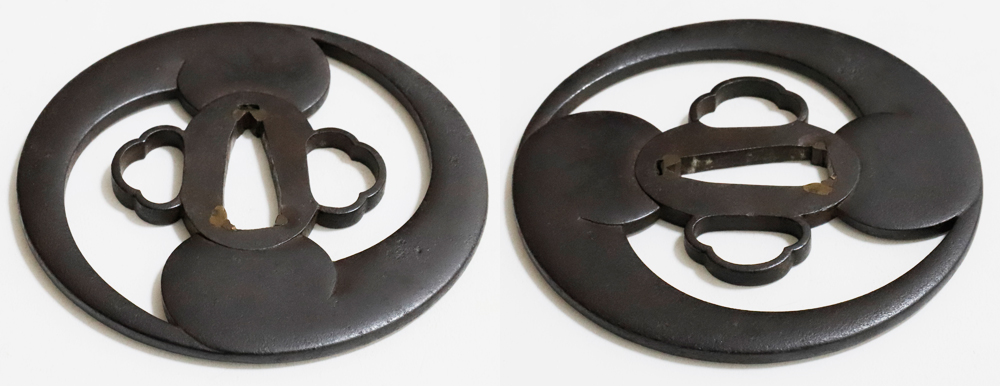
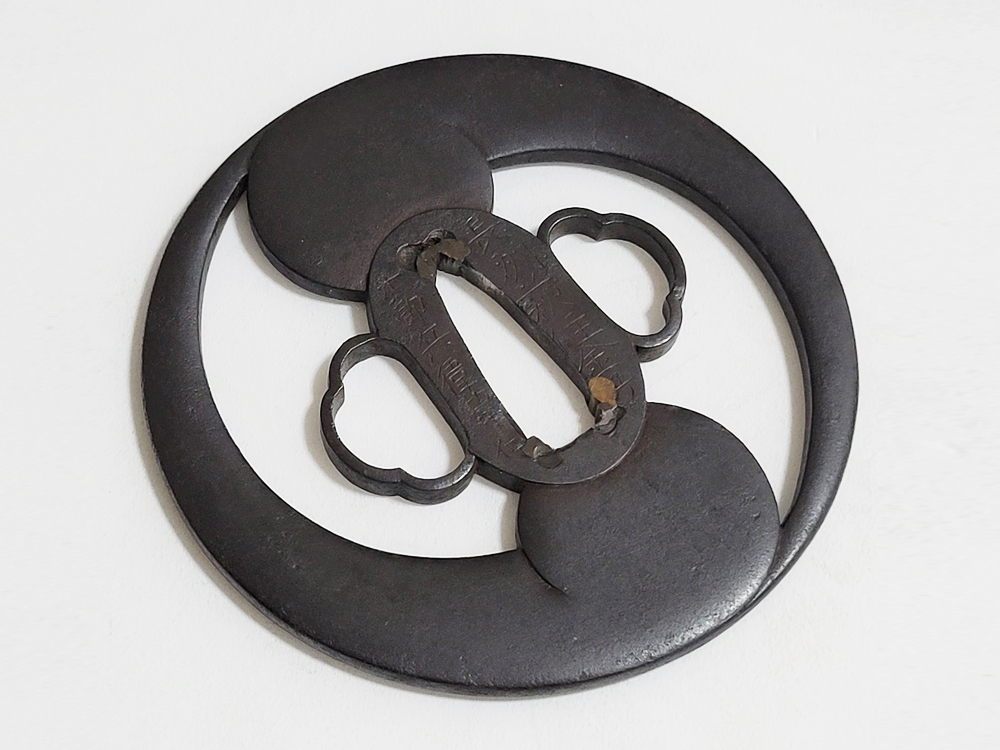
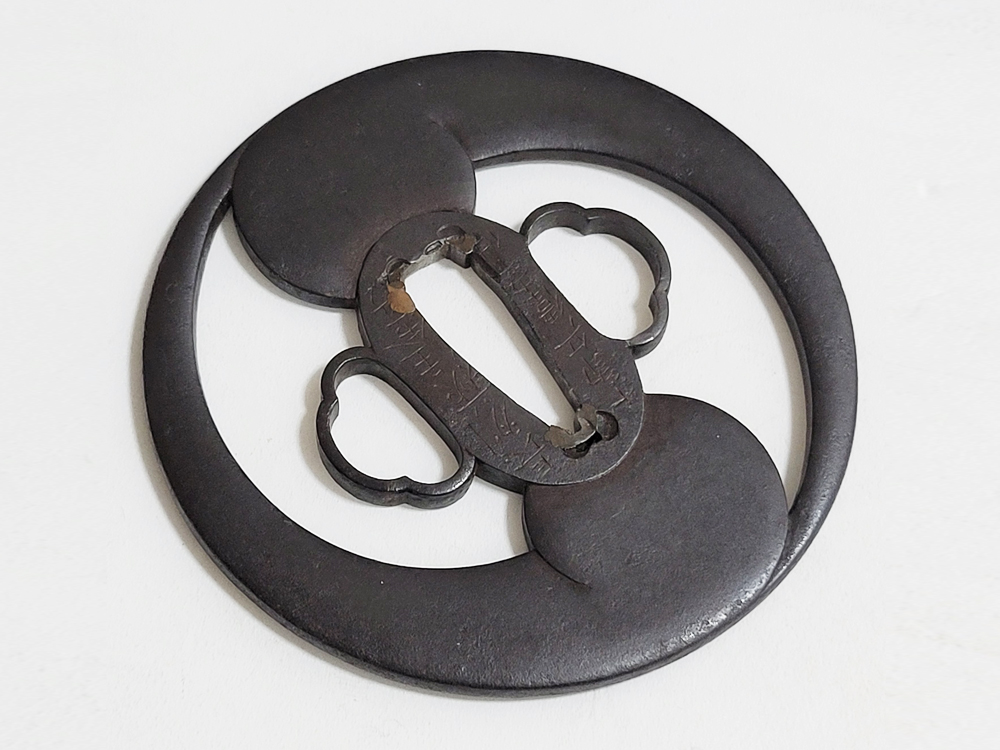
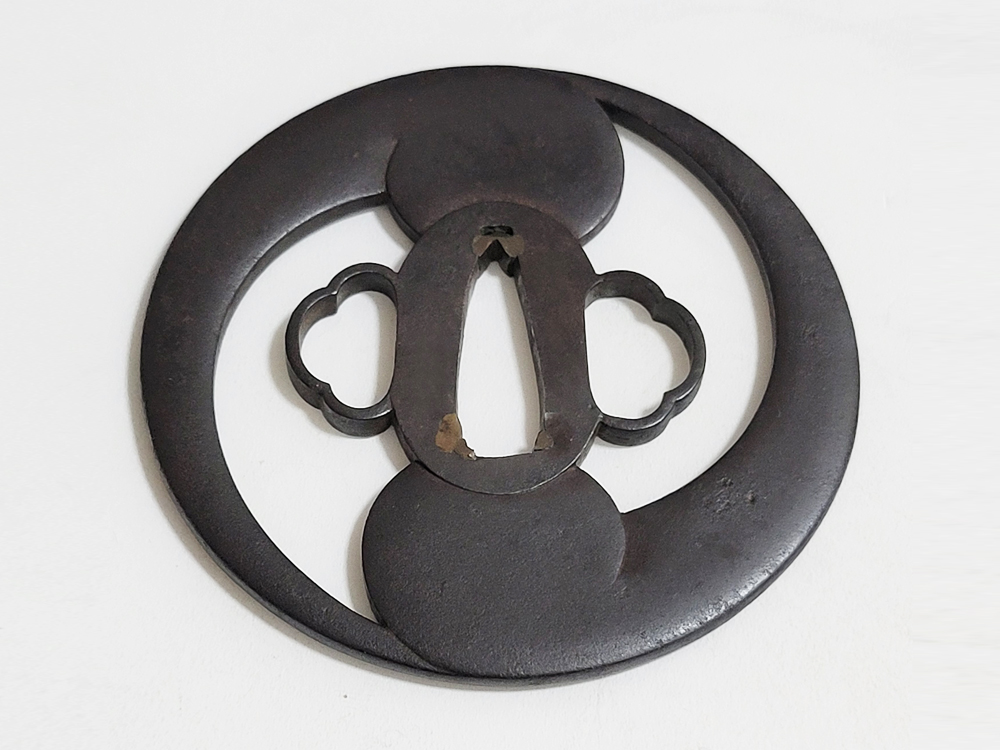
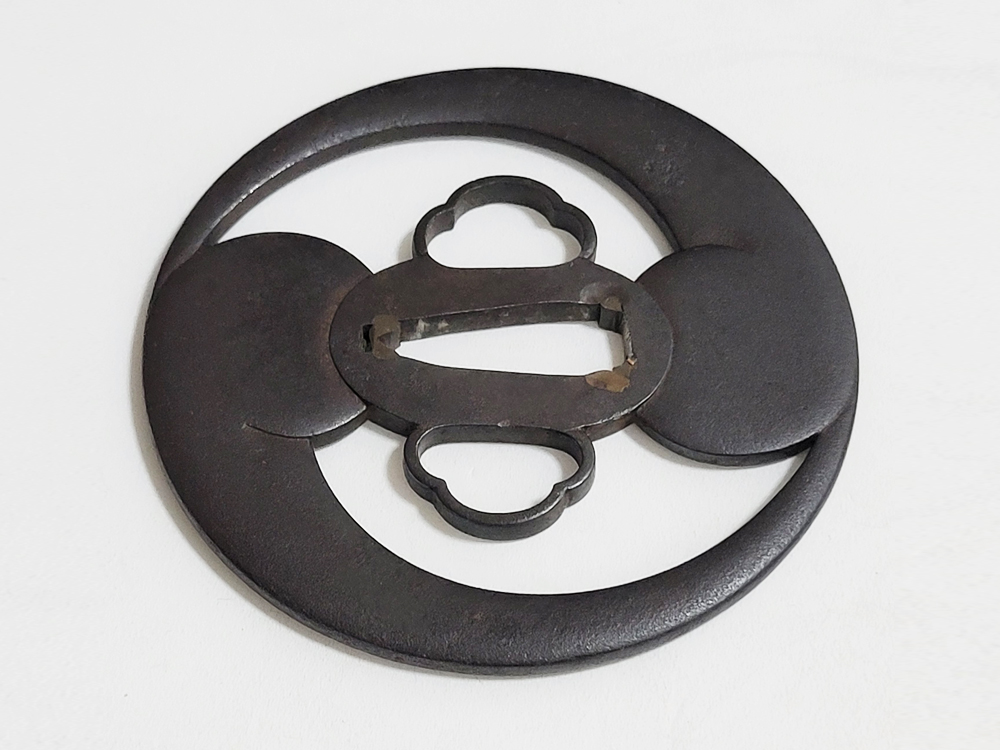
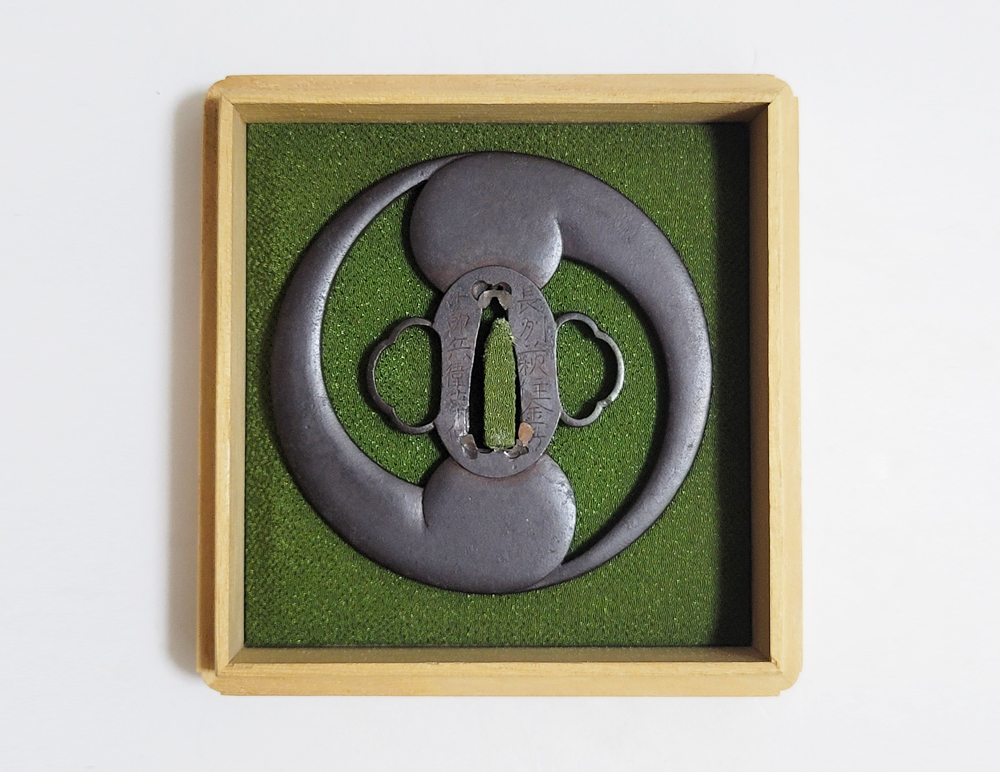
| The tomoe motif is traditionally believed to represent the swirling movement of water. Since the Heian period, it has been used on roof tiles as a symbol believed to protect against fire, and it later became a popular design among the samurai. The signature, “Chōshū Hagi-jū Kaneko Jūrōbei Yukinaka,” identifies the tsuba craftsman as the second-generation Kaneko family master of Hagi in Nagato Province, the son of the first-generation Yukishige, who worked around the Genroku era (1688–1704). This tsuba features a simple yet highly refined Hidari Futatsu-domoe ji-sukashi design. Despite its understated composition, it displays excellent iron quality, well-balanced thickness, and refined workmanship characteristic of the Chōshū school. Passed the NBTHK Tokubetsu Hozon Tosogu shinsa in February 2026. |

 Search