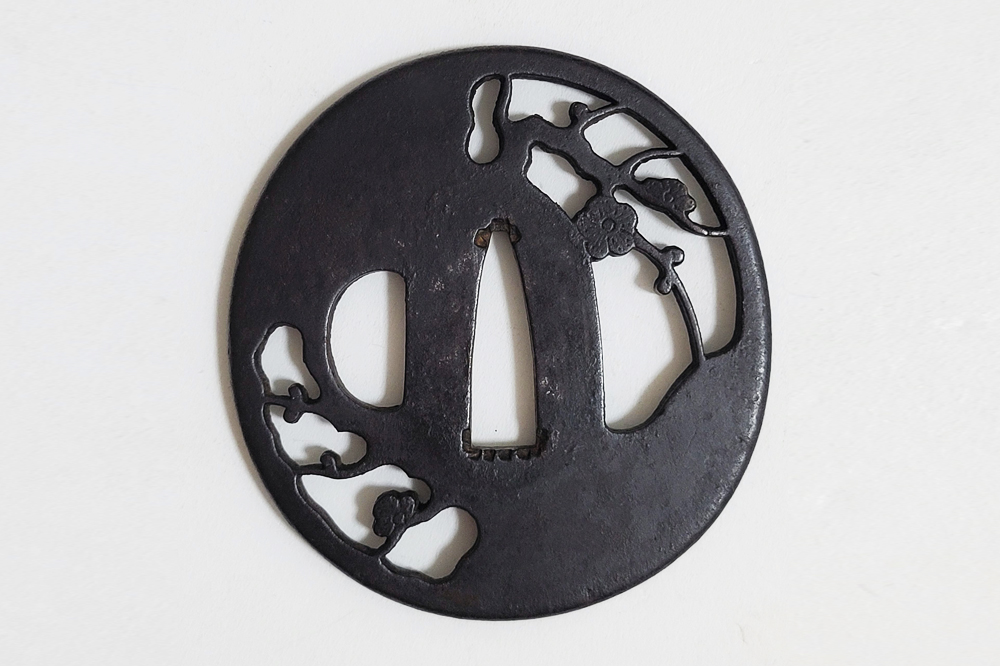
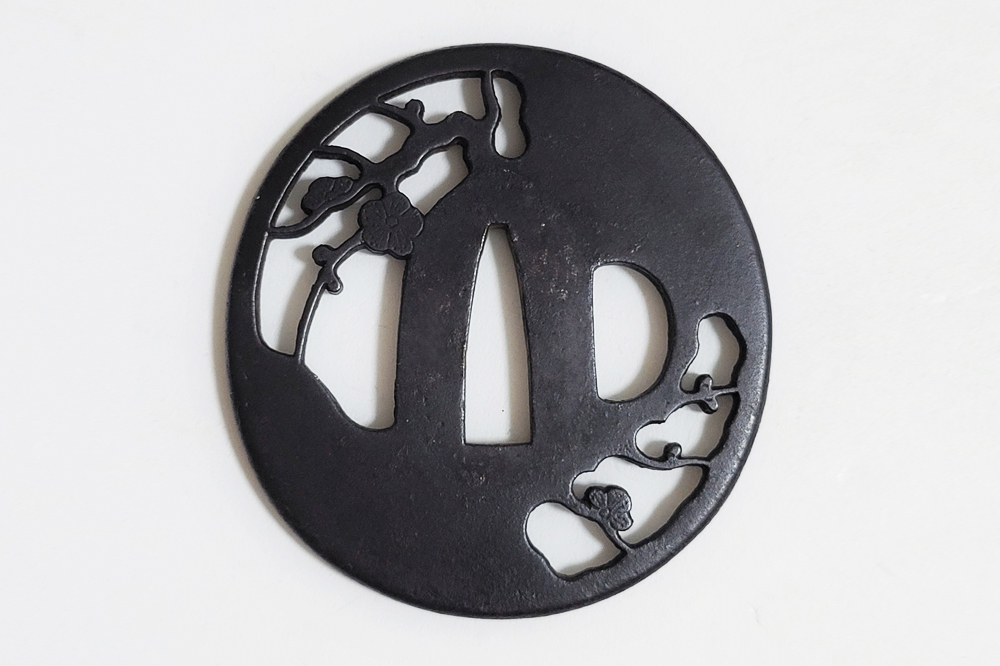
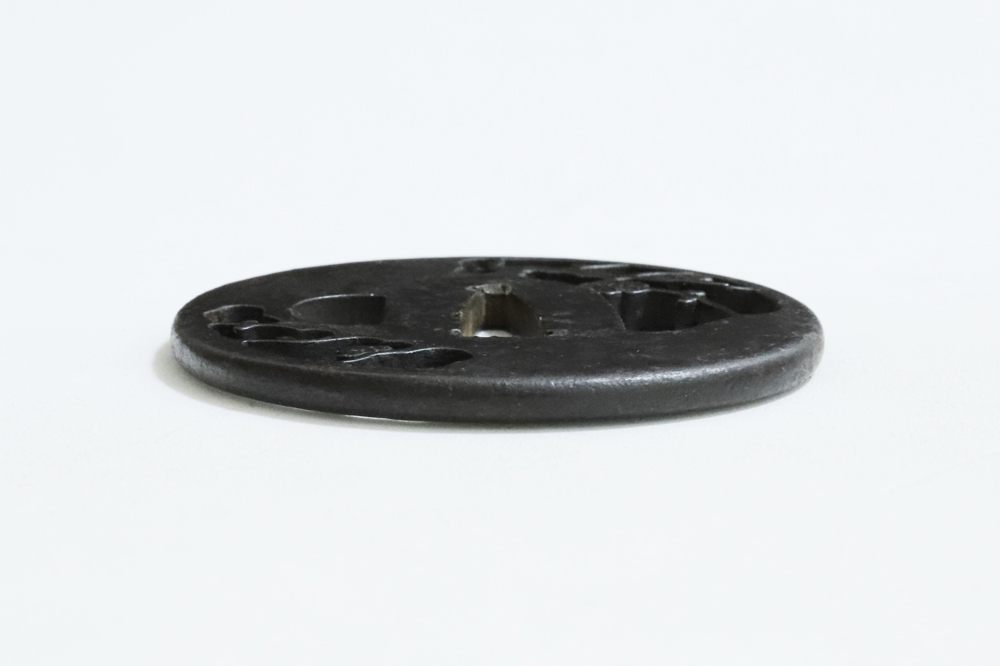
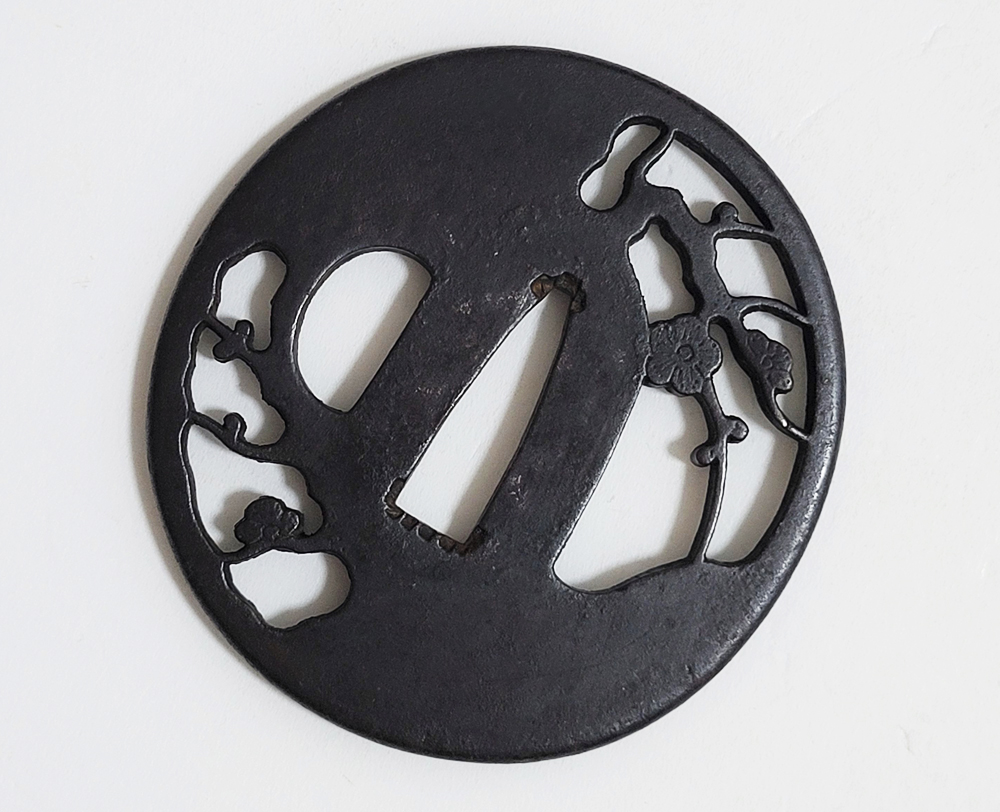
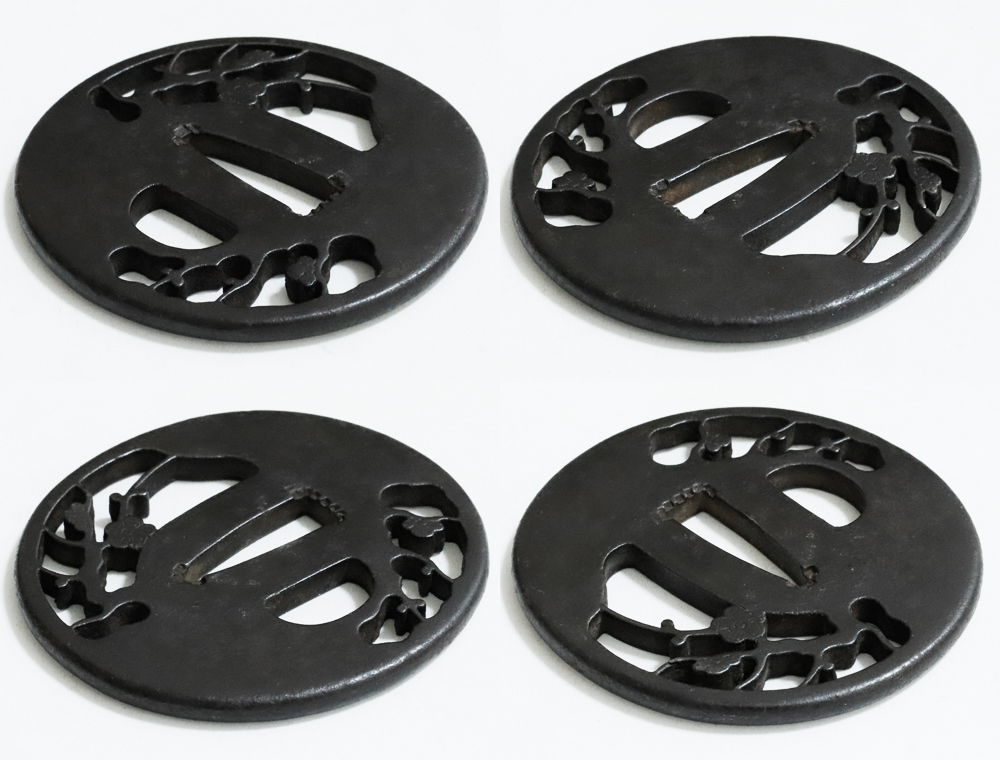
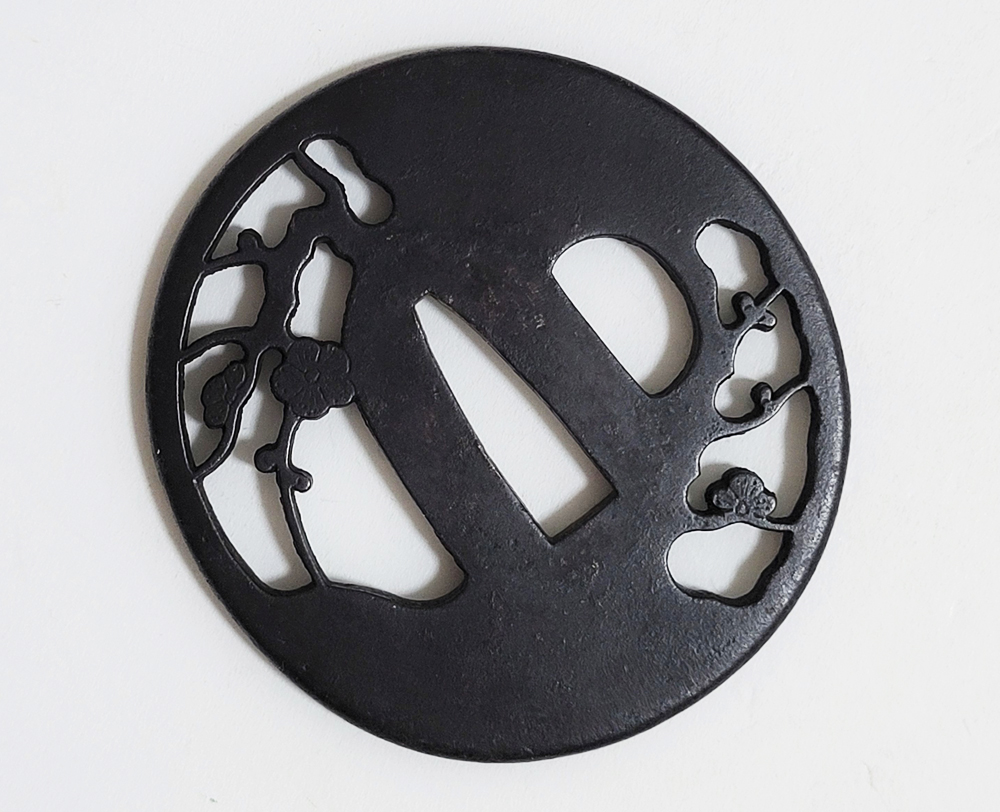
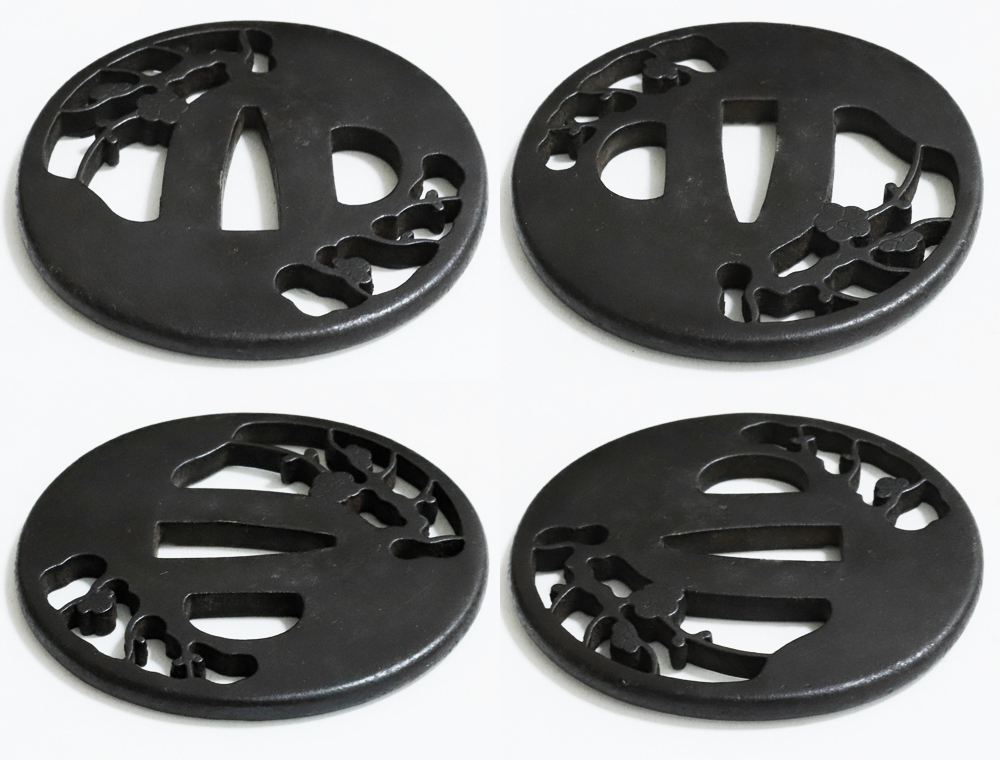
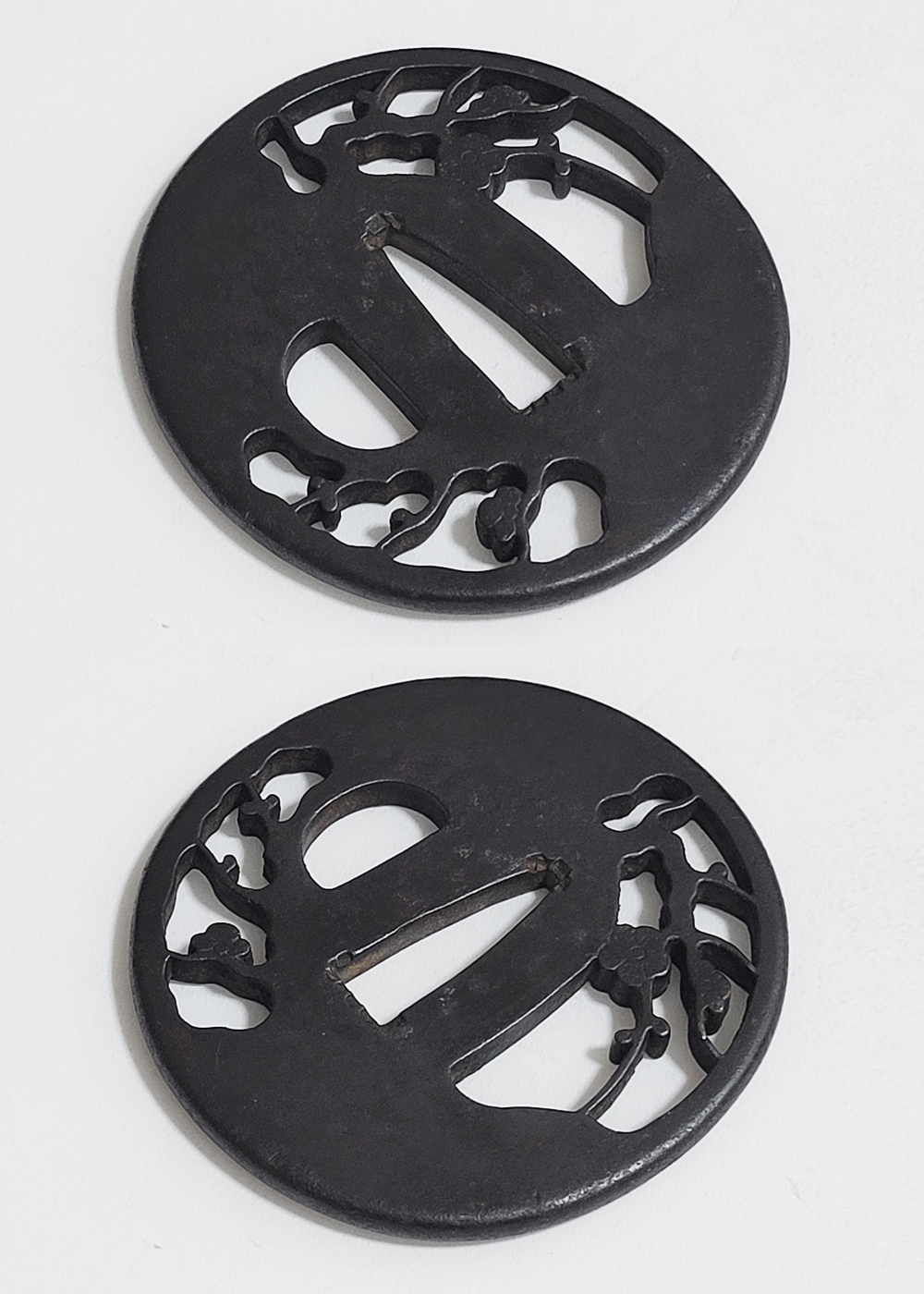
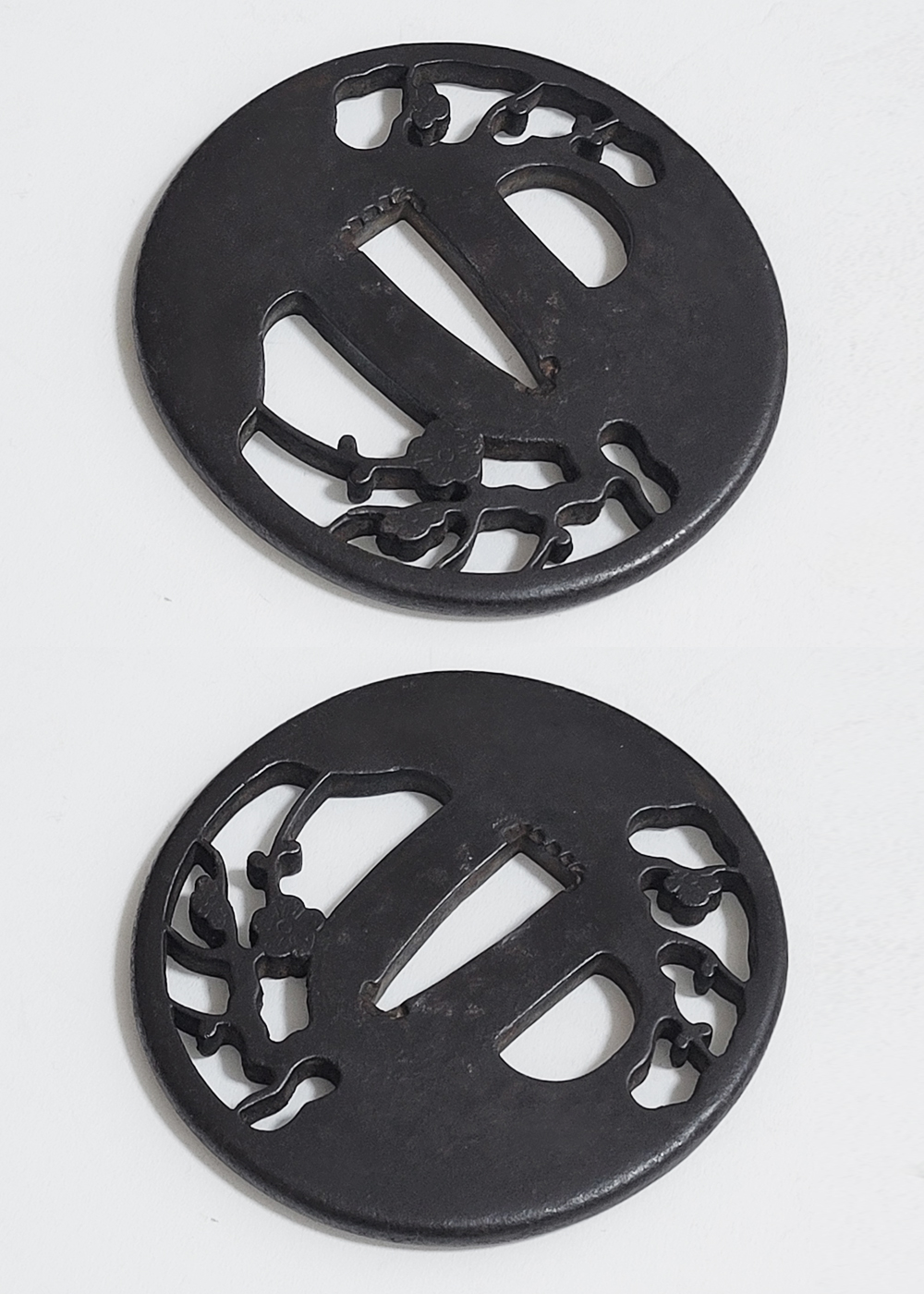
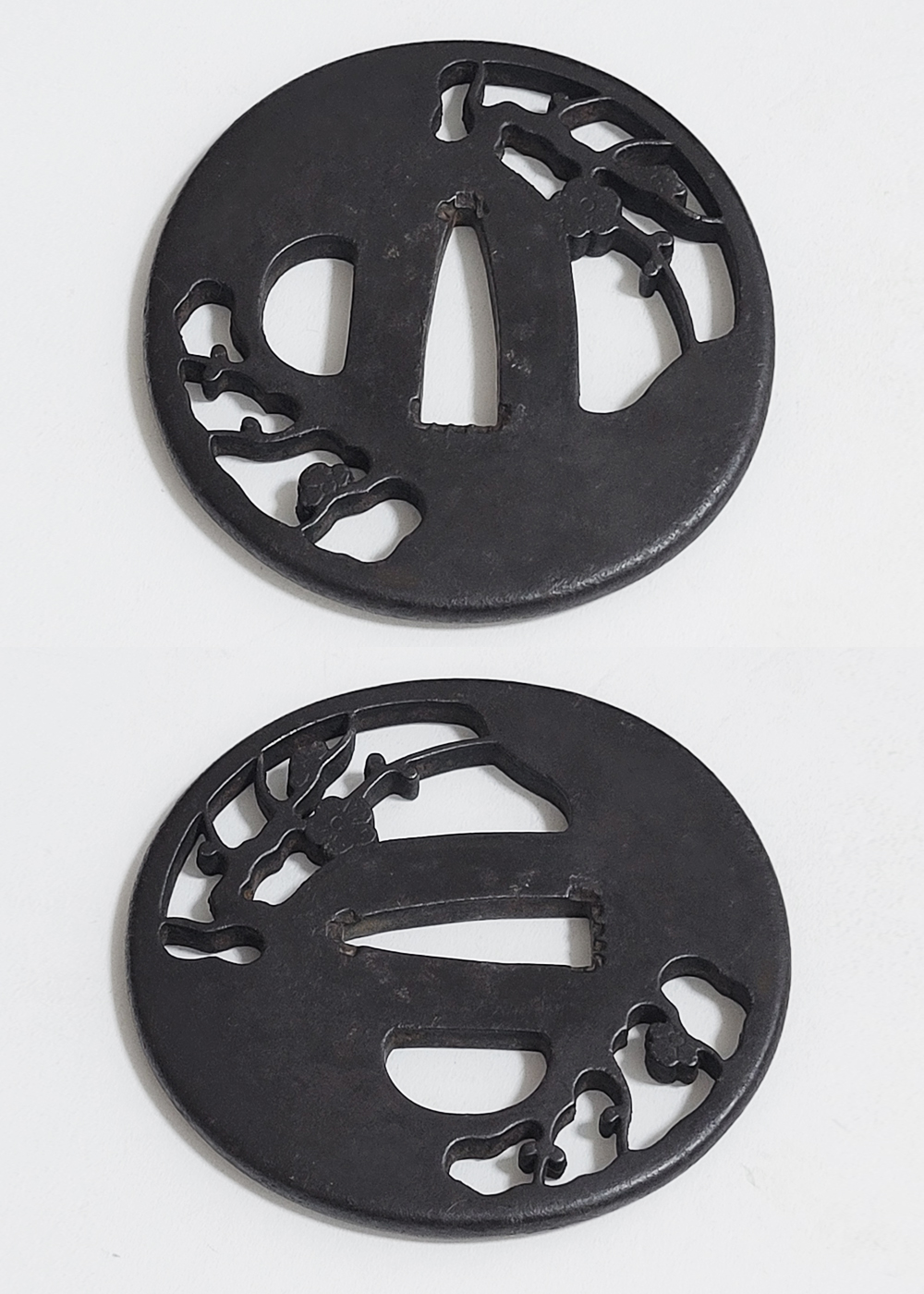
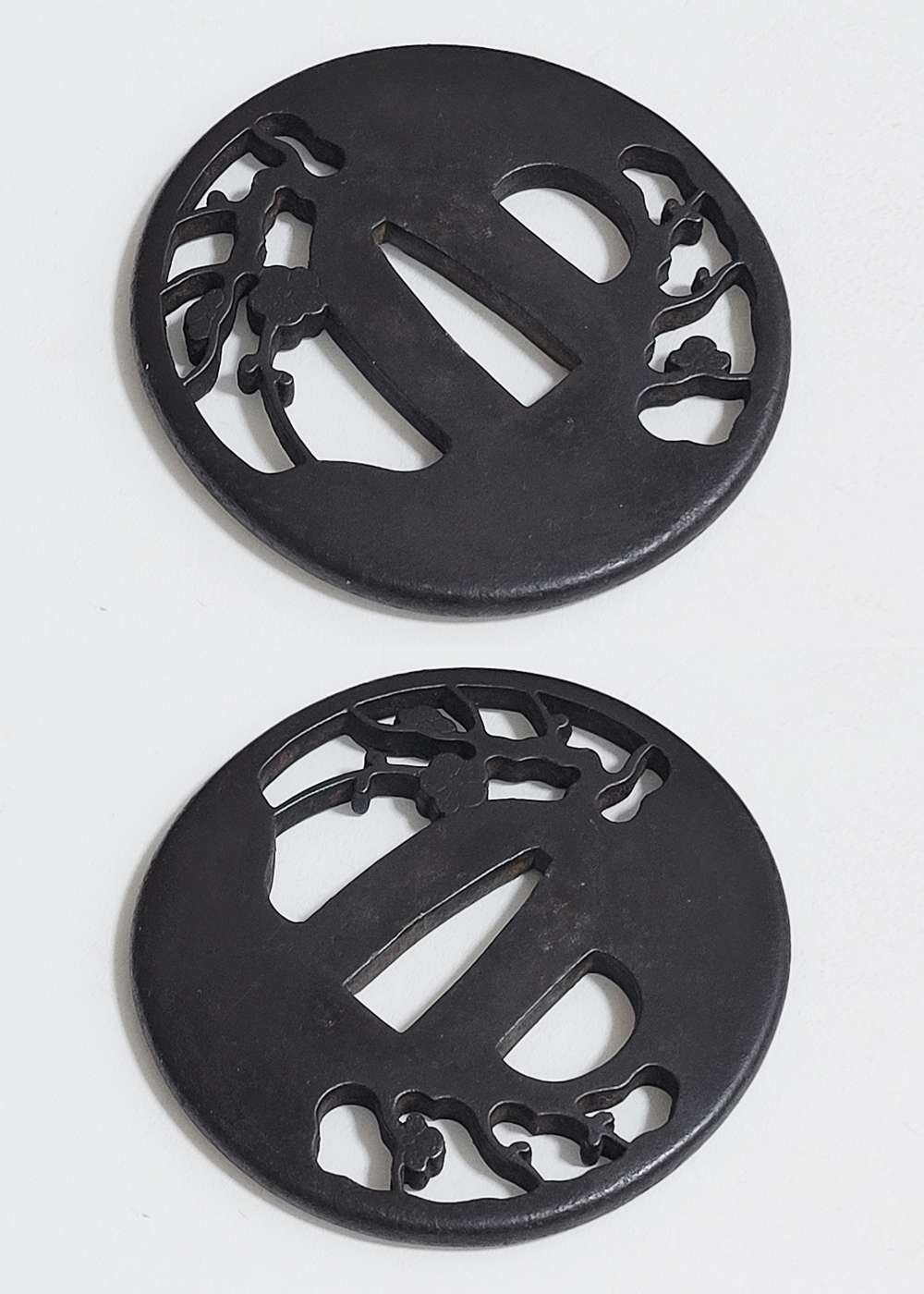
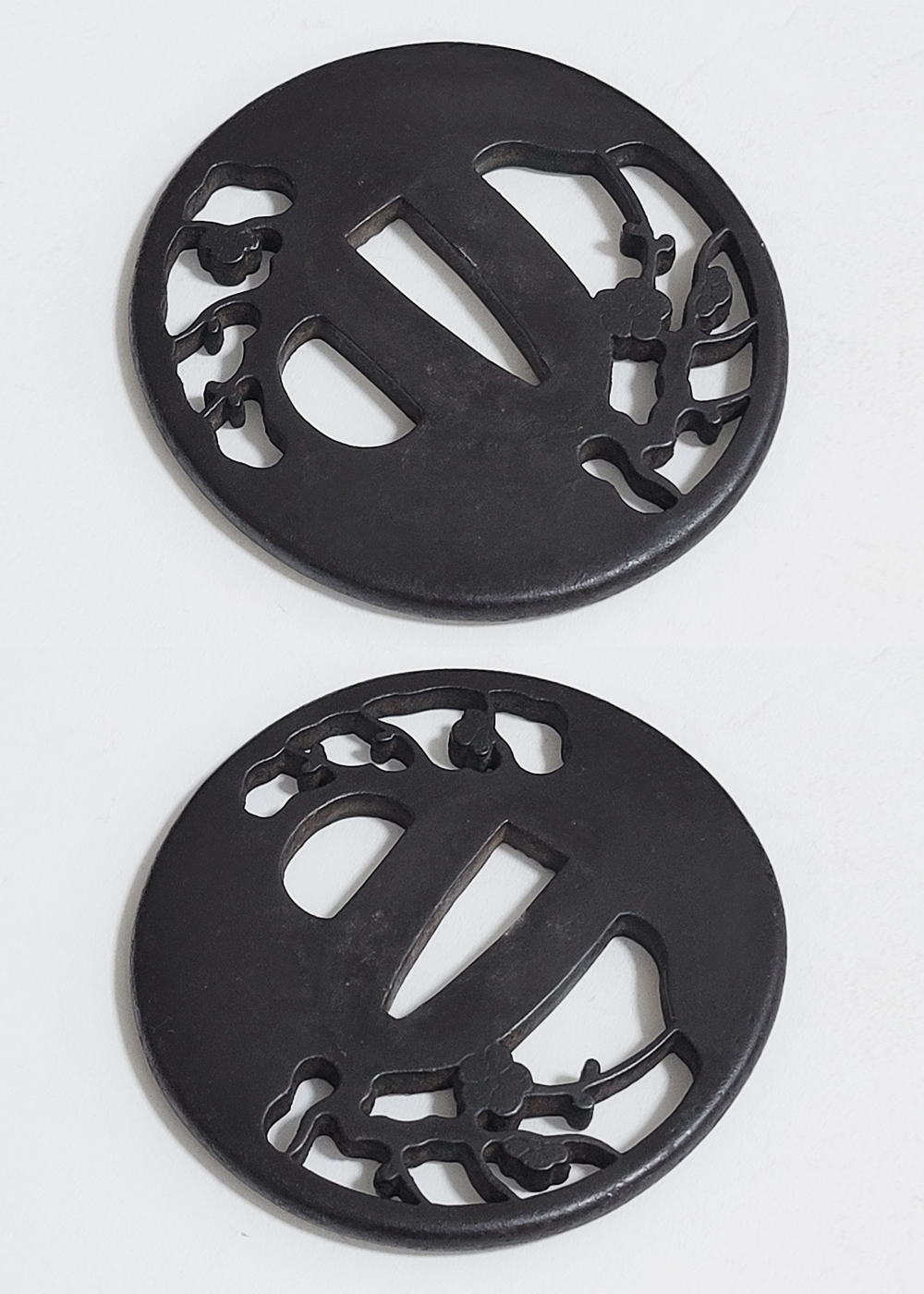
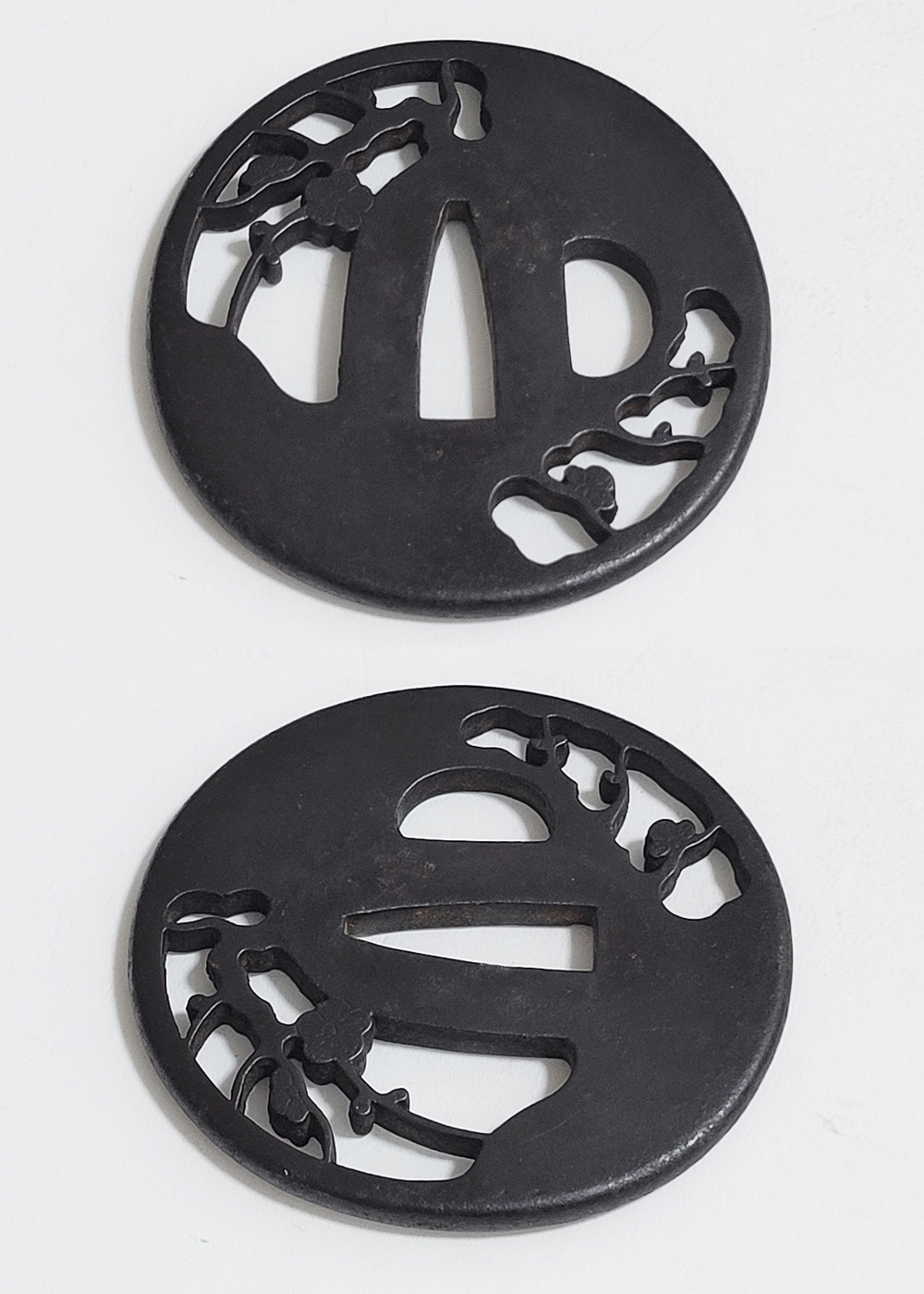
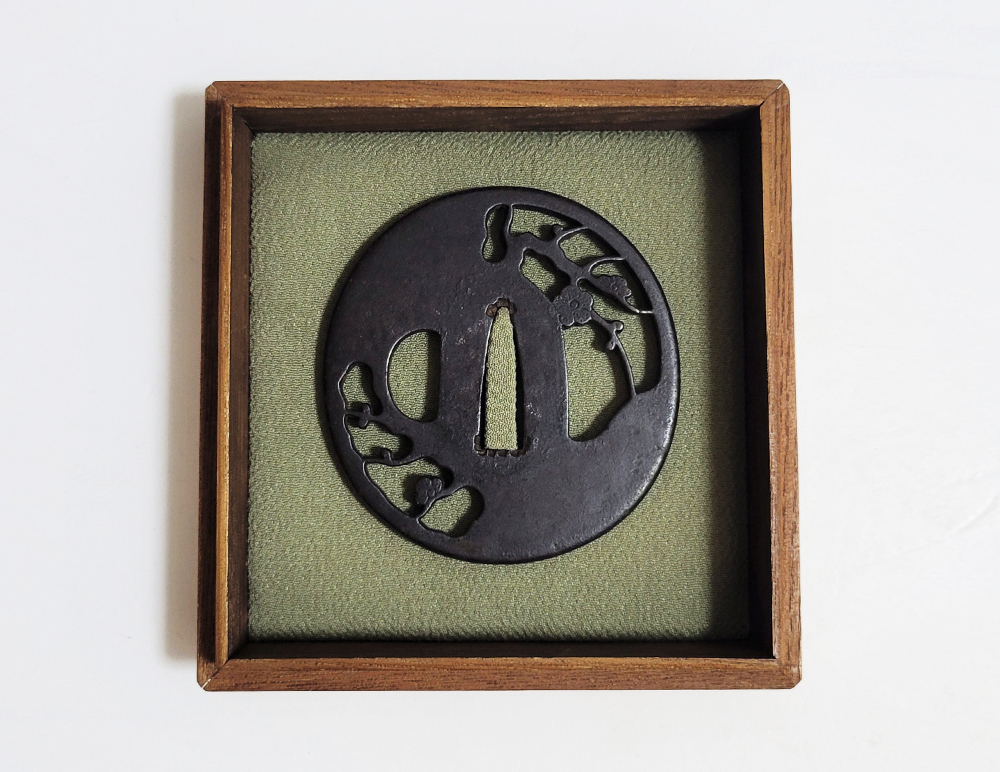
| This tsuba is made of well-forged iron in a vertical round shape and depicts plum branches arranged diagonally on opposite sides. The contrast between the openwork design and the broadly retained iron ground makes skillful use of negative space, creating a refined and well-balanced composition. Although unsigned, the distinctive sekigane fitted to the hitsu-ana suggests that this work can probably be attributed to the Kamiyoshi school. The Kamiyoshi school was one of the four major schools of Higo tsuba, together with the Hayashi, Nishigaki, and Shimizu schools. In order to preserve the traditions of Higo metalwork, the Hosokawa lord instructed Tōhachi, the third generation of the Hayashi family—following the first-generation Matashichi and second-generation Shigemitsu—to transmit all of the Hayashi family's secret techniques to Kamiyoshi Juhei. Juhei's descendants, Fukanobu (1798–1851) and Rakuju (1817–1884), became renowned as distinguished masters of the late Edo period. With its fine iron ground and sophisticated design, this tsuba displays the refined elegance characteristic of Higo metalwork. |

 Search