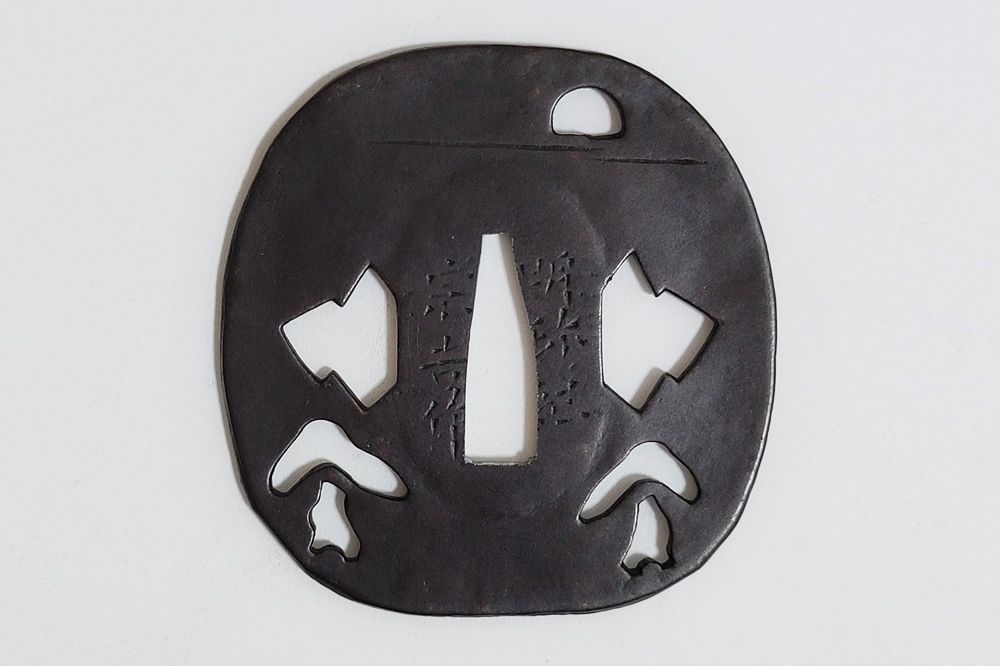
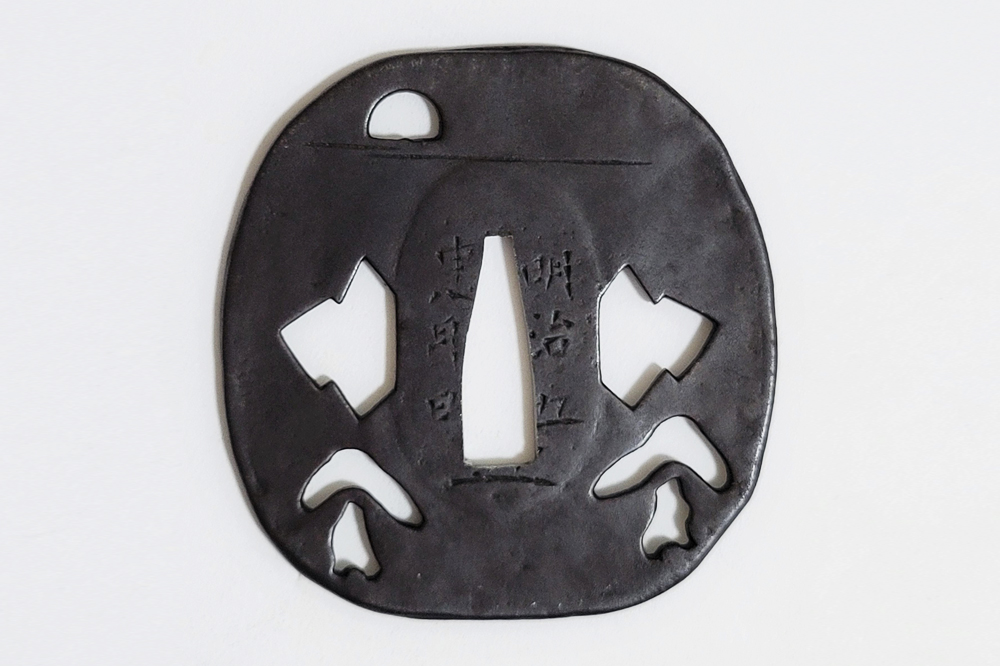
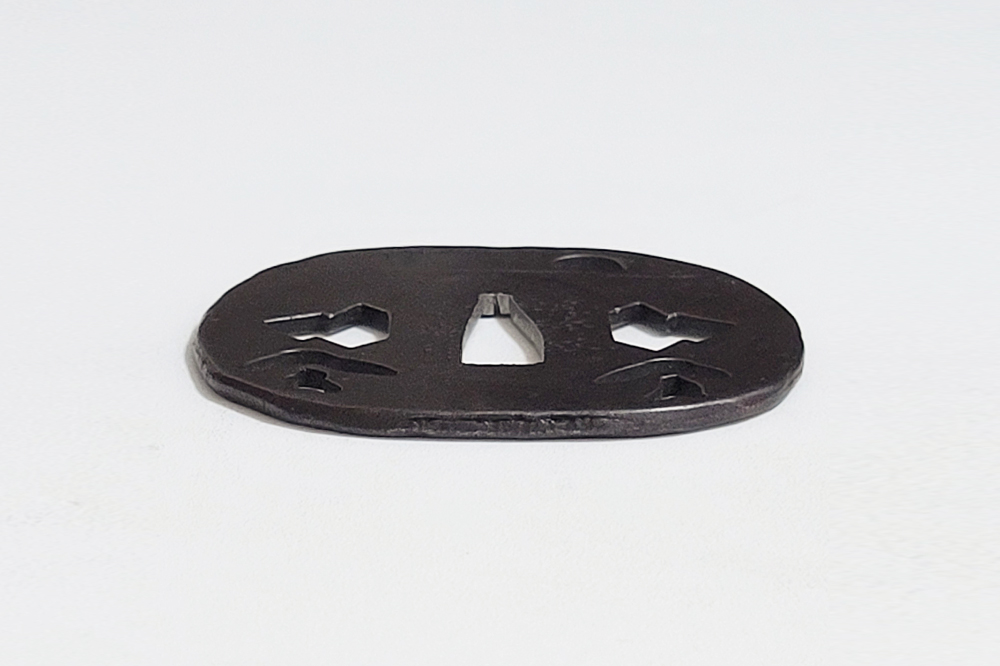
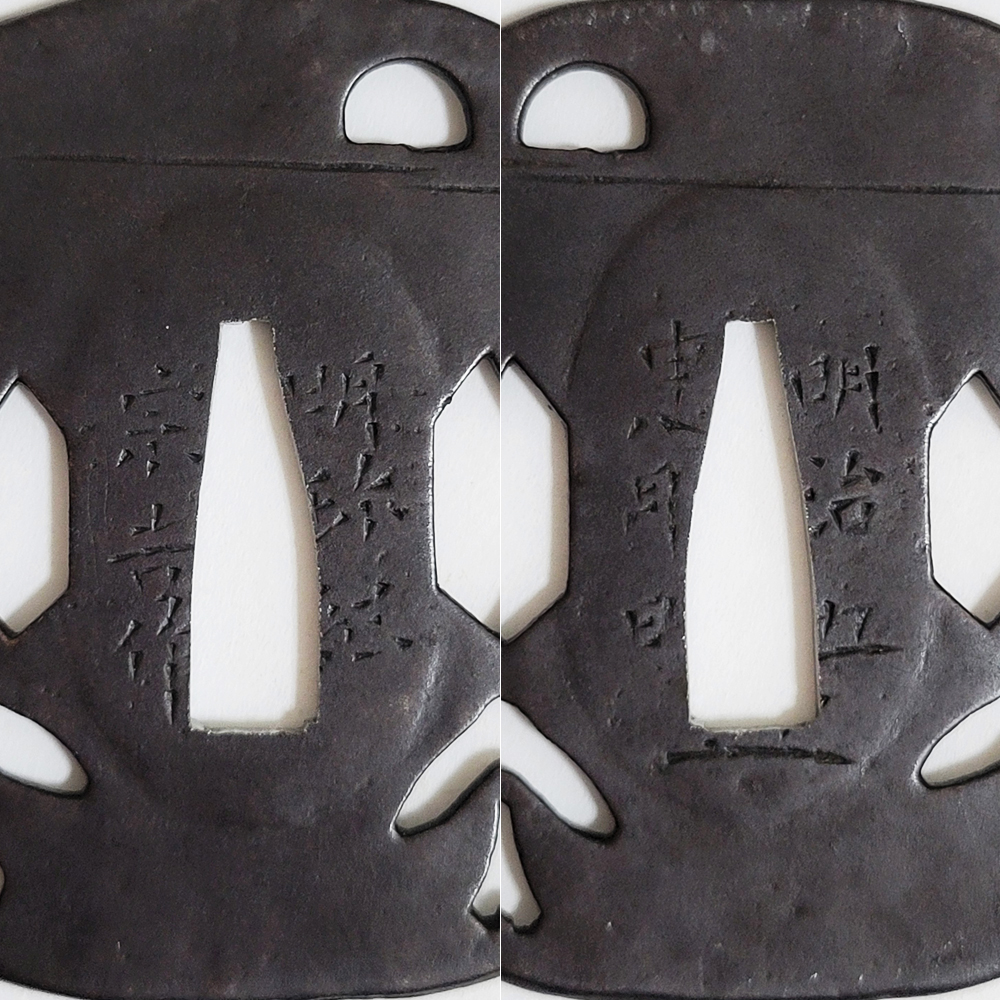
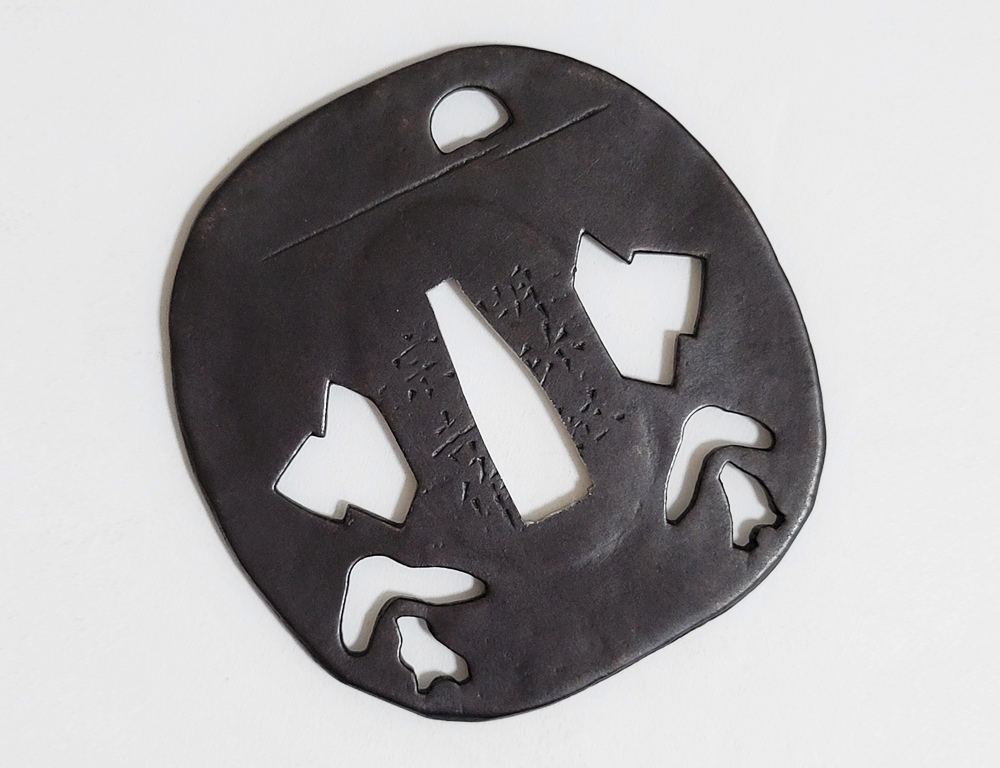
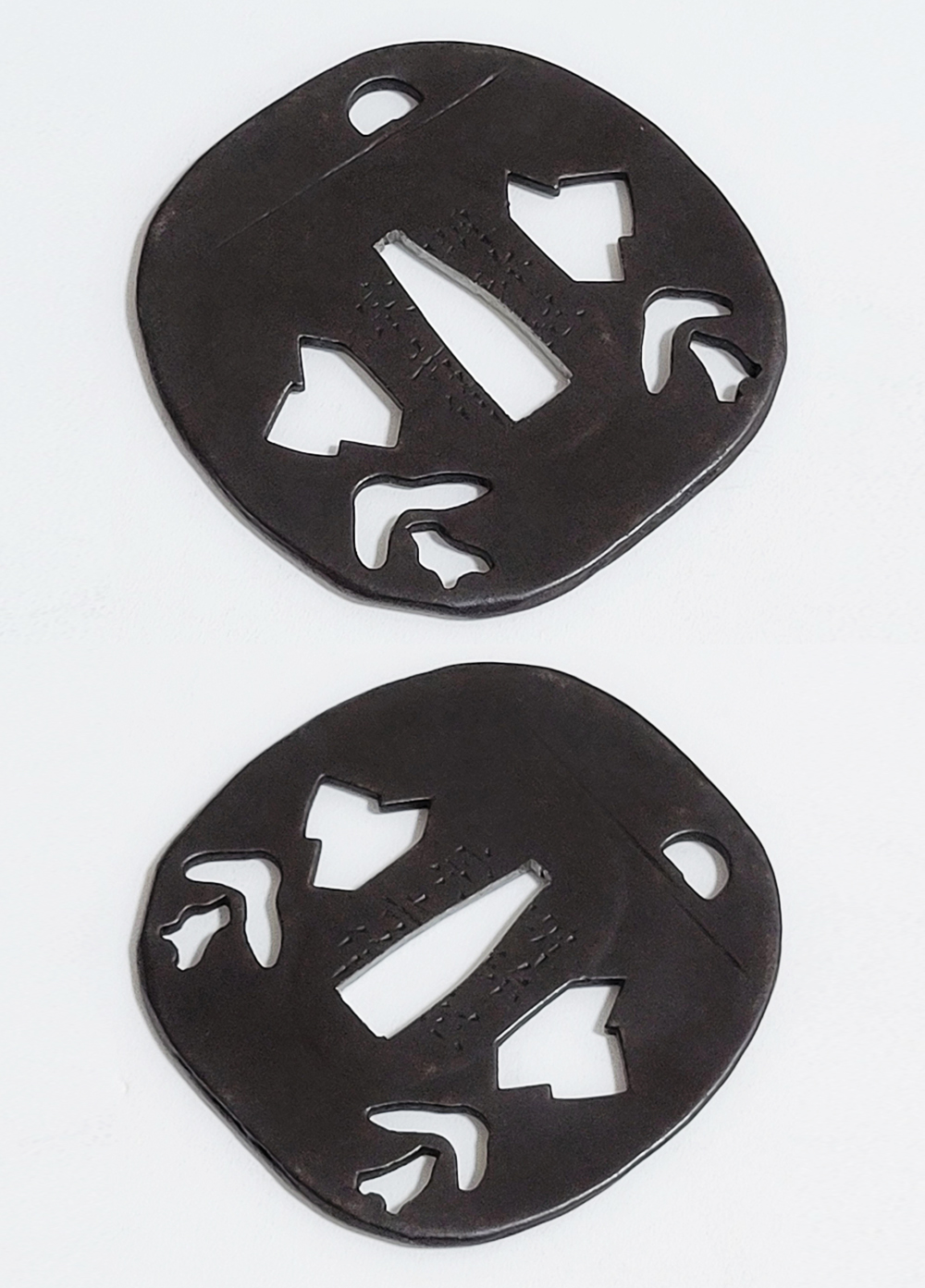
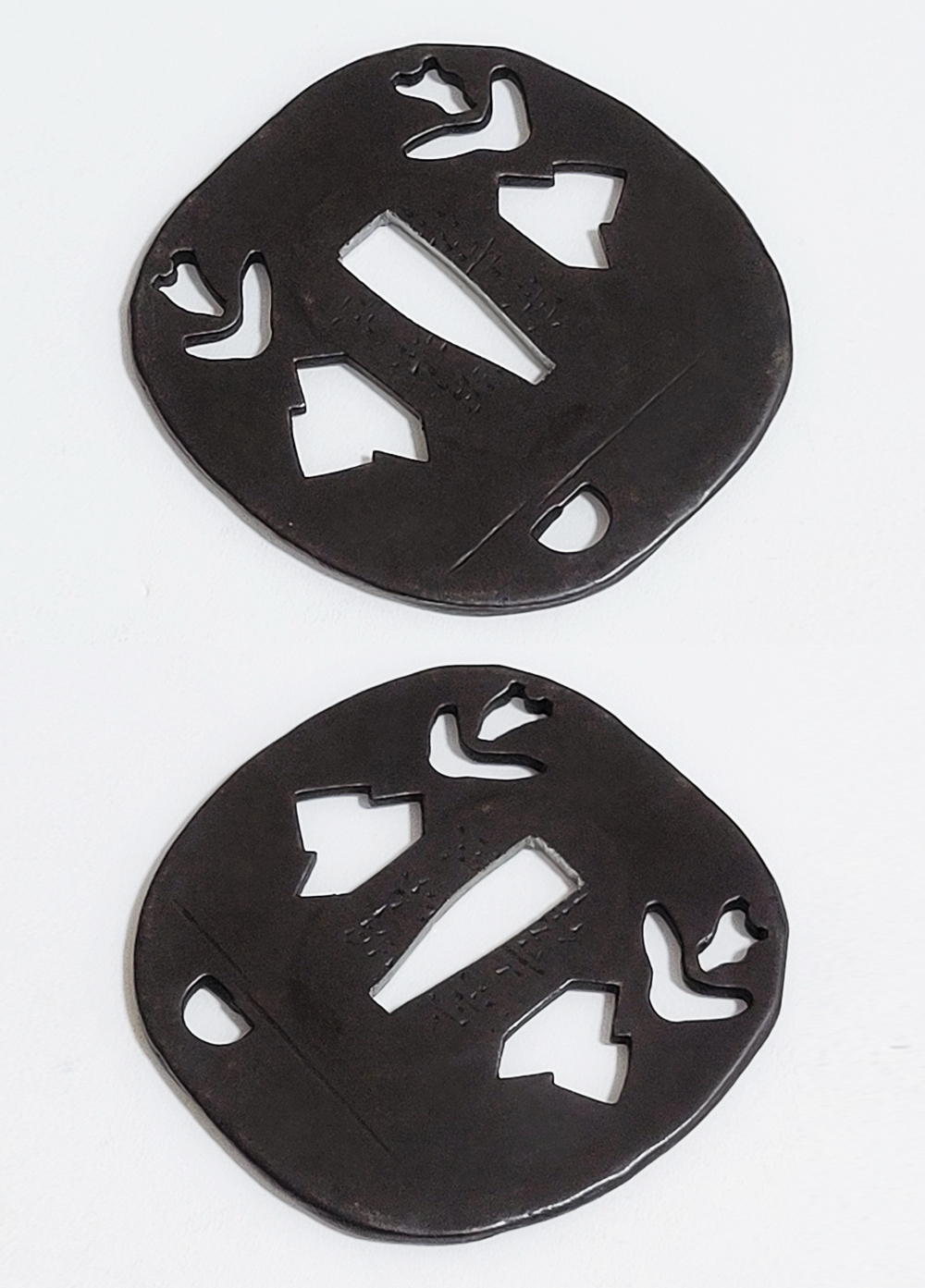
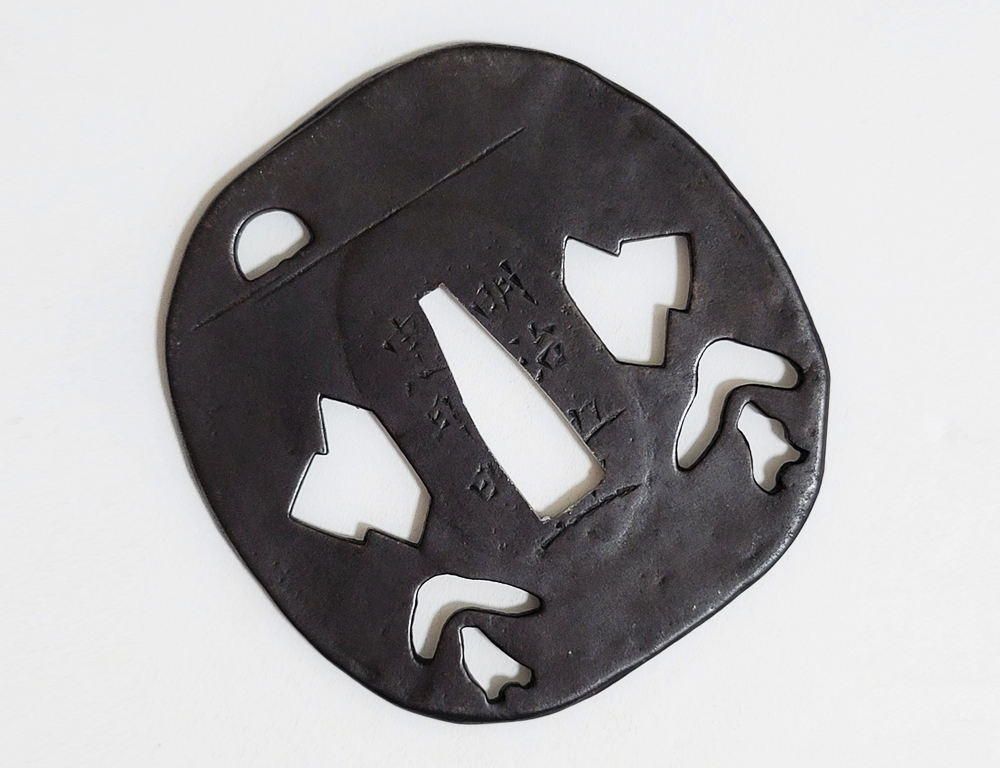
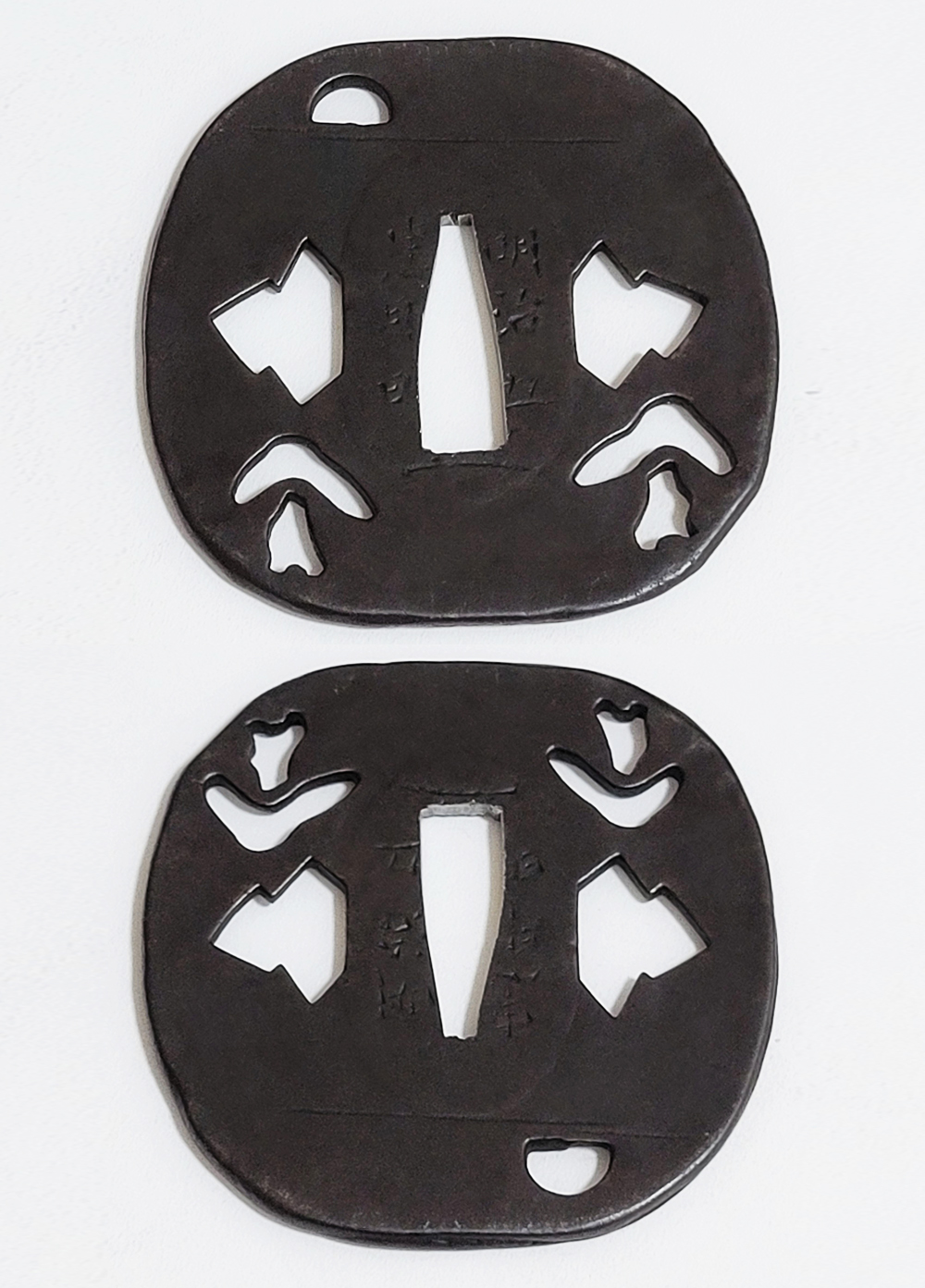
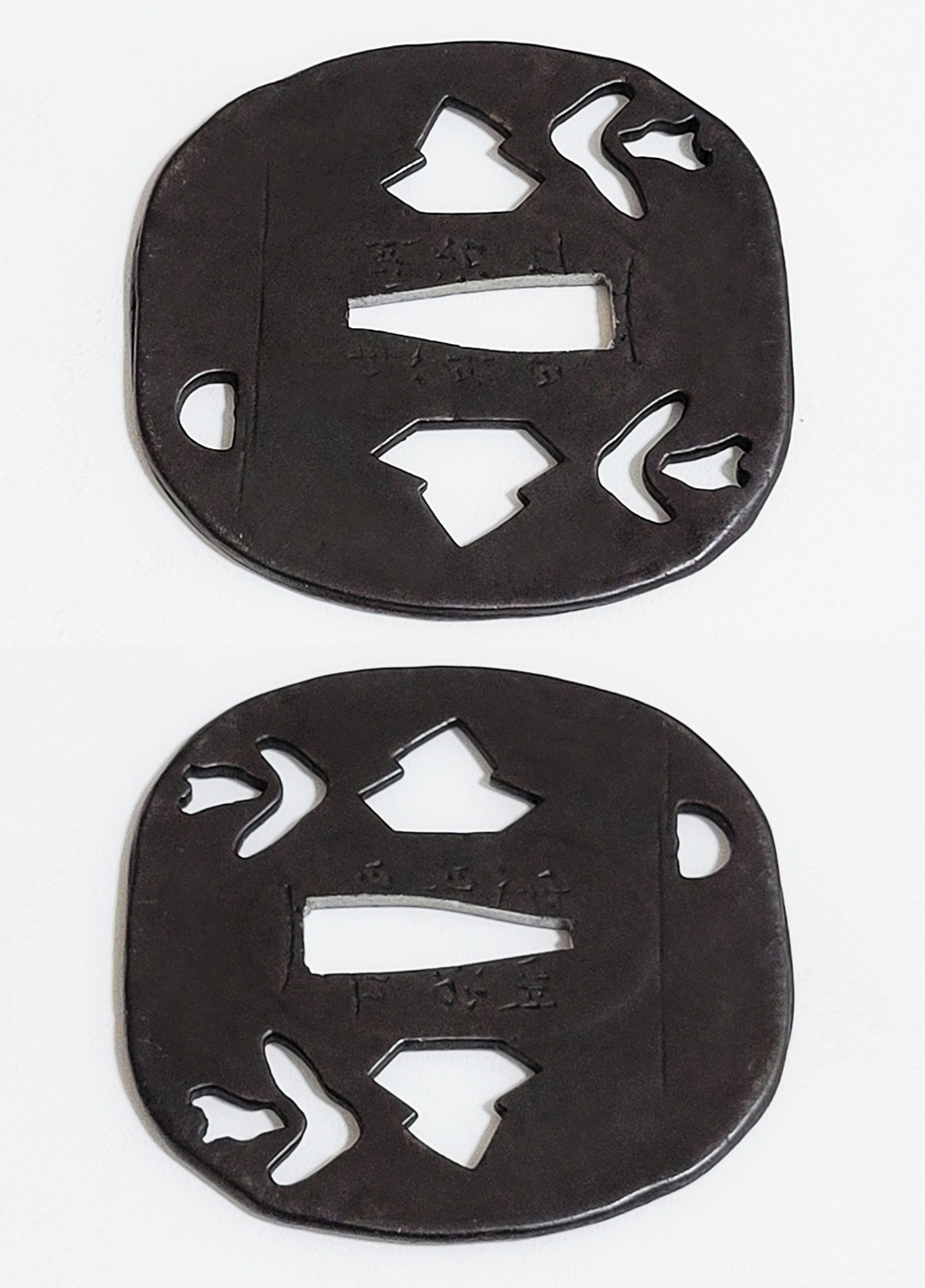
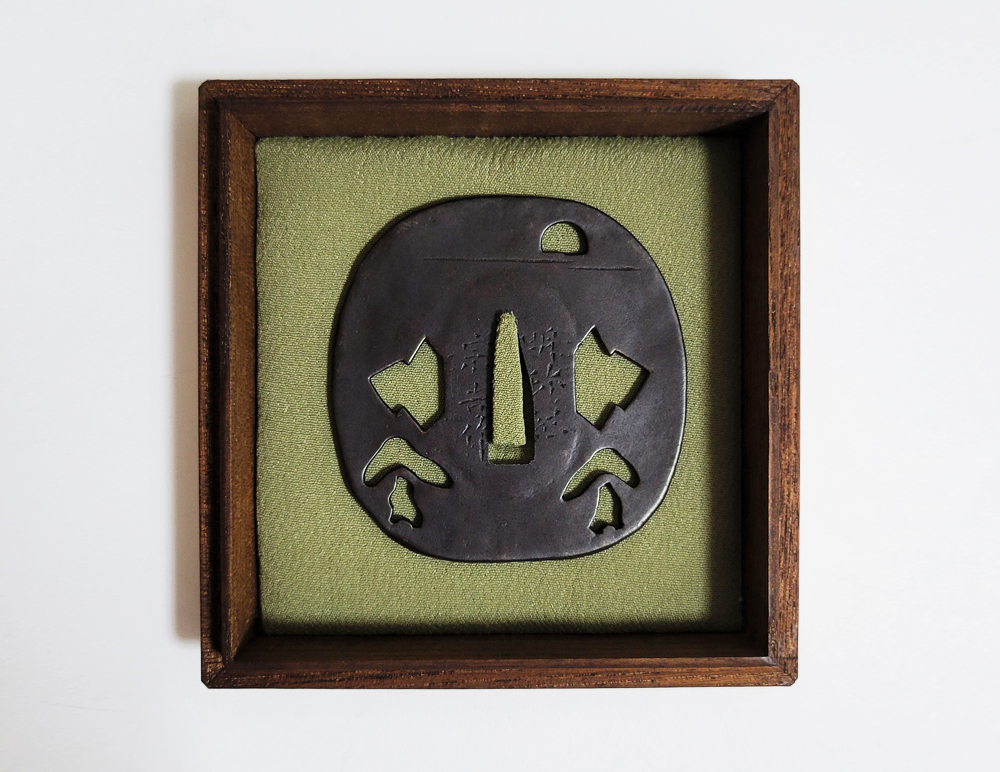
| The Myochin school has long been renowned for its armor makers, who possessed exceptional skills in forging and working iron. During the Edo period, the school produced not only armor but also sword fittings, including tsuba, and its traditional techniques continued to be passed down into the Meiji period. Myochin Muneyoshi was a tsuba maker residing in Shonai, Dewa Province, who studied under Myochin MuneYasu in Edo. His master, Myochin Muneyasu, produced tsuba with tortoiseshell patterns in the style of Nobuie, as well as small openwork designs, and is also known for collaborative works with Ichijo. This tsuba by Myochin Ki Muneyoshi is dated Meiji 5 (1872). The iron ground, with its subdued color, is fashioned into a rounded square shape. A crescent moon is depicted in small openwork near the top, with a single engraved line beneath it suggesting a cloud. The two hitsu-ana are shaped in the form of nikai-bishi (double-tiered diamond crests), while pine trees are arranged symmetrically in openwork on either side of the lower section. The seppa-dai is skillfully formed with exceptionally subtle, low-relief carving.Meiji 5 (1872) was a period of significant change in the demand for tsuba, preceding the Haitorei Edict of 1876, which prohibited the public wearing of swords. This is a valuable, dated tsuba from Meiji 5, elegantly expressing an iron tsuba design inspired by the work of Muneyoshi's master, Myochin Muneyasu. |

 Search