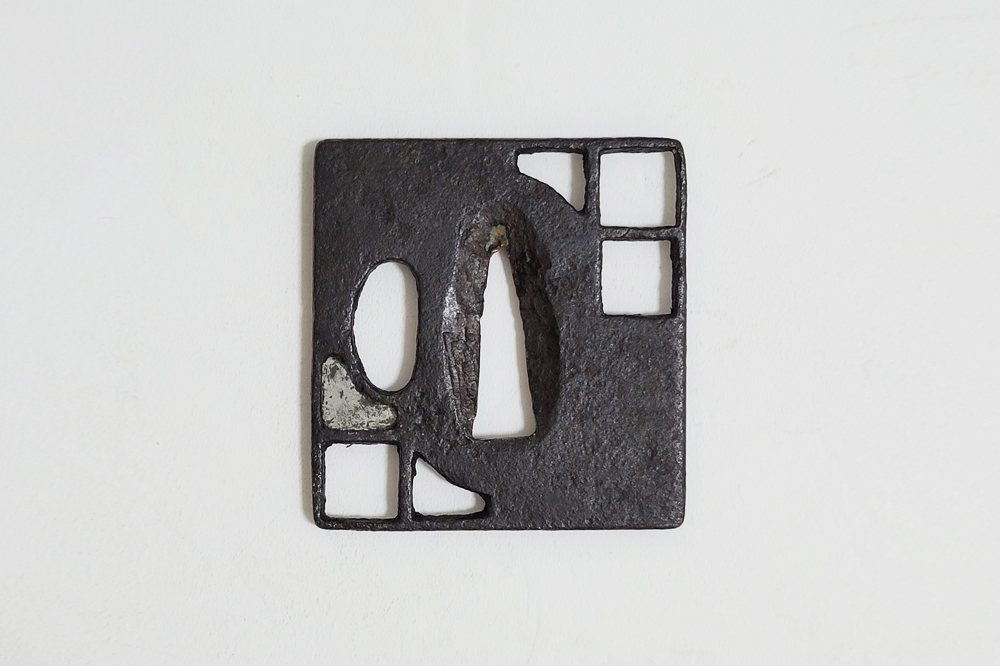
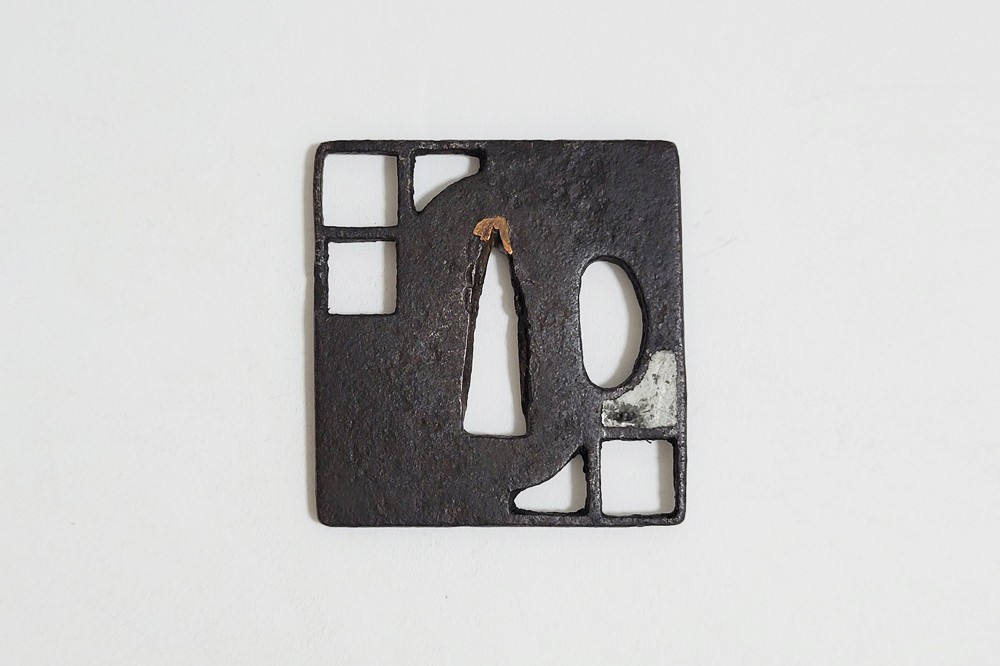
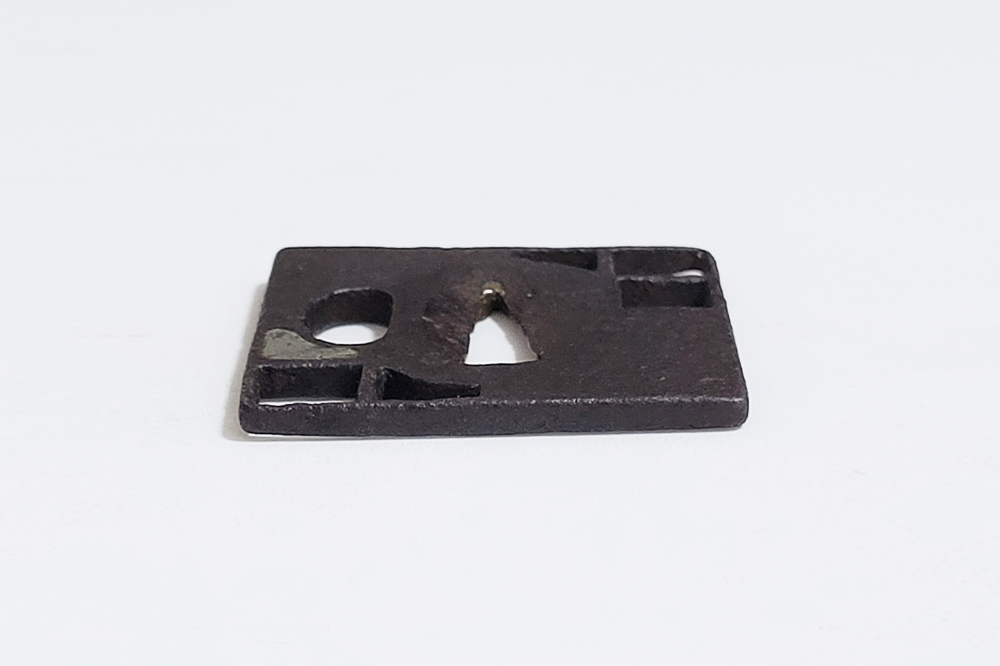
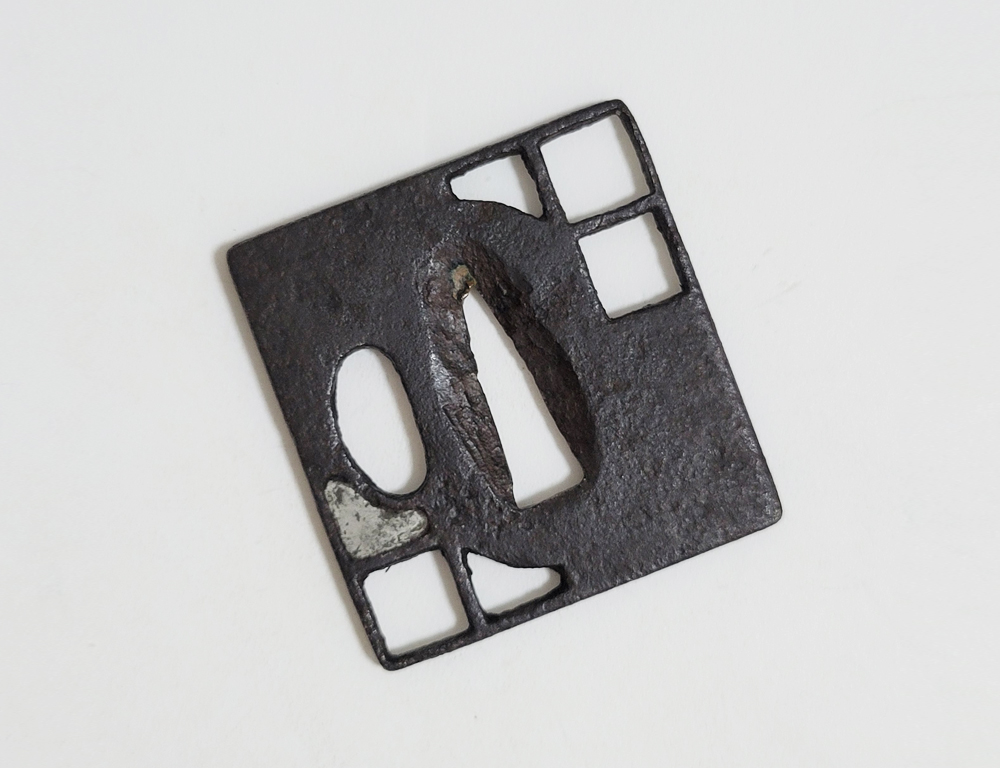
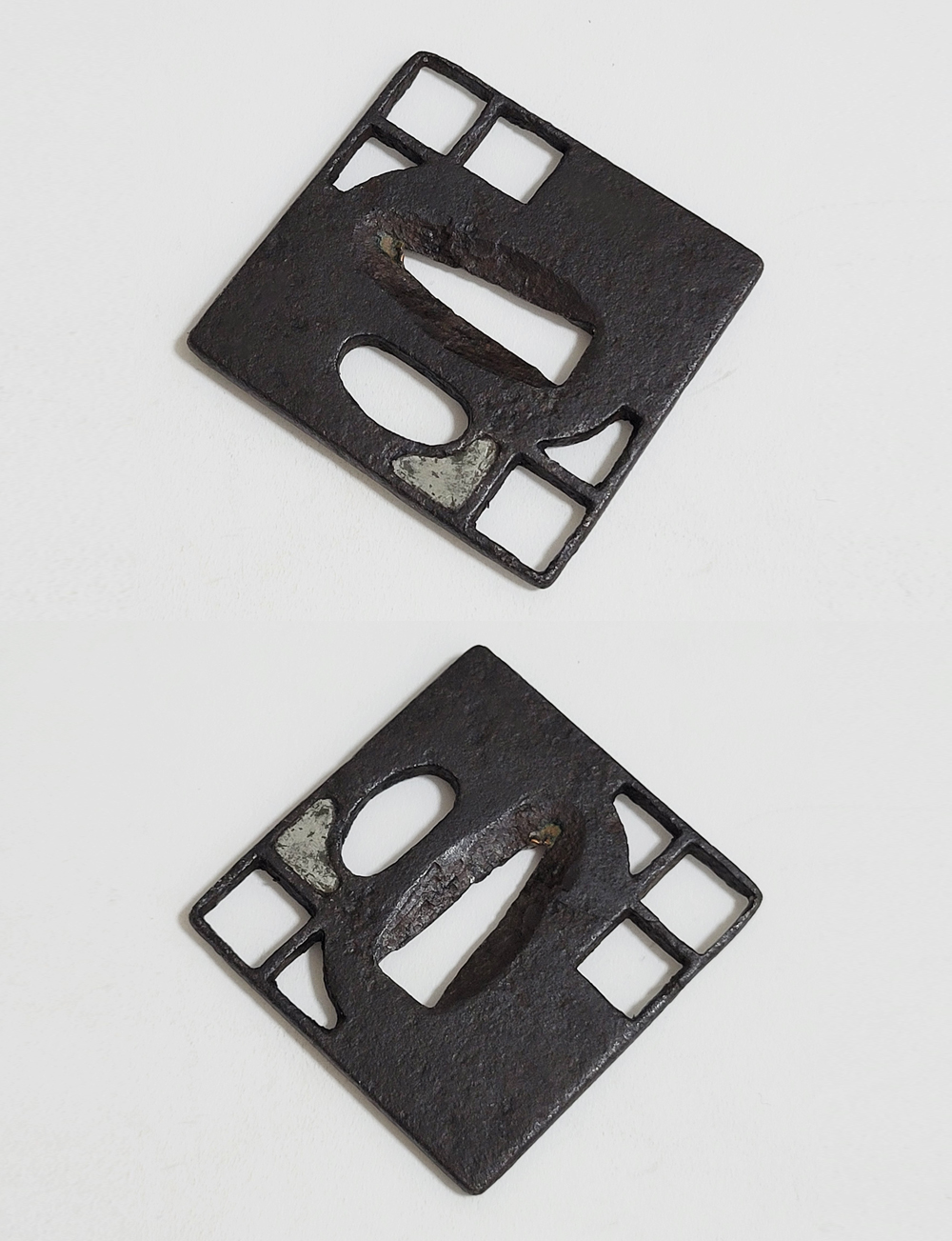
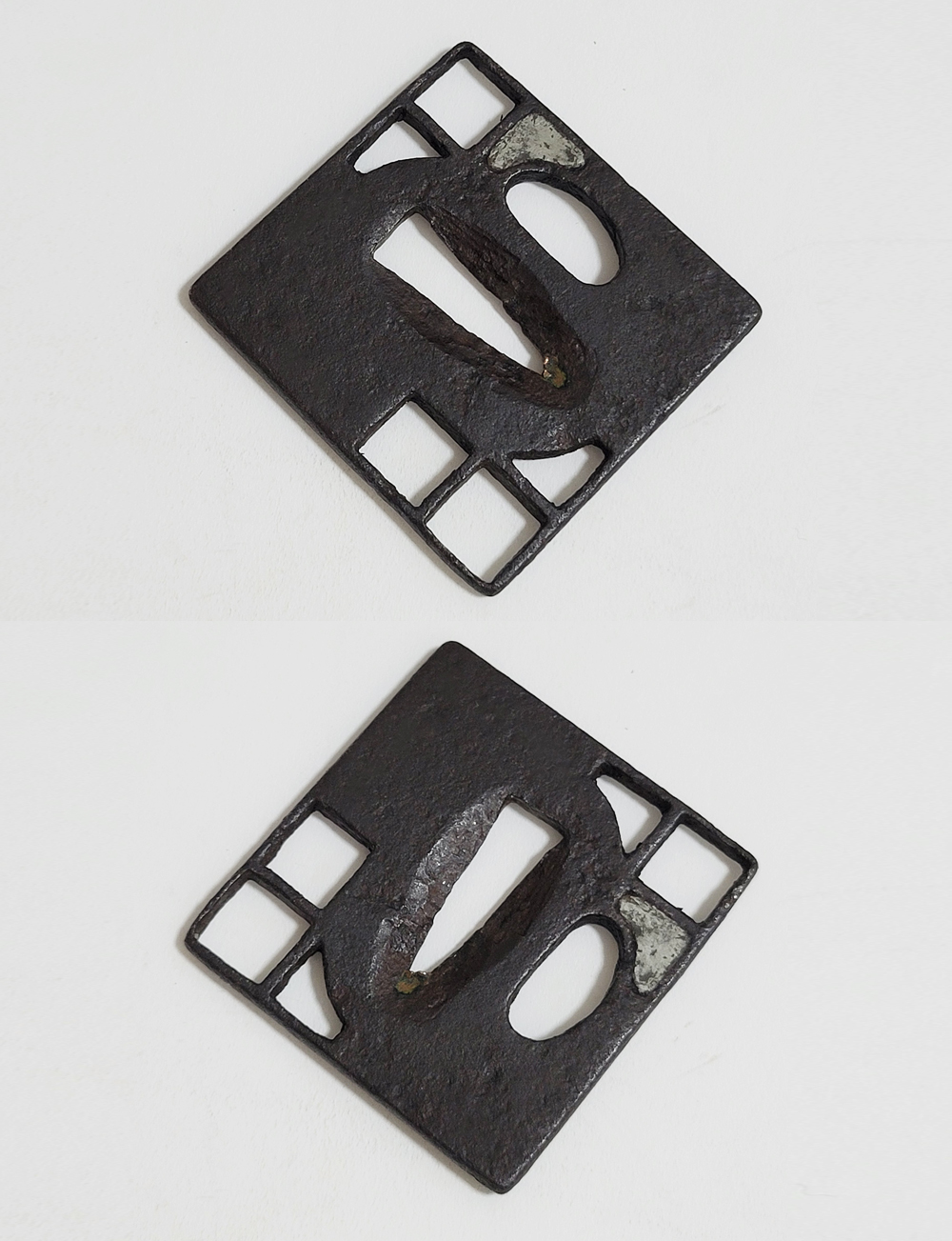
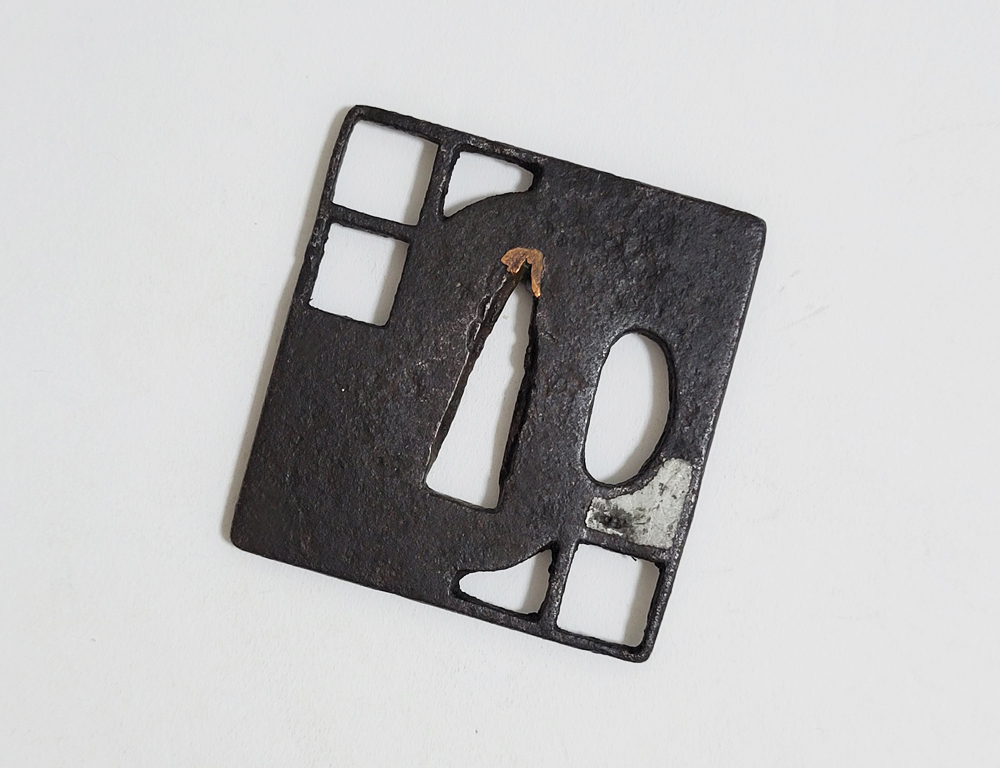
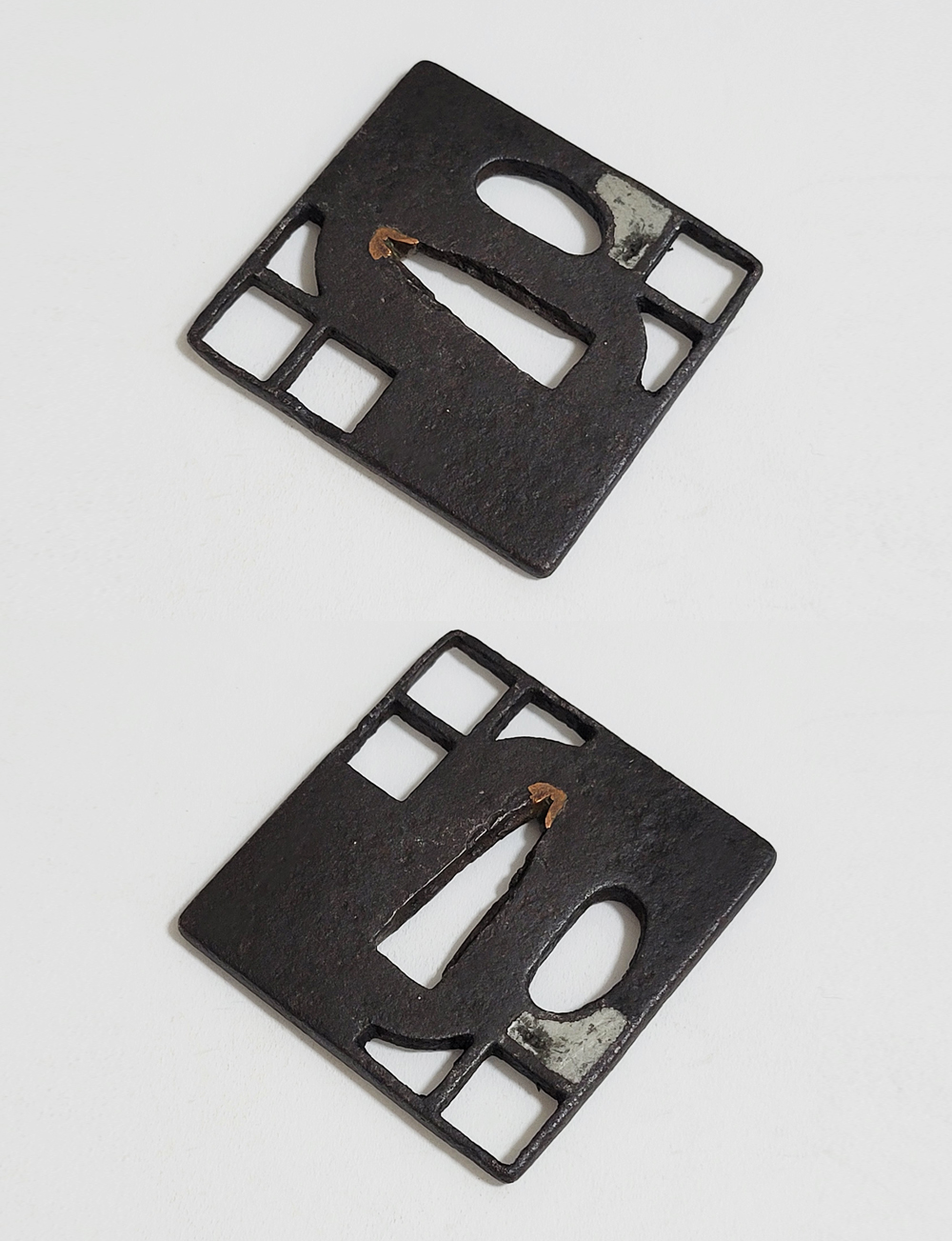
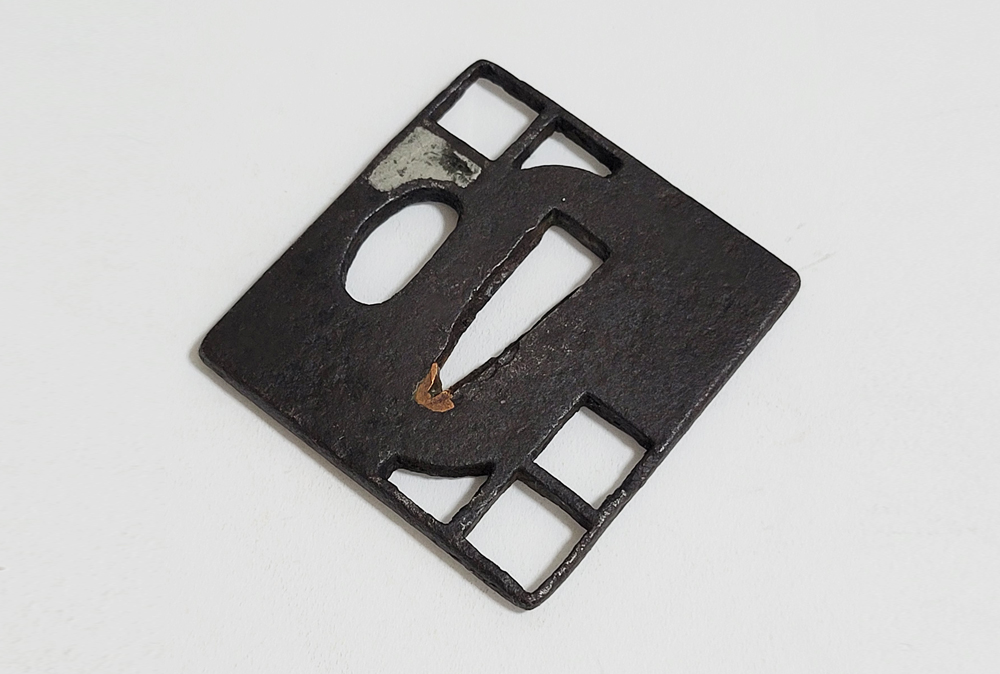
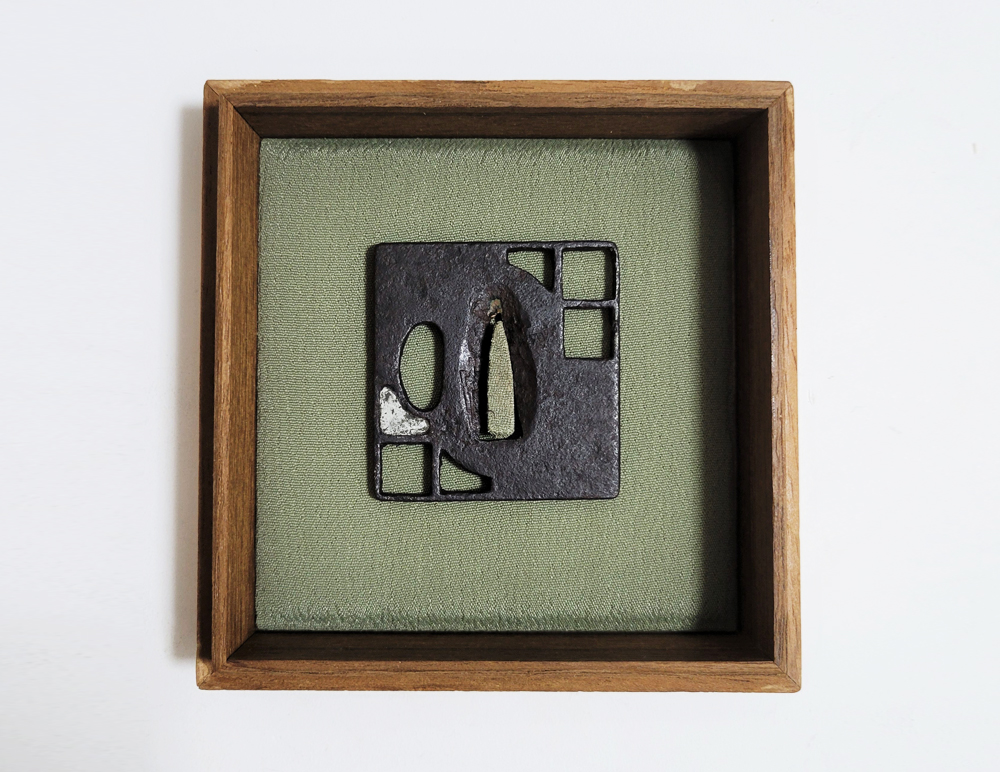
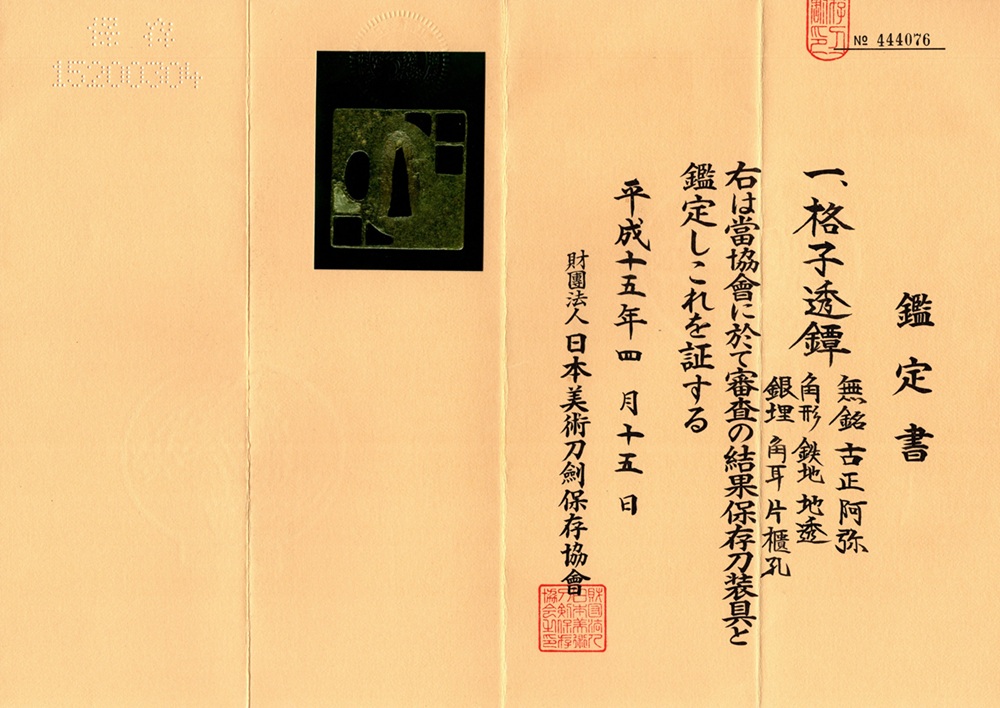
| This tsuba, attributed to Ko-Shoami, features small square and triangular openwork patterns on a square iron plate. The geometric openwork patterns are arranged diagonally opposite each other, creating a distinctive composition. The iron surface retains a richly aged patina, while the thin, square plate and simple openwork carving convey a sense of antiquity. Besides the lattice pattern, the design has also been interpreted as representing Shinto purification implements, such as the onusa (purification wand) or haraegushi (purification wand), adding interest to the interpretation of its motif. This Ko-Shoami tsuba conveys a sense of strength through its simple, unadorned design. |

 Search