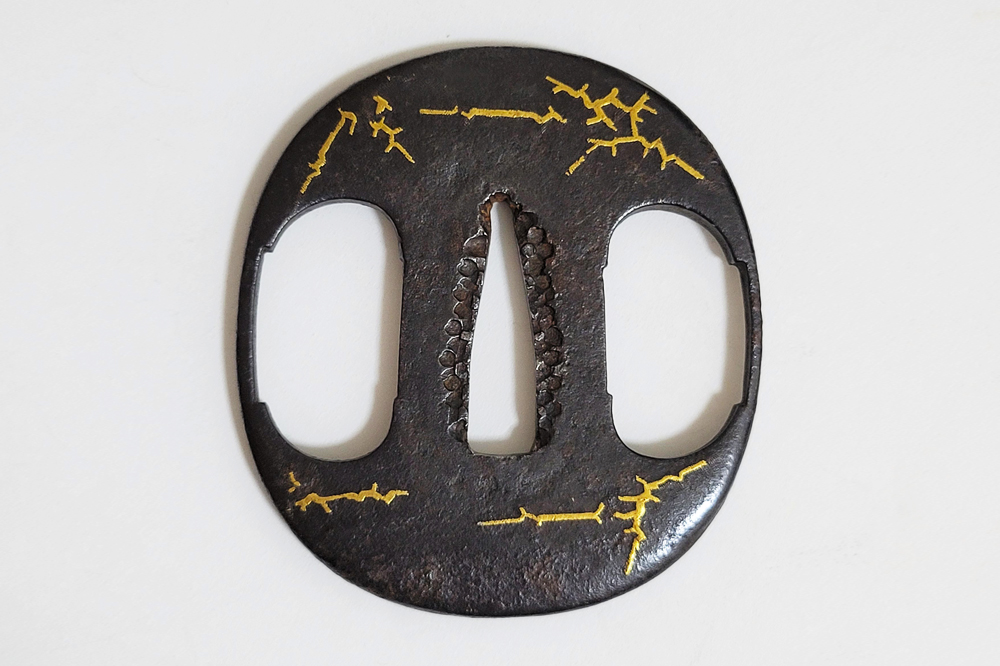
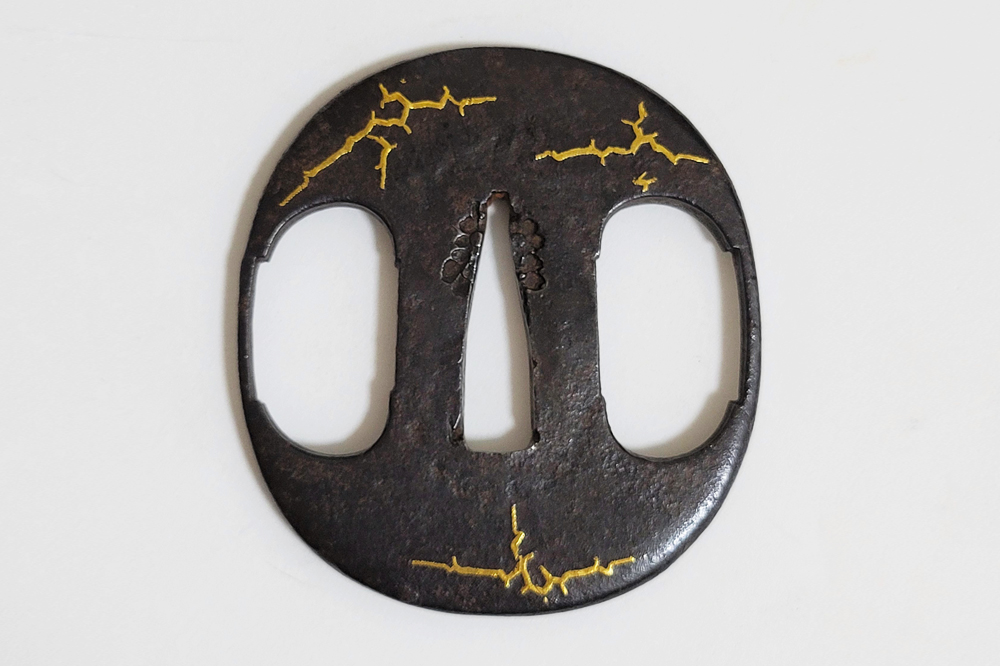
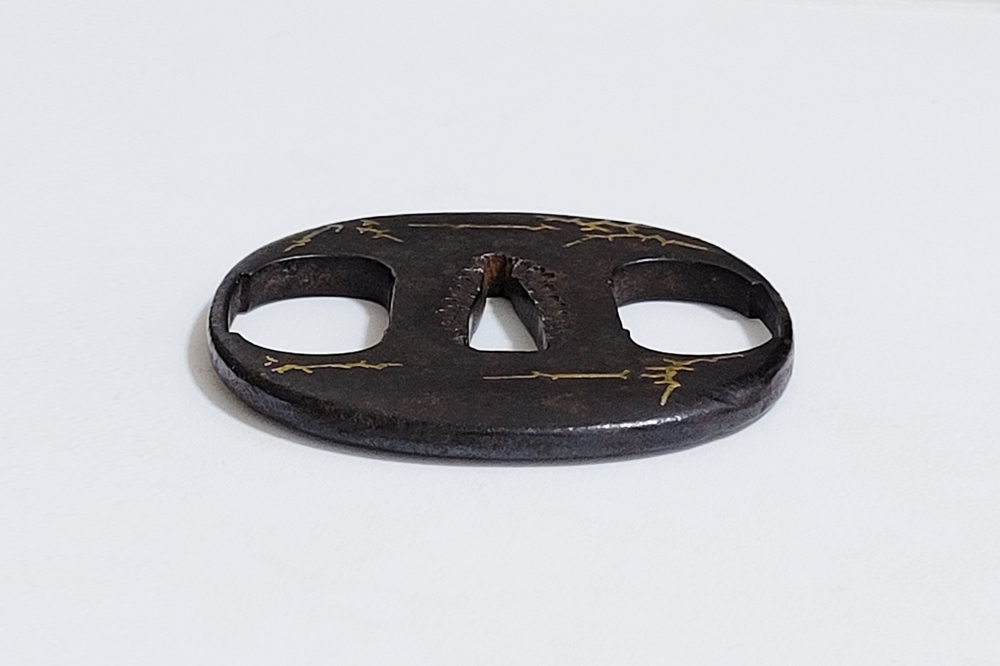
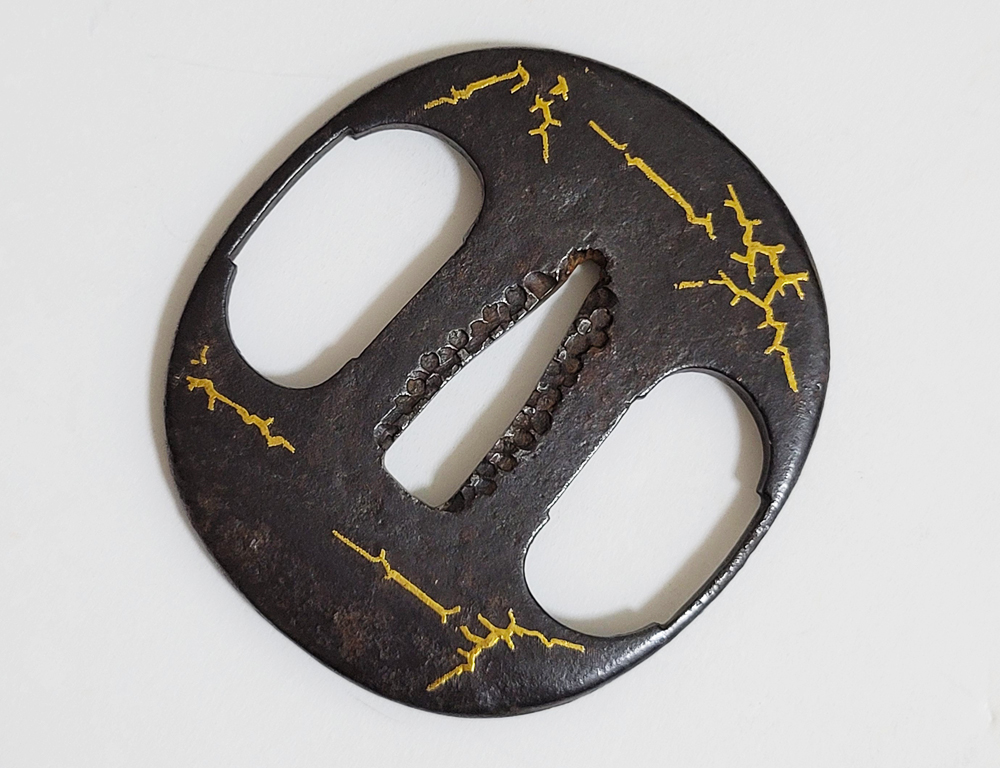
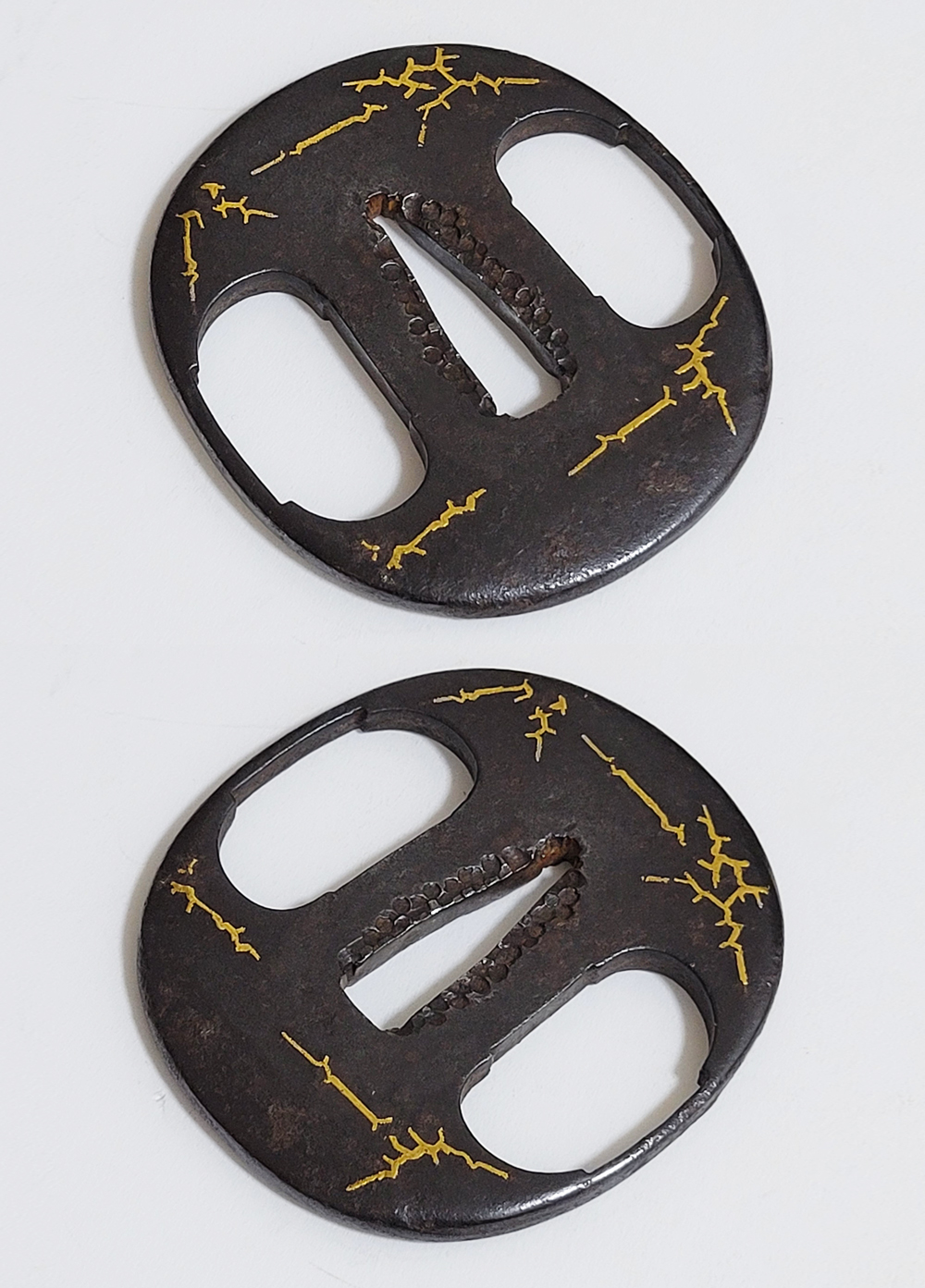
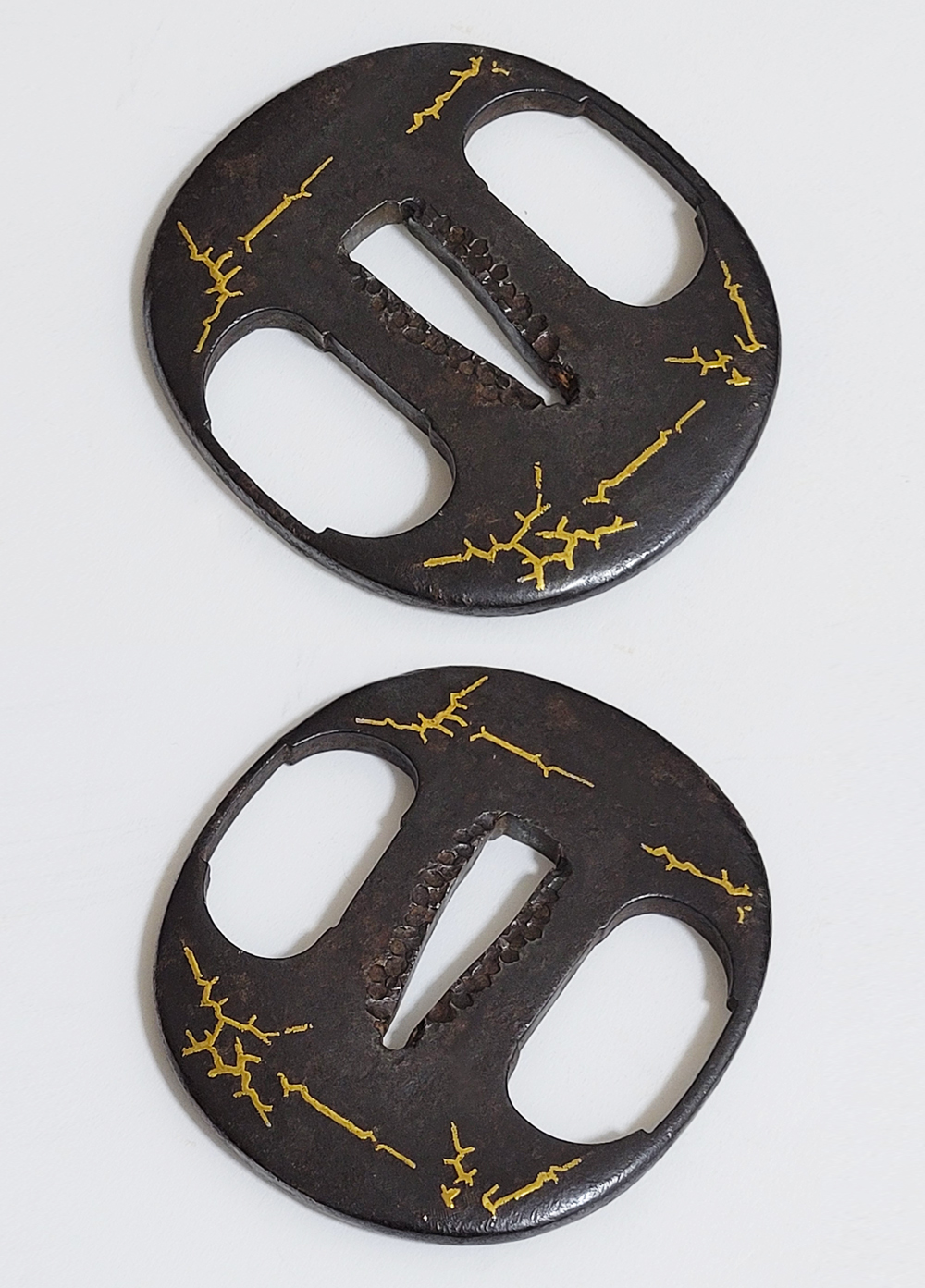
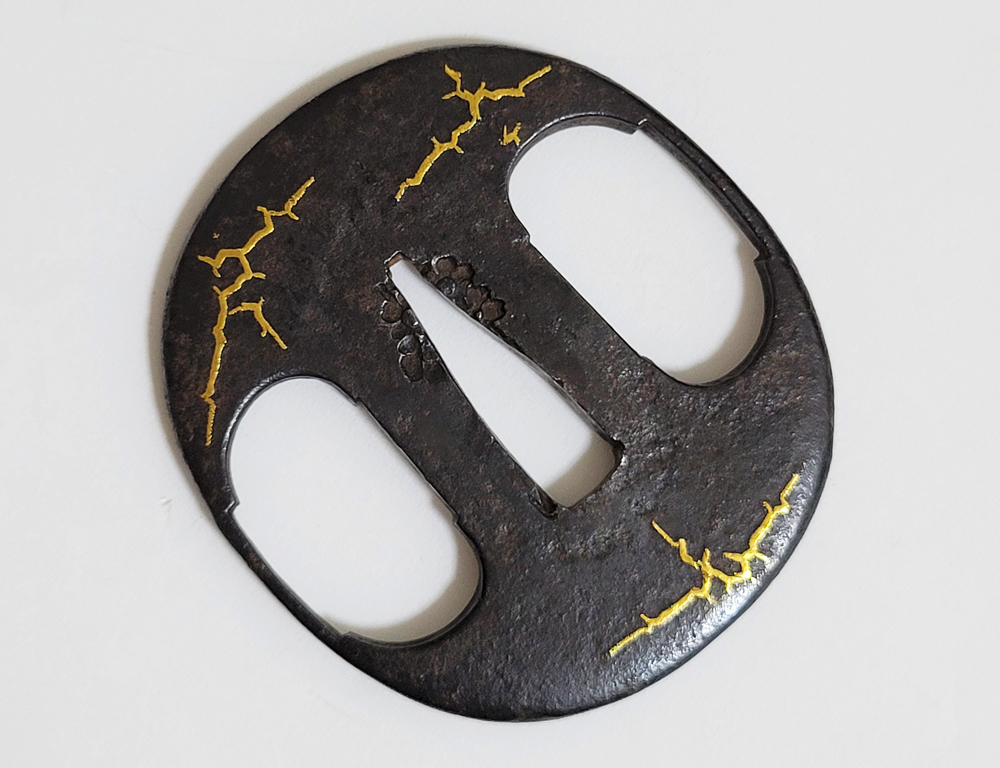
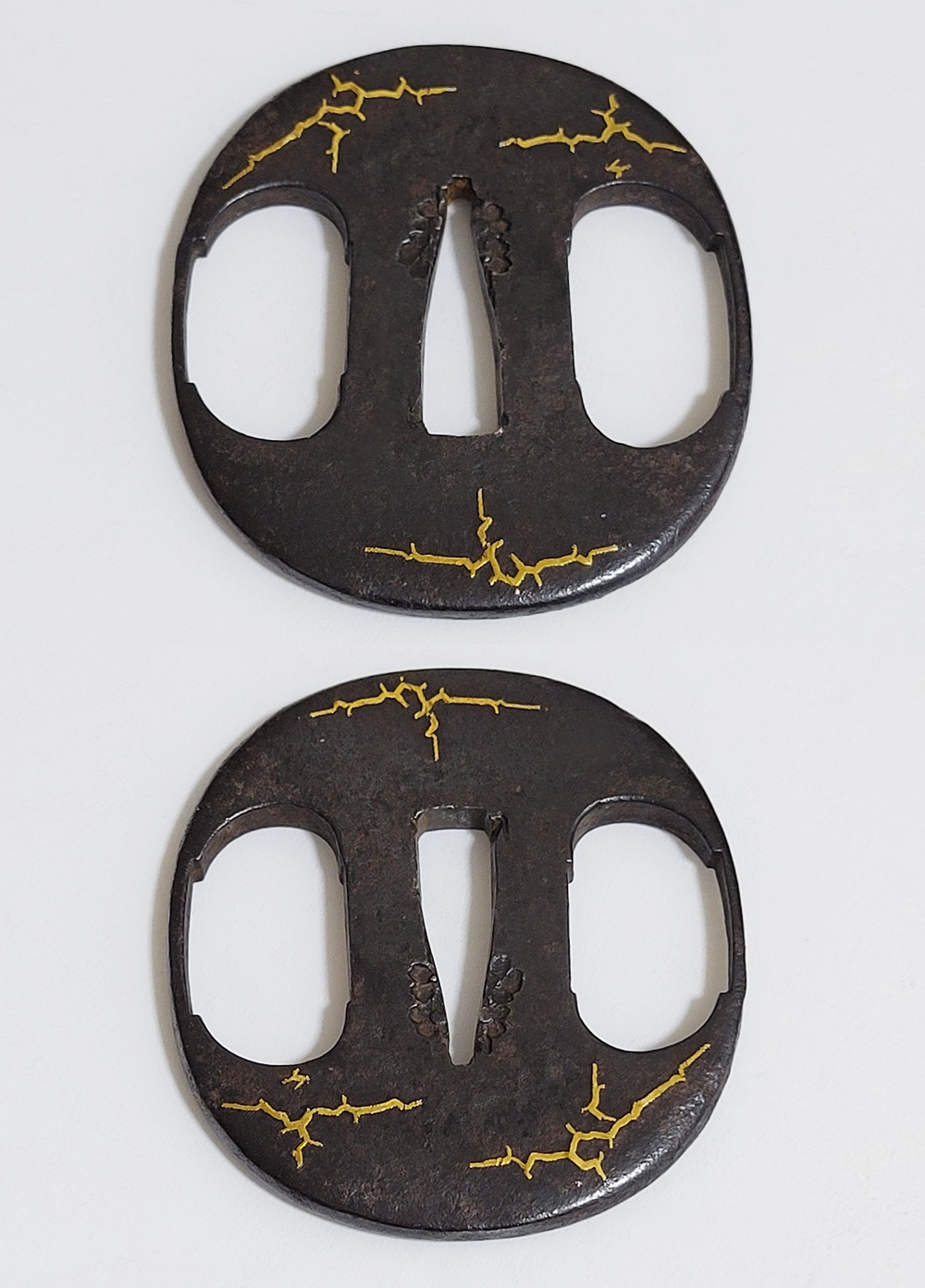
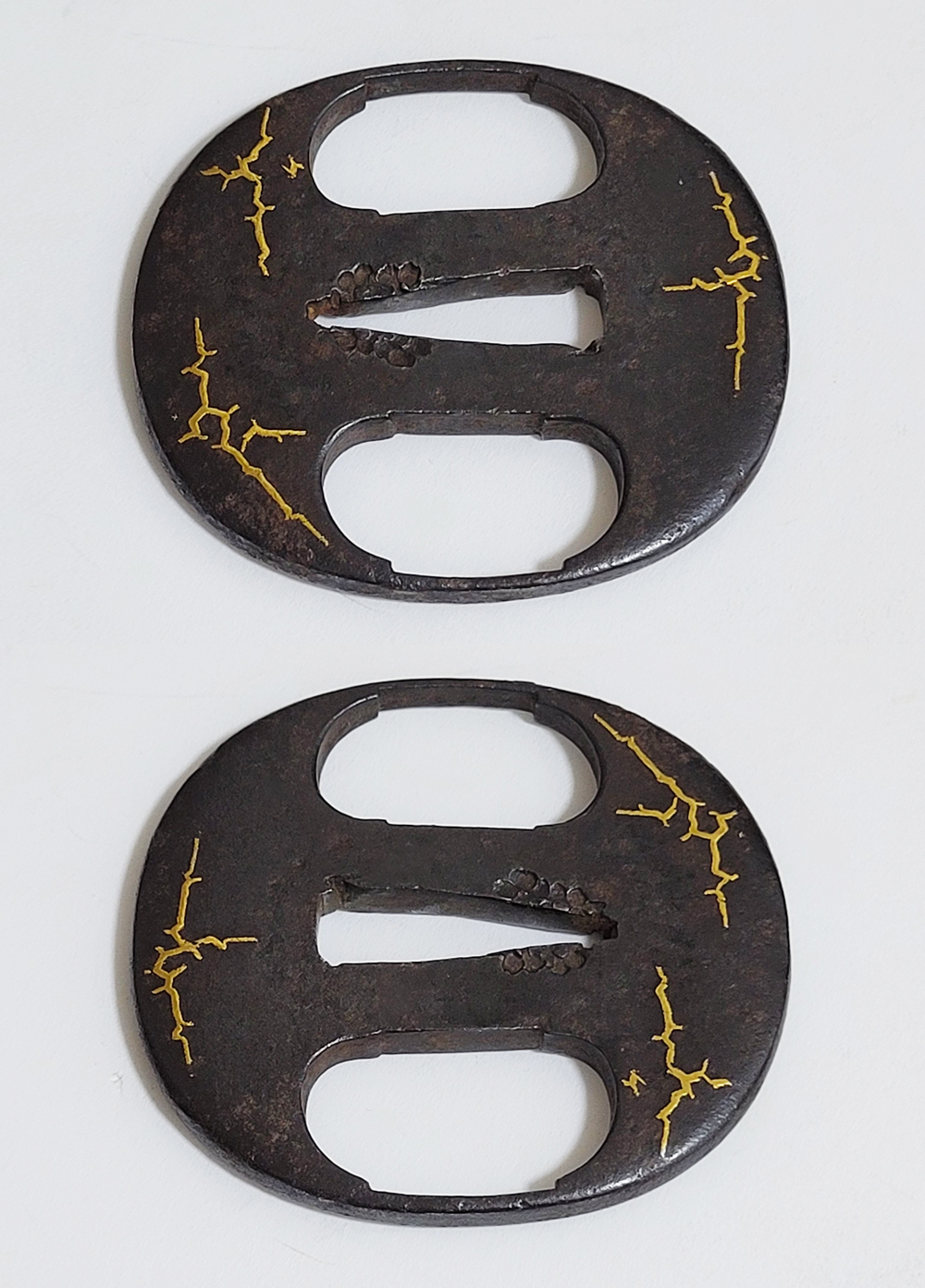
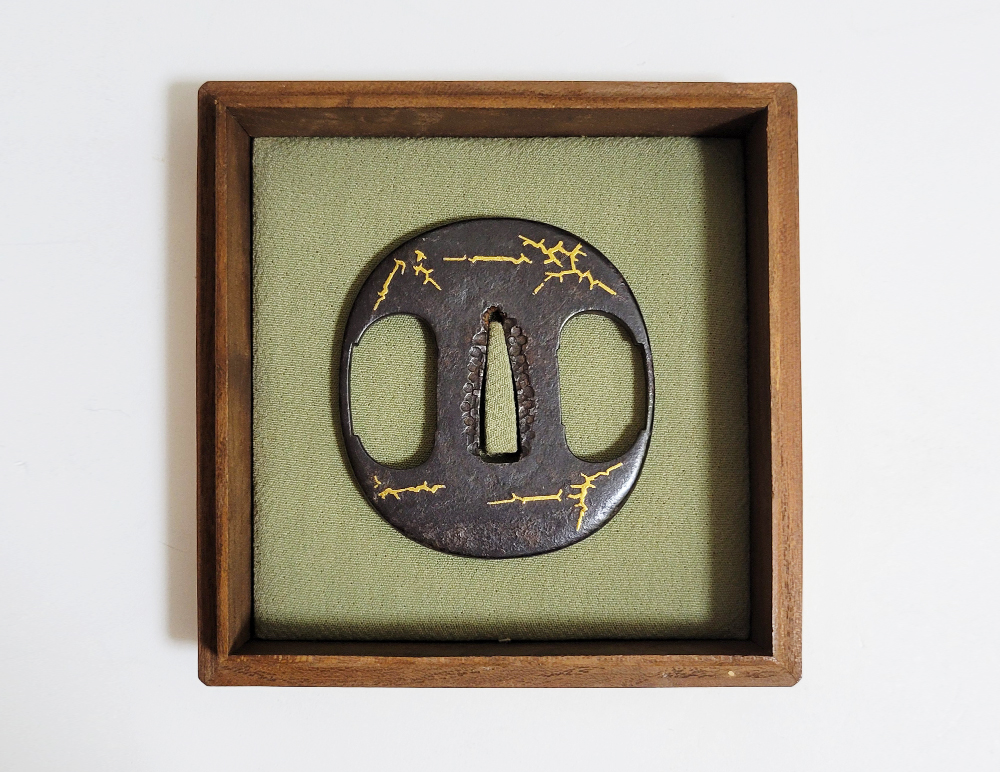
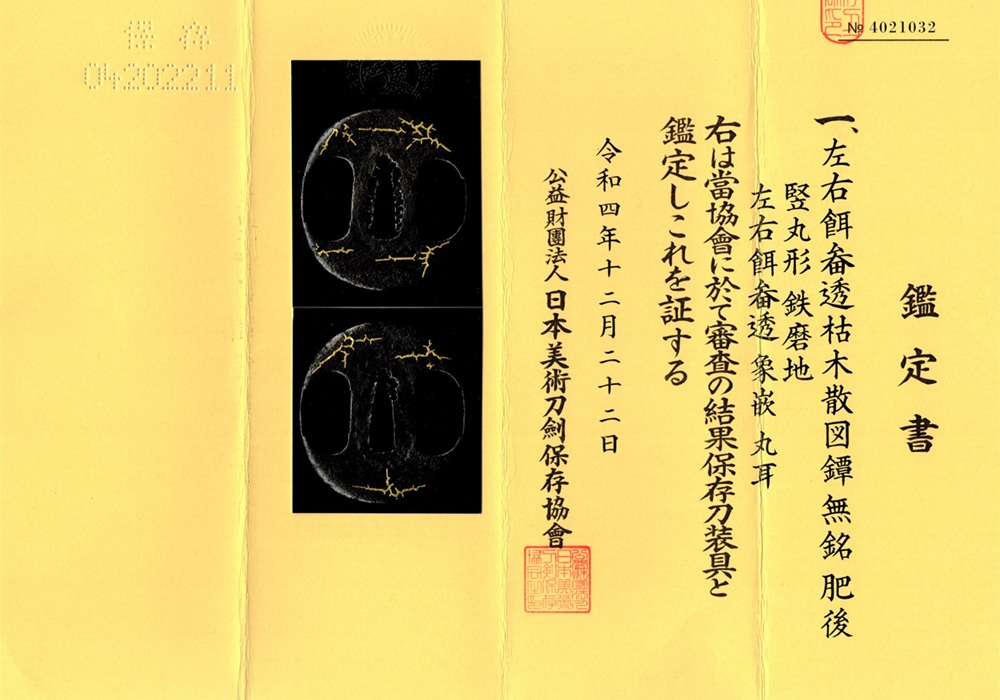
| This is a Higo school tsuba featuring left and right efugo (falconry feed baskets) in openwork, decorated with scattered withered branches in gold inlay. Higo tsuba developed during the Edo period, primarily in Kumamoto, Higo Province. The school encompasses several traditions, including the Hayashi, Hirata, Nishigaki, and Shimizu schools. Higo tsuba are characterized by simple, refined designs reflecting the aesthetics of the Japanese tea ceremony, richly textured iron, and skillful openwork and inlay techniques. The design features two large efugo in openwork on either side of the seppa-dai, with scattered withered branches rendered in gold inlay on both sides of the iron ground. Efugo were containers used to carry food for falcons during falconry, recalling the hunting traditions of the samurai. The bare branches, stripped of their leaves, possess a distinctive rustic charm and evoke the subdued beauty of wabi aesthetics. Against the dark-toned, polished iron ground, the large symmetrical openwork contrasts beautifully with the fine, irregular lines of the withered branches in gold inlay. The rich texture of the iron and the restrained elegance of the gold decoration harmonize to create a tsuba of understated beauty and refined taste, characteristic of the Higo school. The balance between the traditional character of the iron and the sophisticated design suggests that this tsuba was made circa the mid-Edo period (18th century). The tsuba passed the NBTHK Hozon Tosogu shinsa in 2022. |

 Search