| Product No. WA-0870 河野理兵衛尉為家 備中国呰部住 | |
|---|---|
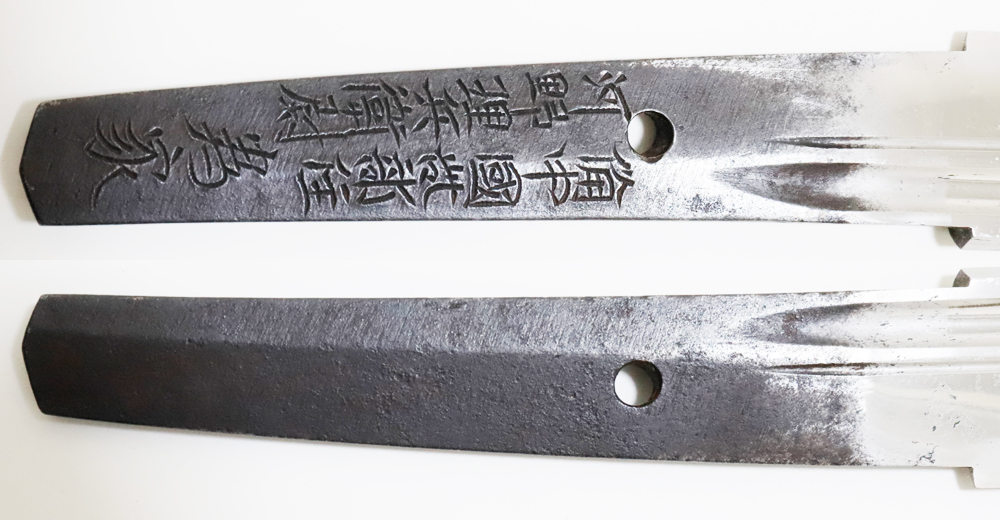
| Mei |
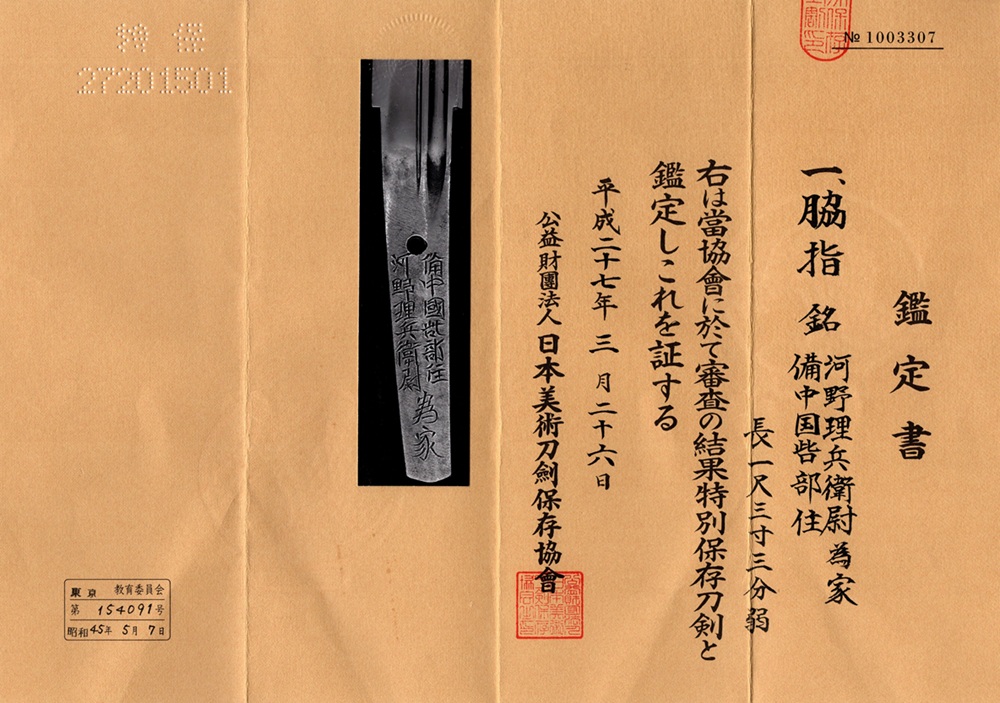
Kōno Rihei-jō Tameie, resident of Azae in Bitchu Province Back: -- |
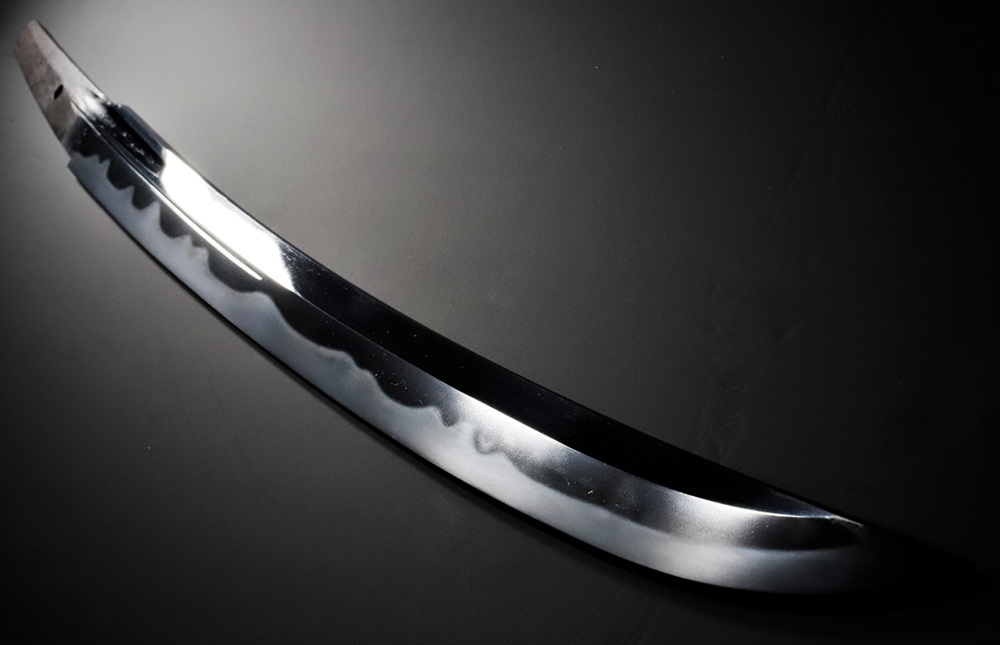
| Shape | unokubizukuri Iorimune |
| Region | Bicchū Province |
| Era | Early Edo Period(around Genna 1615-1624) |
| Length |
40.2 cm 15.8 in |
| Sori (curvature) |
2.5 cm 1.0 in |
| Motohaba |
3.3 cm 1.3 in |
| Munekasane |
0.7 cm 0.3 in |
| Status | Tokubetsu Hozon Token |
| Certification Date | March 26, 2015 |
| Registration Authority | Tokyo |
| Registration Date | May 07, 1970 |
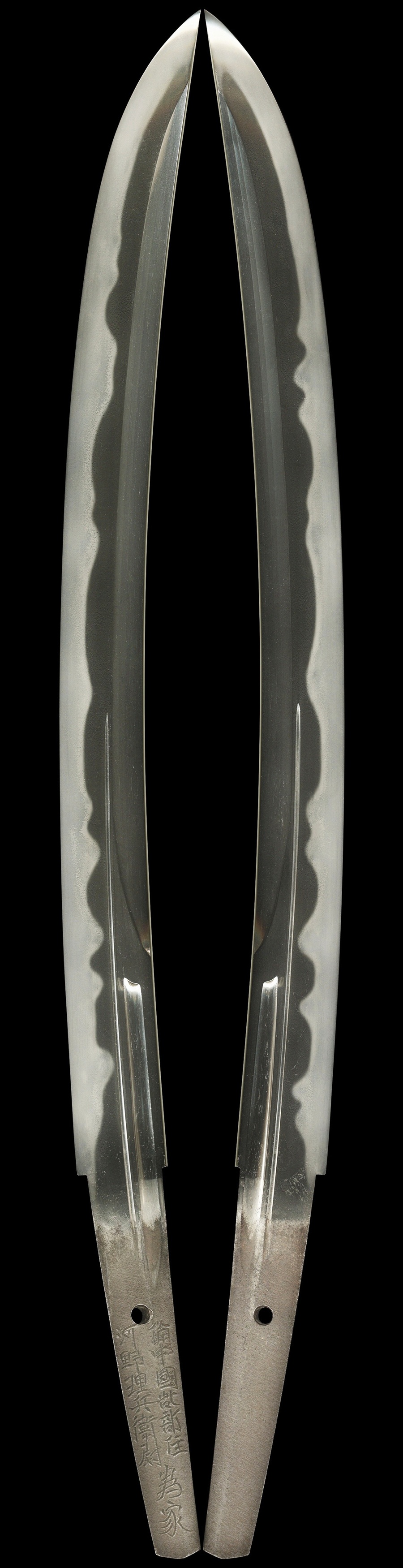
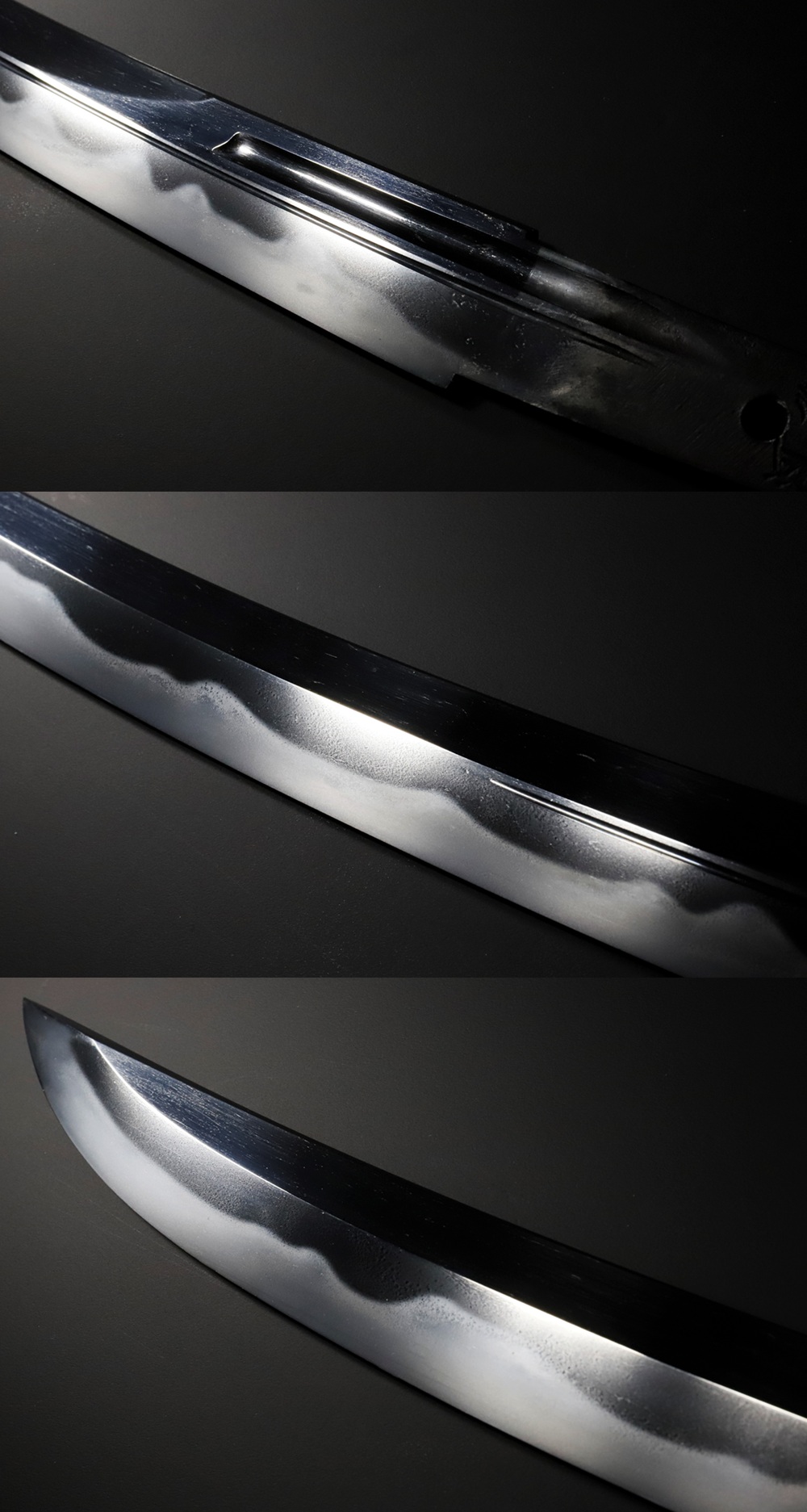
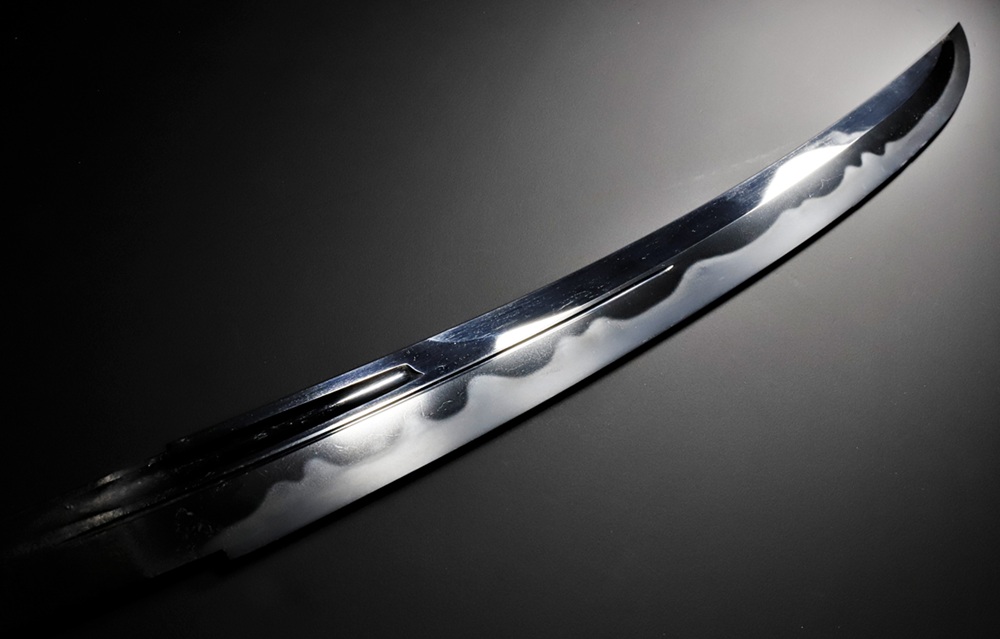
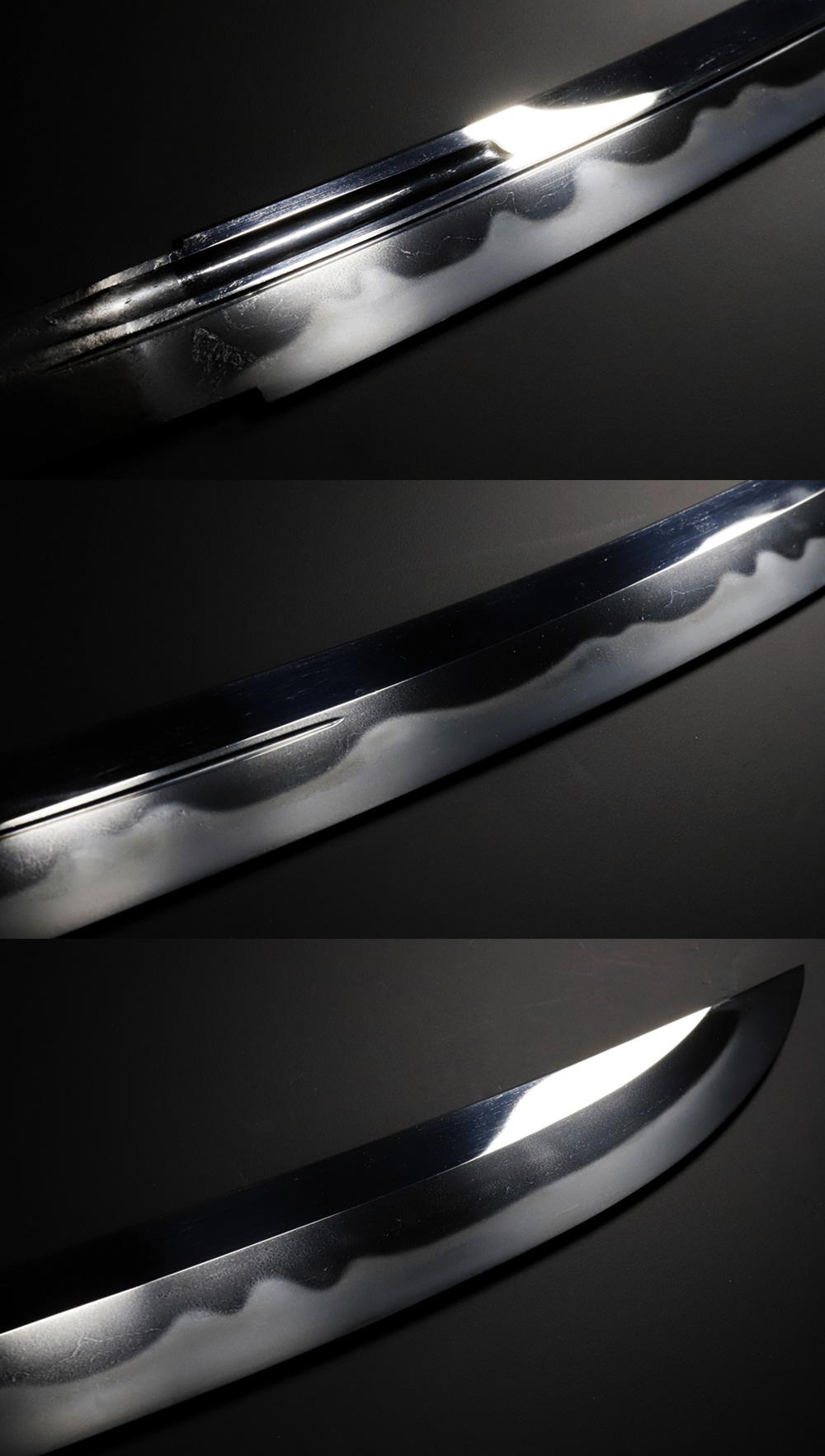
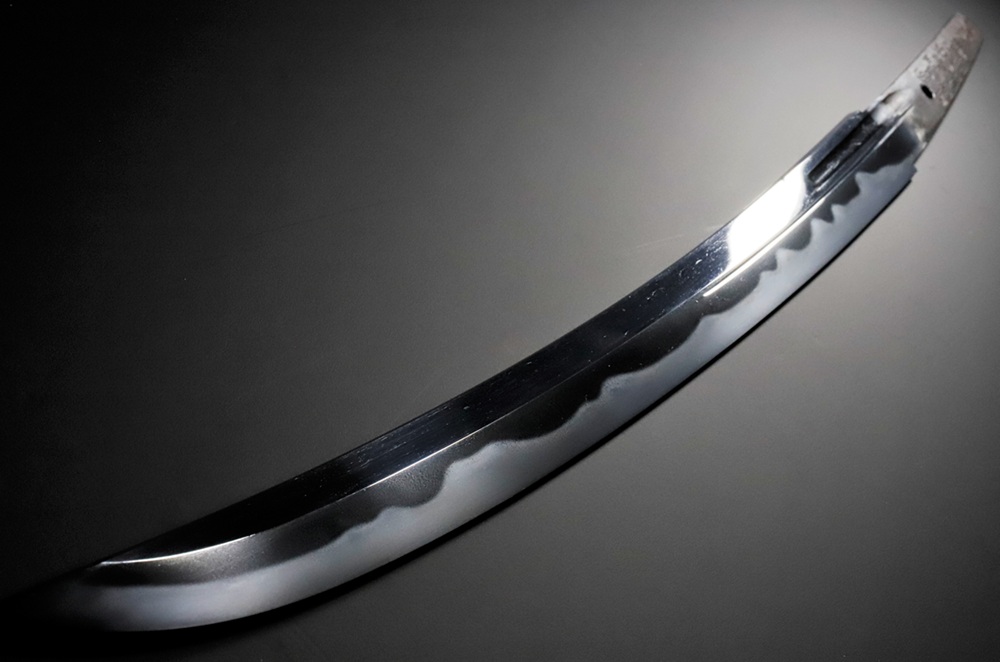
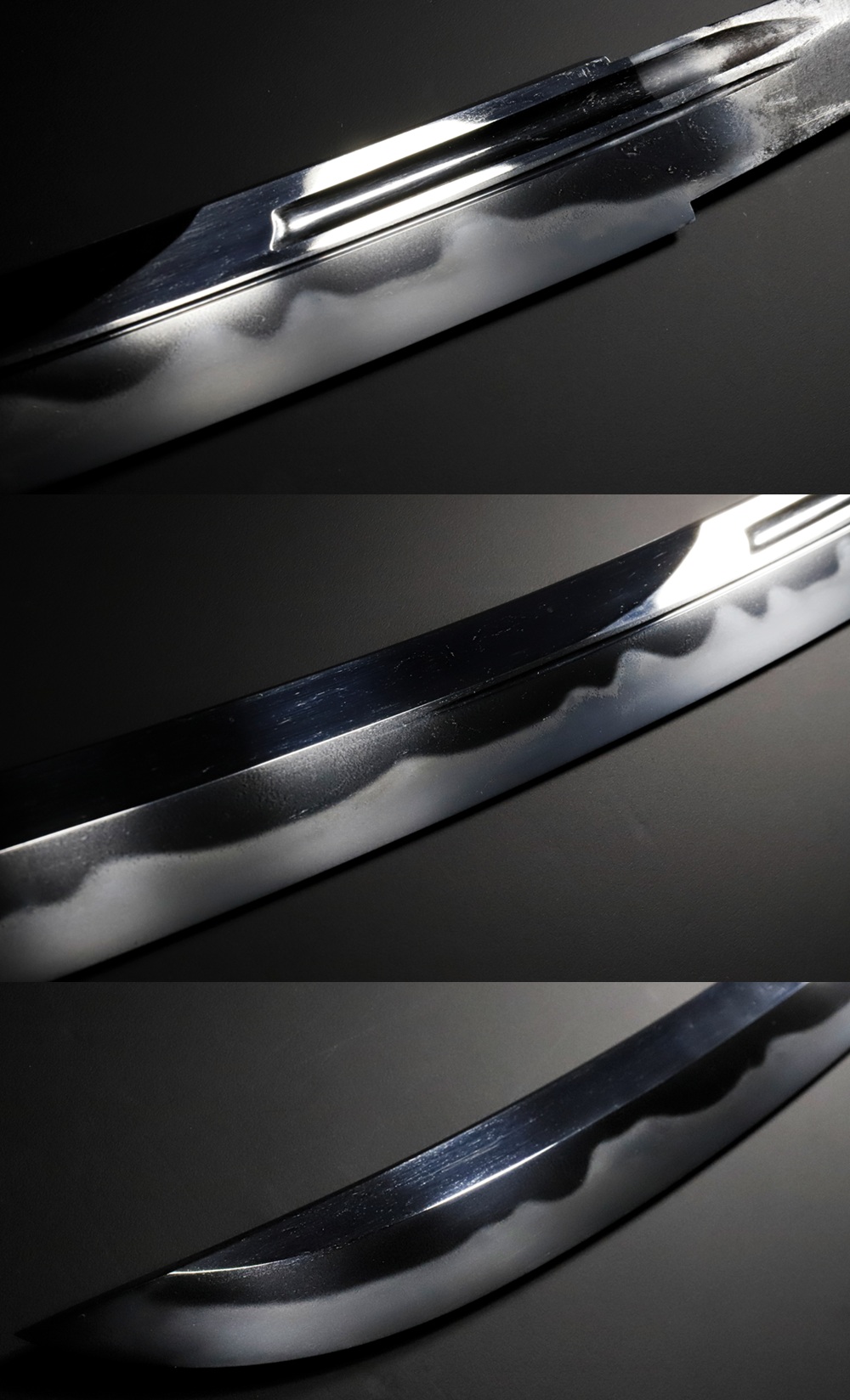
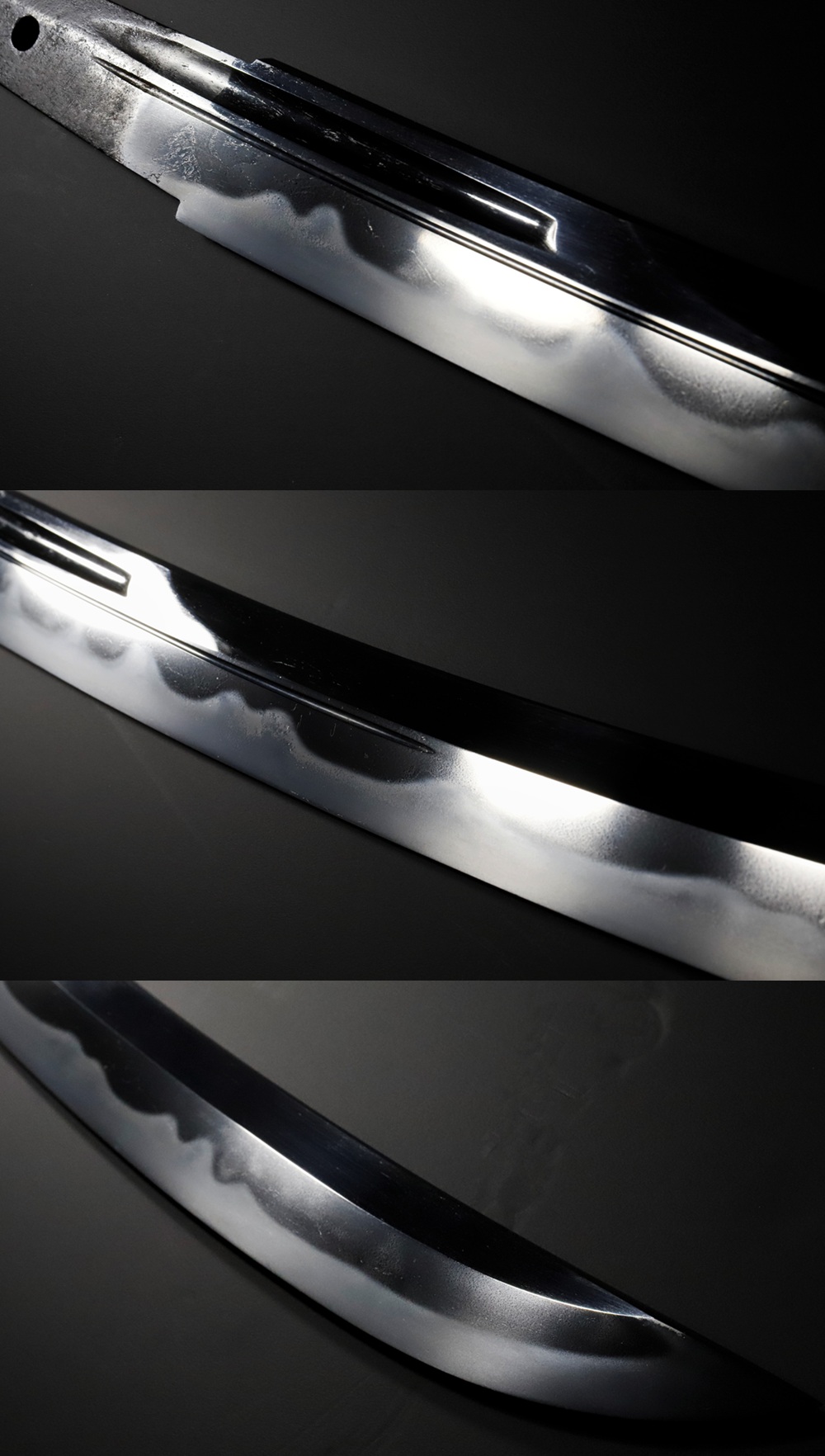
| Jihada (Metal pattern) | A tightly packed ko-itame hada with yubashiri and coarse ara-nie |
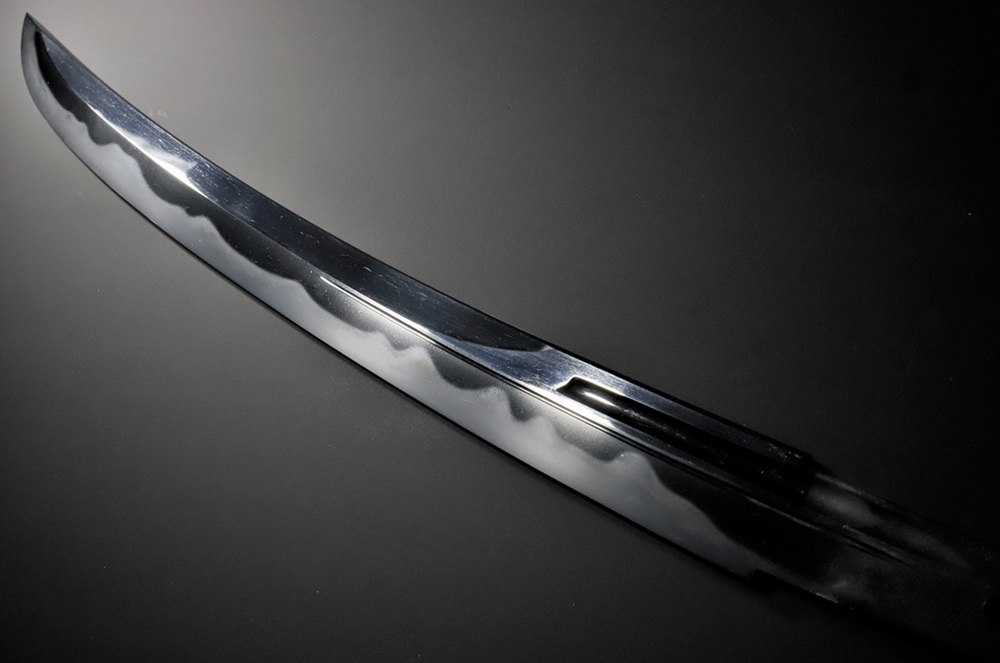
| Hamon (Temper line) | A notare-style large gunome midare, with deep, abundant nie |
| Engraving | Naginata-hi on each side |
| Bōshi (Point / Tip) | Turns back straight in a small ko-maru boshi. |
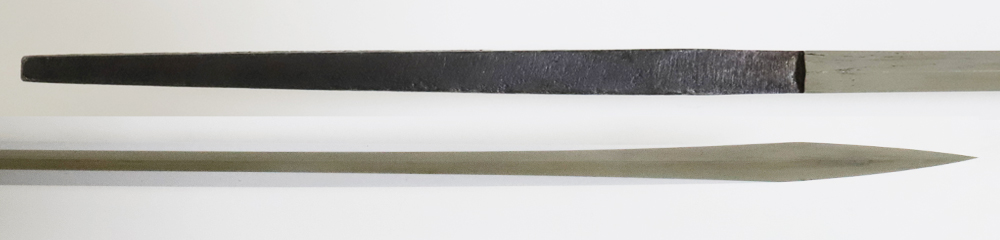
| Nakago (Tang) | Ubu nakago with katte-sagari yasurime and a shallow iriyamagata nakago-jiri |
| Mekugiana (Rivet holes) | 1 |
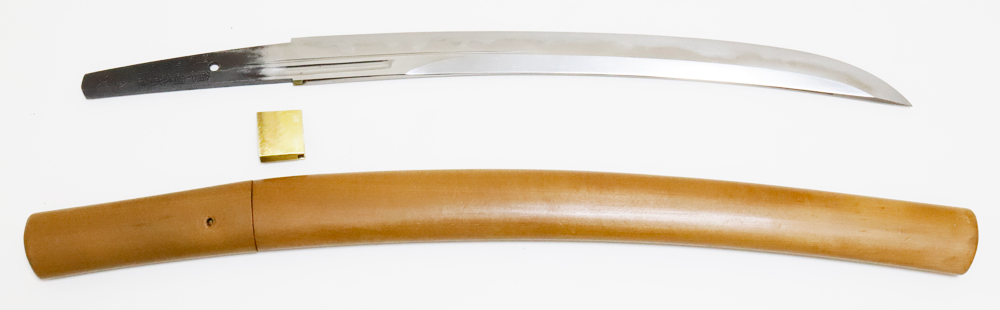
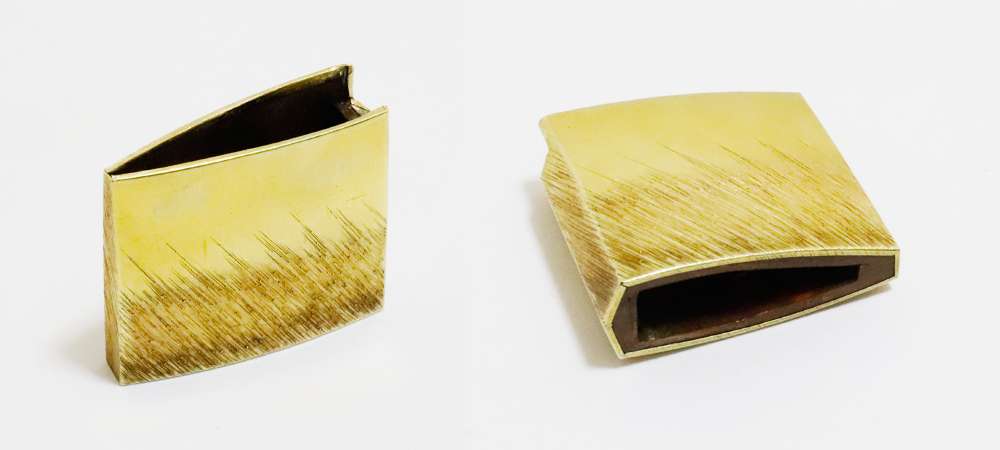
| Habaki | Solid copper habaki with gold foil, finished with koshi-yūjō yasurime |
Price |
500,000 JPY |
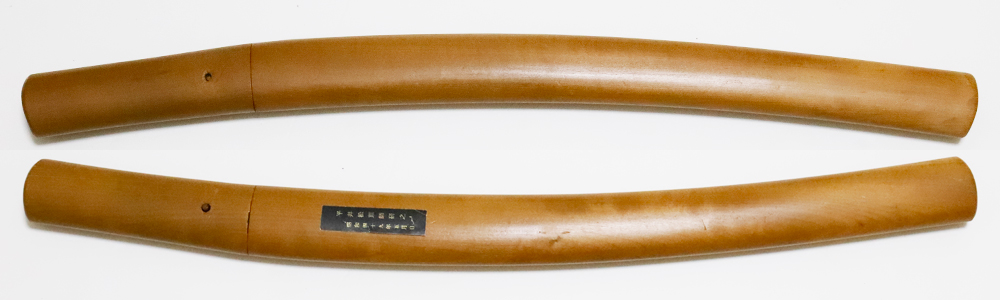
| This smith, “Kōno Rihei-jō Tameie,” is regarded as the first generation of the Tameie line, which continued for twelve generations until the Meiji period, and is ranked as a jō-saku swordsmith. He was from Azae Mizuta in Bitchu Province. He is said to have been the son of Ōtsuki Saemon-no-jō Kunishige and the younger brother of Saburōbei Kunishige. Dated works by him are known from the Keichō to Kan’ei eras.His workmanship is characterized by Sōshū-den style with large midare and prominent ara-nie. This blade is a fine example of nie-deki Sōshū-den, featuring an unokubi-zukuri construction in which the mune is shaved down above the habaki-moto and there is no yokote.The jigane, hamon, and nakago are all in healthy condition and well preserved. It passed the Tokubetsu Hozon Token (Special Preservation Sword) shinsa in 2015.In addition, the shirasaya bears an inscription reading: “Polished by Hirai Matsuba, May 1974 (Showa 49).” Hirai Matsuba was a polisher who became an adopted member of the Hon’ami family and was the younger brother of Hon’ami Nisshū, a Living National Treasure. He was the son of Hirai Chiba and continued the Hirai family name as a togishi. |

 Search