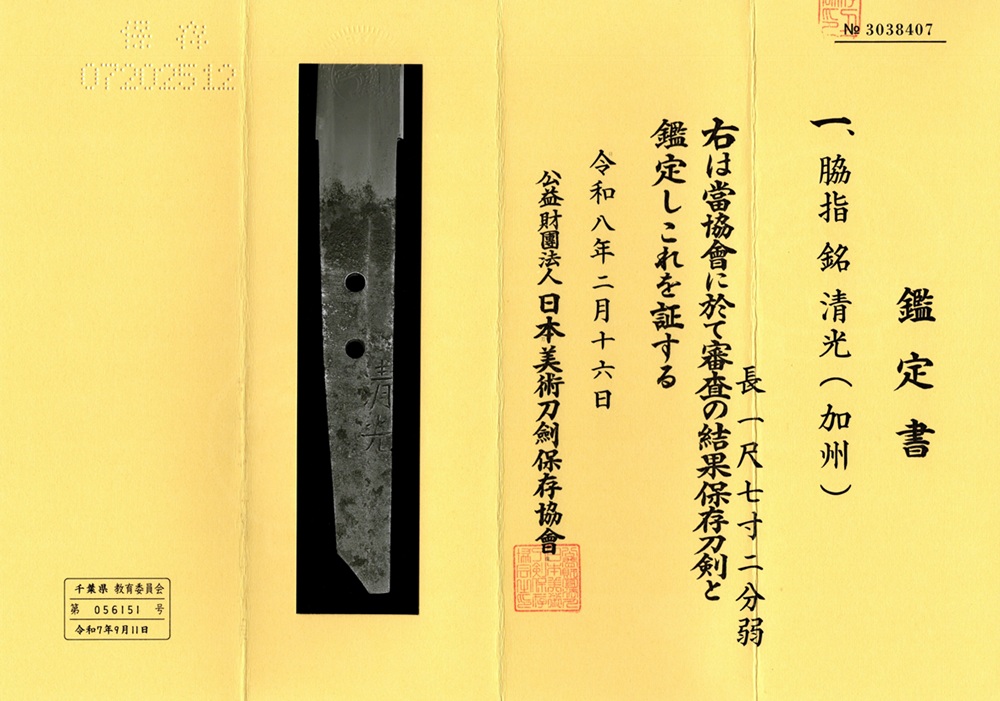
| Product No. WA-0891 清光(加州) | |
|---|---|
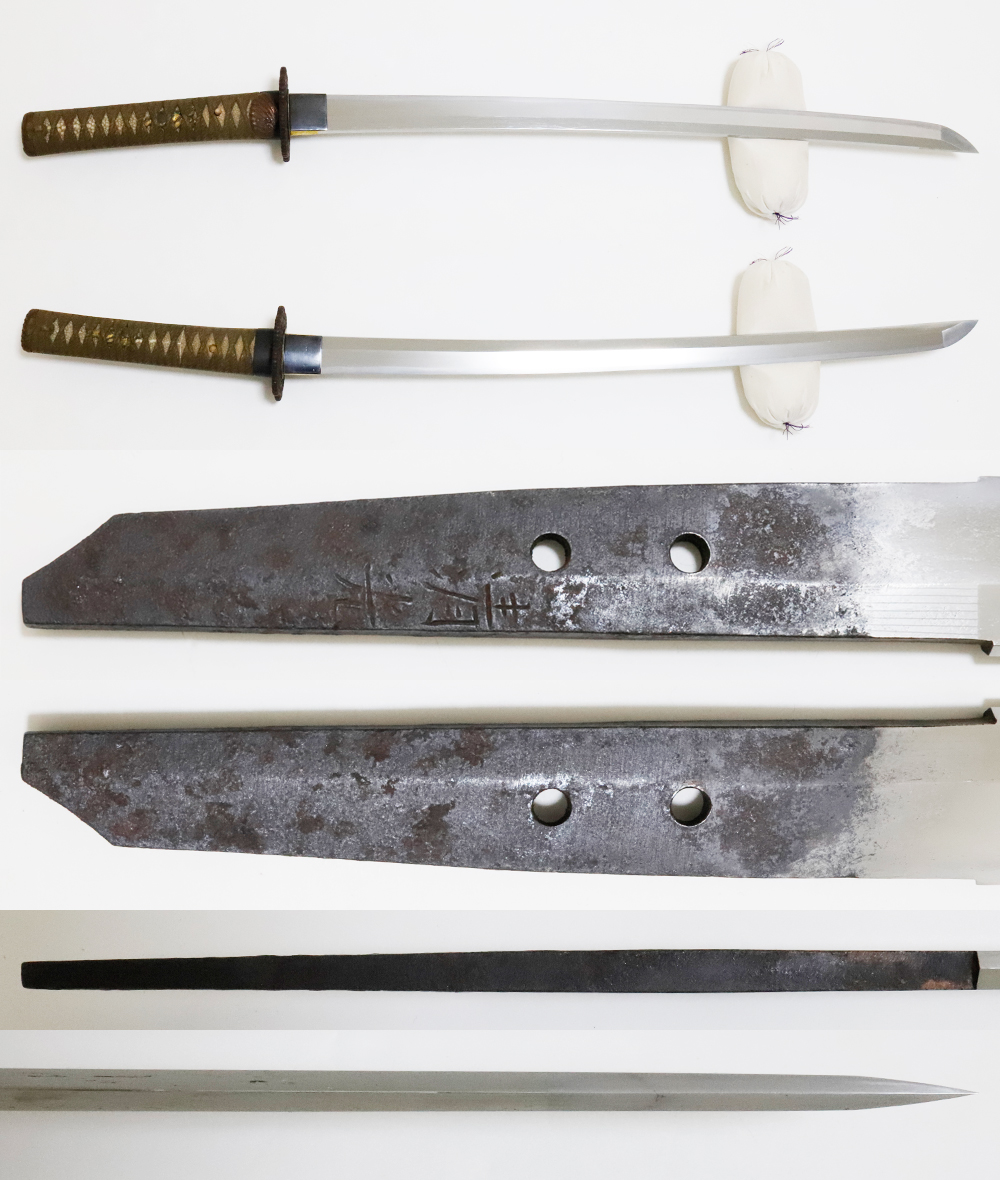
| Mei |
Kiyomitsu Back: -- |
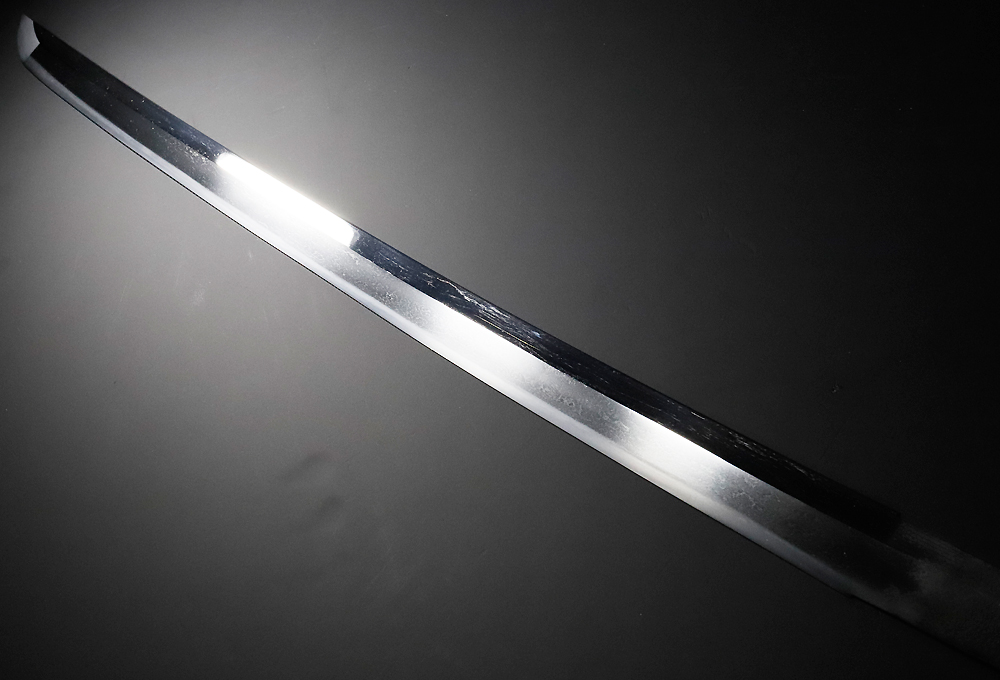
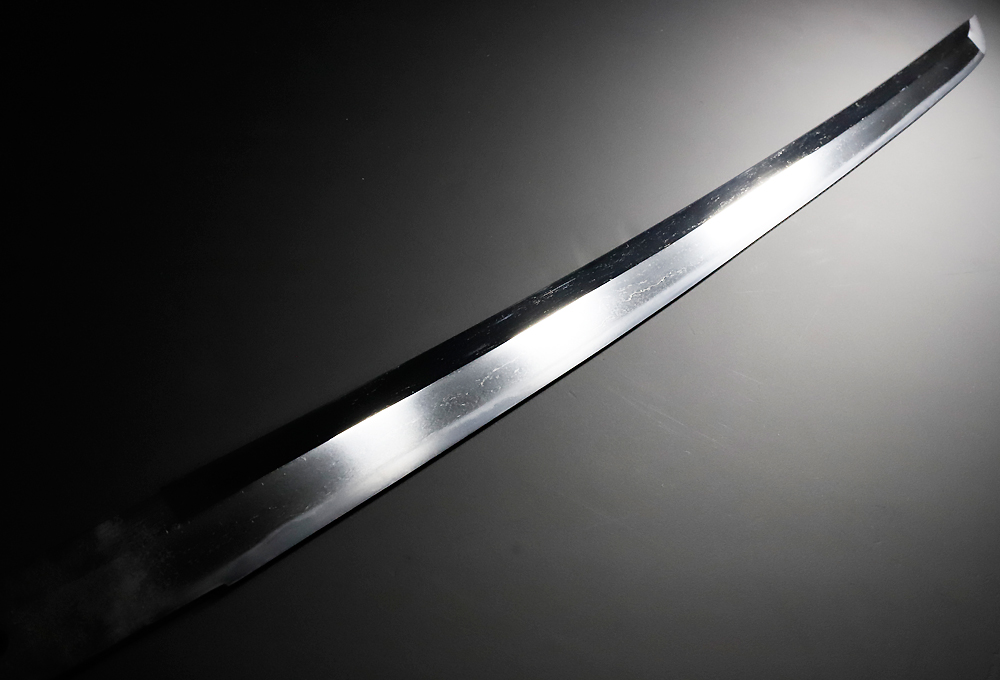
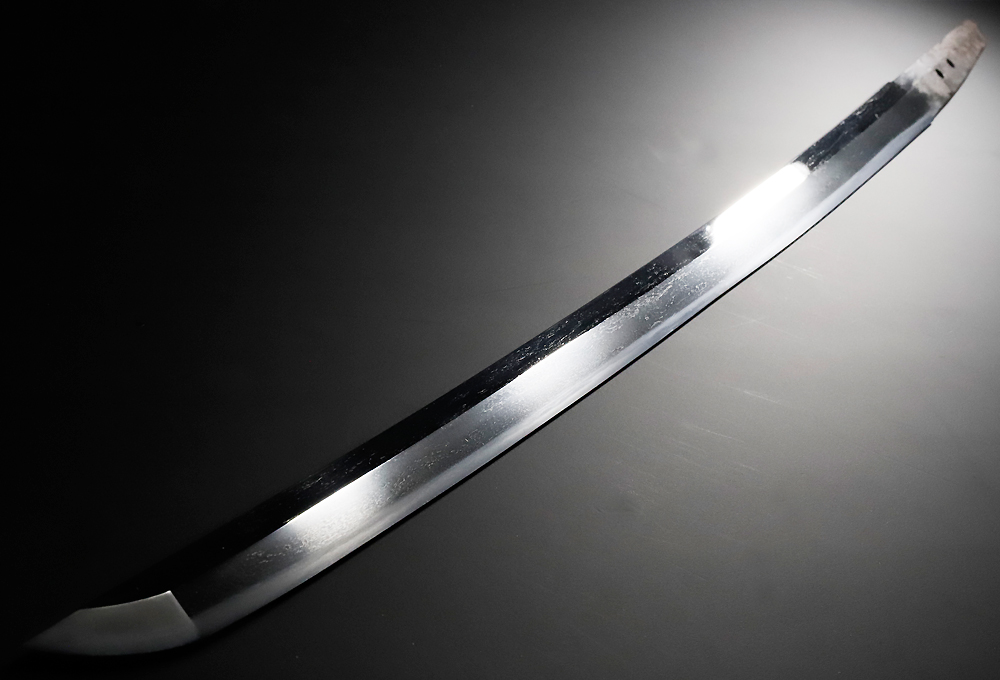
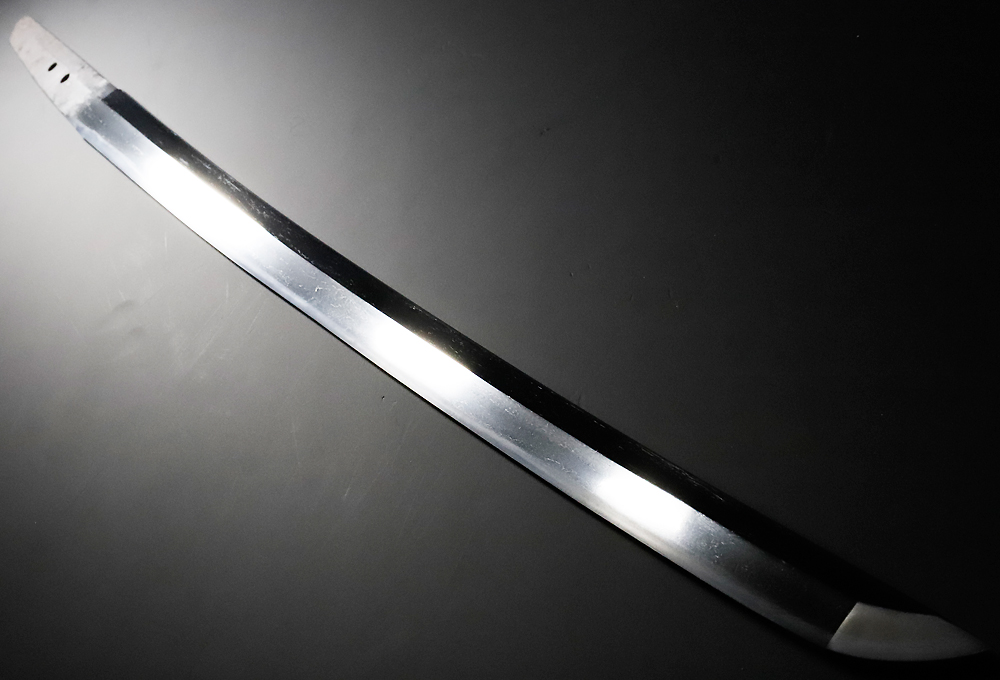
| Shape | Shinogi-zukuri, iori-mune. A refined and graceful sugata with a chū-kissaki, ordinary mihaba and kasane, and moderate sori |
| Region | Kaga Province |
| Era | Early Edo Period |
| Length |
52 cm 20.5 in |
| Sori (curvature) |
0.8 cm 0.3 in |
| Motohaba |
3 cm 1.2 in |
| Sakihaba |
2.2 cm 0.8 in |
| Munekasane |
0.7 cm 0.3 in |
| Status | Hozon Token |
| Certification Date | February 16, 2026 |
| Registration Authority | Chiba Prefecture |
| Registration Date | September 11, 2025 |
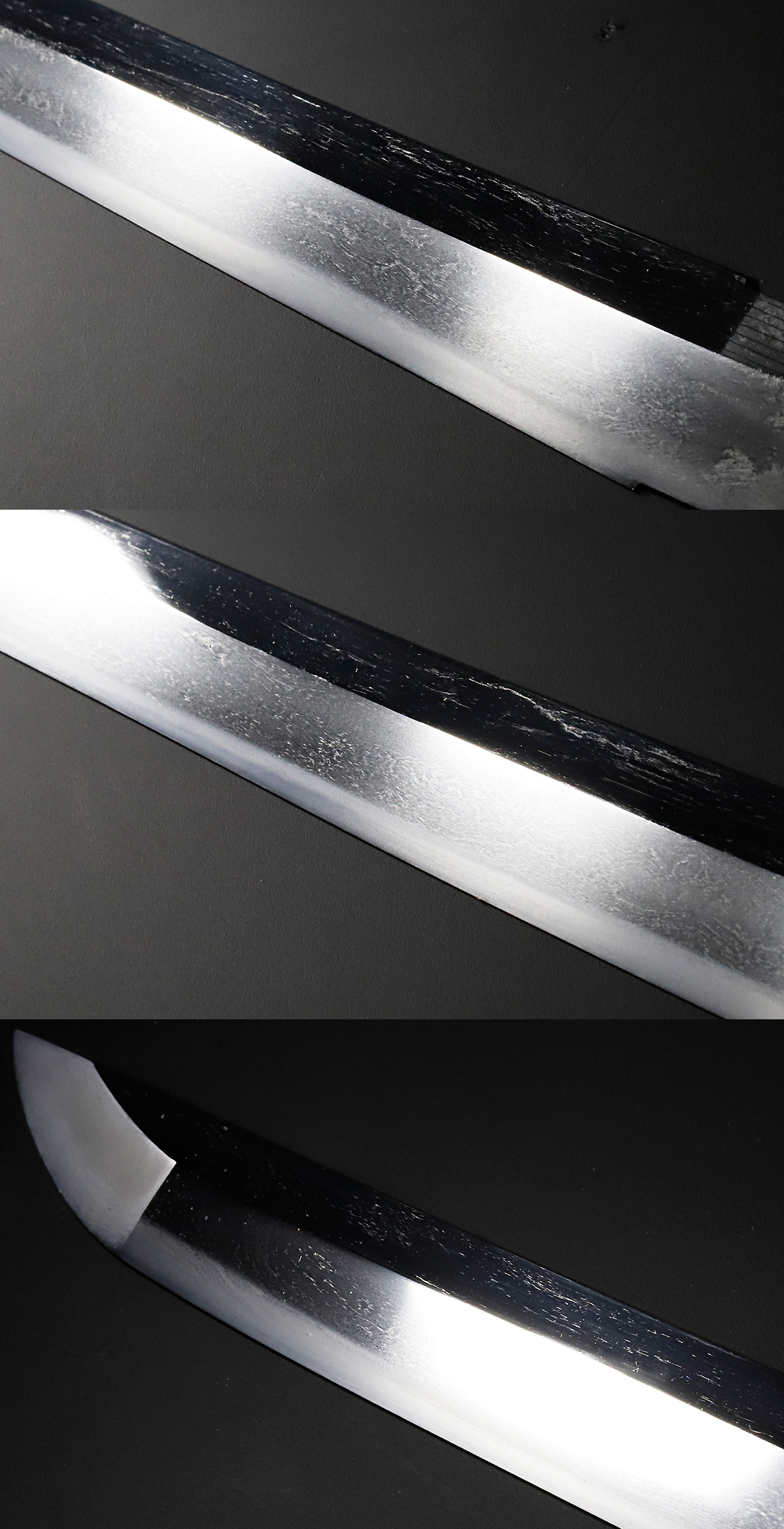
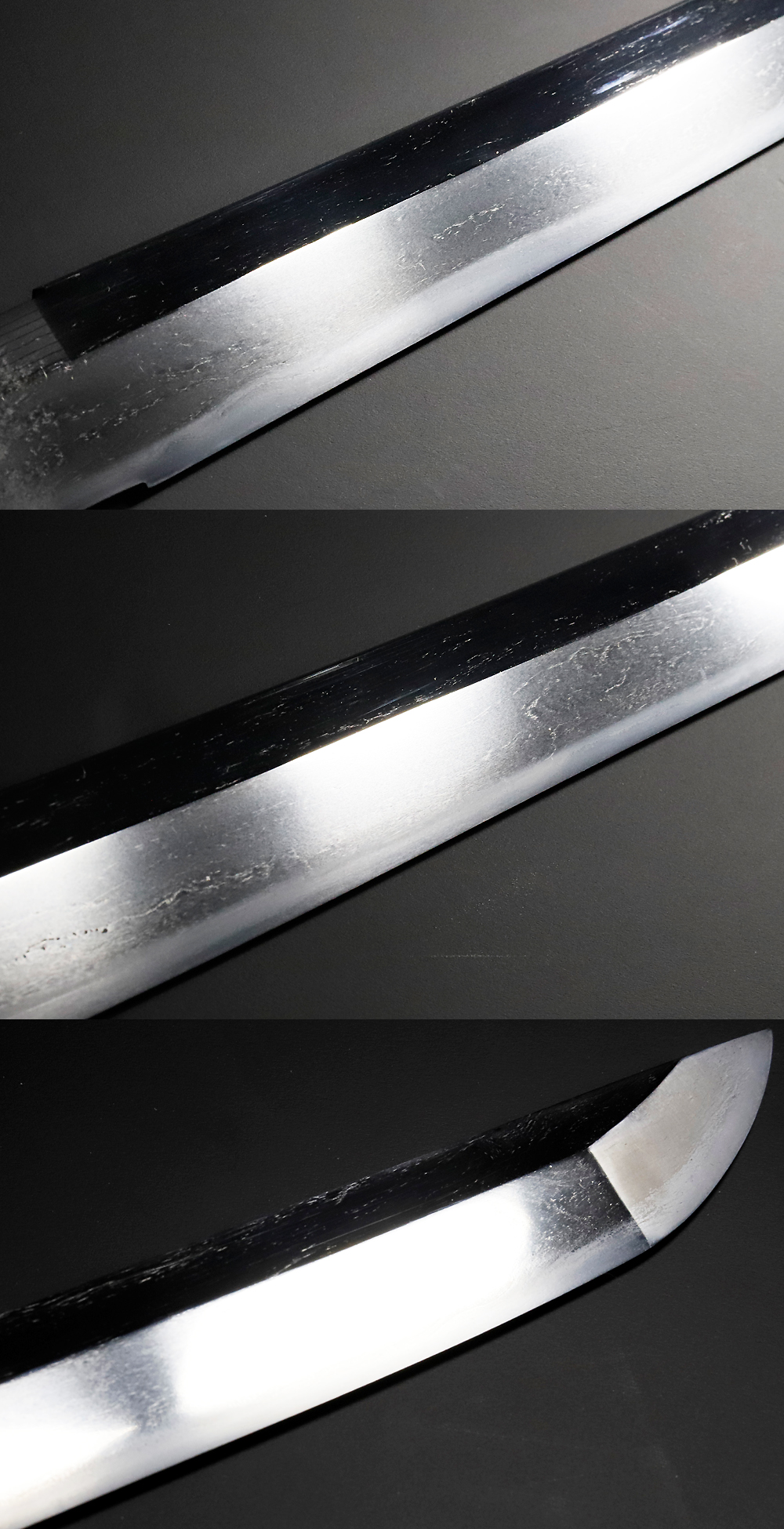
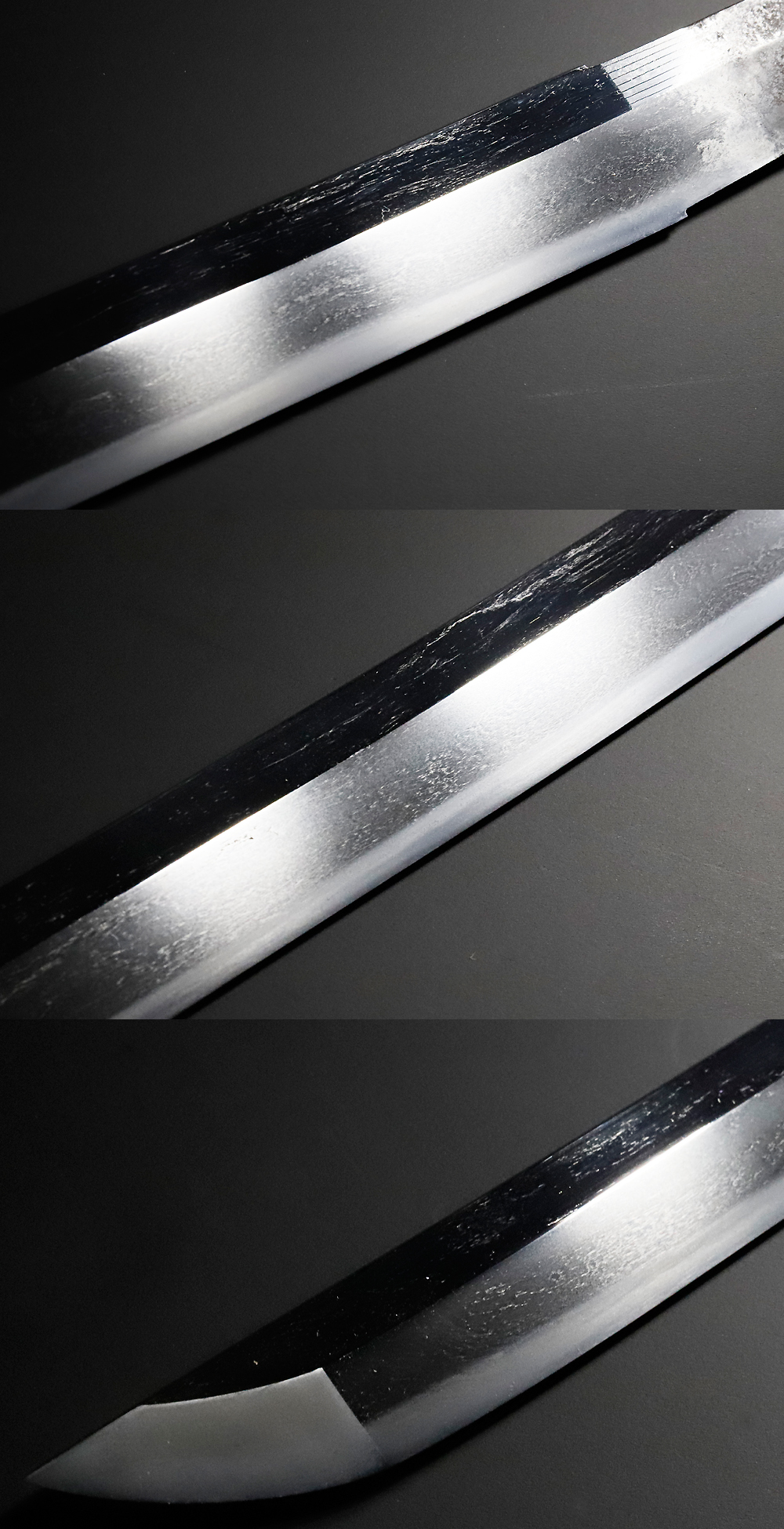
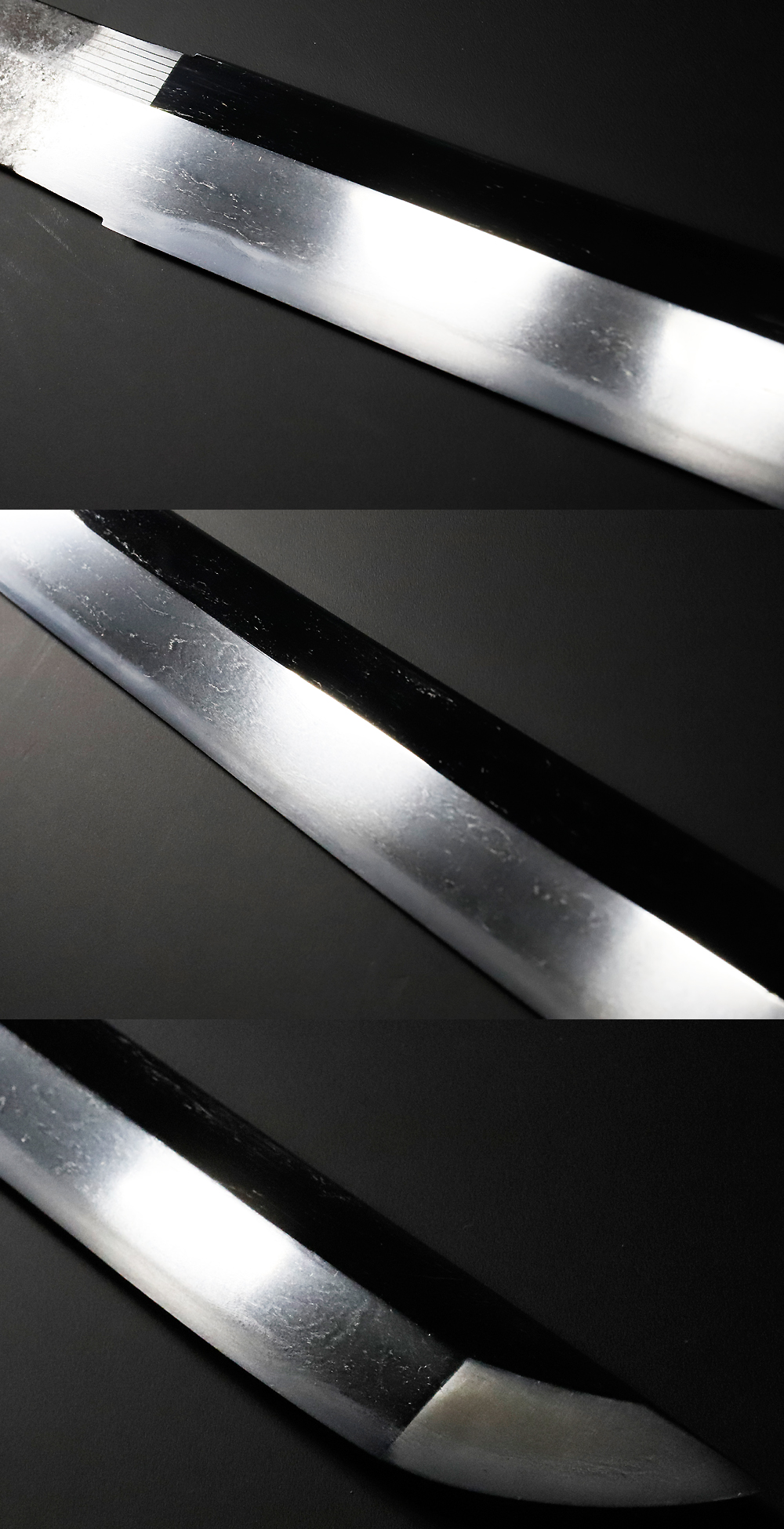
| Jihada (Metal pattern) | The jihada is an itame hada mixed with mokume, covered with ji-nie and interspersed with chikei |
| Hamon (Temper line) | Suguha, with kinsuji, showing hotsure and kuichigai |
| Bōshi (Point / Tip) | The boshi is sugu, shows hakikake, and turns back |
| Nakago (Tang) | Suriage, kiri yasurime, katasogi nakago-jiri |
| Mekugiana (Rivet holes) | 2 |
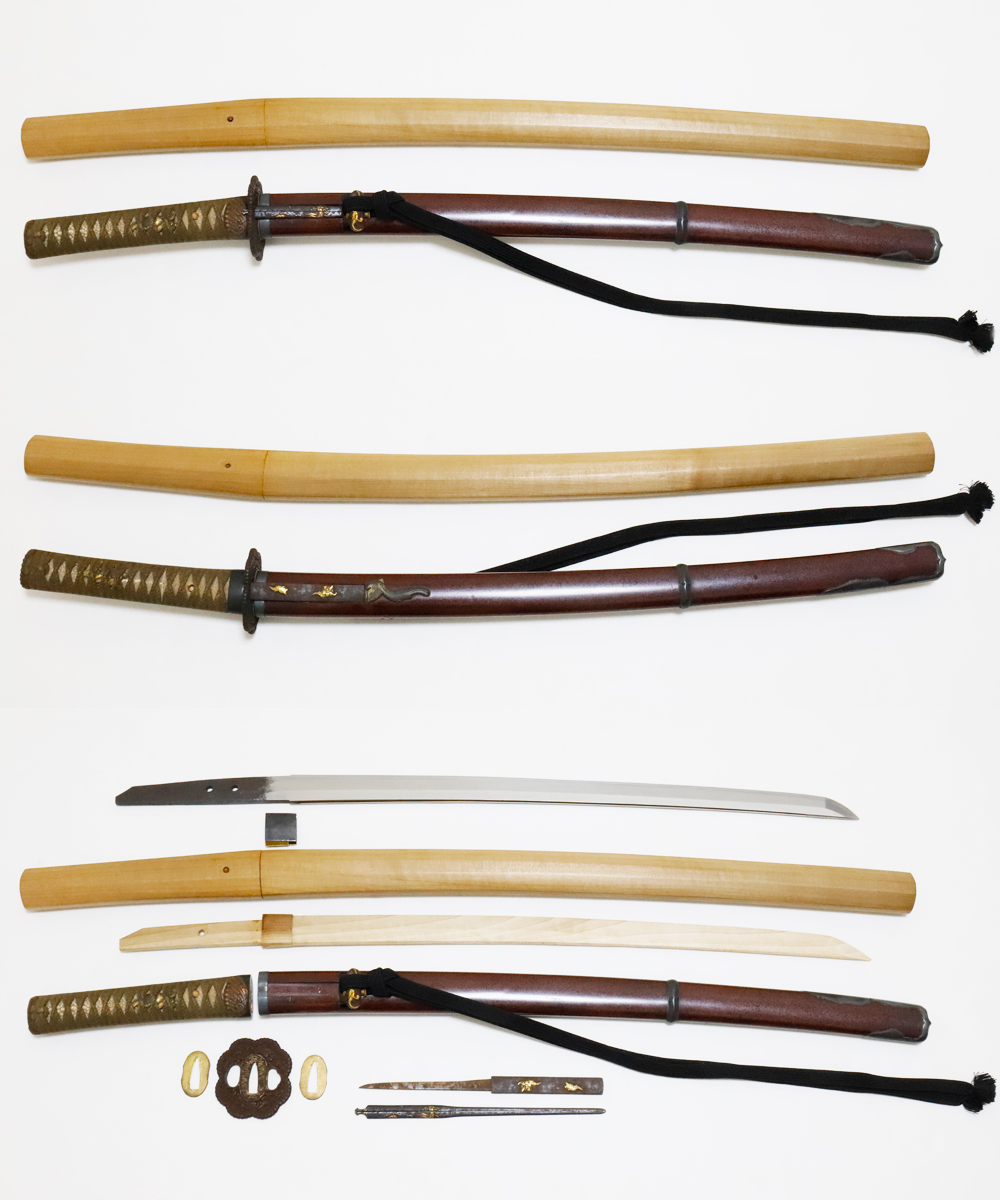
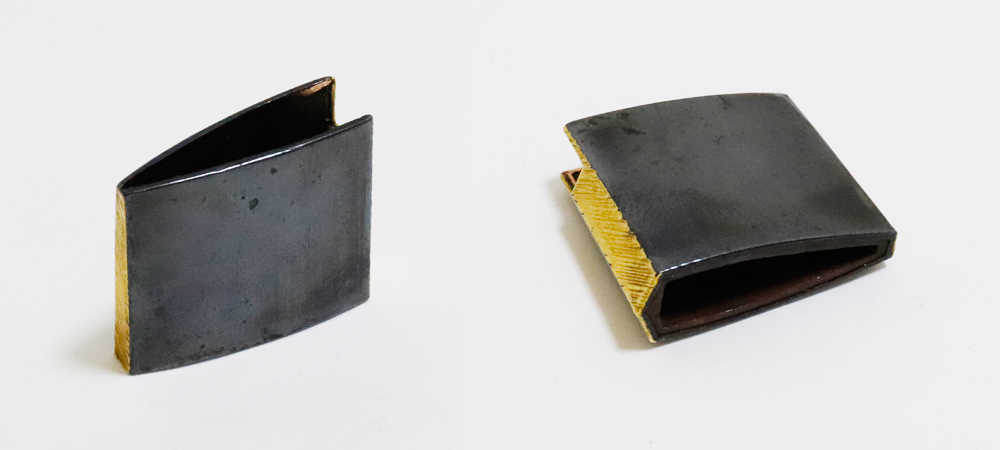
| Habaki | Copper base, shakudō-foiled habaki with gold iroe on the ha and mune sides |
| Mountings | Koshirae-tsuki |
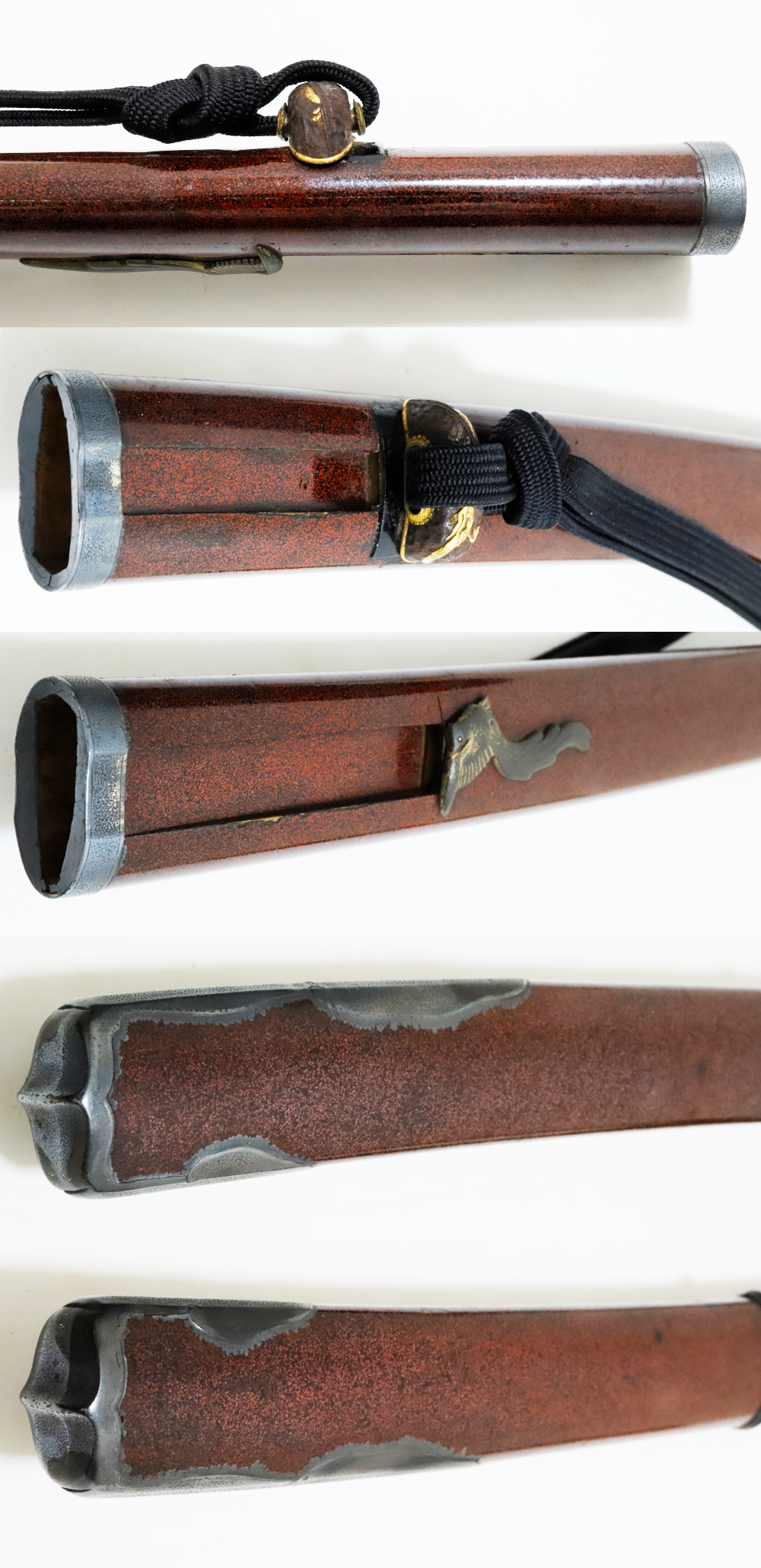
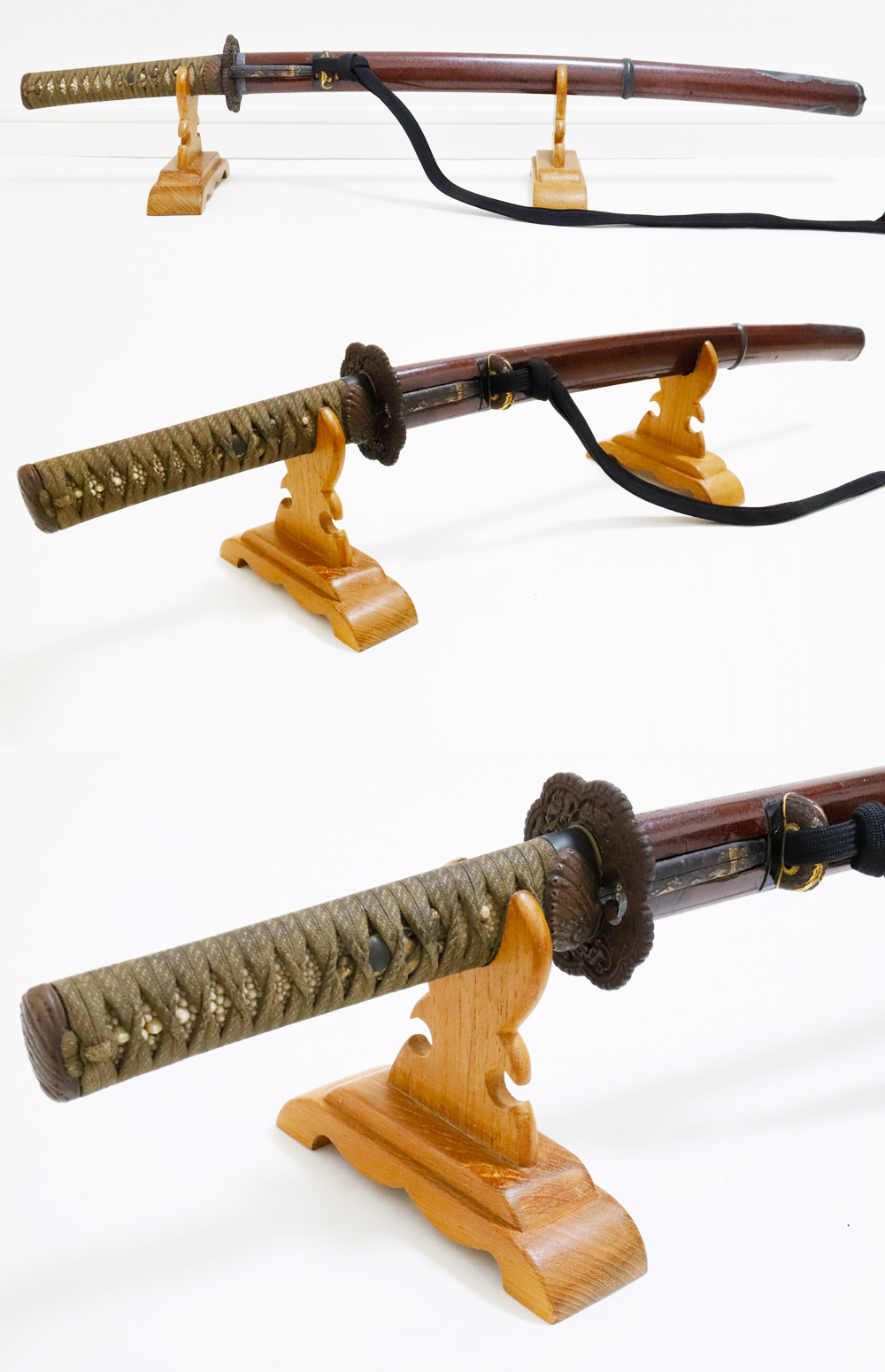
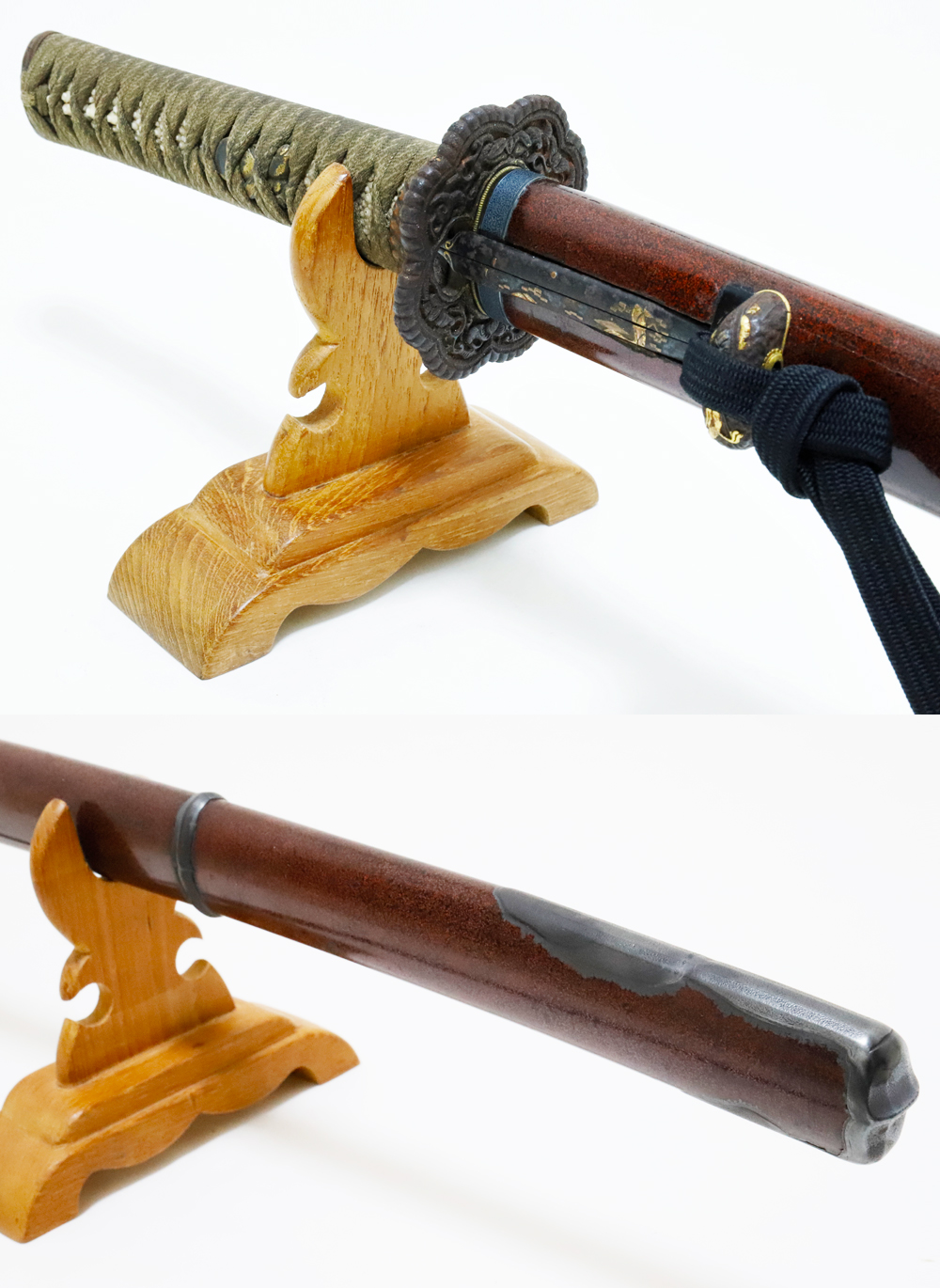
| Koshirae | Wakizashi koshirae with a brown urumi-nuri lacquered saya |
| Koshirae Length |
76.5 cm 30.1 in |
| Tsuka Length |
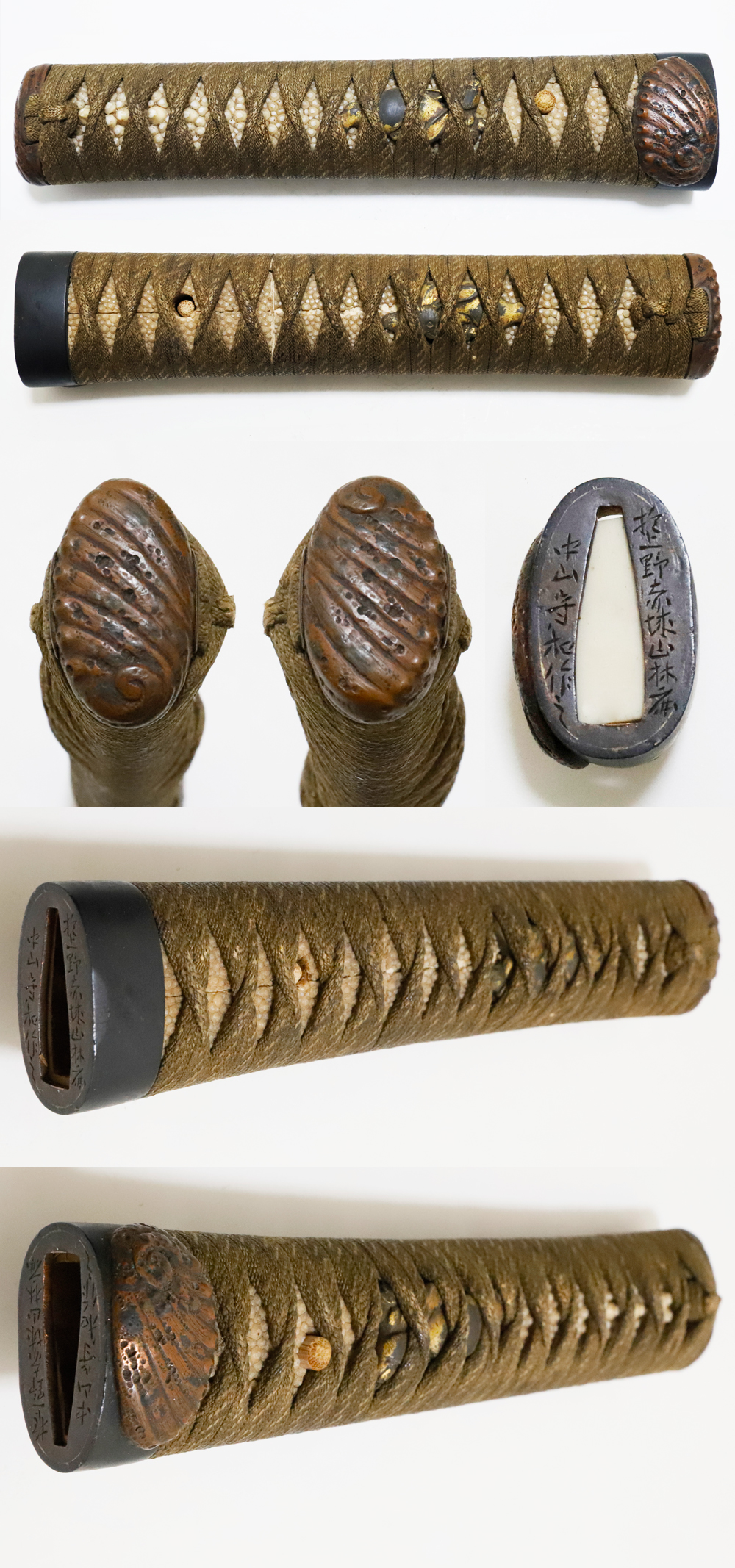
18.7 cm 7.4 in |
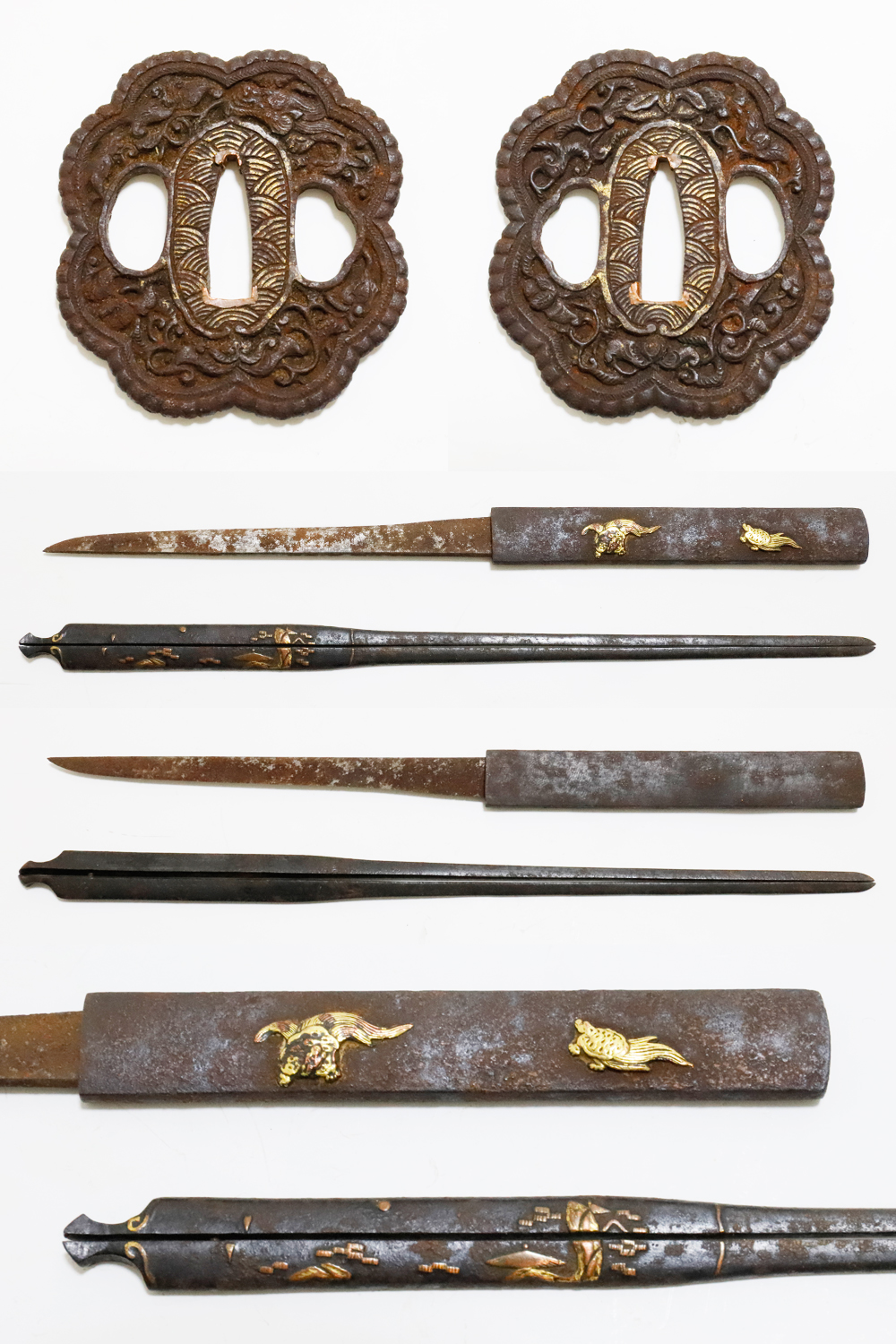
| Tsuba | Nanban Tsuba with Dragon Arabesque design |
| Menuki | A Rabbit design. Gold iroe |
| Fuchigashira | Abalone design |
| Kozuka | wo Minogame Turtles design. Iron, zōgan, gold iroe |
| Kogai | Warikōgai: Landscape Scene design. Iron, zōgan, gold iroe |
| Other details | White samegawa-covered tsuka with uguisu-colored variant ito in tsumami-maki style, Kurikata: Amaryu design, Uragawara: Phoenix design, Kojiri: Silver Nagakuwagata kojiri |
Price |
450,000 JPY |
| This blade bears the two-character signature Kiyomitsu and has been attributed to the Kaga school. The name Kaga Kiyomitsu appears from the Koto period onward in Kaga Province, and the lineage continued through the Shintō period into the late Edo period. Judging from both the workmanship and the style of the signature, this blade is considered to be the work of the Shintō-period smith known as “Hinin Kiyomitsu.” Here, hinin does not carry the modern derogatory meaning of beggar. Rather, it refers to a special social class established in 1670 by Lord Maeda, who gathered several thousand impoverished people into designated settlements where they were provided support and granted exemptions from taxes and certain obligations. Chōbei Kiyomitsu, his son Uemon Kiyomitsu, and other family members continued working as swordsmiths while living in these settlements. Although this blade has been slightly suriage, it retains traditional features of the nakago, including kiri yasurime and the characteristic katasogi nakago-jiri. It is a solid and reliable example of Kaga Kiyomitsu workmanship. Passed the NBTHK Hozon Token shinsa in December 2025. Accompanied by a wakizashi koshirae with a cha-urumi-nuri saya. |


 Search