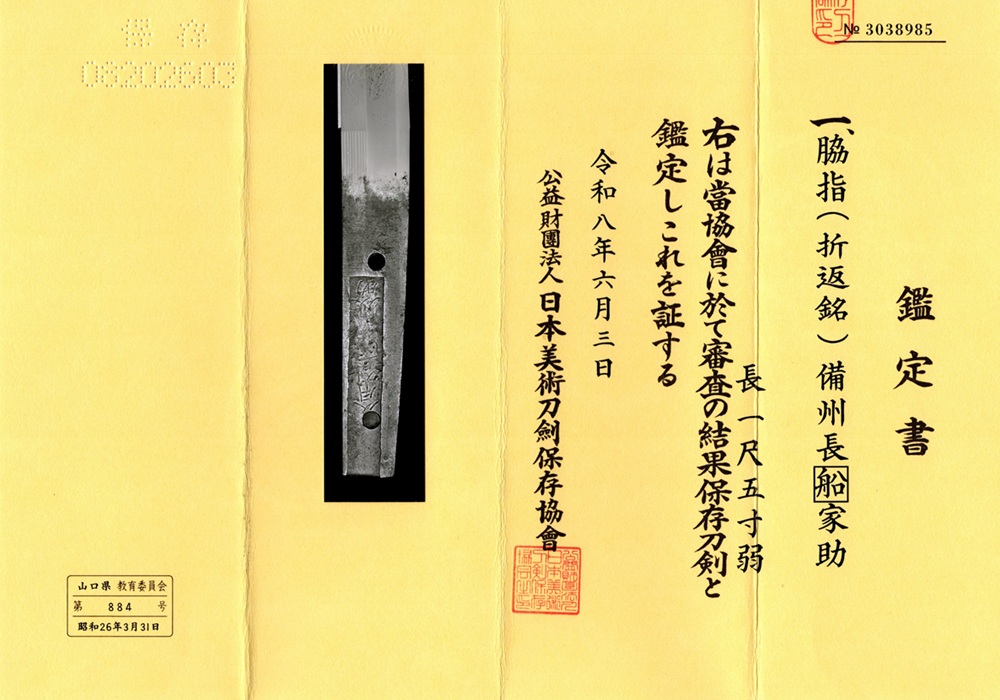
| Product No. WA-0918 (折返銘)備州長[船]家助 | |
|---|---|
| Mei |
(Orikaeshi-mei, folded-over signature) Bishu Osa[ fune ] Iesuke Back: -- |
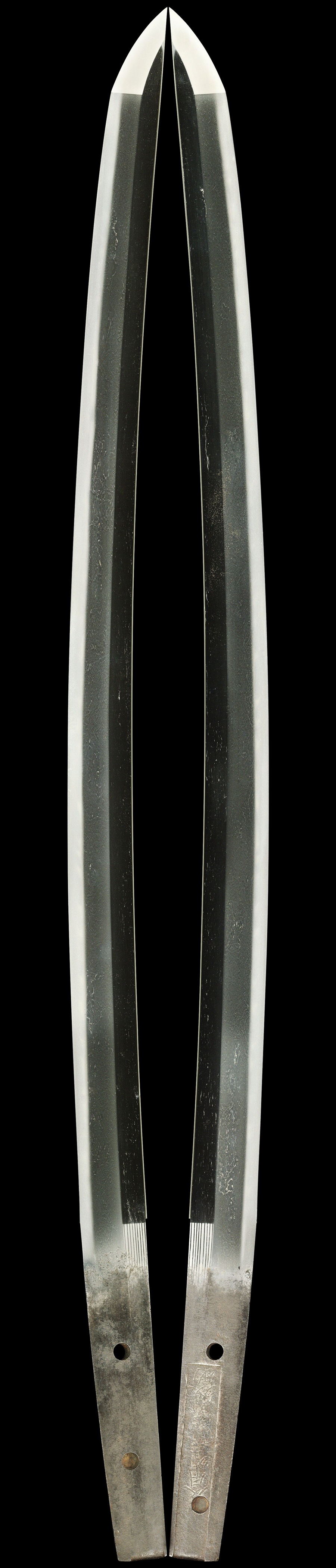
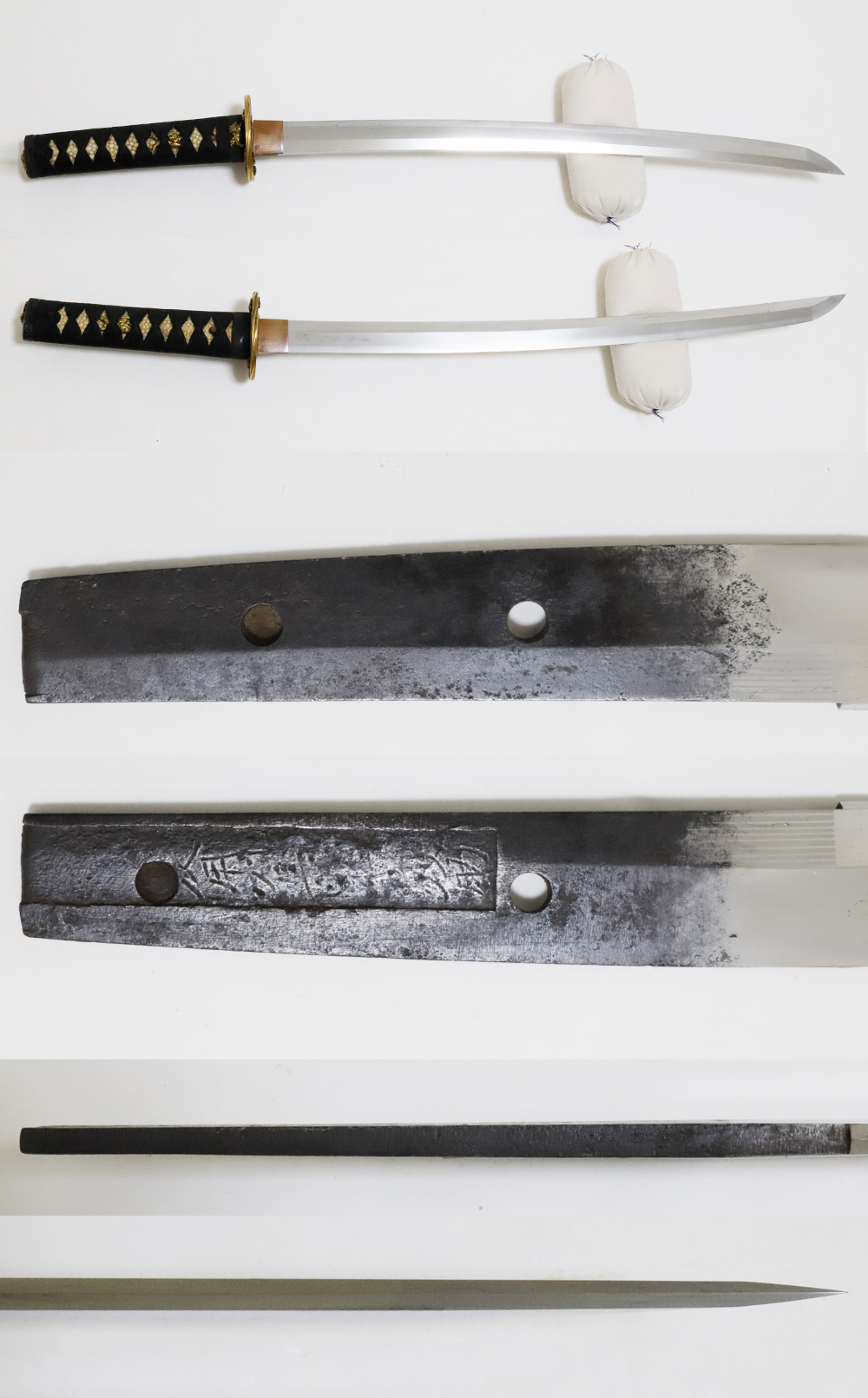
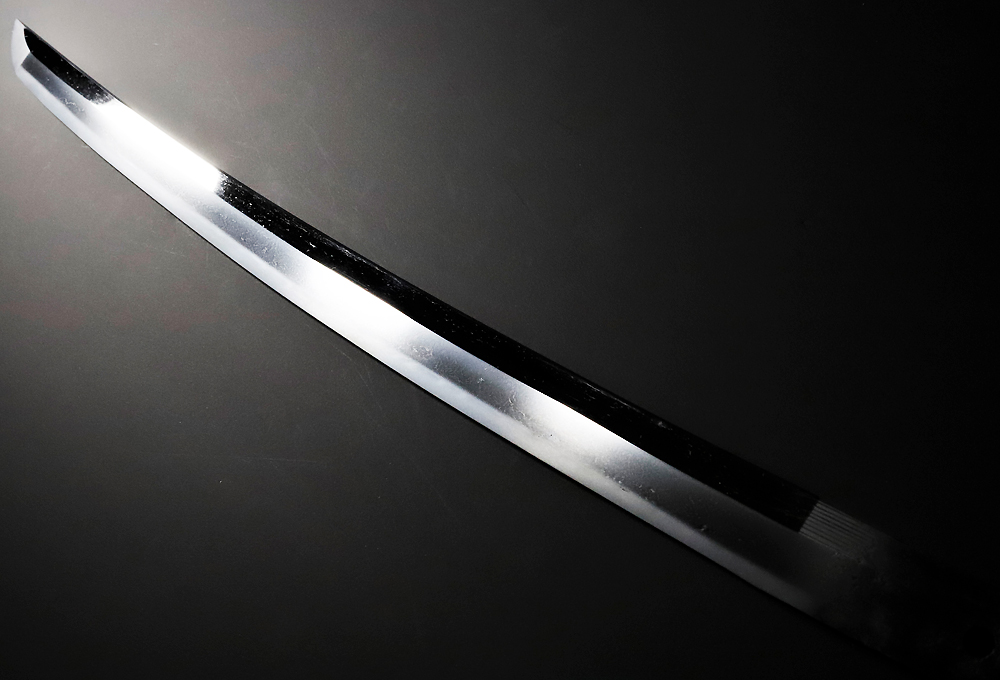
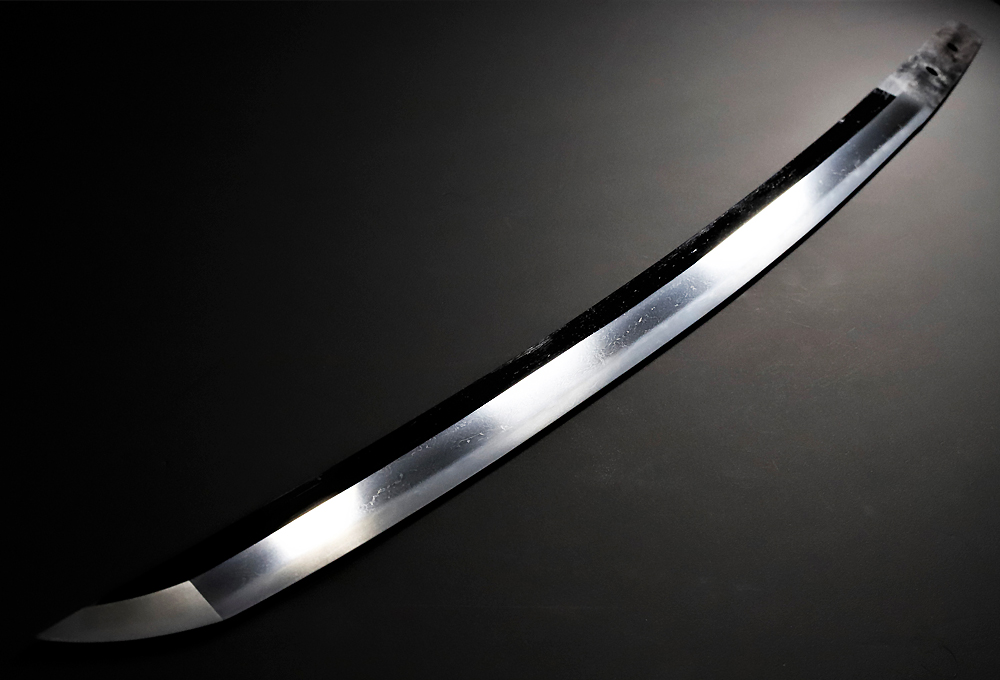
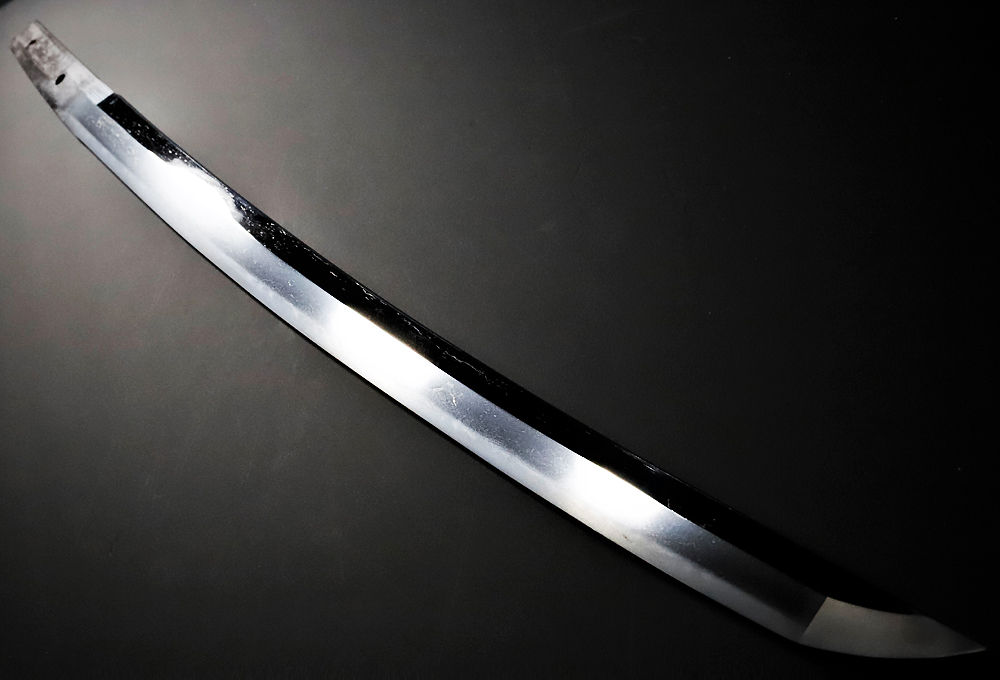
| Shape | Shinogi-zukuri, iori-mune, chu-kissaki. Despite being o-suriage (greatly shortened) with a folded-over signature, the blade retains a dignified and graceful sugata. |
| Region | Bizen Province |
| Era | Early Muromachi Period |
| Length |
45.4 cm 17.9 in |
| Sori (curvature) |
0.9 cm 0.4 in |
| Motohaba |
2.6 cm 1.0 in |
| Sakihaba |
2 cm 0.8 in |
| Munekasane |
0.5 cm 0.2 in |
| Status | Hozon Token |
| Certification Date | June 03, 2026 |
| Registration Authority | Yamaguchi Prefecture |
| Registration Date | March 31, 1951 |
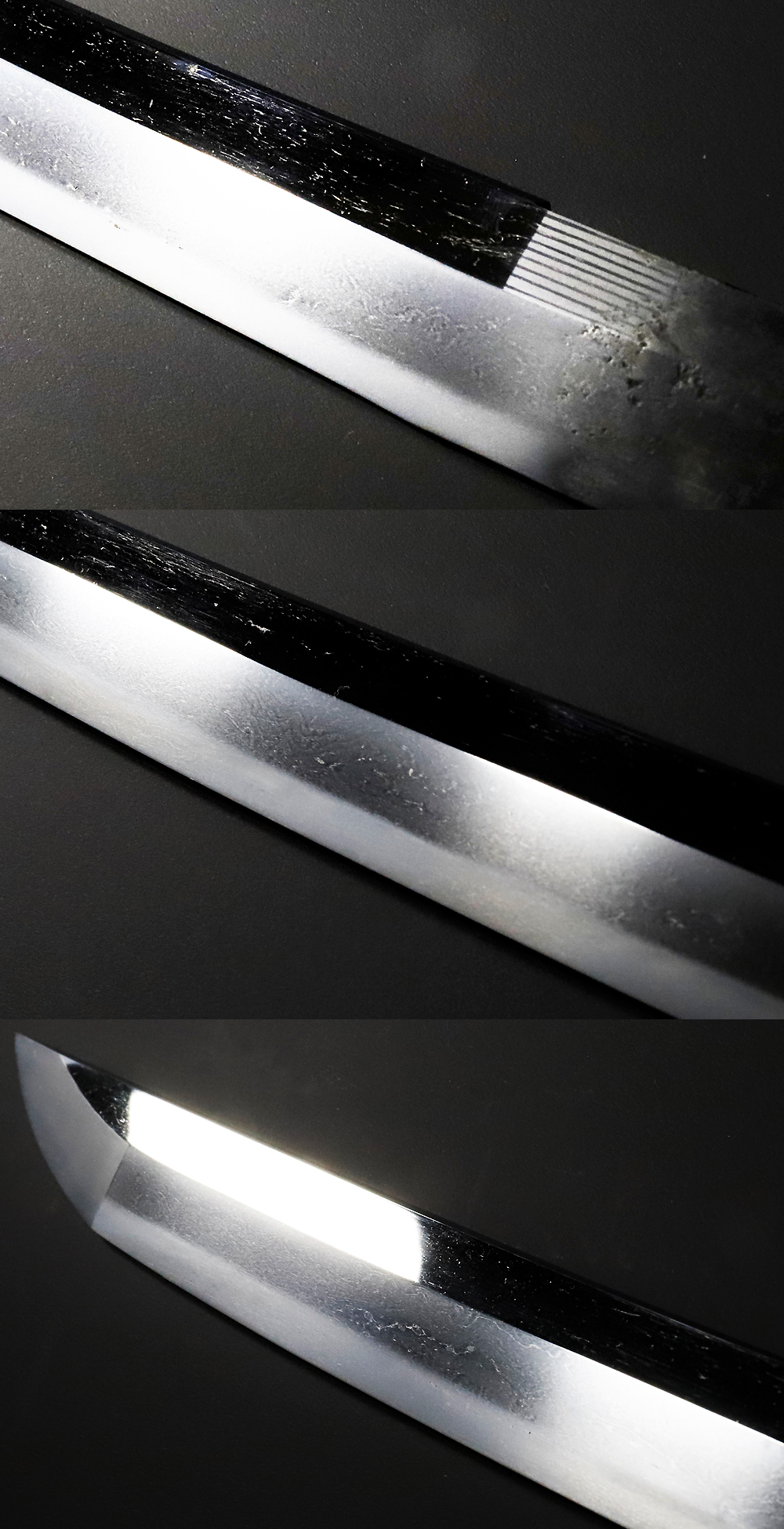
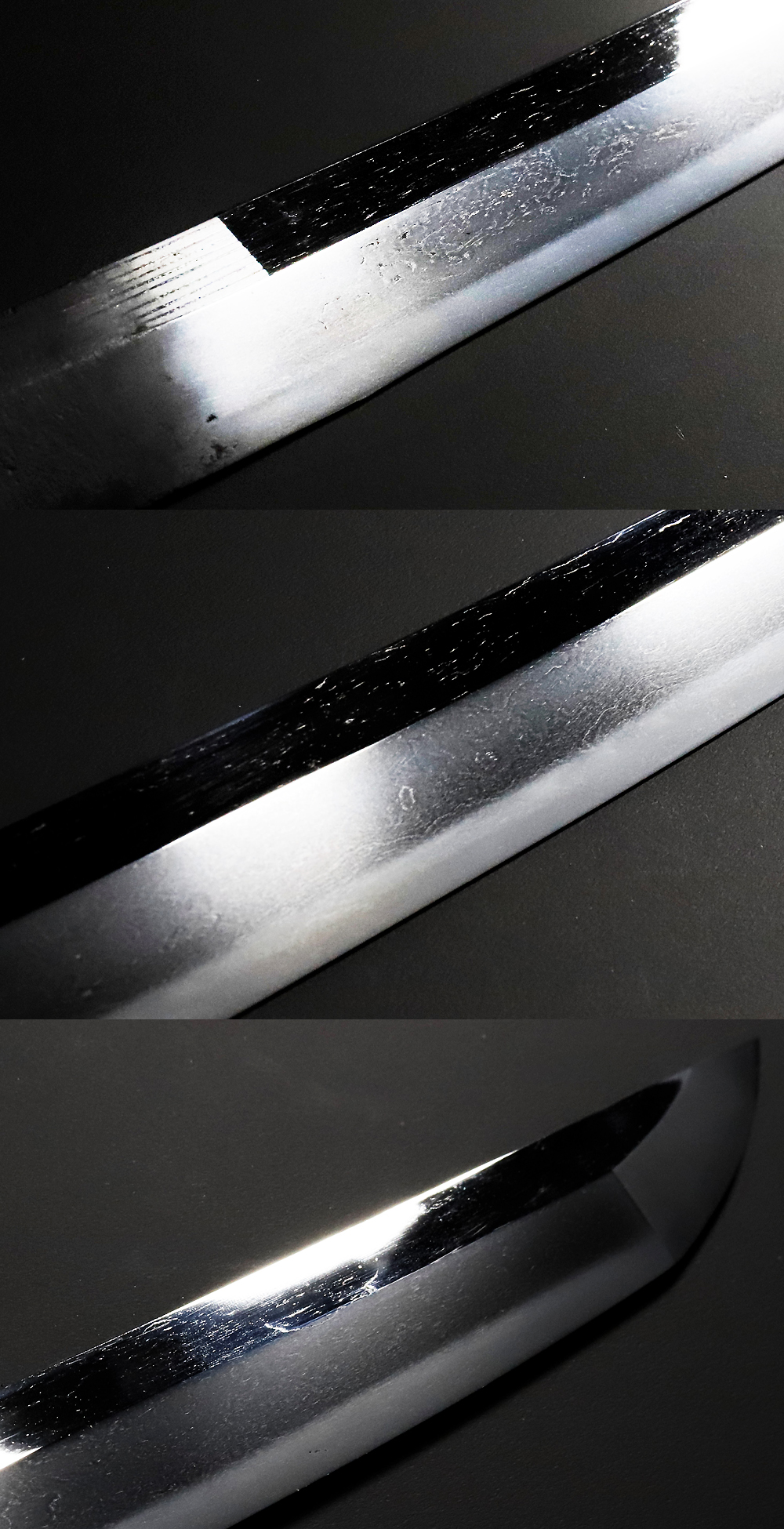
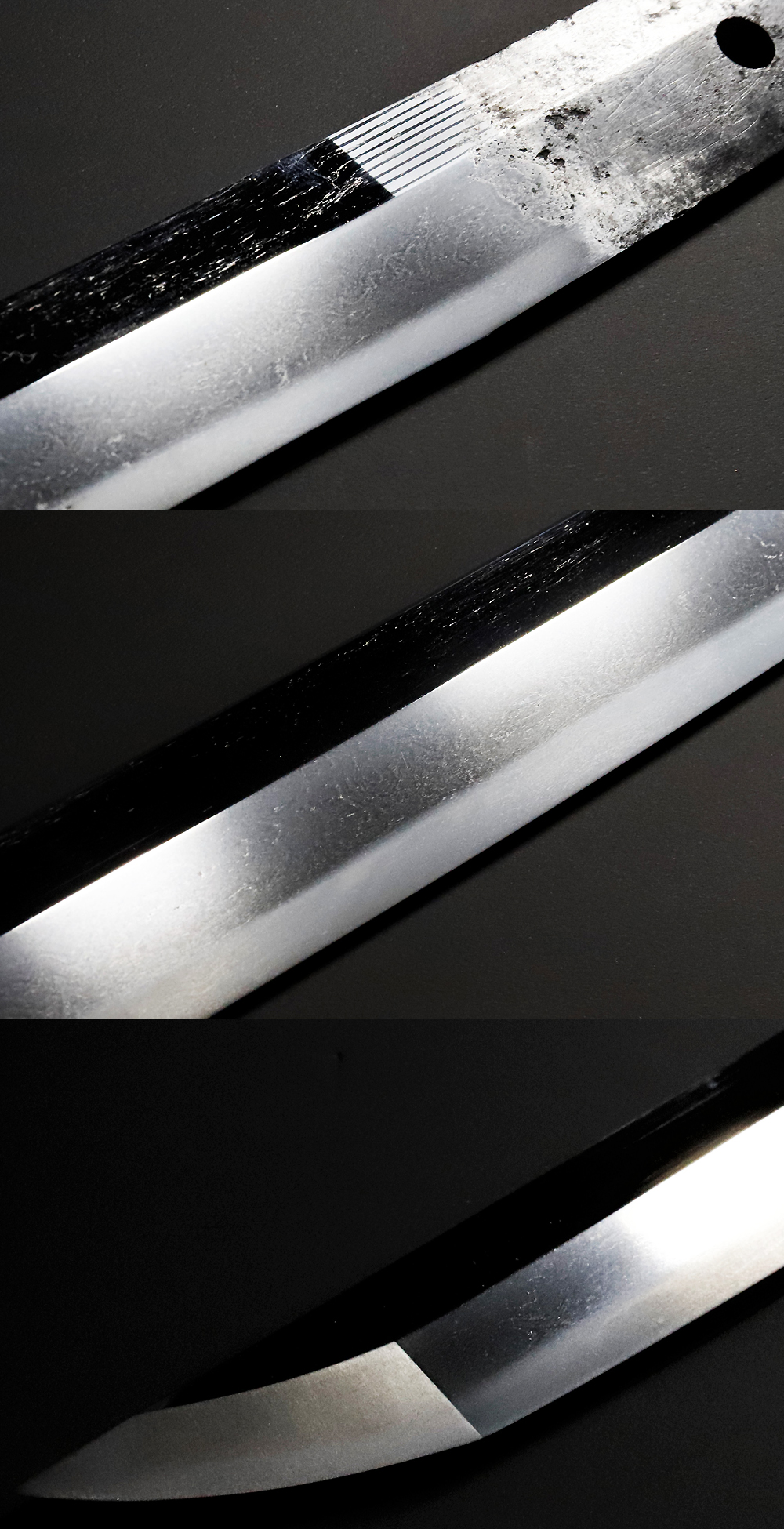
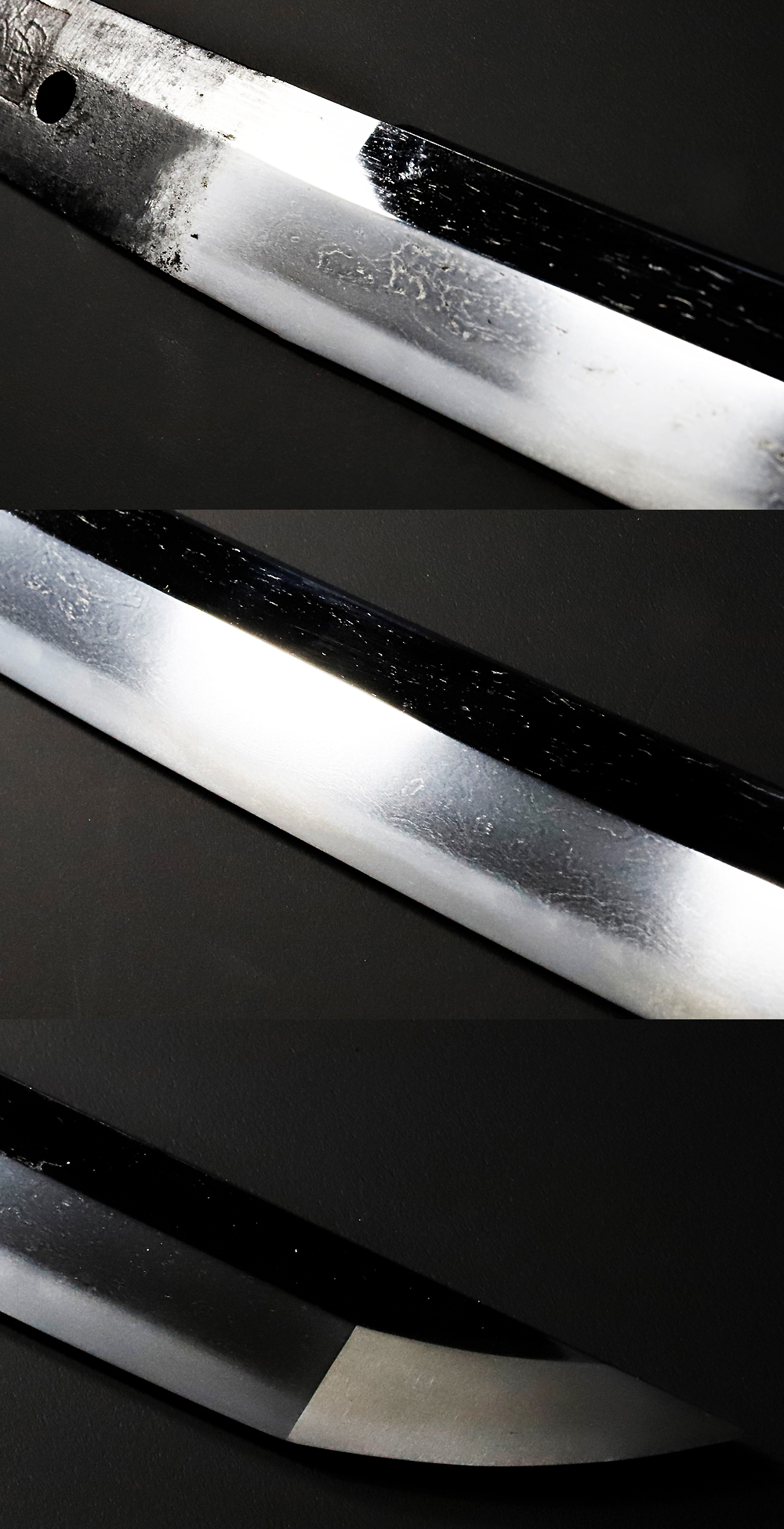
| Jihada (Metal pattern) | Tightly forged itame-hada mixed with mokume-hada, showing utsuri. |
| Hamon (Temper line) | Suguha-based, with gunome tending toward saka (reverse inclination), accompanied by ashi. |
| Bōshi (Point / Tip) | Straight with a gentle notare, forming a ko-maru with a short turn back. |
| Nakago (Tang) | O-suriage, orikaeshi-mei (folded-over signature). |
| Mekugiana (Rivet holes) | 3 |
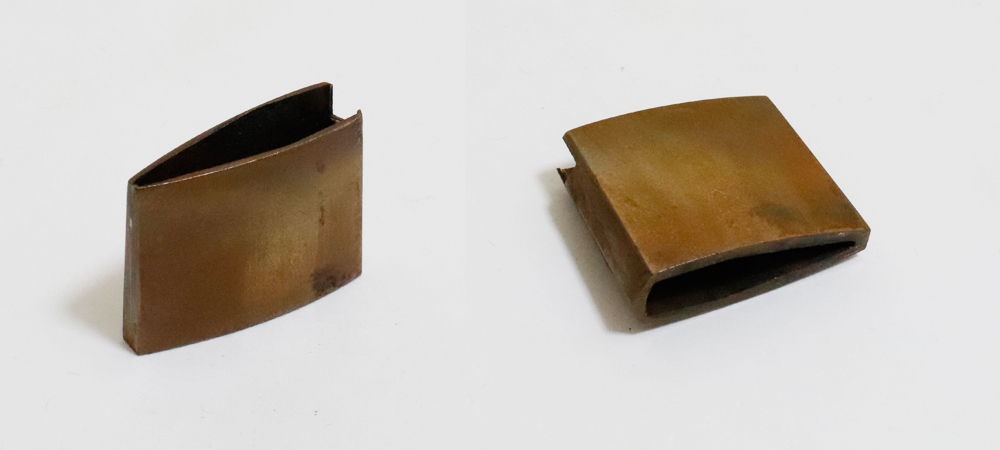
| Habaki | O-suriage, orikaeshi-mei (folded-over signature). |
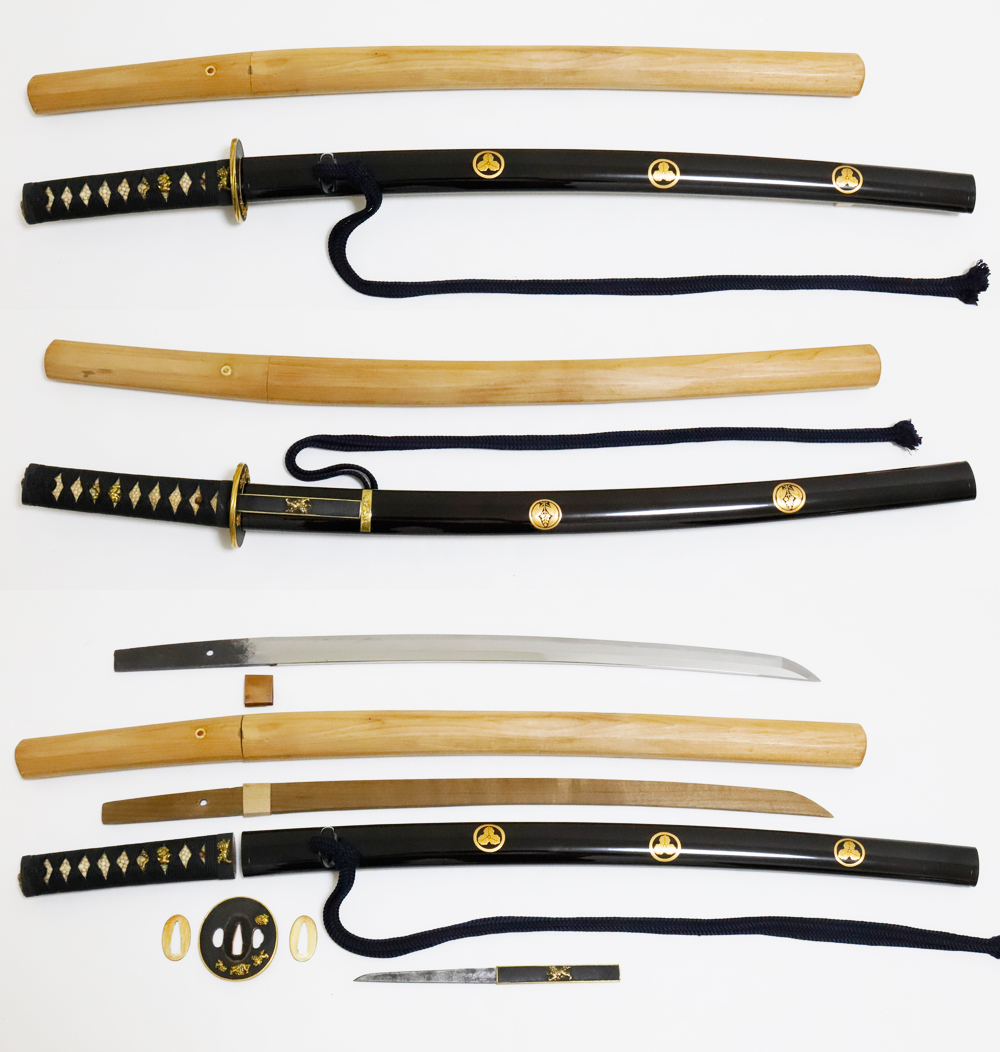
| Mountings | Koshirae-tsuki |
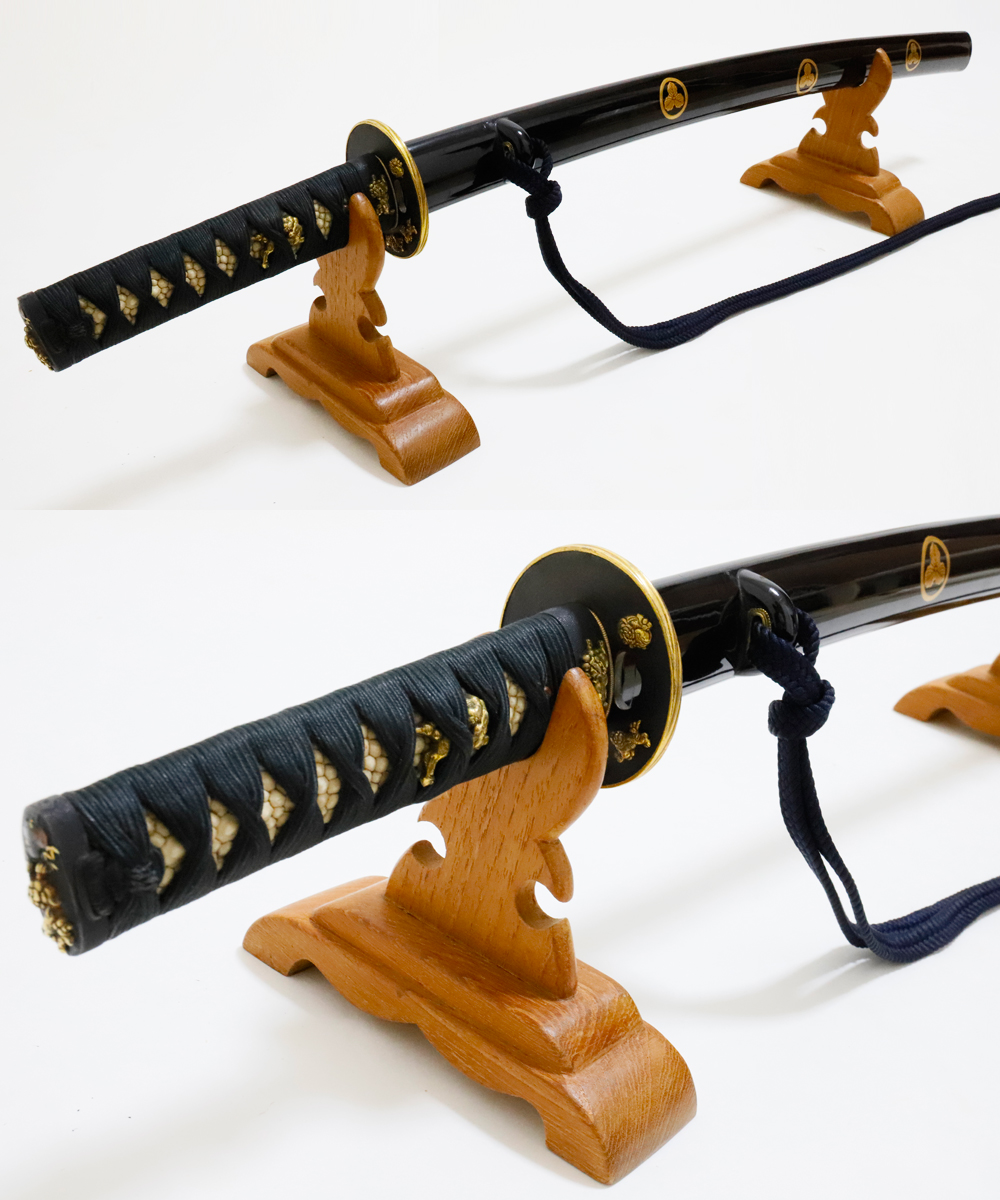
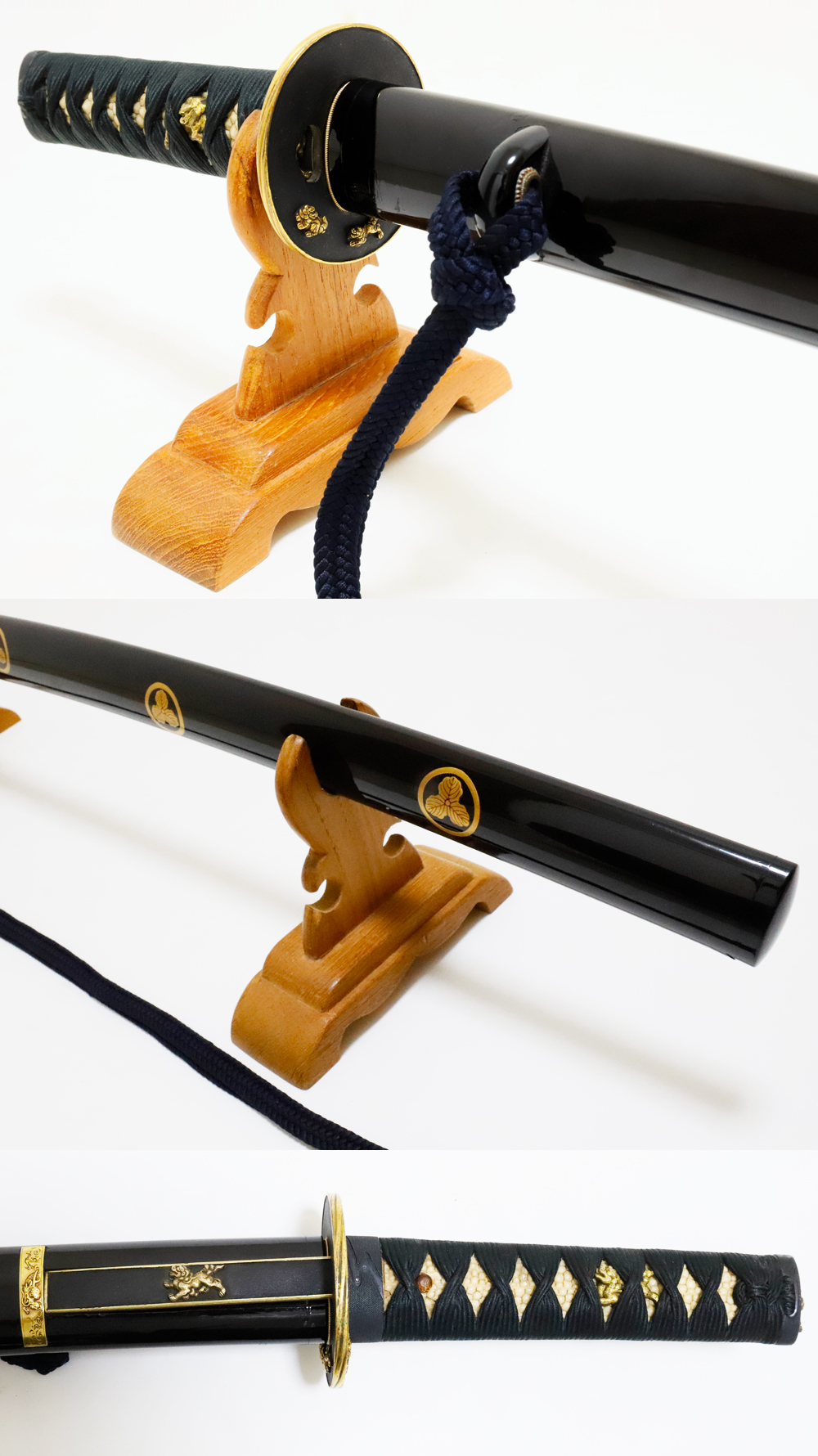
| Koshirae | Wakizashi koshirae with a black roiro lacquered saya, decorated with gold maki-e family crests of Maru-ni-Mitsu-Kashiwa (three oak leaves within a circle) and Maru-ni-Daki-Omodaka (paired arrowhead plants within a circle). |
| Koshirae Length |
74.1 cm 29.2 in |
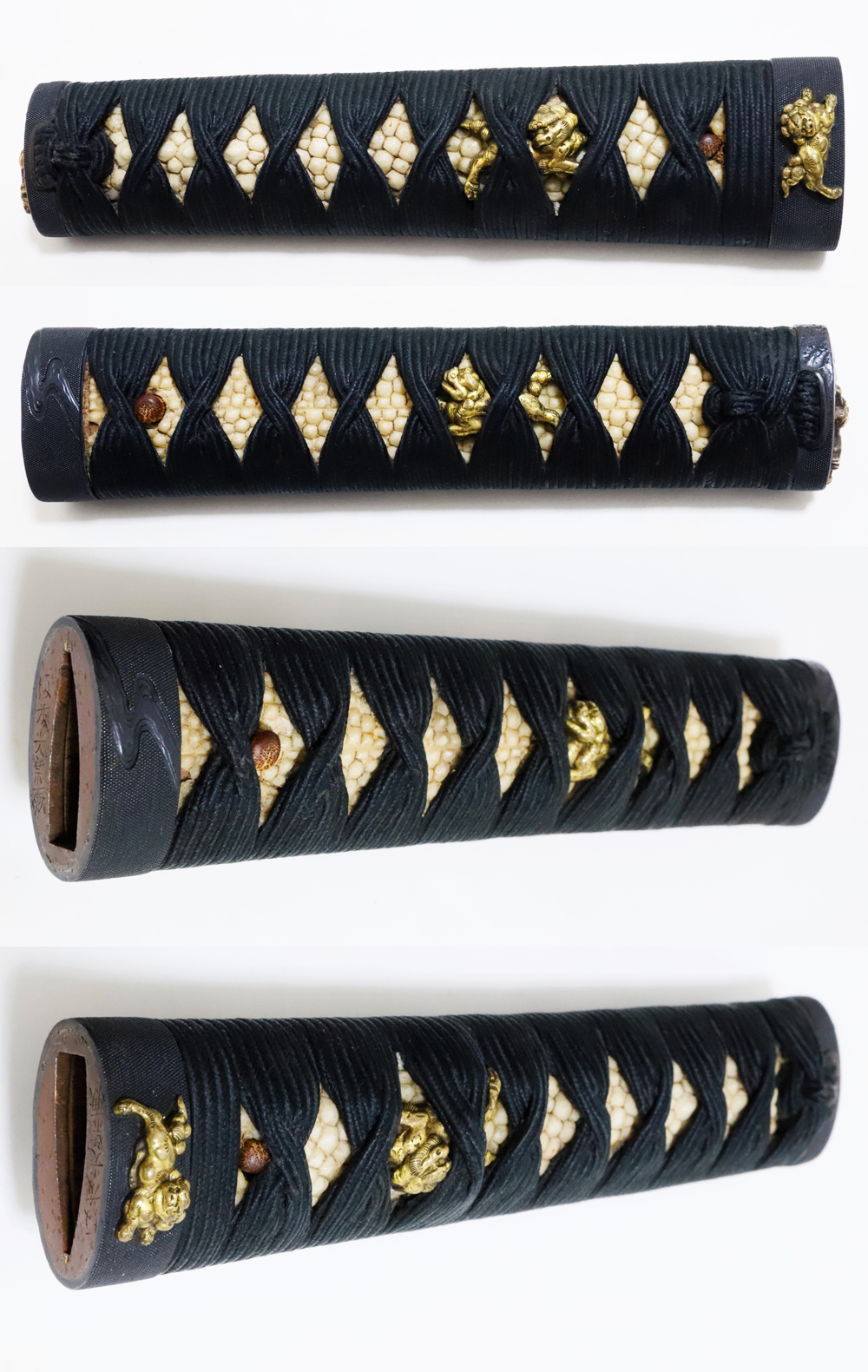
| Tsuka Length |
16.4 cm 6.5 in |
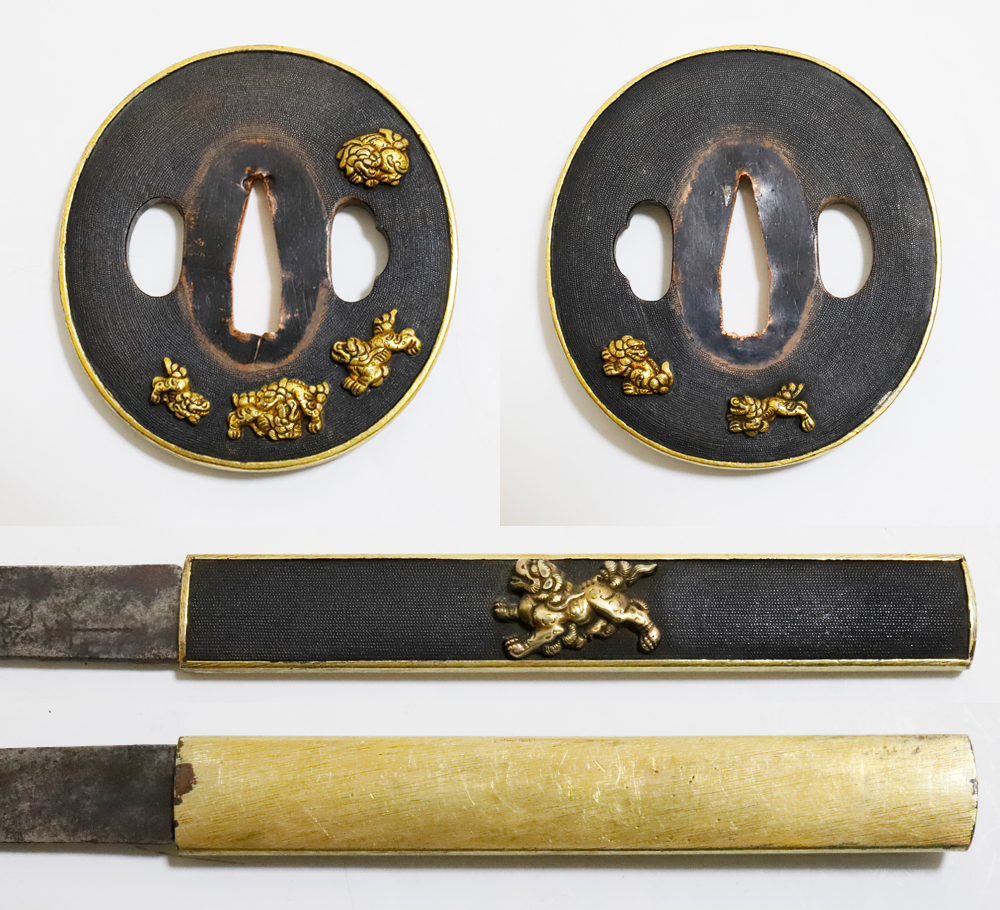
| Tsuba | Group of Sacred Lions Design. Shakudo nanako ground, vertical round shape, with gold iroe and suemon-zogan (applied relief inlay), and a gold rope-patterned rim (kin-nawame-fukurin). |
| Menuki | Single Sacred Lion Design. Katachibori with gold iroe. |
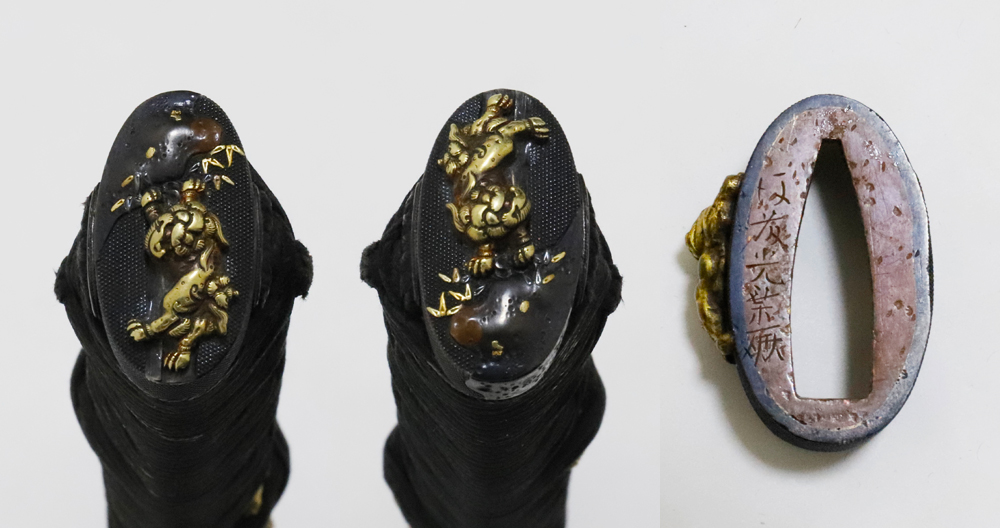
| Fuchigashira | Sacred Lion Design. Signed: Goto Kojo (bearing the signature of Goto Kojo). Shakudo nanako ground, inlay with gold iroe. |
| Kozuka | Single Sacred Lion Design. Shakudo nanako ground. |
| Other details | Tsuka: White same (rayskin), wrapped with black thread in tsumami-maki style. Uragawara: Gold Cloud and Dragon Design. |
Price |
500,000 JPY |
| This wakizashi bears the folded-over signature (orikaeshi-mei) “Bishu Osafune Iesuke.” An orikaeshi-mei is a signature preserved through a painstaking process in which, when shortening the nakago (tang), the portion bearing the swordsmith's original signature is folded over to the opposite side, thereby preserving the valuable inscription.Iesuke was a swordsmith of the Ko-Sori school in Osafune, Bizen Province, active around the Oei era (1394–1428). The first and second generations of Iesuke are both ranked Ryo-wazamono for the cutting ability of their swords. The second-generation Iesuke produced swords from the latter half of the Oei era through the Eikyo era (1429–1441), the third generation from the Bun'an era (1444–1449) through the Kansho era (1460–1466), and the fourth generation from the Onin era (1467–1469) through the Meio era (1492–1501).This wakizashi bears the folded-over signature of Bishu Osafune Iesuke. The jigane displays utsuri, while the hamon features a suguha-based pattern of gunome with a reverse inclination (saka-gunome). The sword was registered in Yamaguchi Prefecture in 1951 (Showa 26), suggesting that it has been carefully preserved and handed down through generations. It is accompanied by a black roiro lacquered saya koshirae decorated with family crests in gold maki-e and fitted with tosogu featuring Sacred Lion designs. In 2026, this wakizashi passed the NBTHK Hozon Token shinsa. |

 Search