| Product No. KA-0786 無銘(石堂) | |
|---|---|
| Mei |
Mumei, but attributed to the Ishido school Back: -- |
| Shape | Shinogizukuri Iorimune |
| Era | Early Edo Period |
| Length |
71.5 cm 28.1 in |
| Sori (curvature) |
1.4 cm 0.6 in |
| Motohaba |
2.4 cm 0.9 in |
| Sakihaba |
1.9 cm 0.7 in |
| Munekasane |
0.6 cm 0.2 in |
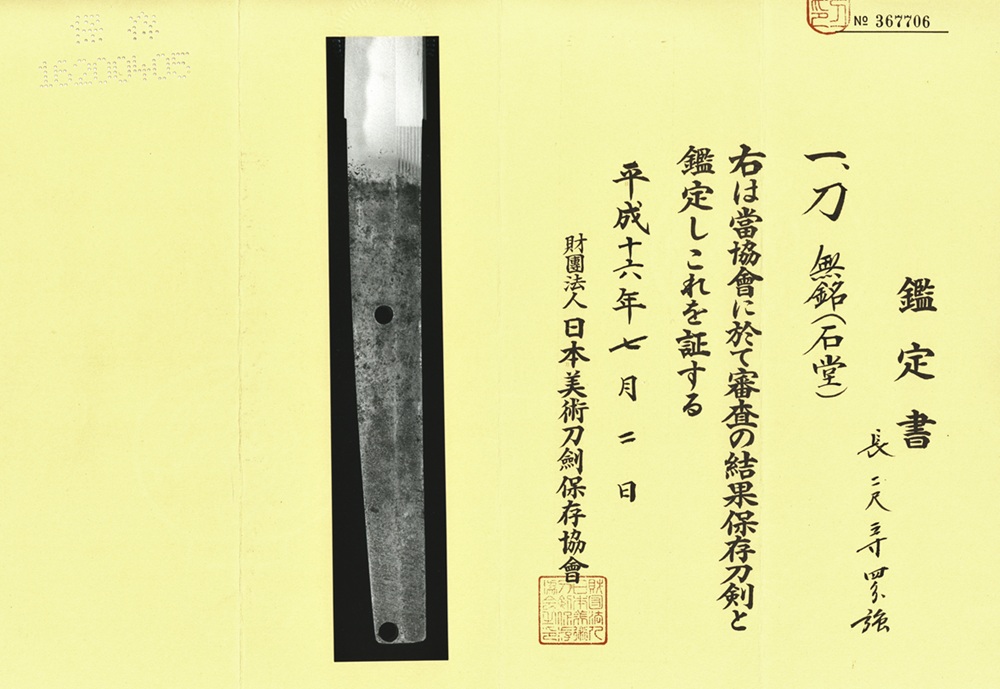
| Status | Hozon Token |
| Certification Date | July 02, 2004 |
| Registration Authority | Hyogo Prefecture |
| Registration Date | January 16, 1954 |
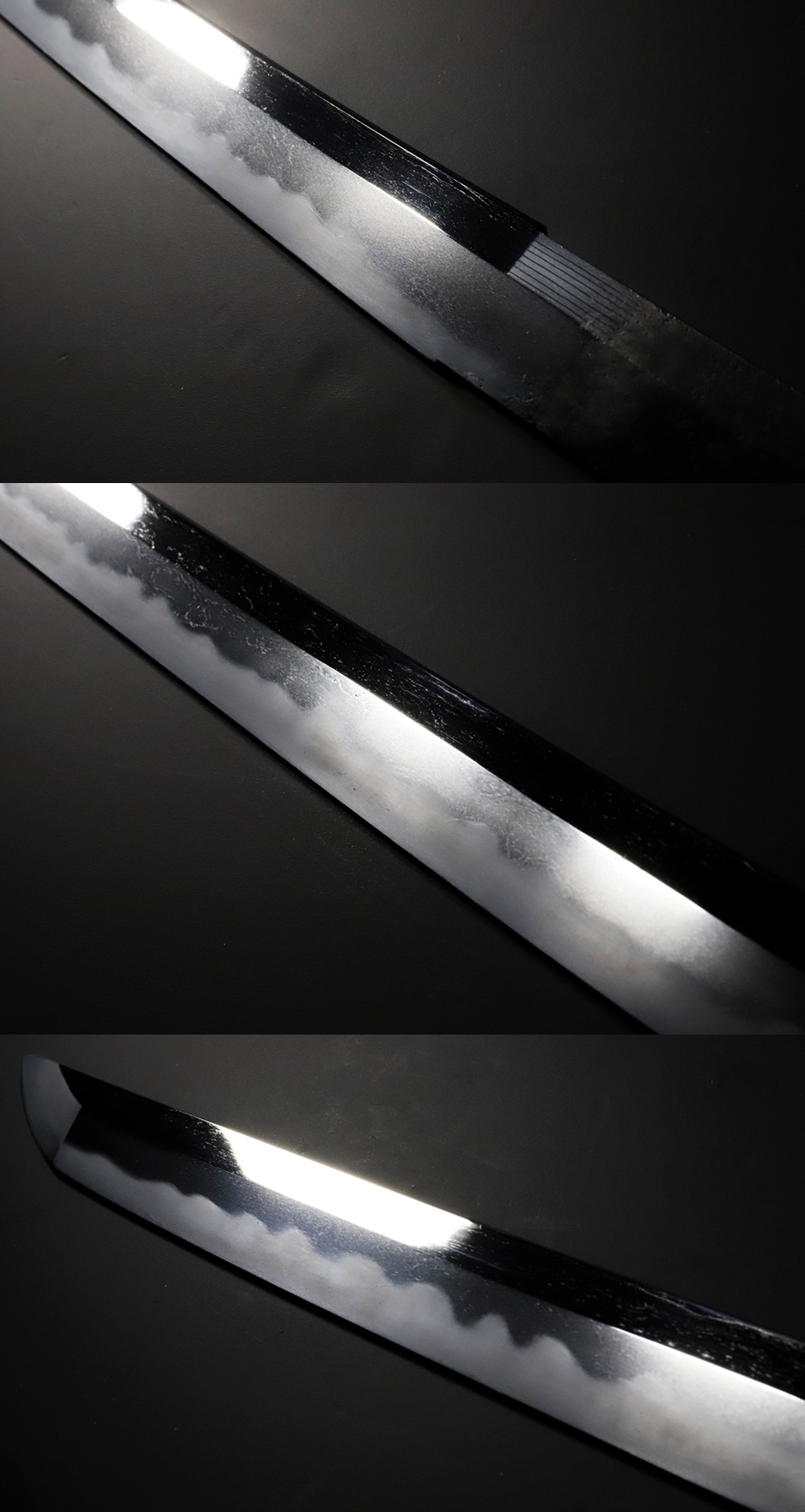
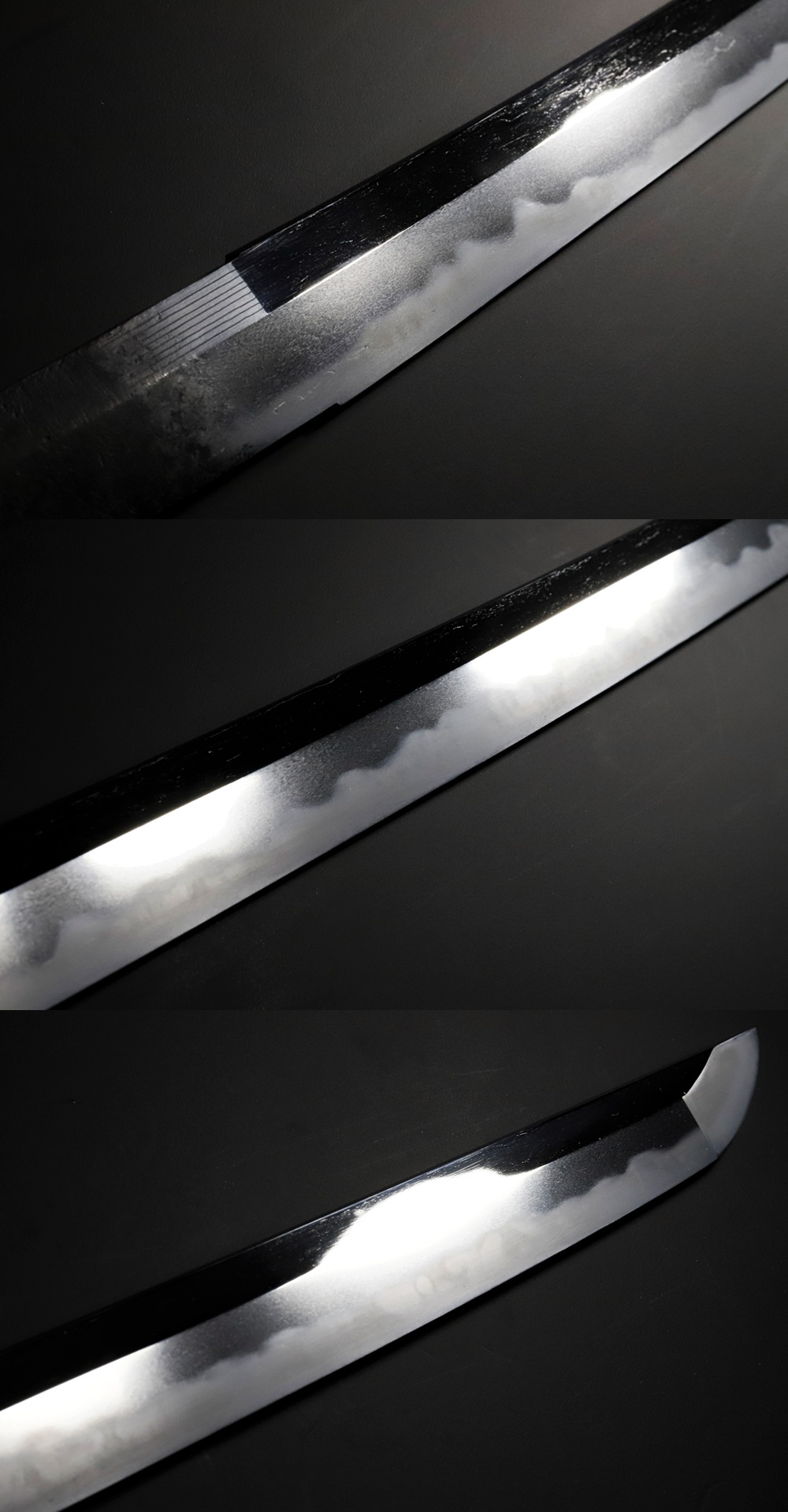
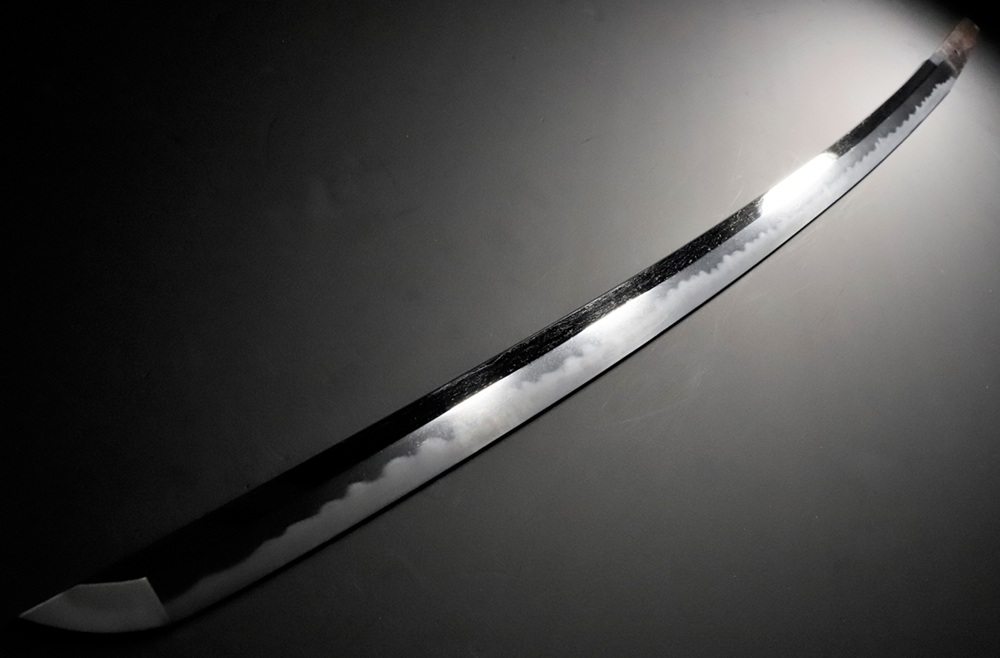
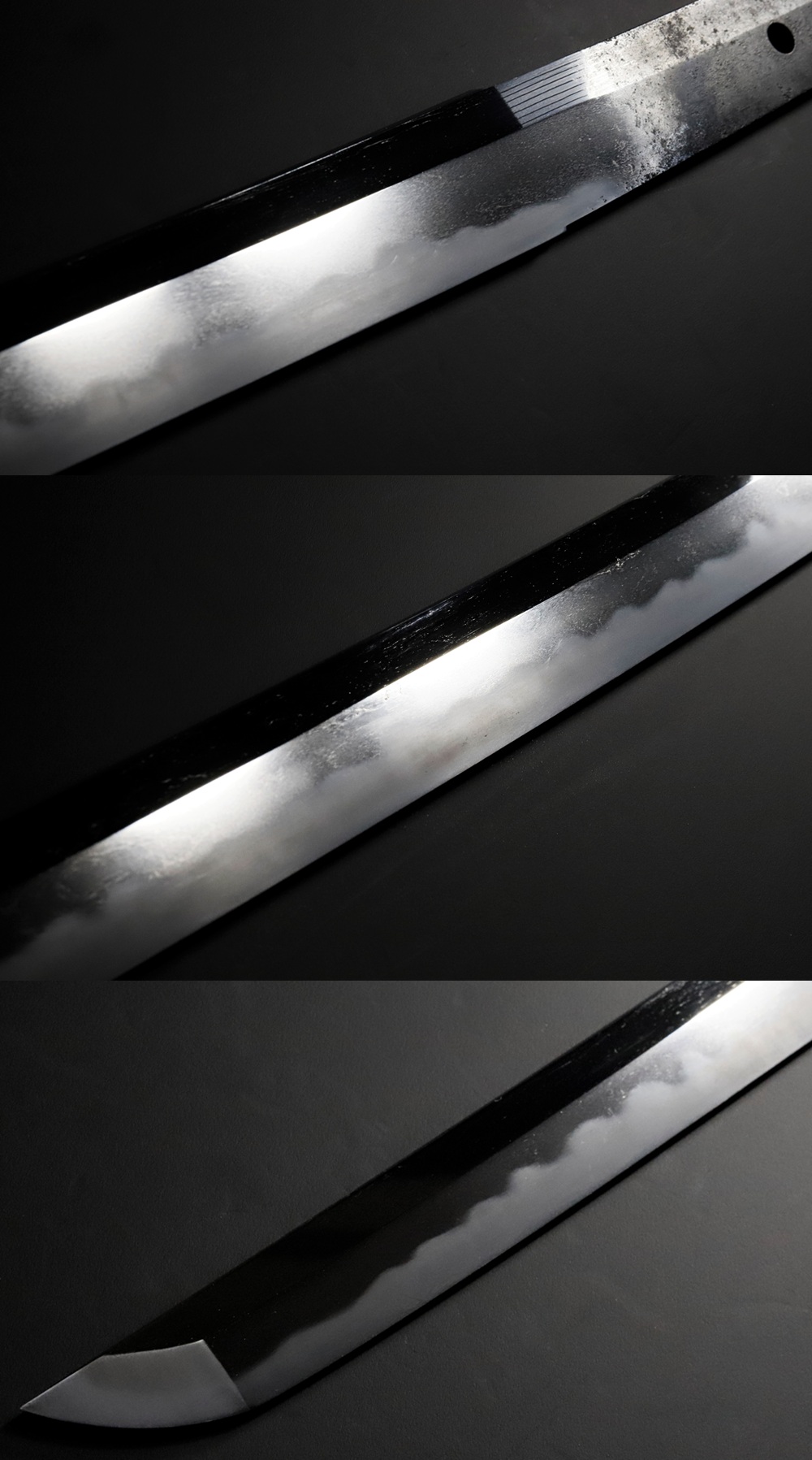
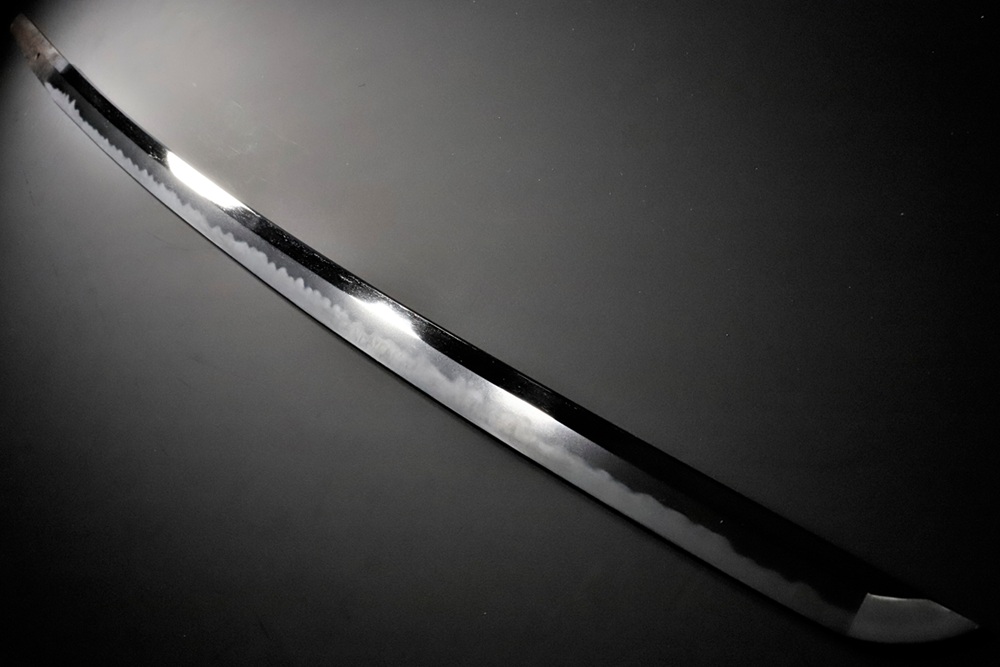
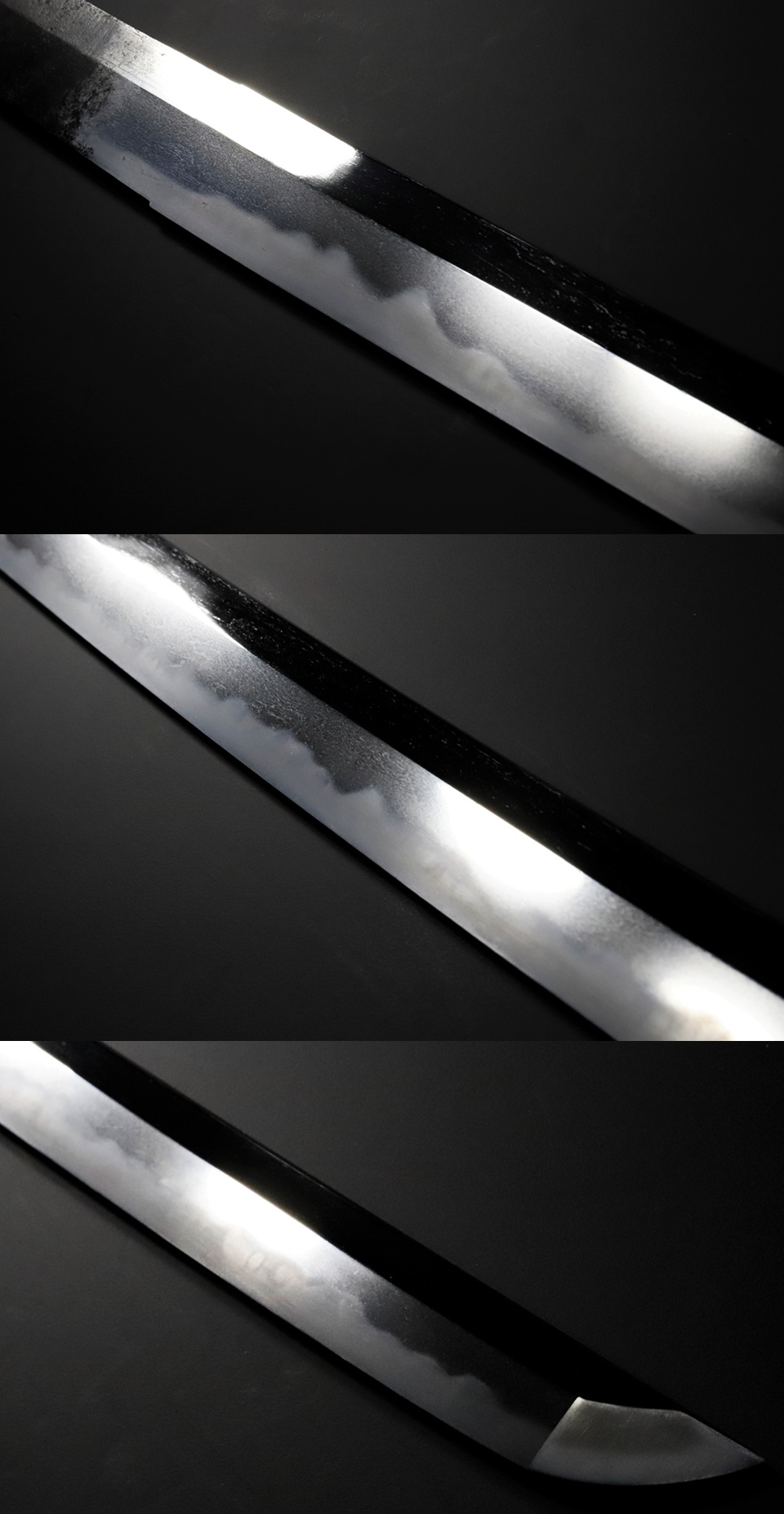
| Jihada (Metal pattern) | Itame and mokume with jinie and ovious midare-utsuri |
| Hamon (Temper line) | Flamboyant choji-midare |
| Bōshi (Point / Tip) | Sugu komaru turn shortly |
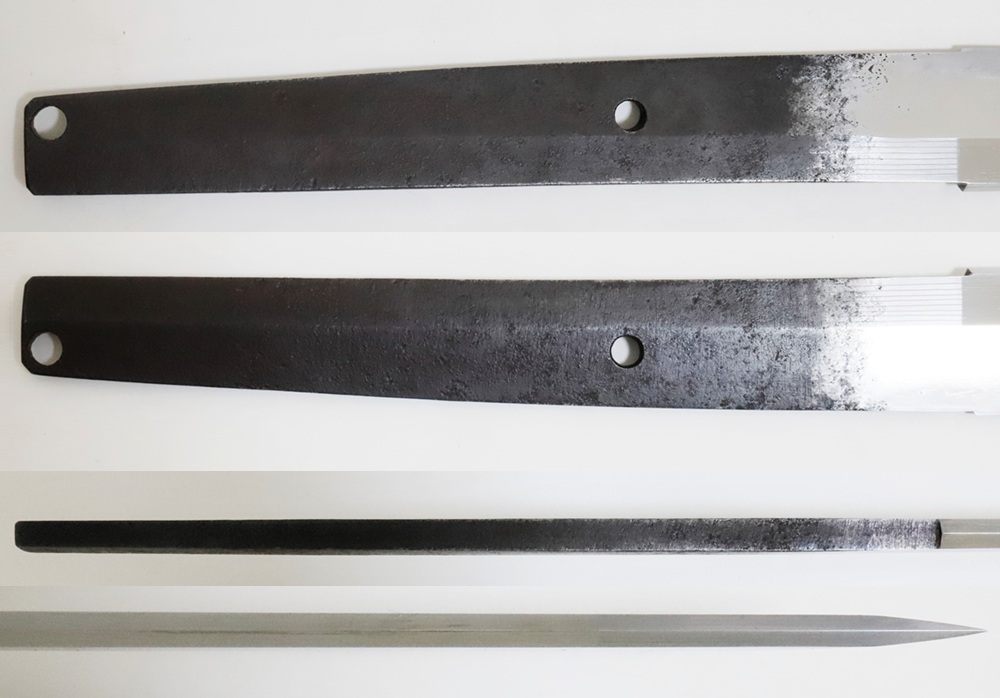
| Nakago (Tang) | Osuriage |
| Mekugiana (Rivet holes) | 2 |
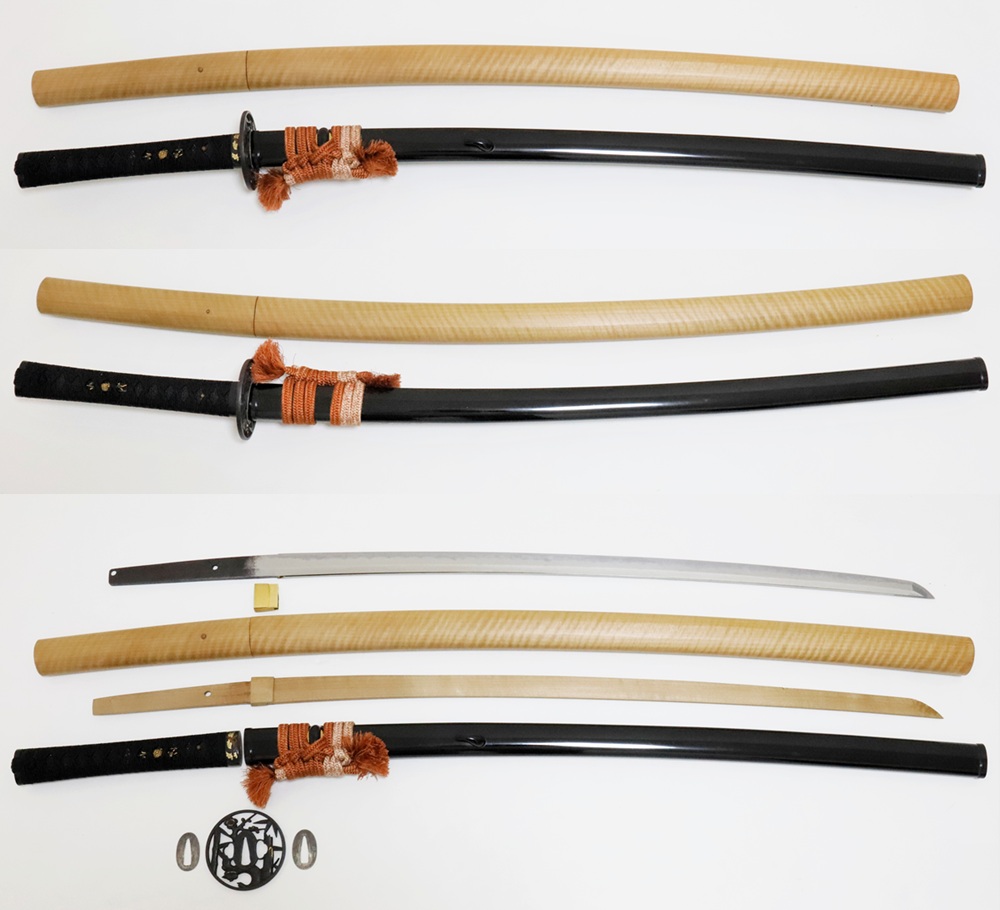
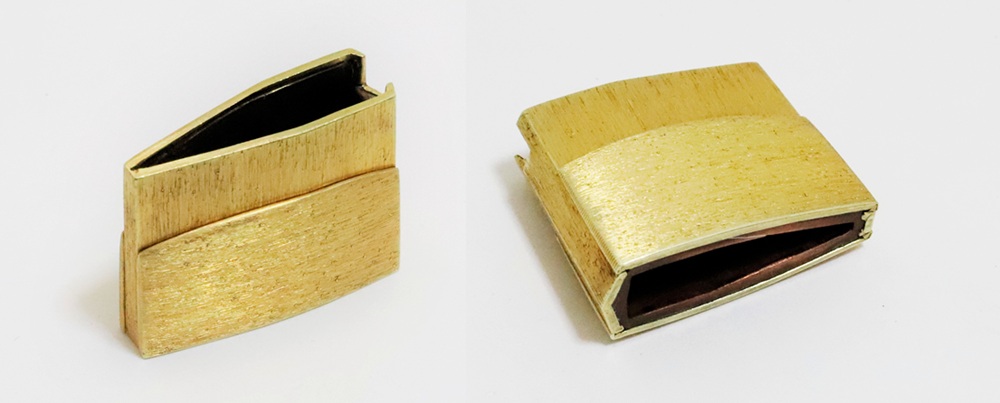
| Habaki | Two part, copper base gold foil with file habaki |
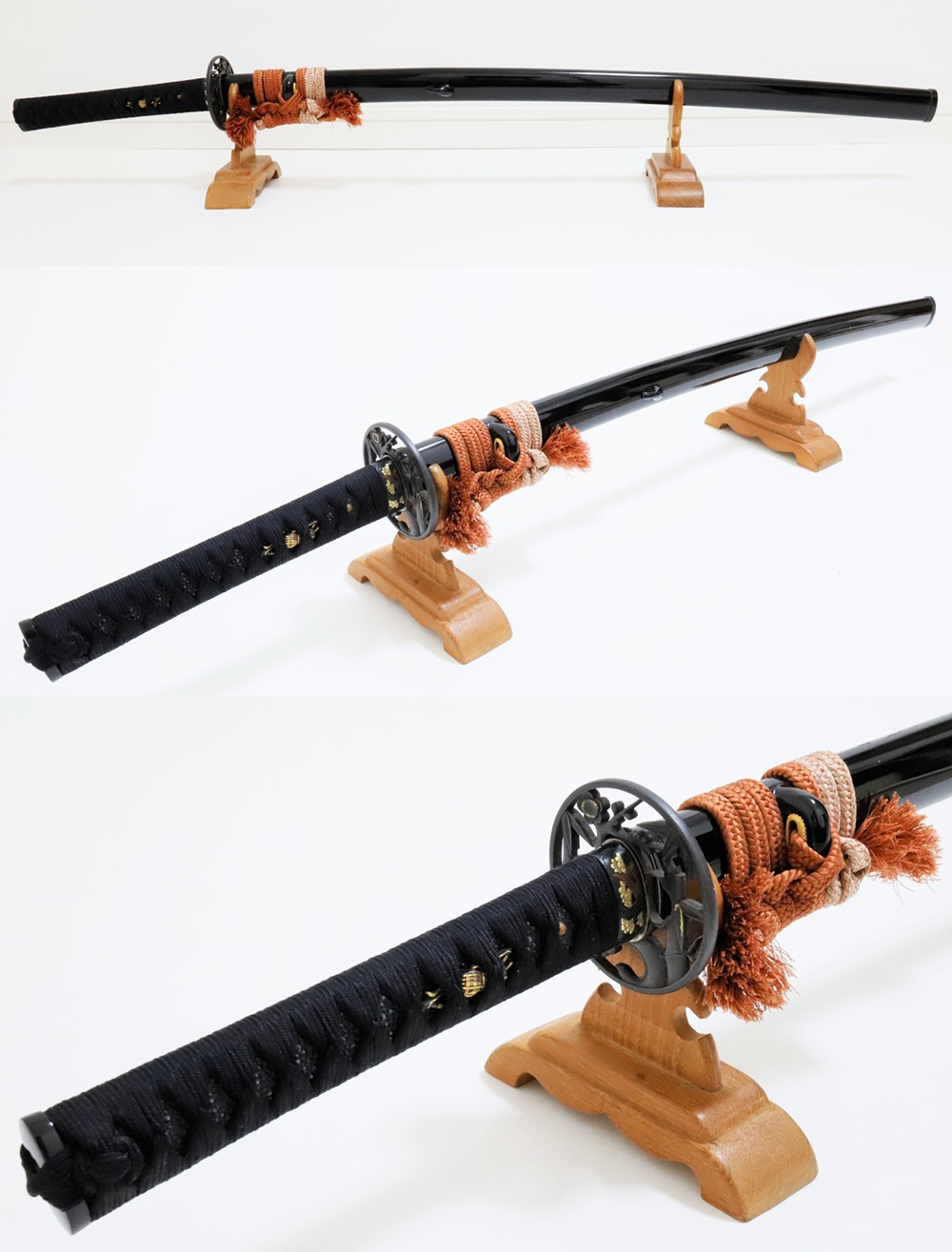
| Mountings | Koshirae-tsuki |
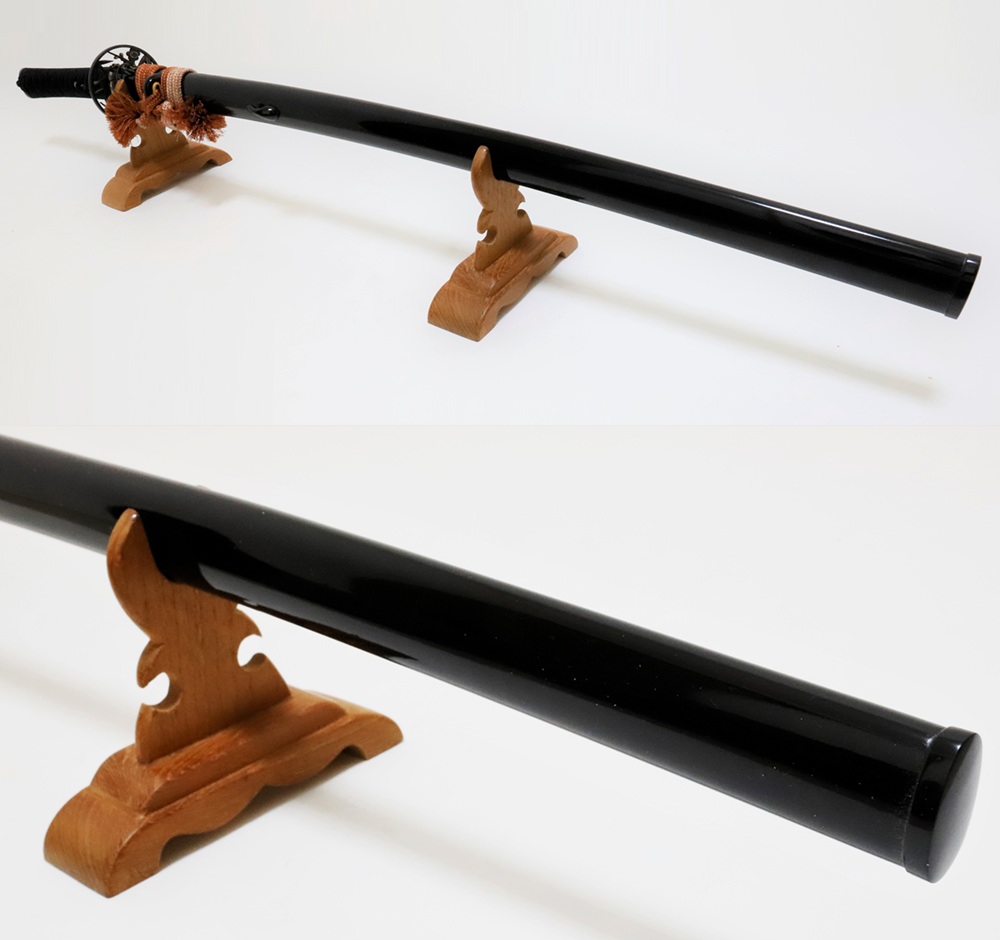
| Koshirae | Uchikatana koshirae with a black lacquer saya |
| Koshirae Length |
98.7 cm 38.9 in |
| Tsuka Length |
22.7 cm 8.9 in |
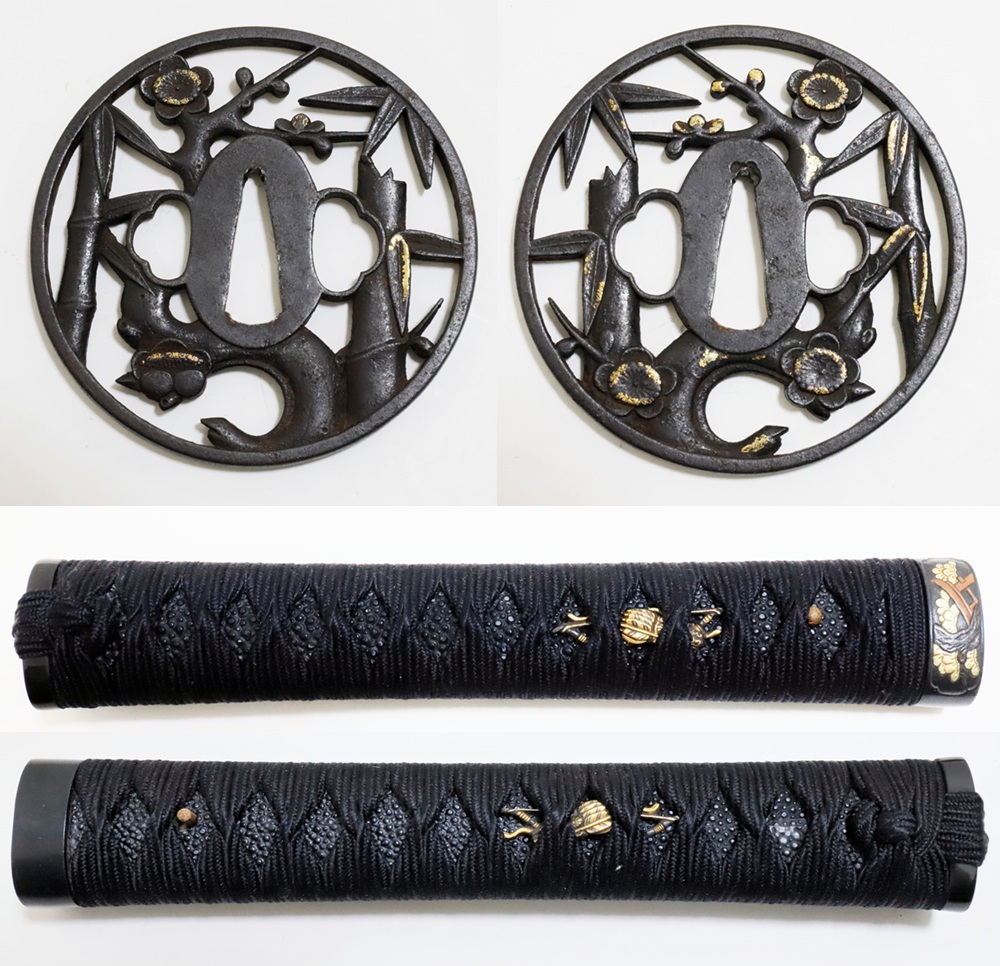
| Tsuba | Pine and Plum Tree that withstand the Cold Winter Season |
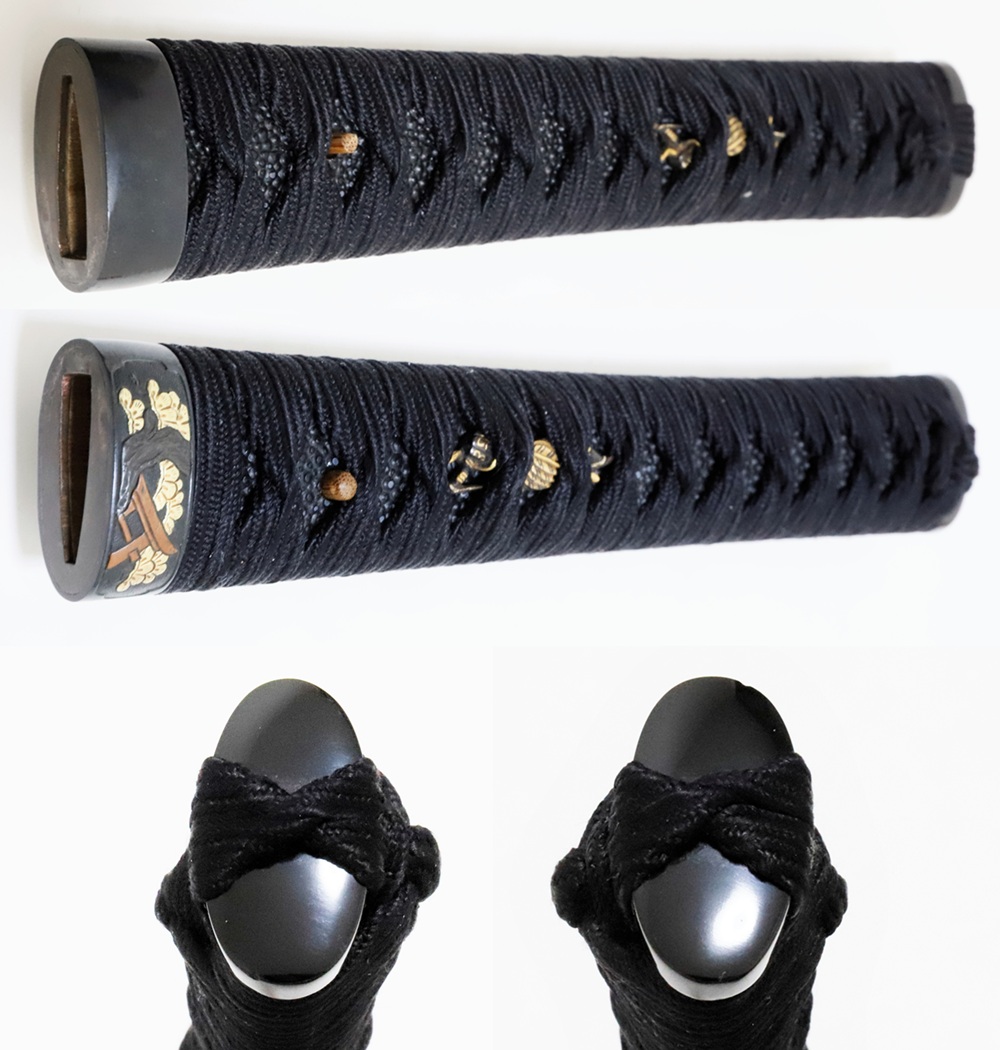
| Menuki | Bow and arrow |
| Fuchigashira | Torii Gate and Pine Tree |
| Other details | Black ray skin wrapped black silk Hineri-maki style Tsuka |
Price |
600,000 JPY |
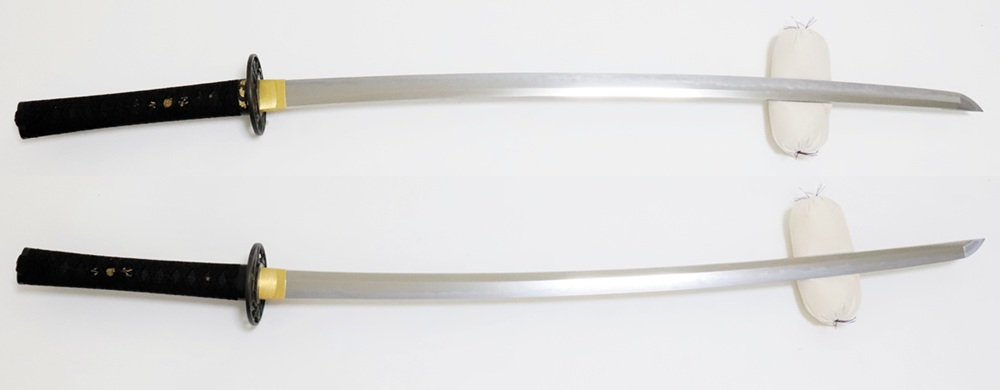
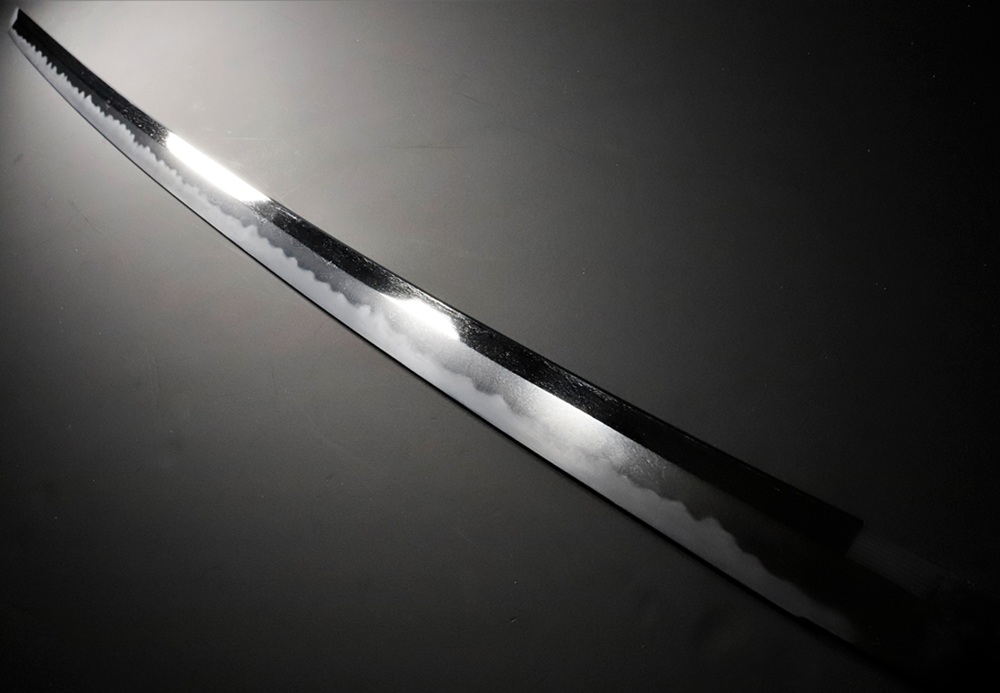
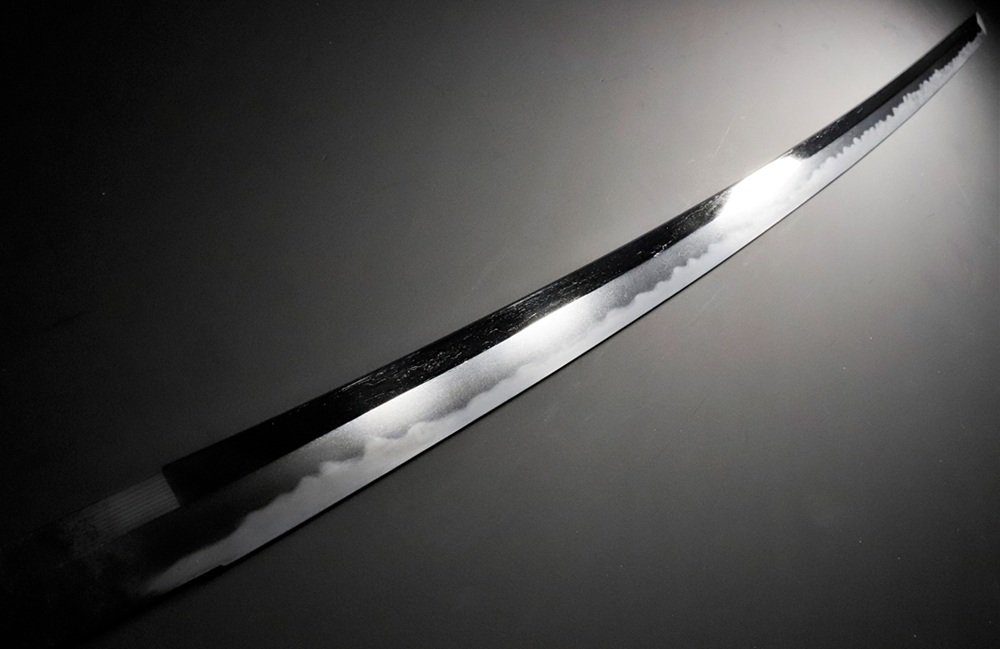
| This katana is oosuriage mumei, but attributed to the “Ishido” school. The Ishido school originated in Ōmi Province. During the early Edo Period, Shintō period, branches of the school migrated to Kishū, Ōsaka, Fukuoka, and Edo, each flourishing independently. Their style features the vibrant, chōji-midare hamon pattern characteristic of the Bizen-den. This katana features a flamboyant juka-chōji hamon with ovious utsuri spreading across the blade, evoking the appearance of a Ichimonji pattern and possessing great charm. The hamon's pattern and composition, along with the sugu and komaru short turn, suggest it is probably Heki Mitsuhide or his desciple (Edo Sekidō) . It comes with a koshirae with a black lacquered saya. It passed the Hozon Token shinsa in 2004. |


 Search