| Product No. KA-0847 山上播磨守藤原国寿 | |
|---|---|
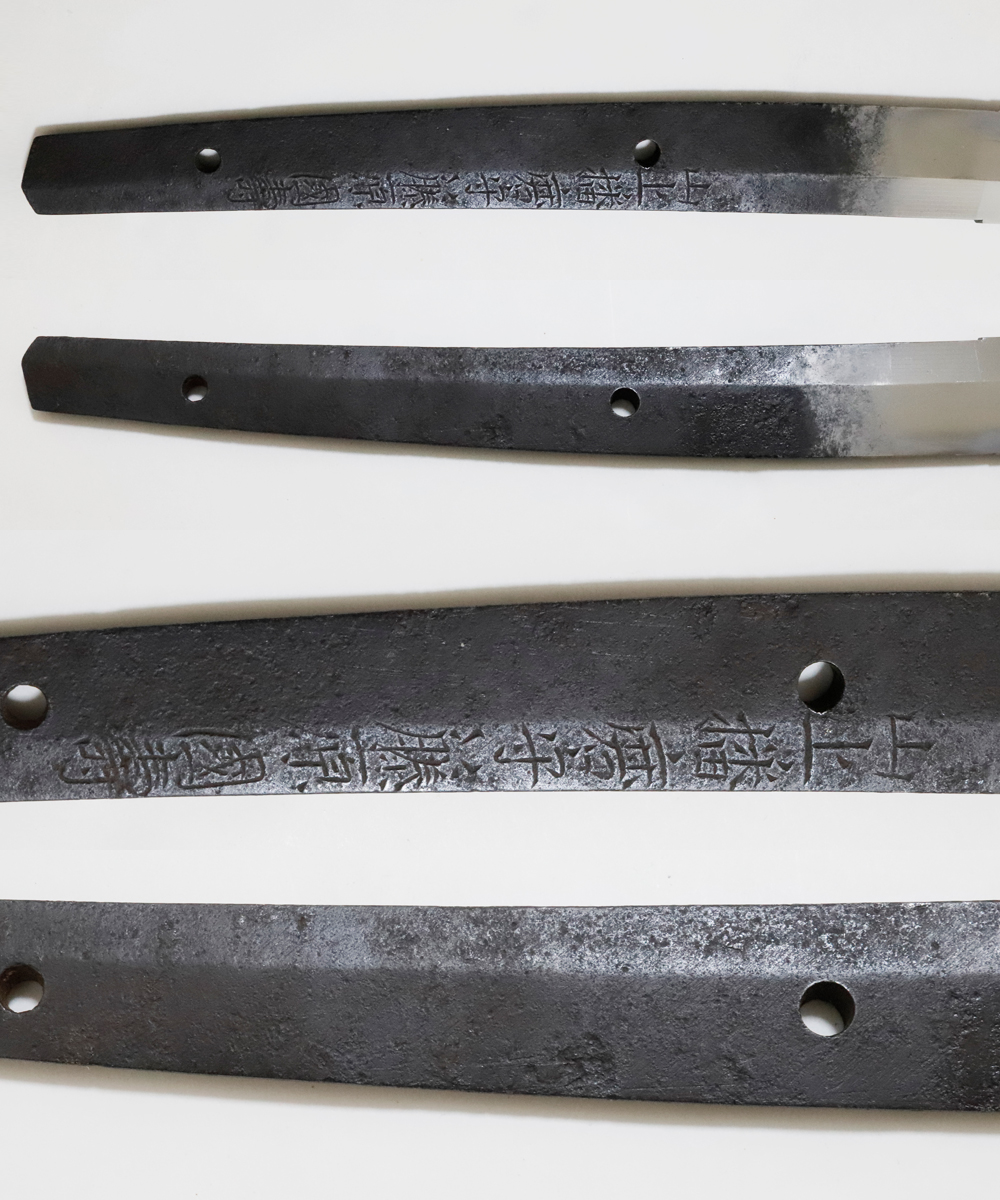
| Mei |
Yamagami Harima no Kami Fujiwara Kunitoshi Back: -- |
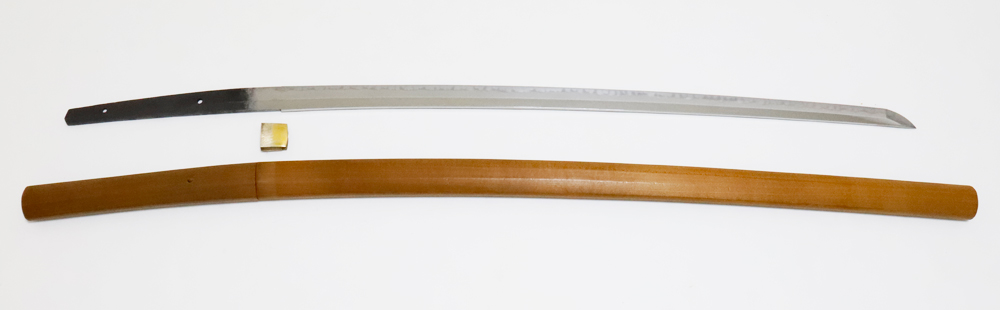
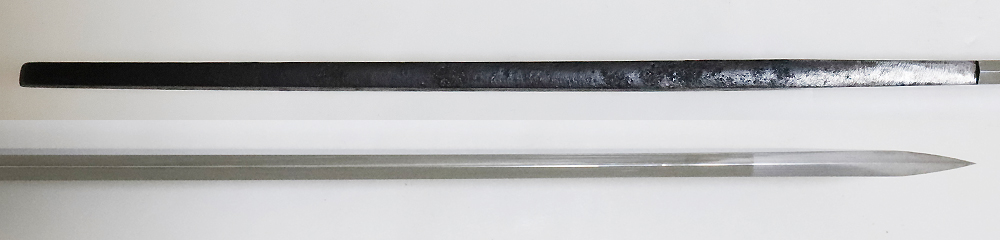
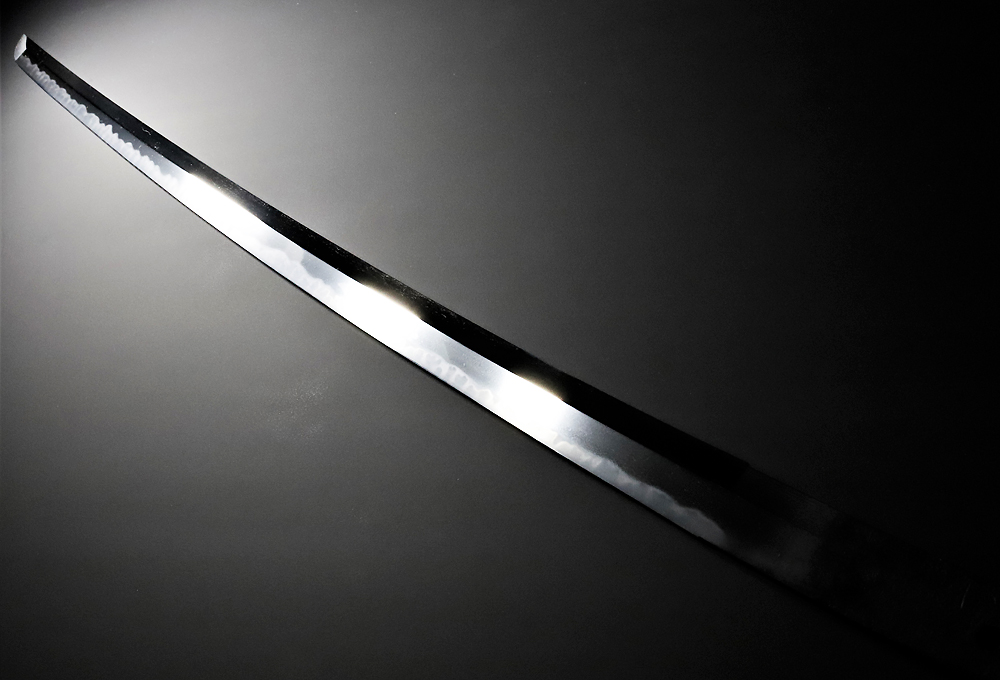
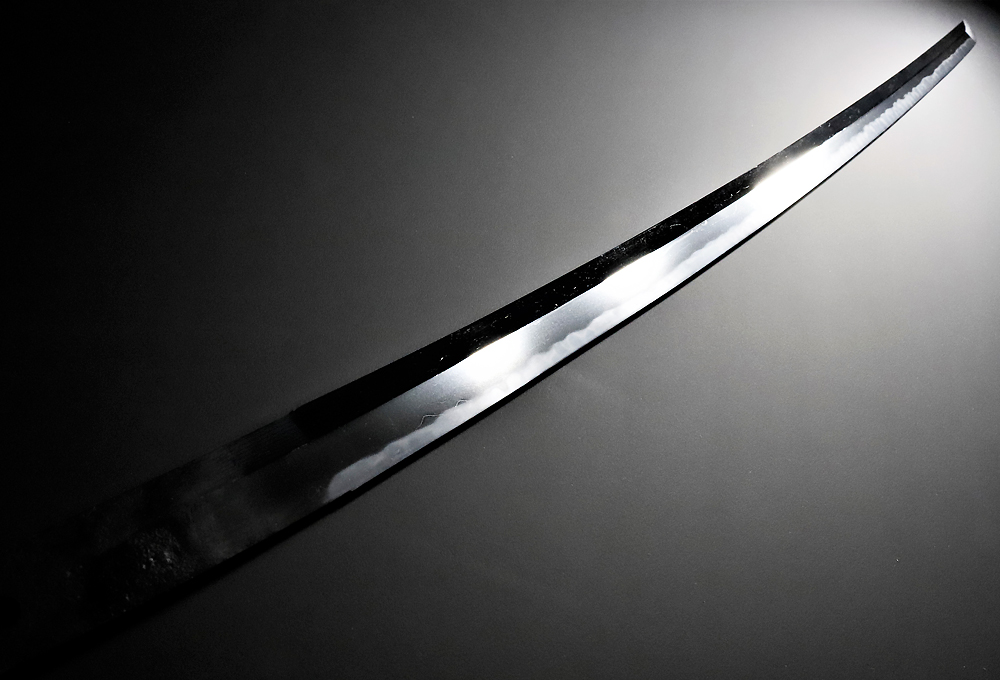
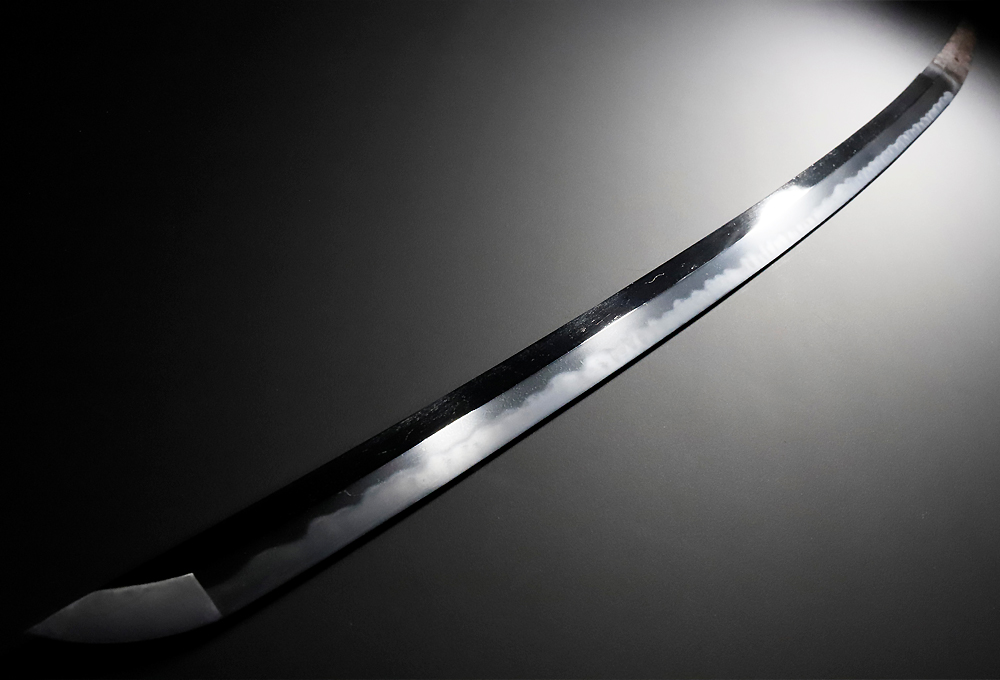
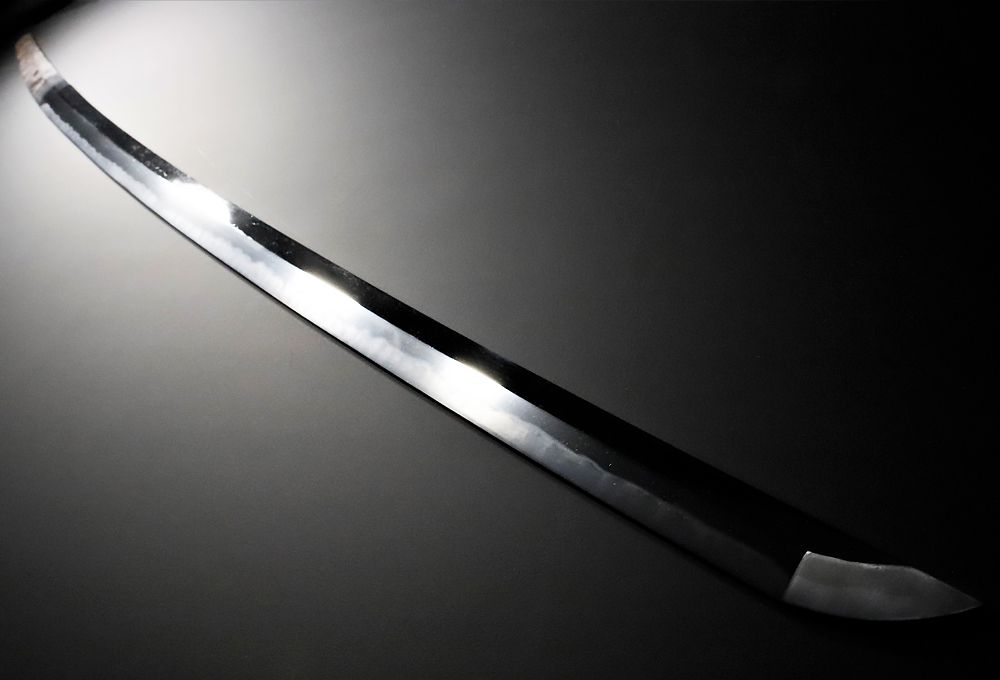
| Shape | Shinogi-zukuri with an iori-mune, medium-sized kissaki. The blade has ample width and thickness, with restrained curvature, giving it a firm and well-proportioned appearance. |
| Region | Bungo Province |
| Era | Late Edo Period |
| Length |
70.9 cm 27.9 in |
| Sori (curvature) |
1.2 cm 0.5 in |
| Motohaba |
3 cm 1.2 in |
| Sakihaba |
2.1 cm 0.8 in |
| Munekasane |
0.6 cm 0.2 in |
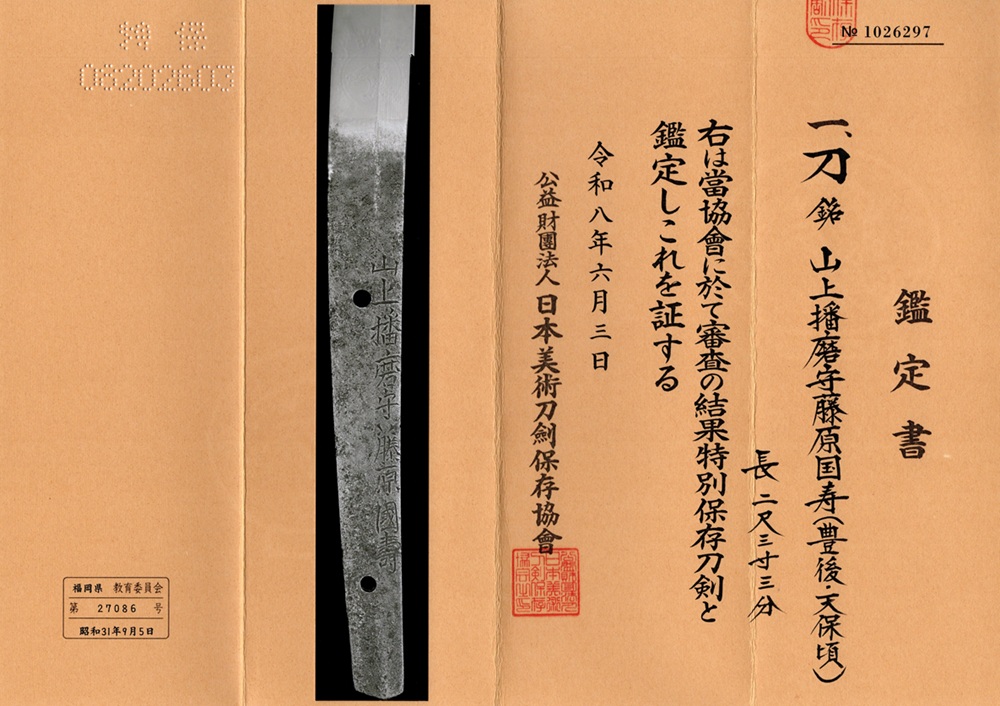
| Status | Tokubetsu Hozon Token |
| Certification Date | June 3, 2026 |
| Registration Authority | Fukuoka Prefecture |
| Registration Date | September 05, 1956 |
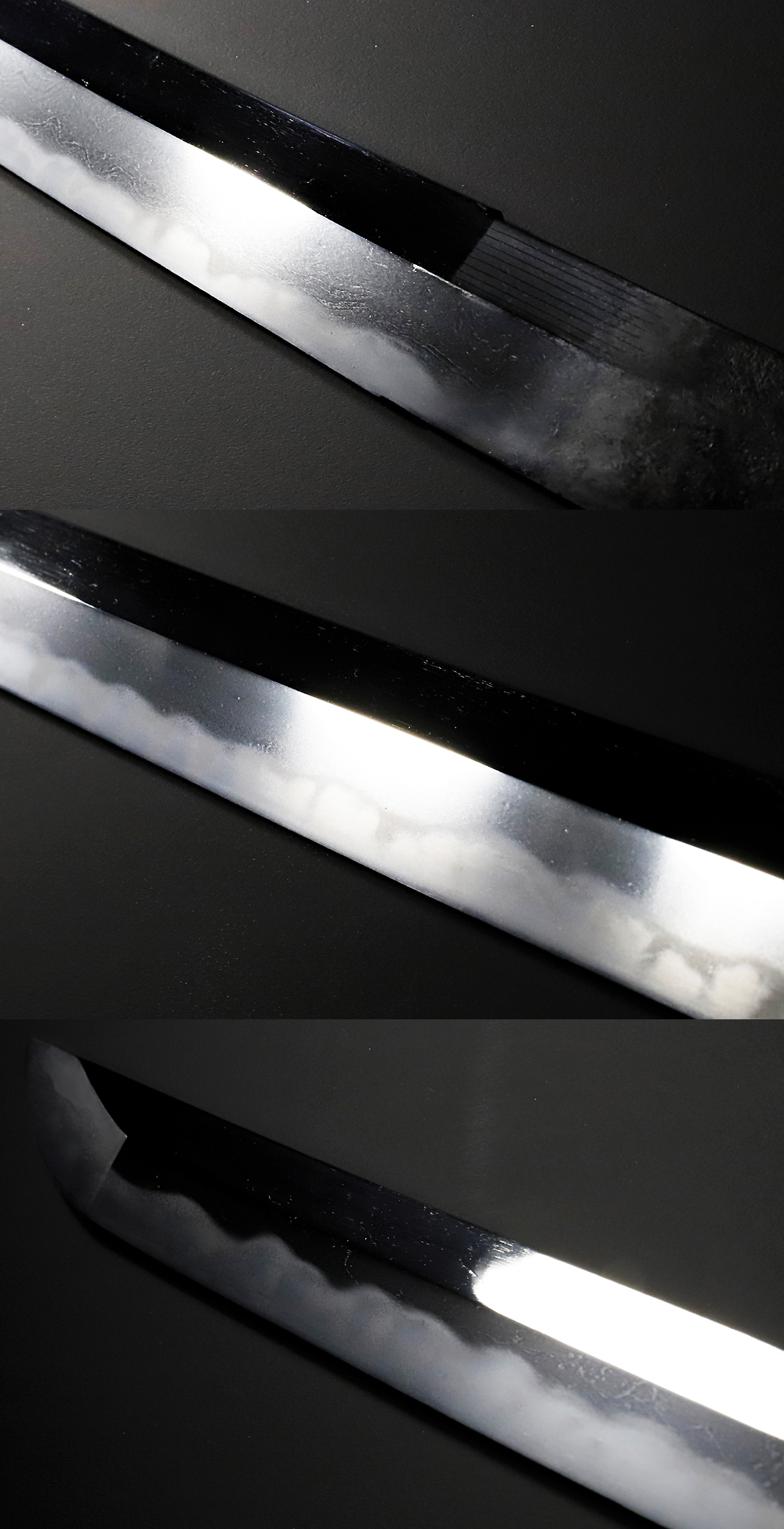
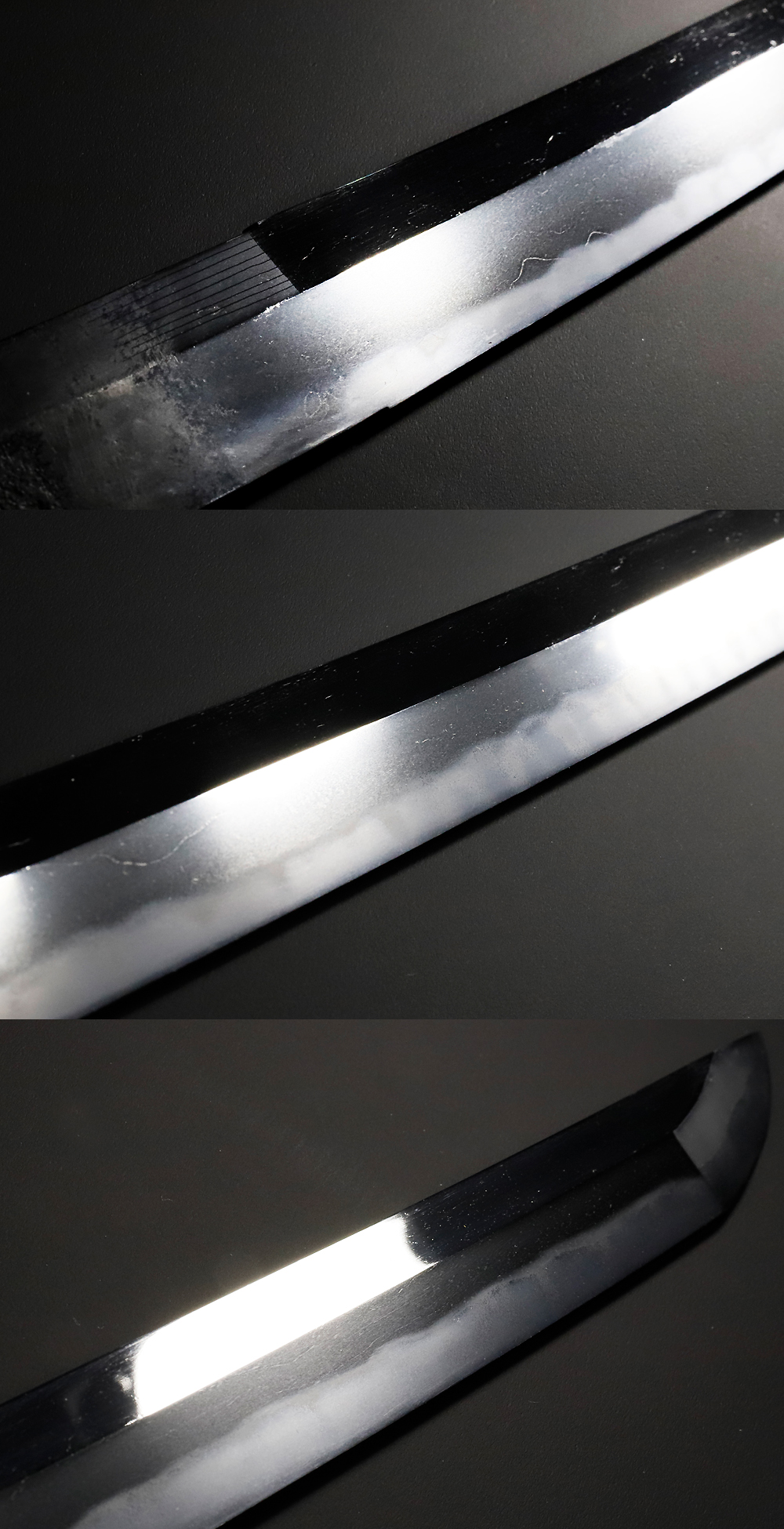
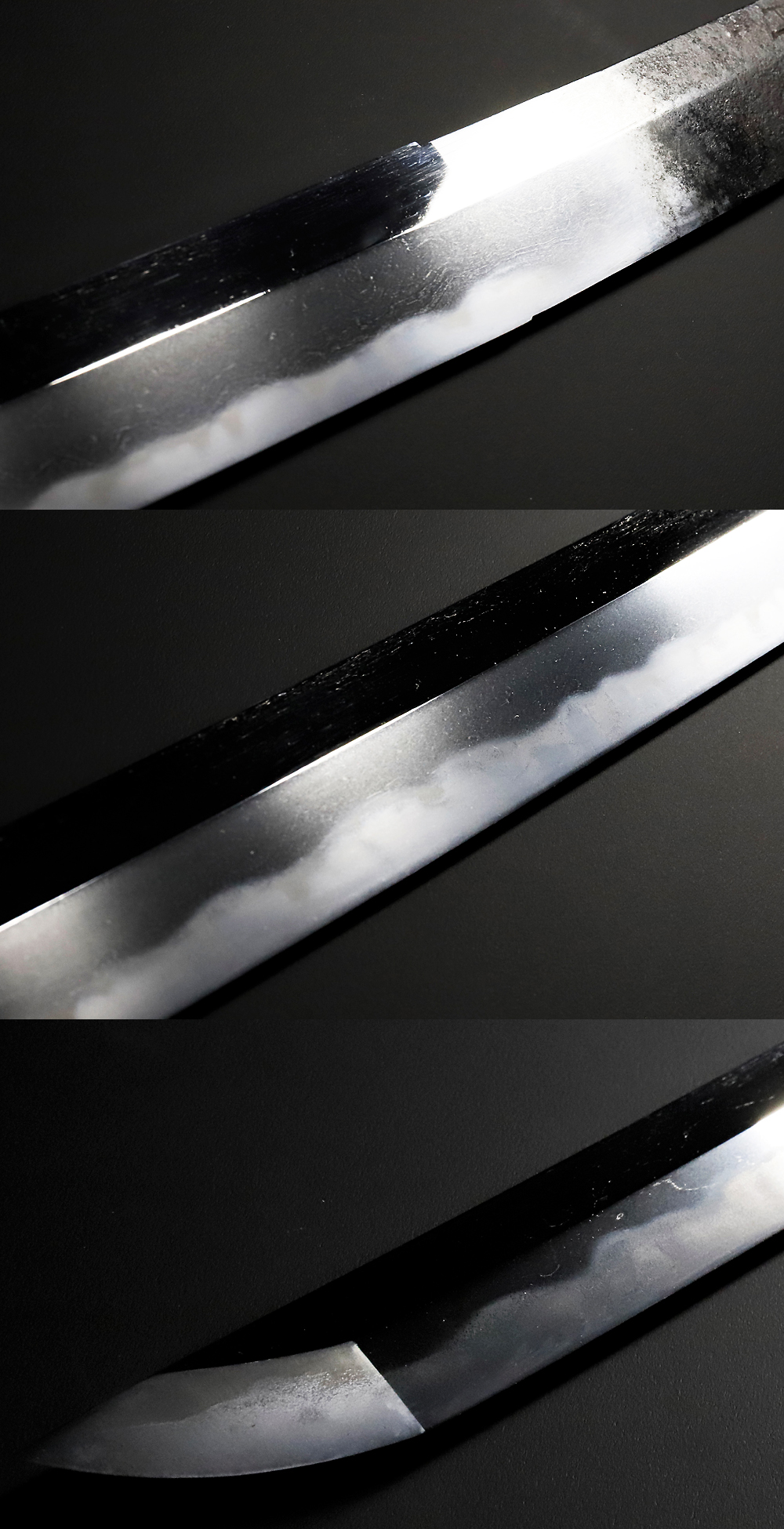
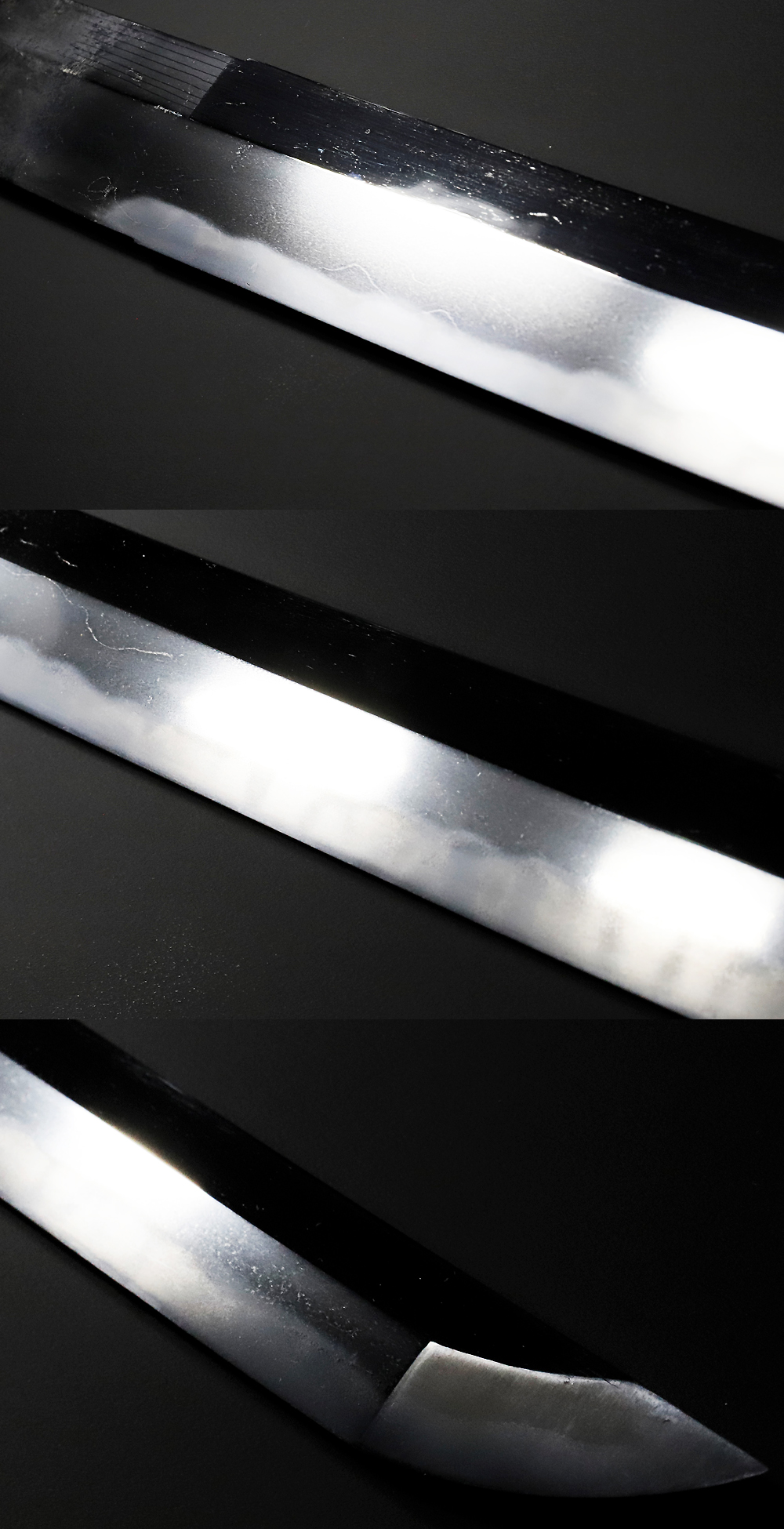
| Jihada (Metal pattern) | Fine ko-itame with some flowing grain and ji-nie. |
| Hamon (Temper line) | Chōji-midare with ko-nie, with the peaks of the tempering tending to be relatively uniform in height. |
| Bōshi (Point / Tip) | Midare, rising sharply toward the tip, with a slightly hakikake appearance and a small turn-back. |
| Nakago (Tang) | Ubu (slightly machi-okuri), sujikai file marks, iriyama-gata tip. |
| Mekugiana (Rivet holes) | 2 |
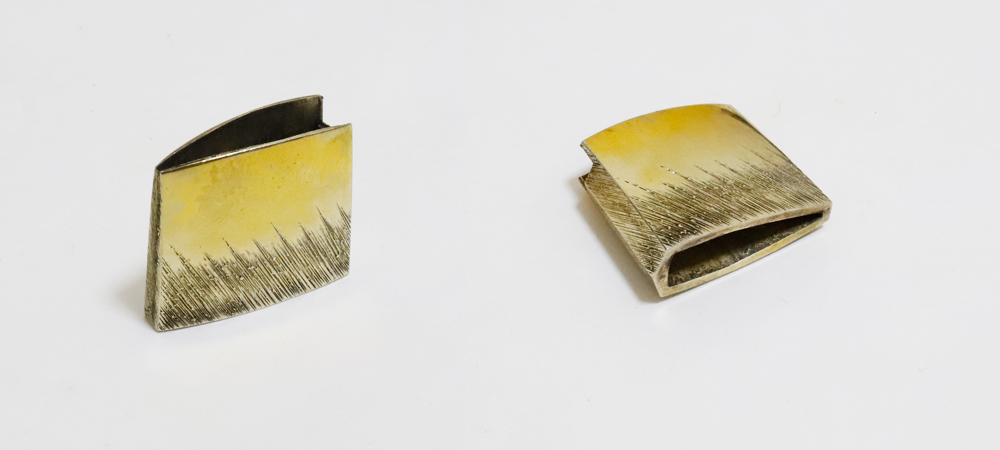
| Habaki | Solid silver habaki with gold plating and koshi-yūjō file marks. |
Price |
650,000 JPY |
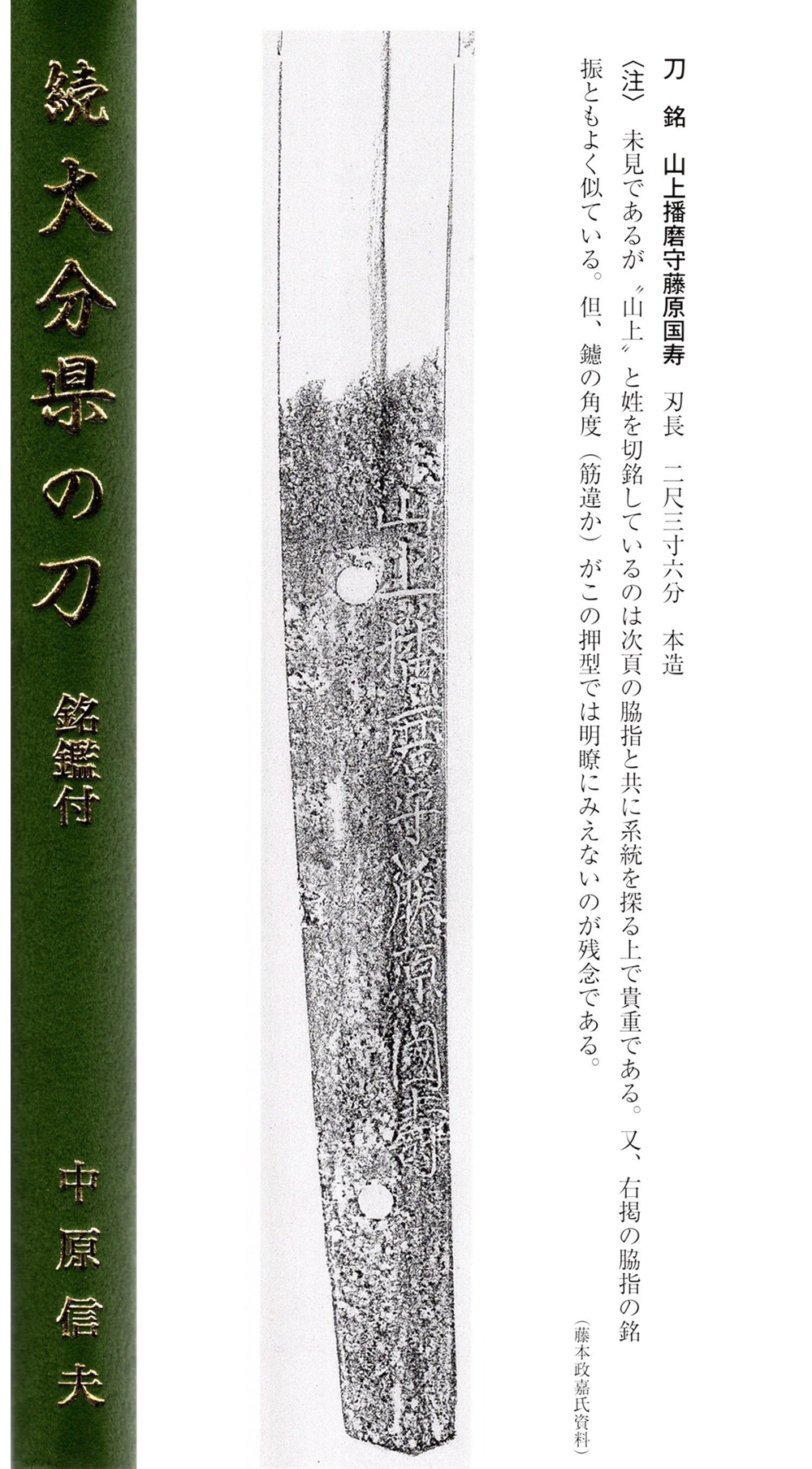
| This sword, signed “Yamagami Harima no Kami Fujiwara Kunitoshi,” was made by a Shinshintō-period swordsmith who lived in Mori, Kusu District, Bungo Province (present-day Kusu Town, Kusu District, Oita Prefecture) and was active from the Bunsei to Tenpō eras (1818–1844). He used various signatures, including “Made by Kunitoshi, resident of Mori in Bungo Province,” “Kunitoshi, Harima no Kami, resident of Mori,” and “Yamagami Harima no Kami Kunitoshi.” Yamagami Harima no Kami Fujiwara Kunitaka, who was likewise from Mori in Bungo Province, bore the same family name Yamagami and also received the honorary title Harima no Kami. Active in Osaka during the early Edo period, Kunitaka was a distinguished pupil of the first-generation Izumi no Kami Kunisada. He enjoyed the deep trust of his master and, in Kunisada’s later years, made swords and signed them on his master’s behalf. Joint works by Kunitaka and the second-generation Kunisada are also known. After the death of the first-generation Kunisada, Kunitaka is believed to have assisted the second generation, who later became renowned as Inoue Shinkai, and to have played an important role in transmitting the techniques of the Kunisada school to him. This sword is therefore particularly interesting when considering the lineage of the Yamagami family of swordsmiths in Bungo Province. This very sword is illustrated in “Oita Prefecture Swords from the Muromachi Period Onward” by Nobuo Nakahara. Passed the NBTHK Tokubetsu Hozon Token shinsa in March 2026. |


 Search