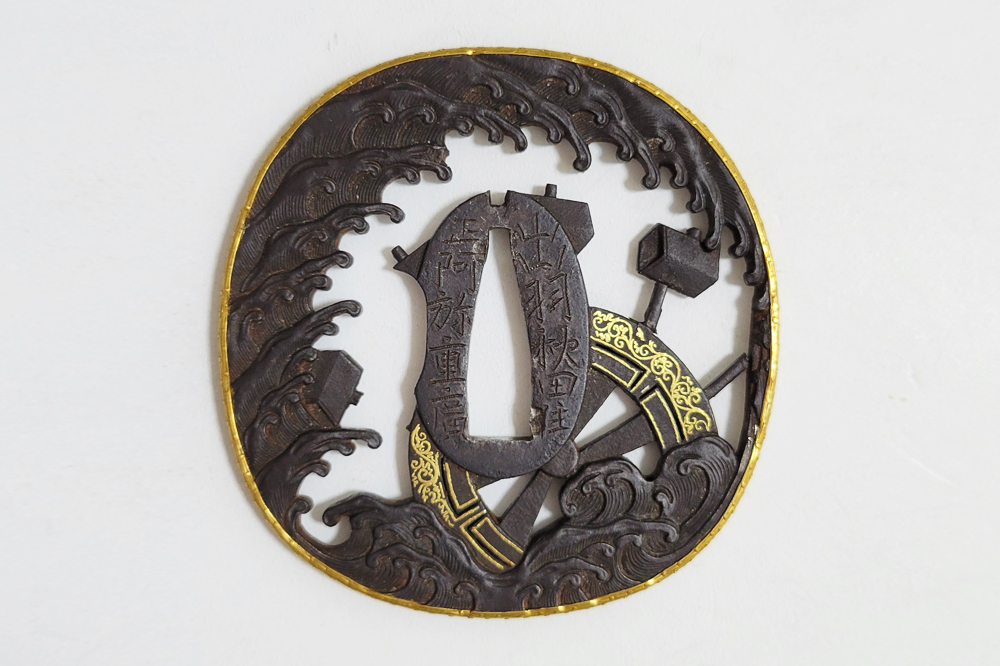
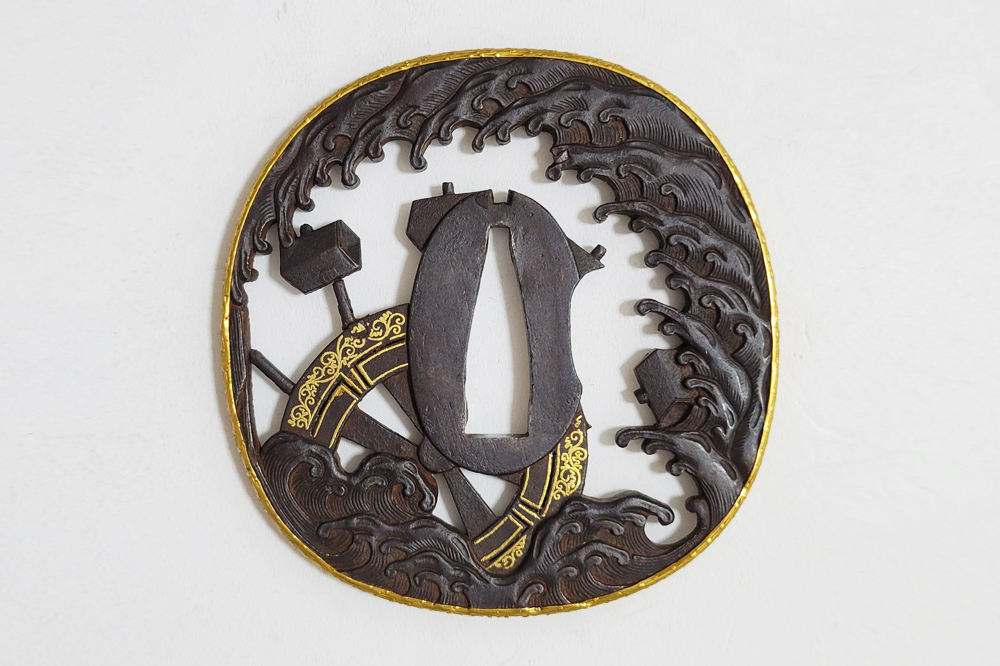
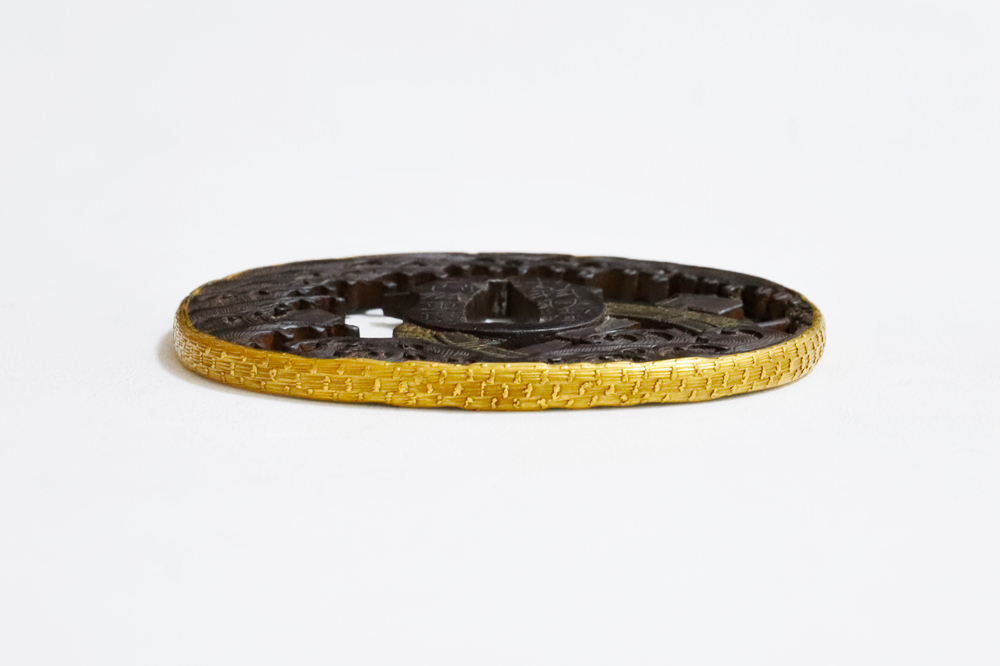
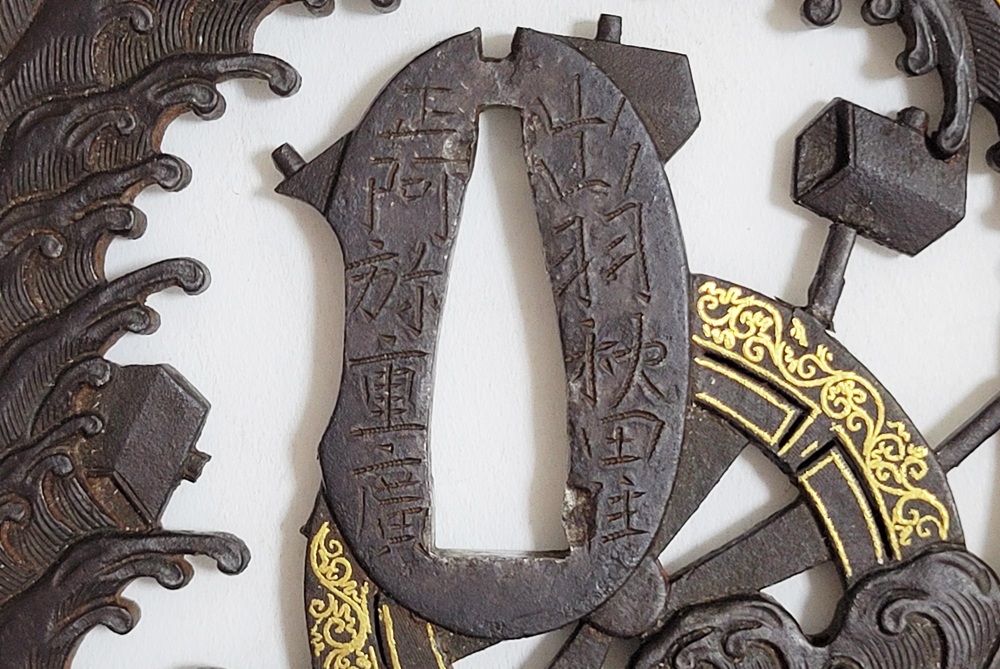
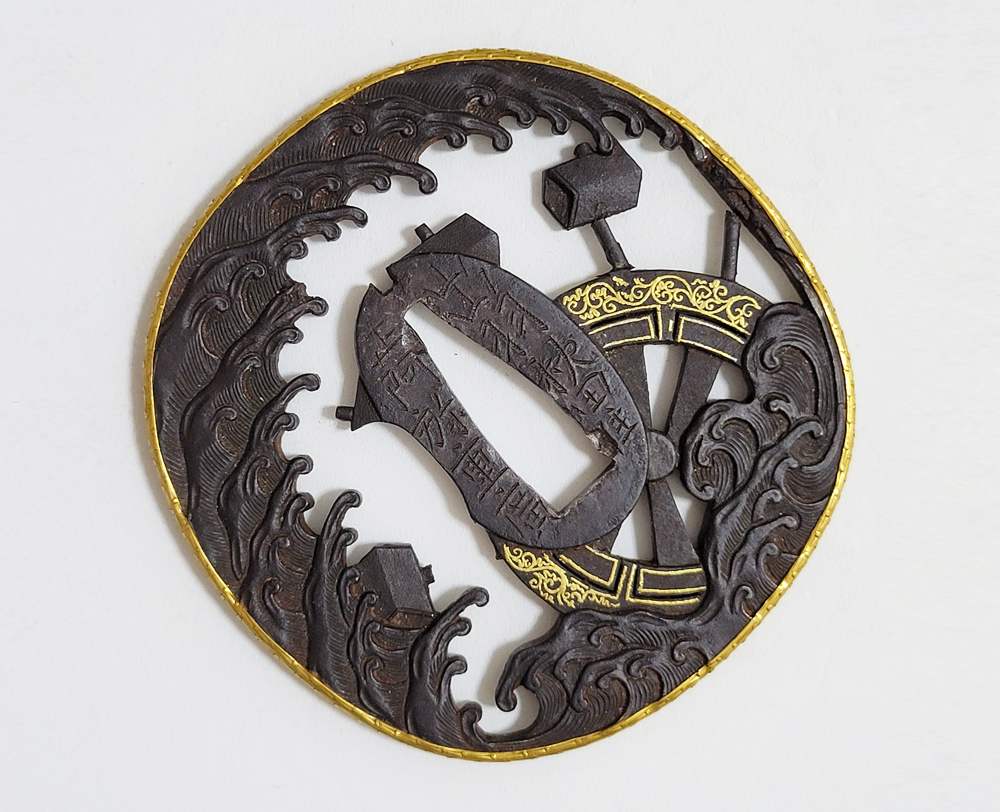
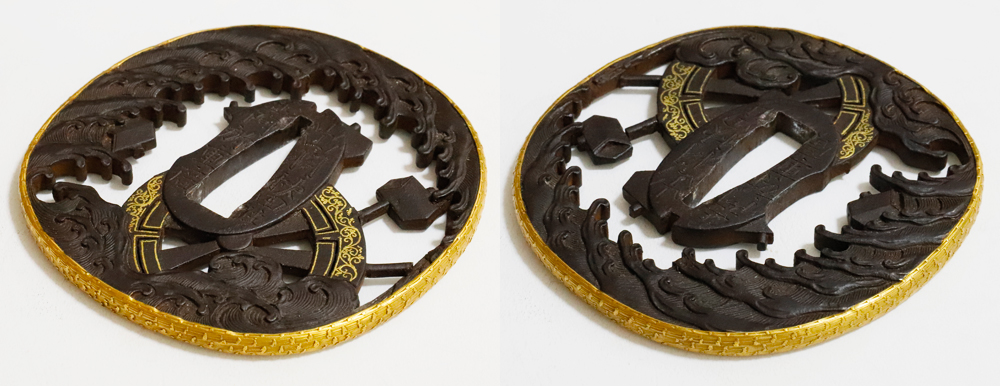
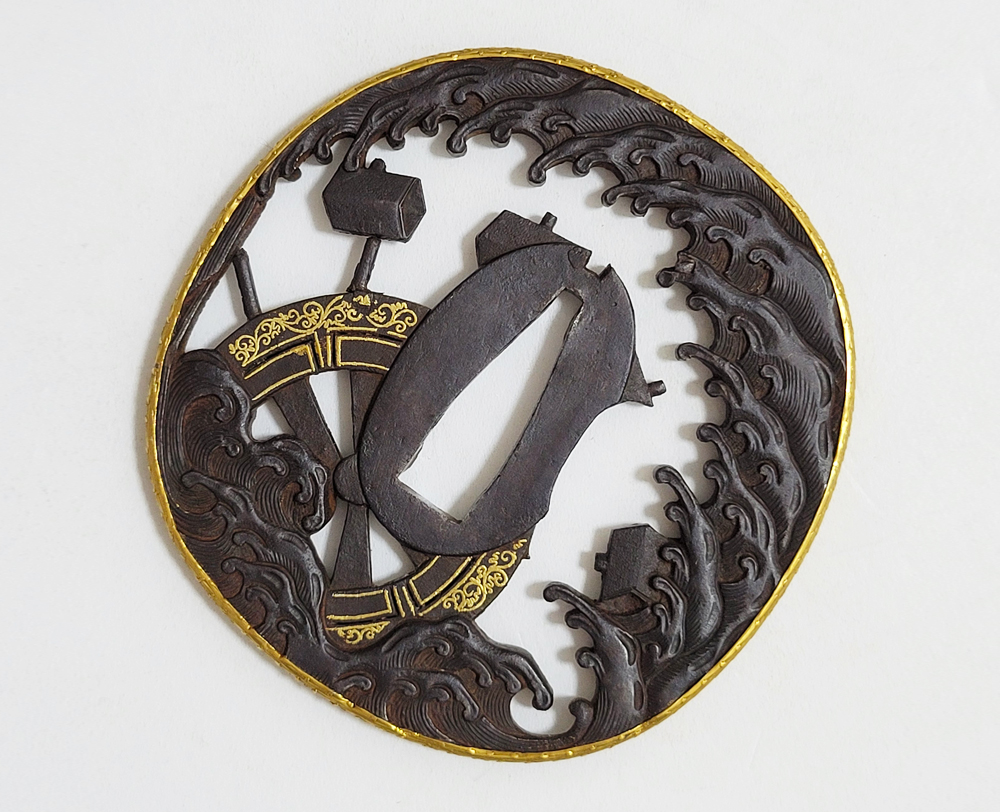
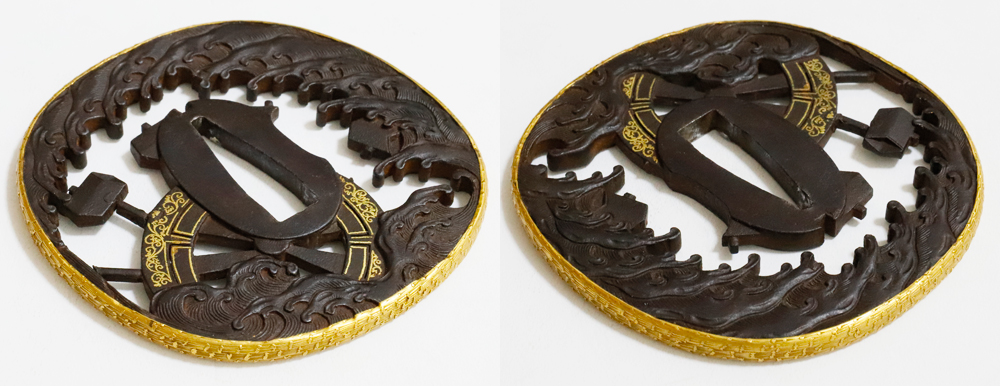
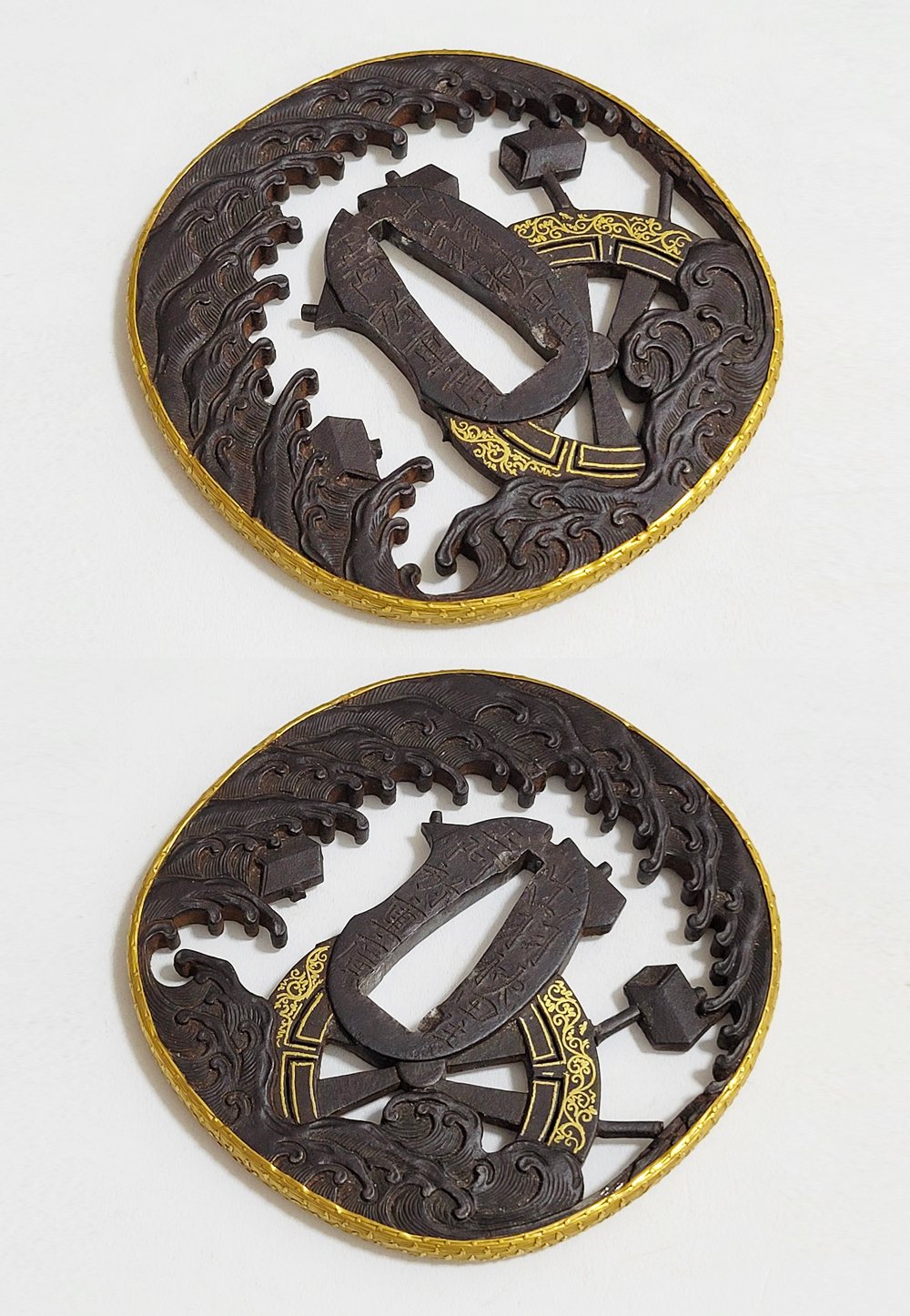
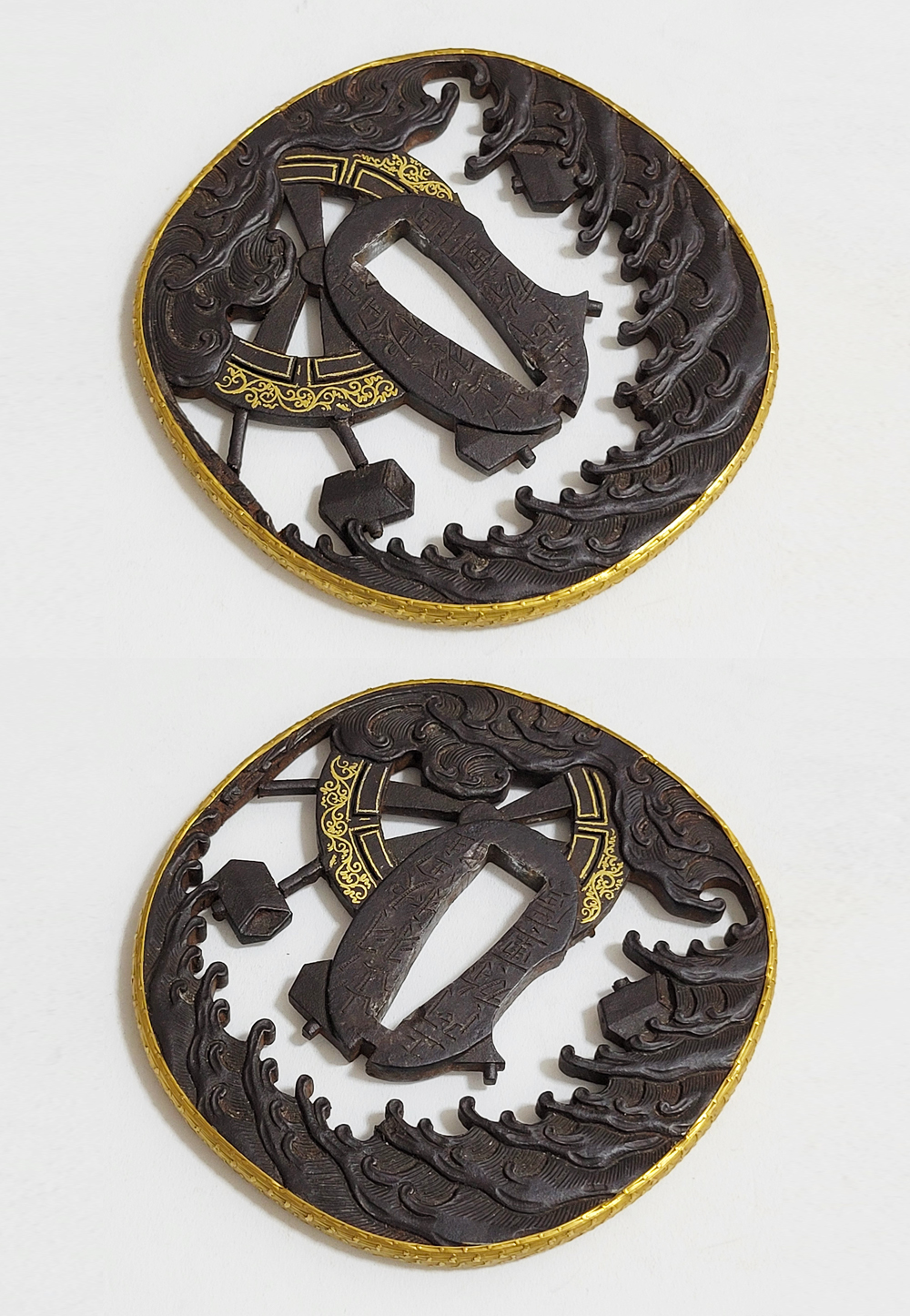
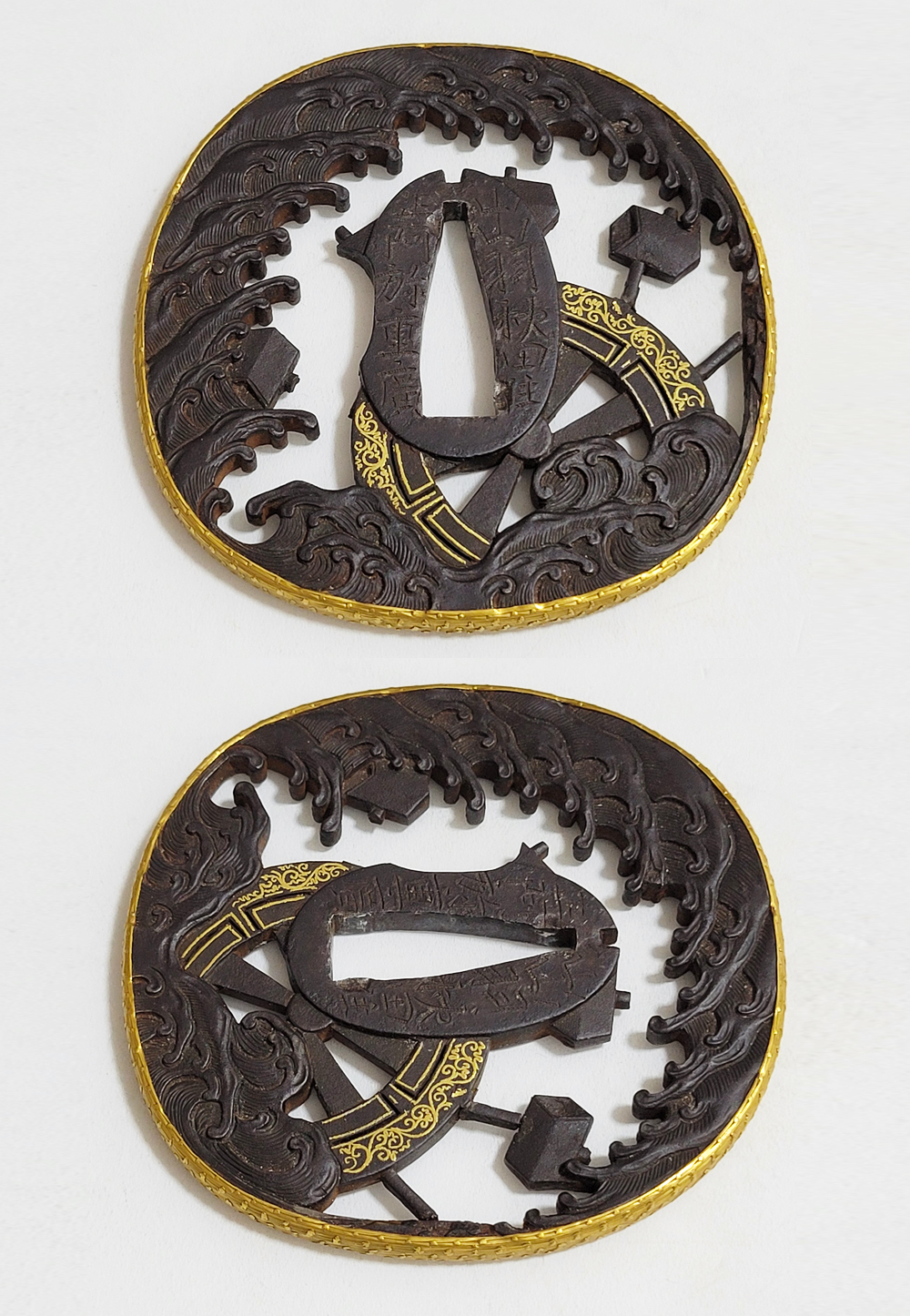
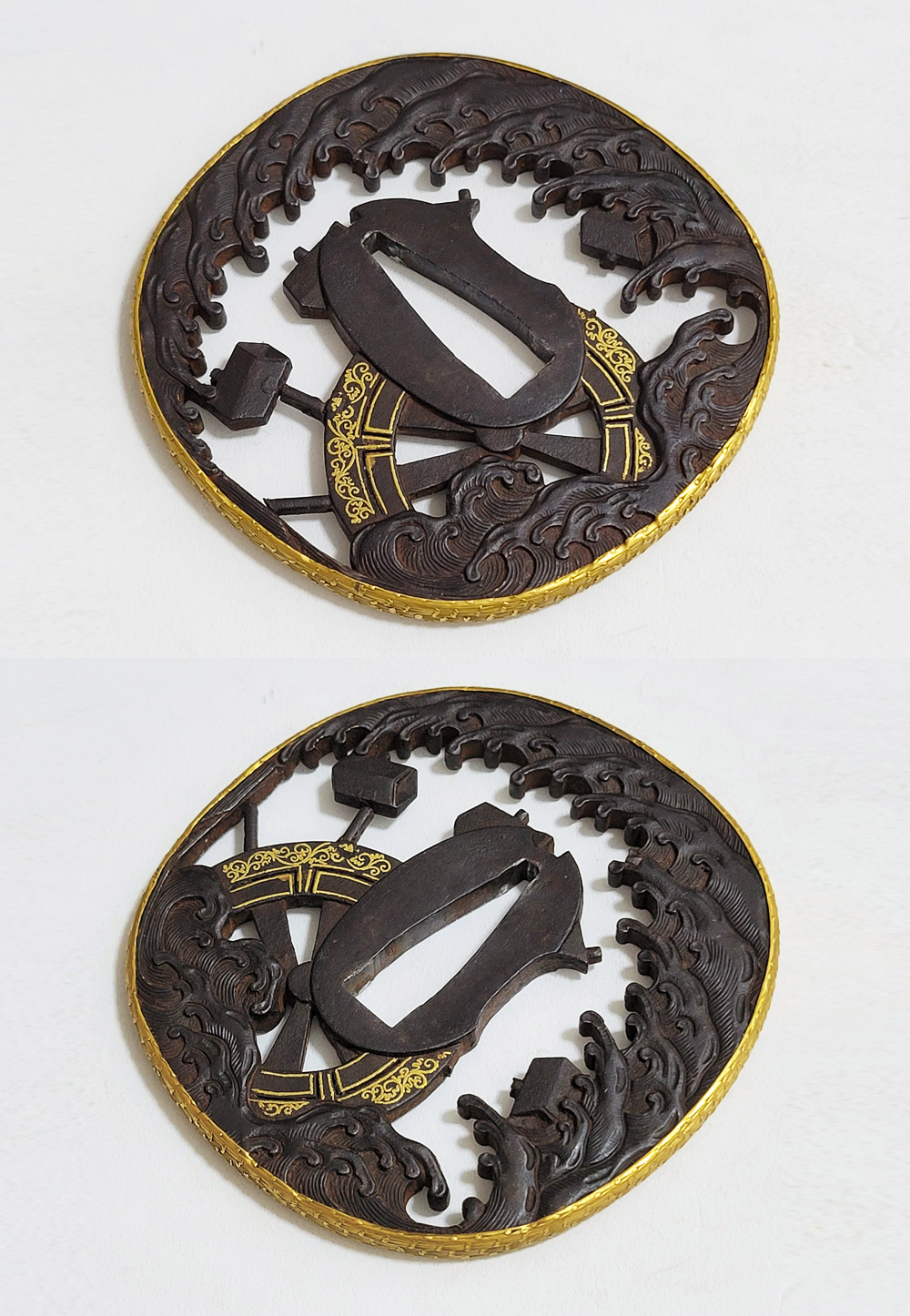
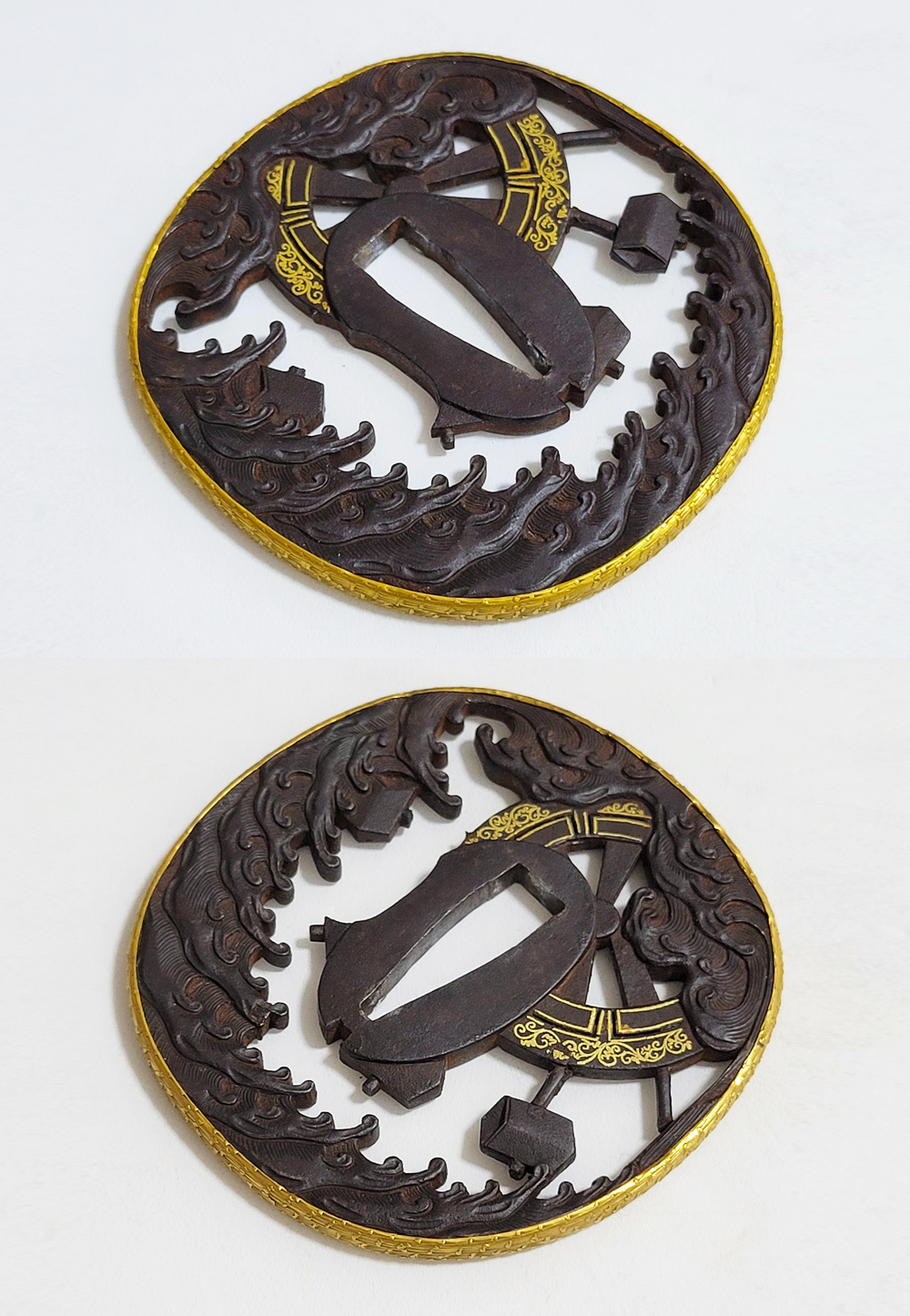
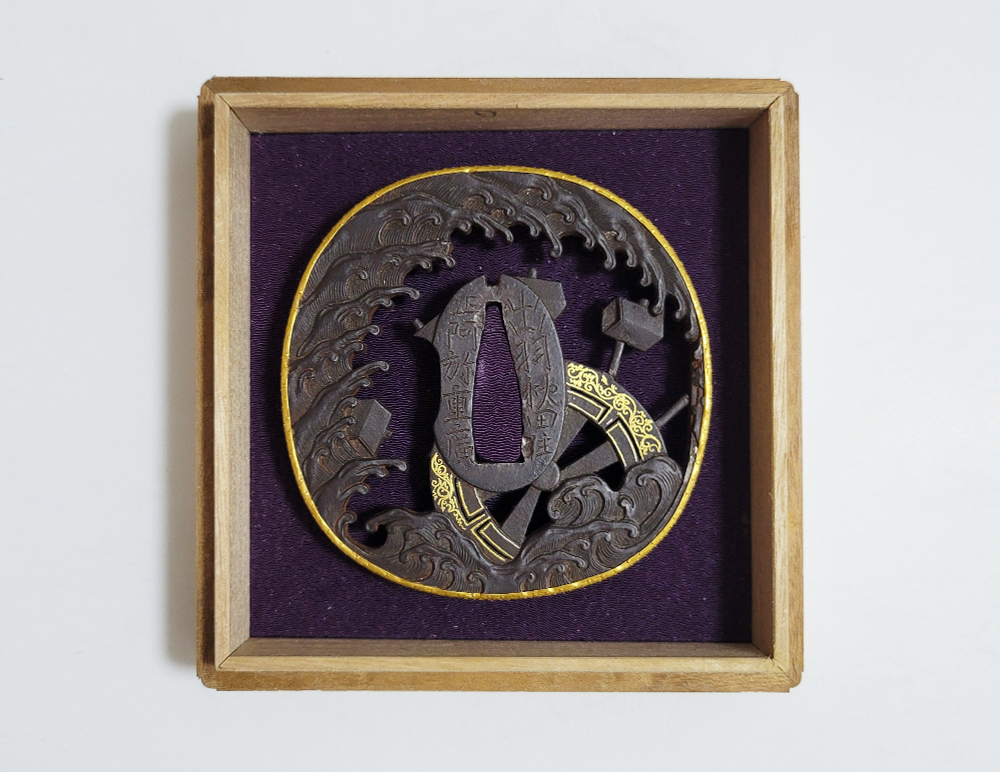
| Shigehiro was a tsuba maker of the Akita Shōami school, active during the mid Edo period (around the Genroku to Kyōhō eras, 1688–1736). His works are generally well executed in the traditional Shōami style. He is believed to have belonged to the lineage of Shōami craftsmen and Saotome armor-makers who accompanied the Satake family when they were transferred from Mito to Akita in the early Edo period. Some references describe Shigehiro as a student of Gotō Tsūjō, but this attribution is now generally regarded as erroneous based on the characteristics of his surviving works. On the other hand, Shigehiro produced examples of guri-bori carving executed in the same distinctive manner as the celebrated Shōami master Denbei Shigeyoshi, suggesting a close relationship between the two craftsmen. It is most likely that Shigehiro initially served as an assistant to Denbei after the latter entered the service of the Satake family, and that he became independent when the second-generation Den'nai Shigetaka entered Satake service as Denbei's assistant in Genroku 11 (1698). (Reference: A Study of Akita Tsuba Craftsmen and Swordsmiths, posthumous manuscript by Tsurutarō Sugawara.) This tsuba features a highly original design depicting a waterwheel set against the powerful, turbulent flow of a river. Upon close inspection, a small loss can be seen in one of the braces connecting the waterwheel paddles; however, it blends naturally into the composition and is not visually distracting. The applied gold fukurin rim enhances the overall appearance and lends the tsuba an elegant finish. Passed NBTHK Tokubetsu Hozon Tosogu shinsa in February 2026. |

 Search