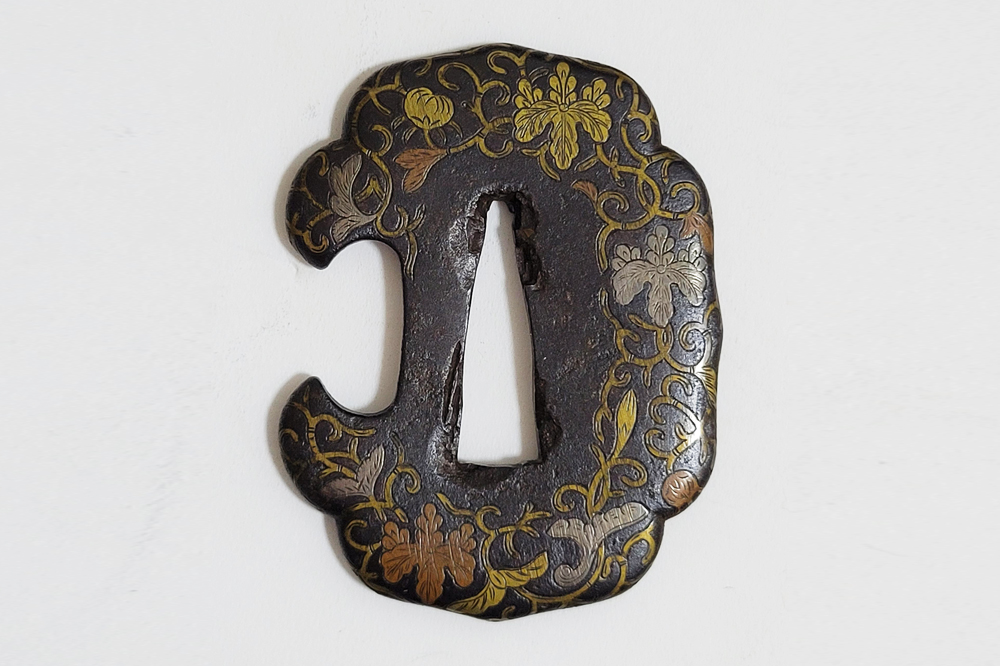
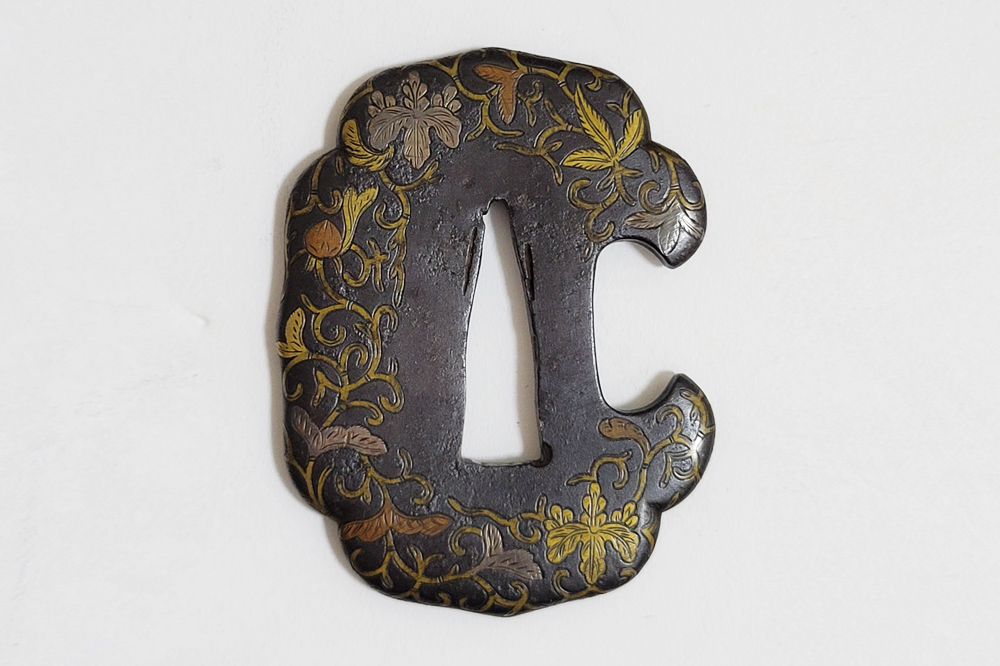
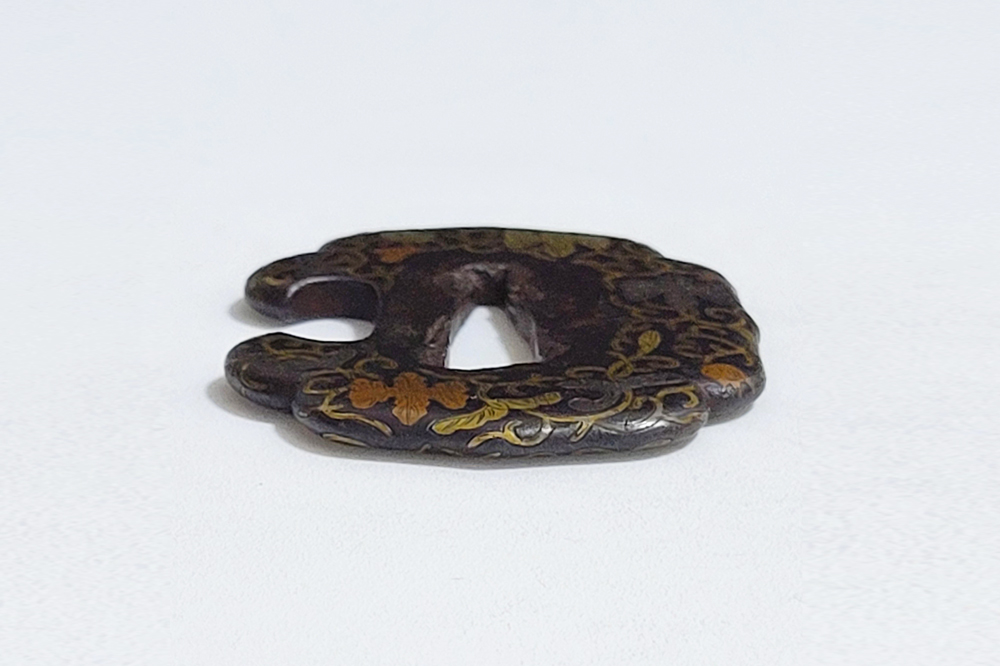
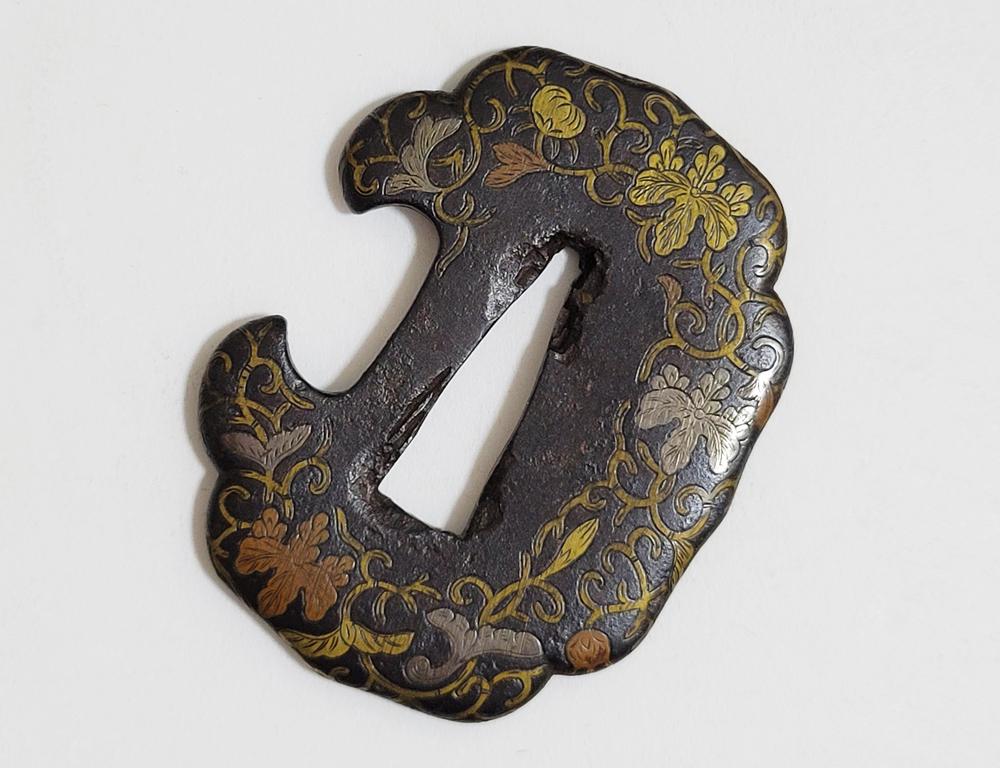
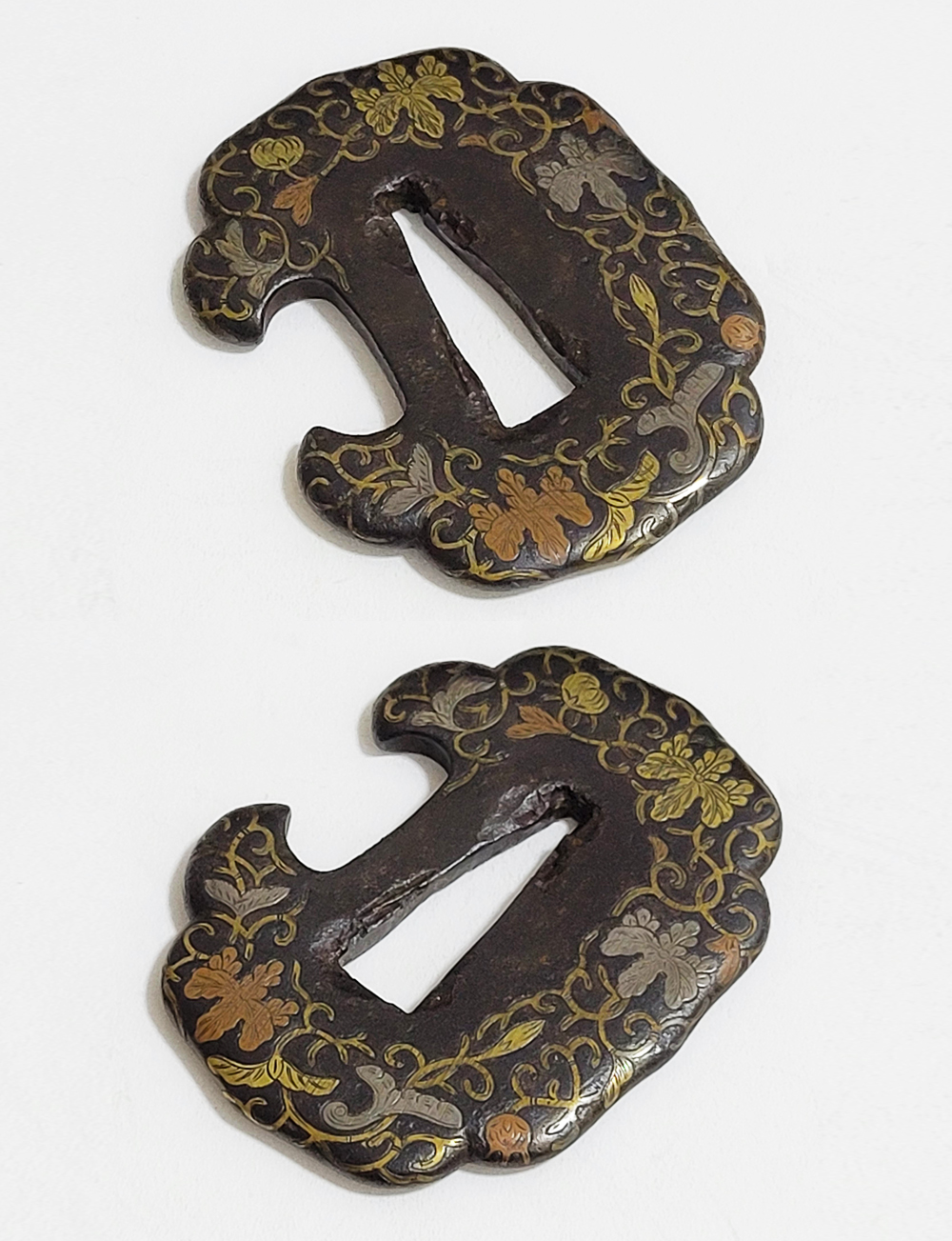
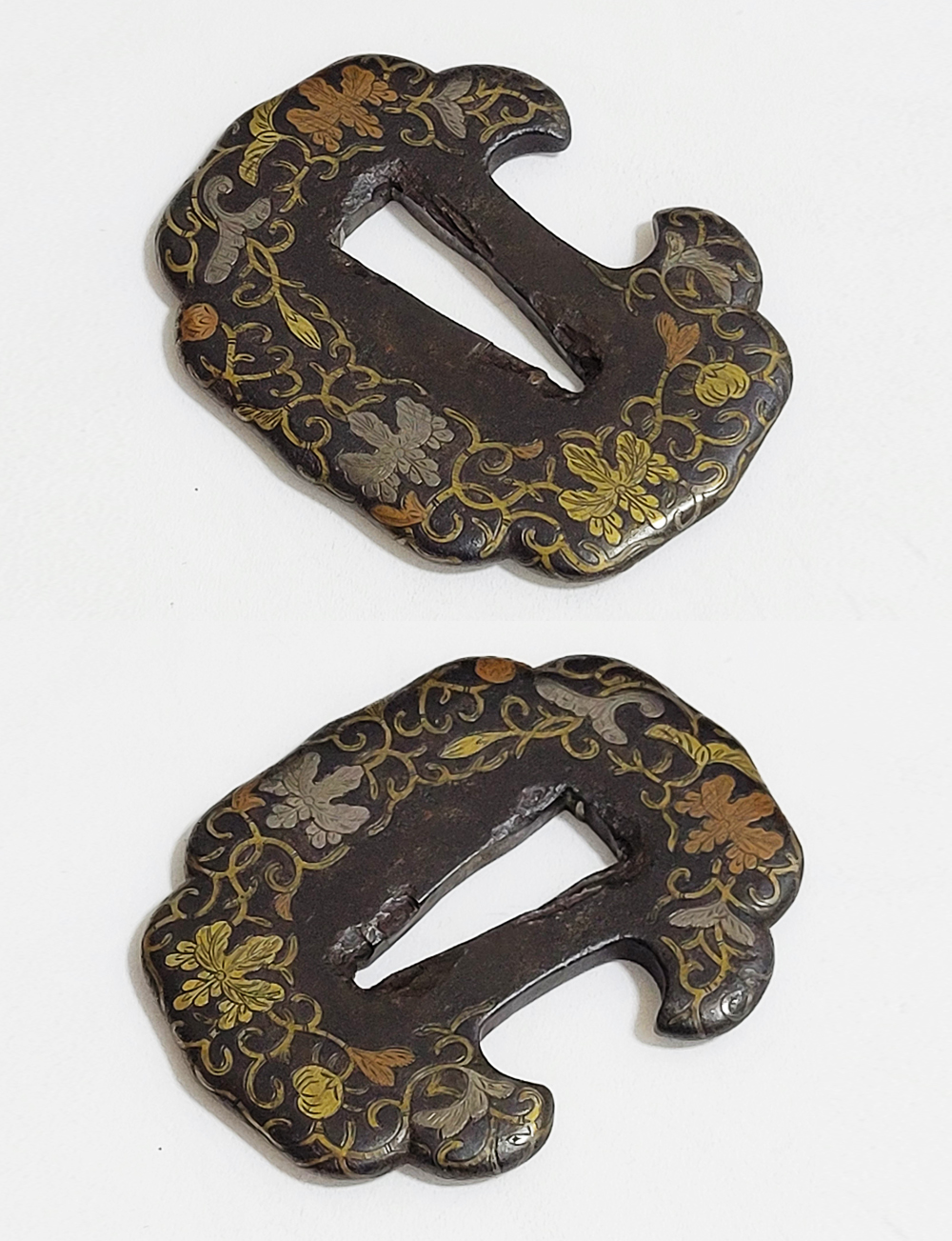
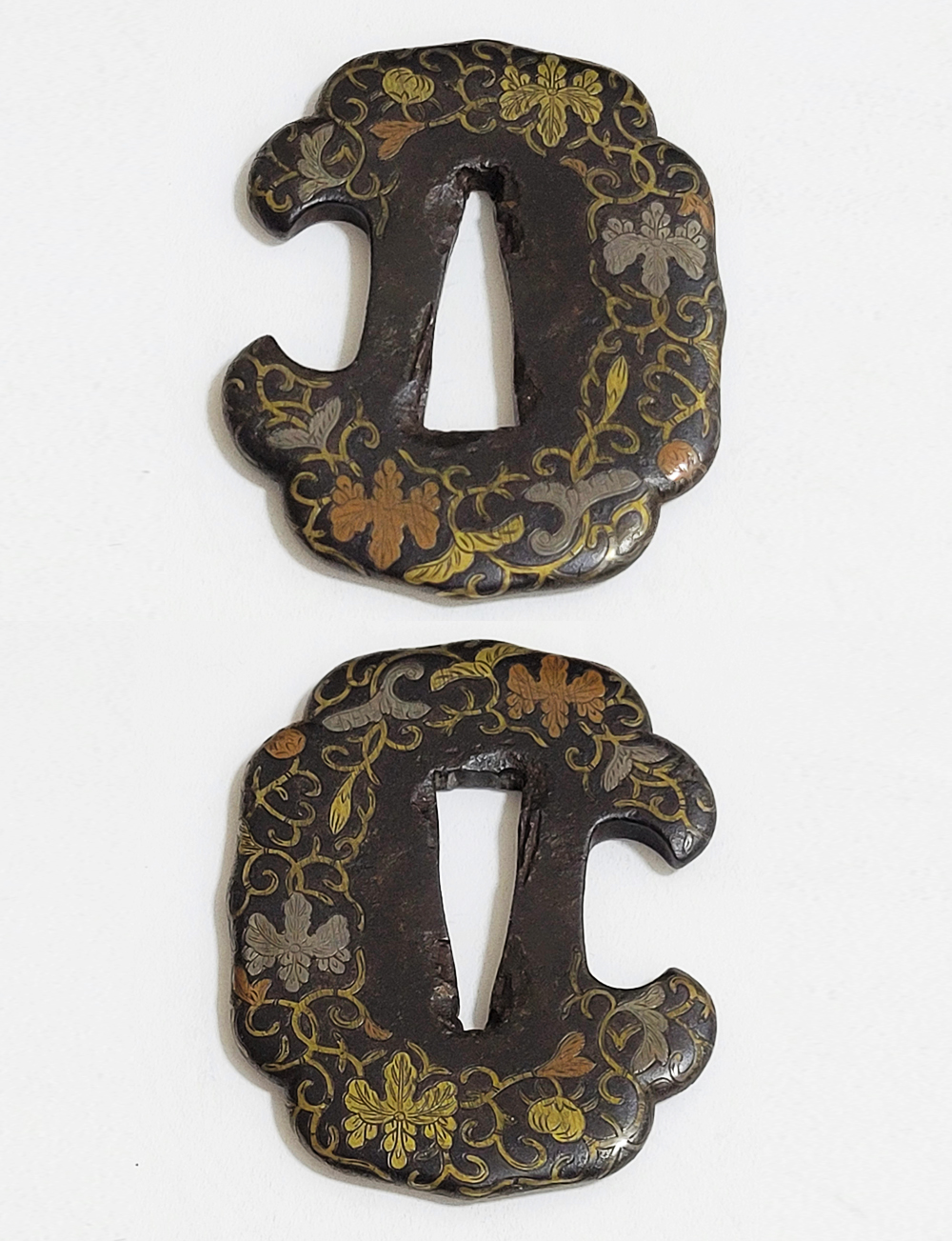
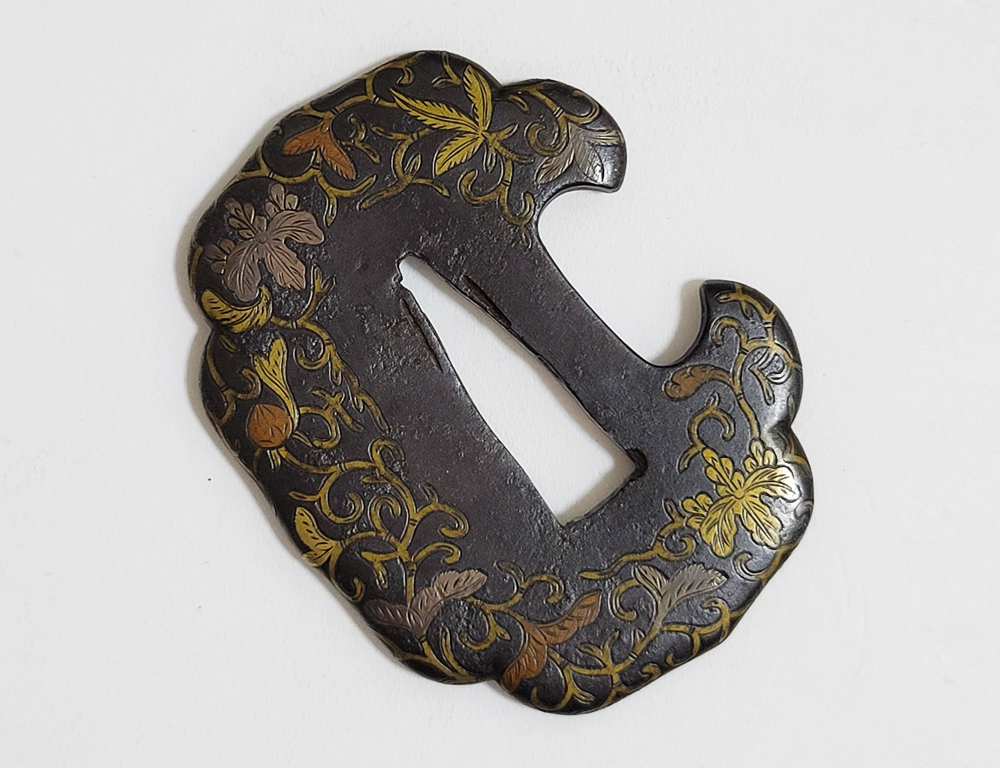
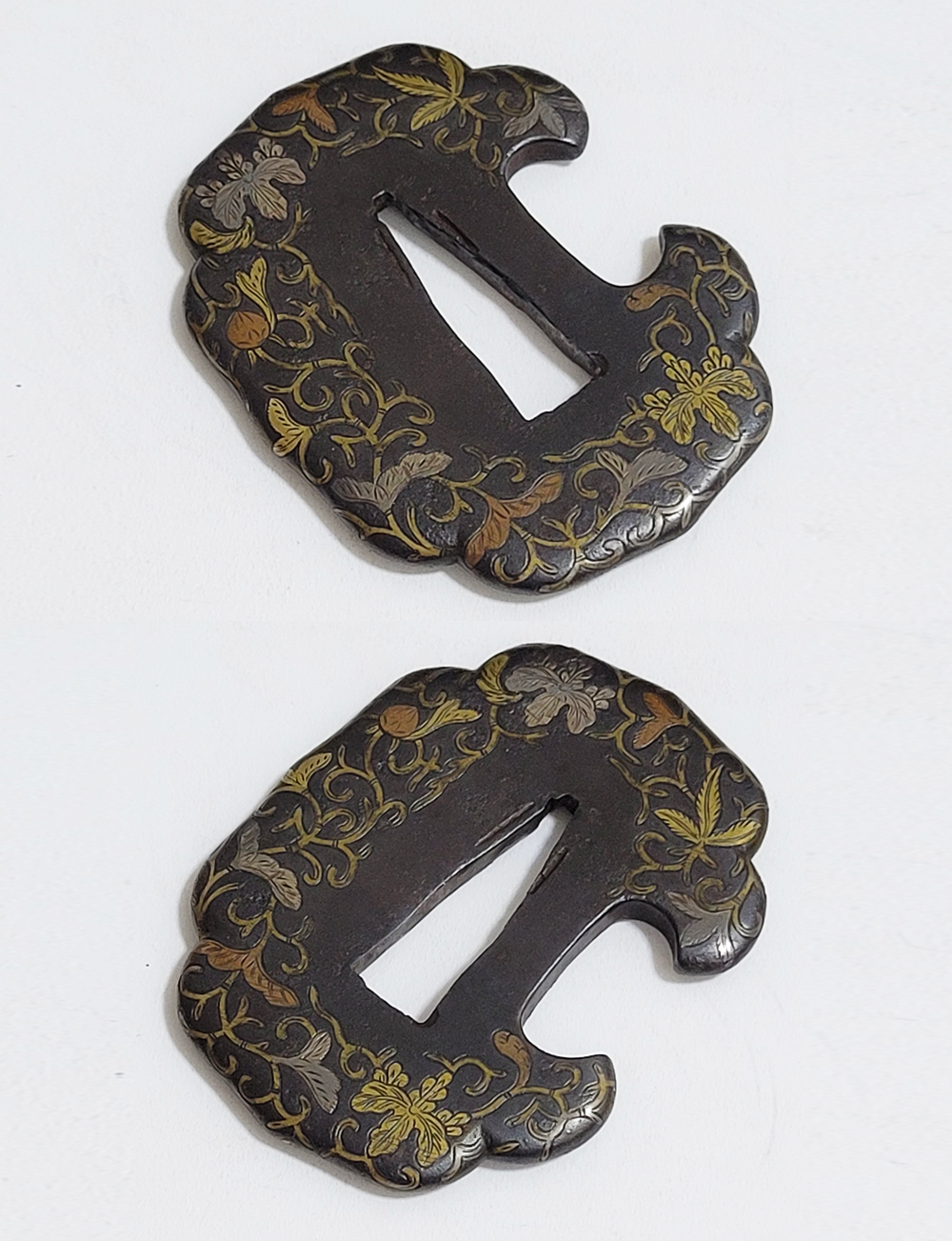
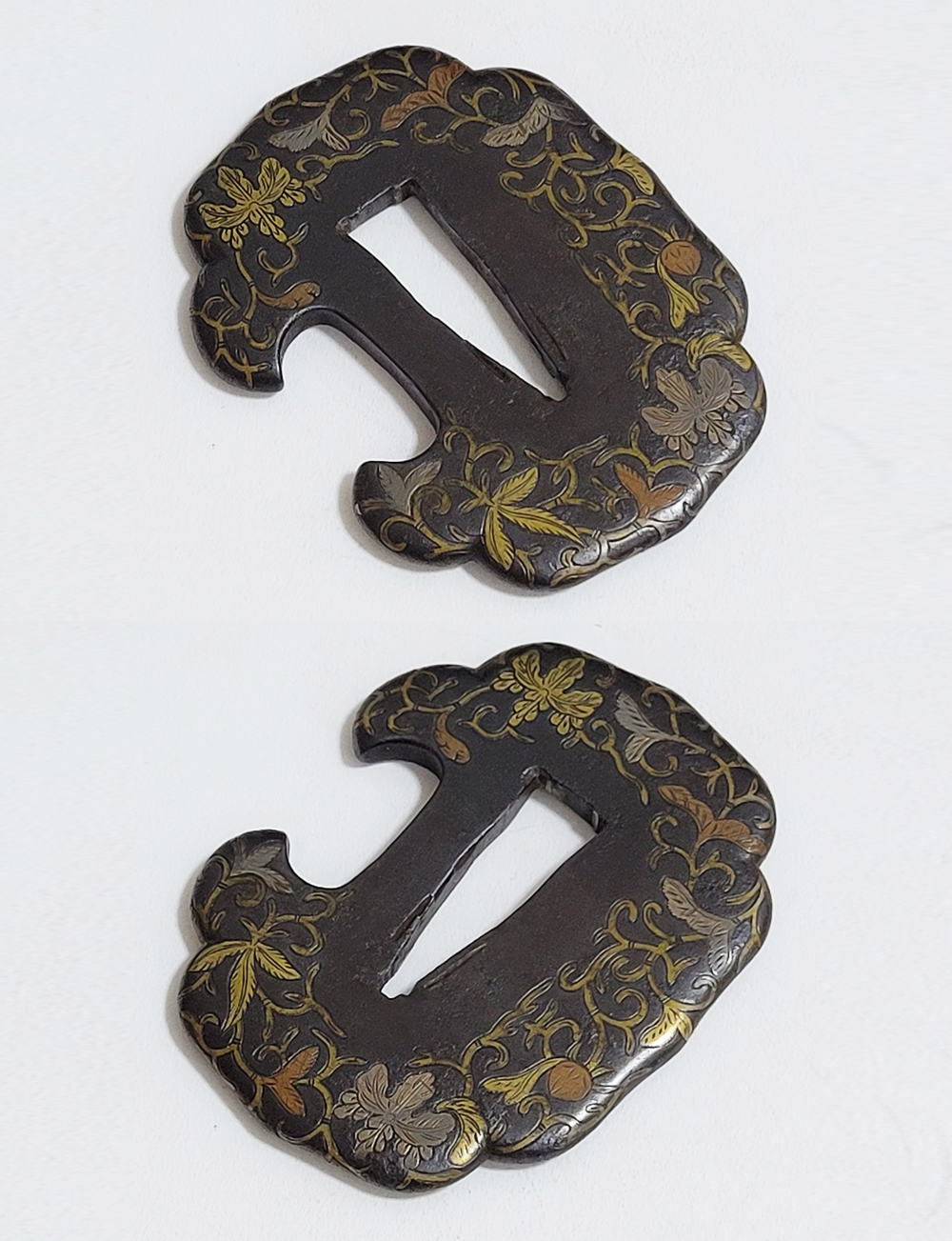
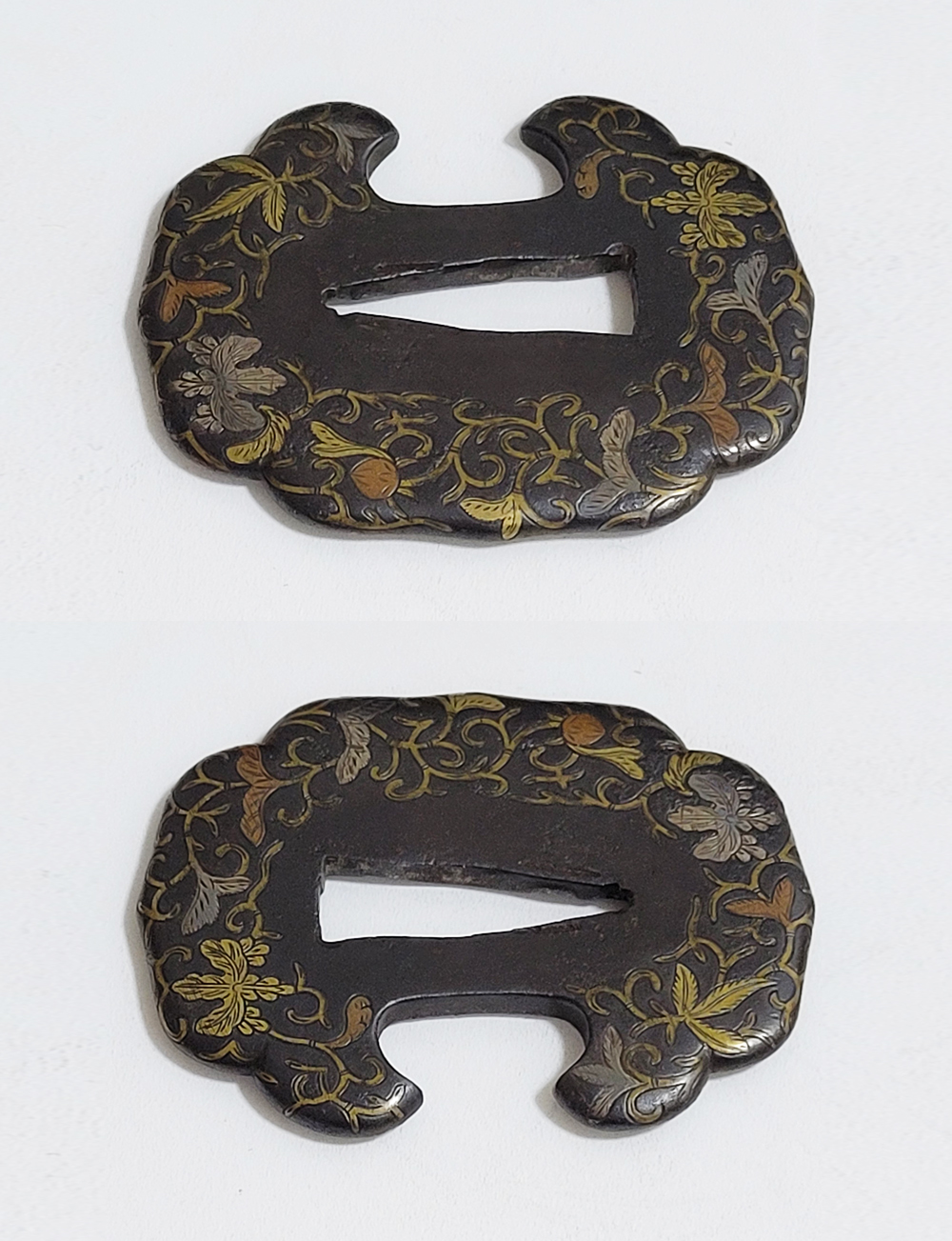
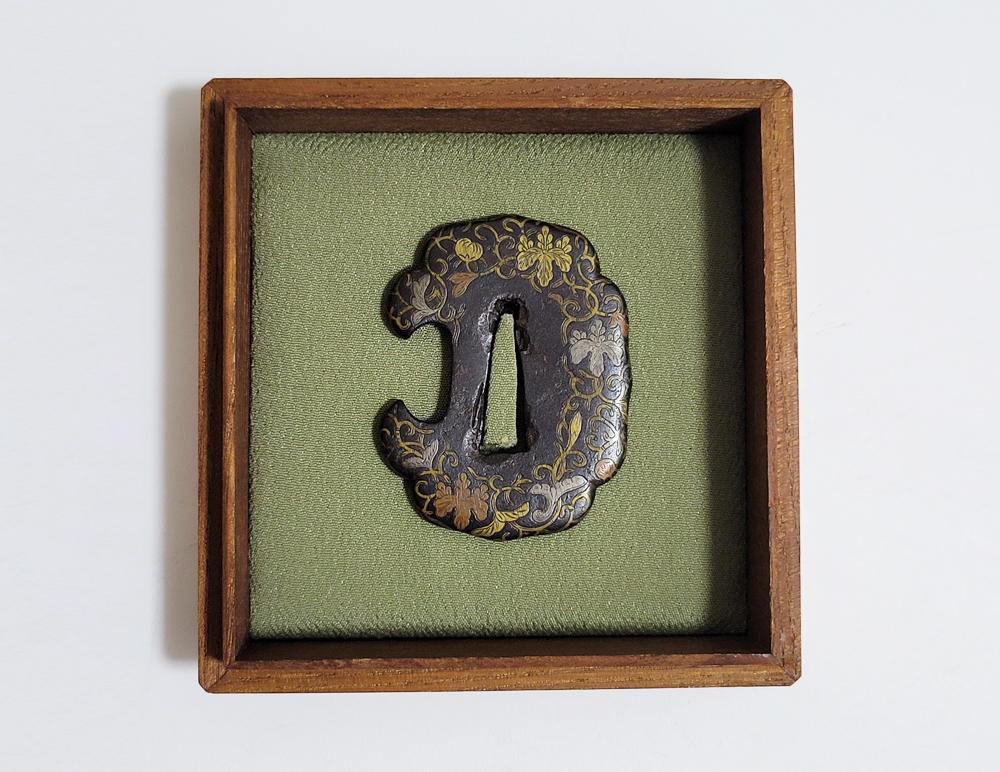
| Yoshiro tsuba developed from Heianjo-zogan tsuba. They are characterized by arabesque and other designs carved into an iron ground and decorated with brass using the hira-zogan (flat inlay) technique. These tsuba are collectively known as Yoshiro tsuba, named after Yoshiro, the most prominent metalworker associated with this style. Yoshiro's full name was Koike Yoshiro. He was a renowned metalworker active around the Keicho era (1596–1615). According to tradition, he received the honorary title of Izumi no Kami and was awarded the title of Tenkaichi (Best in the Realm) by Toyotomi Hideyoshi. He is also said to have later moved from Kyoto to Kanazawa in Kaga Province and contributed to the development of Kaga-zogan (Kaga inlay). This small hamidashi-gata tsuba features paulownia crests and flowing arabesque patterns rendered in brass hira-zogan on an iron ground. The brass inlay stands out beautifully against the dark iron surface, while the elegant arabesque patterns decorate the distinctive outline of the tsuba, creating a refined and attractive design. In May 2026, this tsuba was attributed to Yoshiro and passed the NBTHK Hozon Tosogu shinsa. |

 Search